To prepare an authentic bowl of Mai Xa clam noodles, the villagers of Mai Xa must go through a meticulous and elaborate cooking process:
Main Ingredients
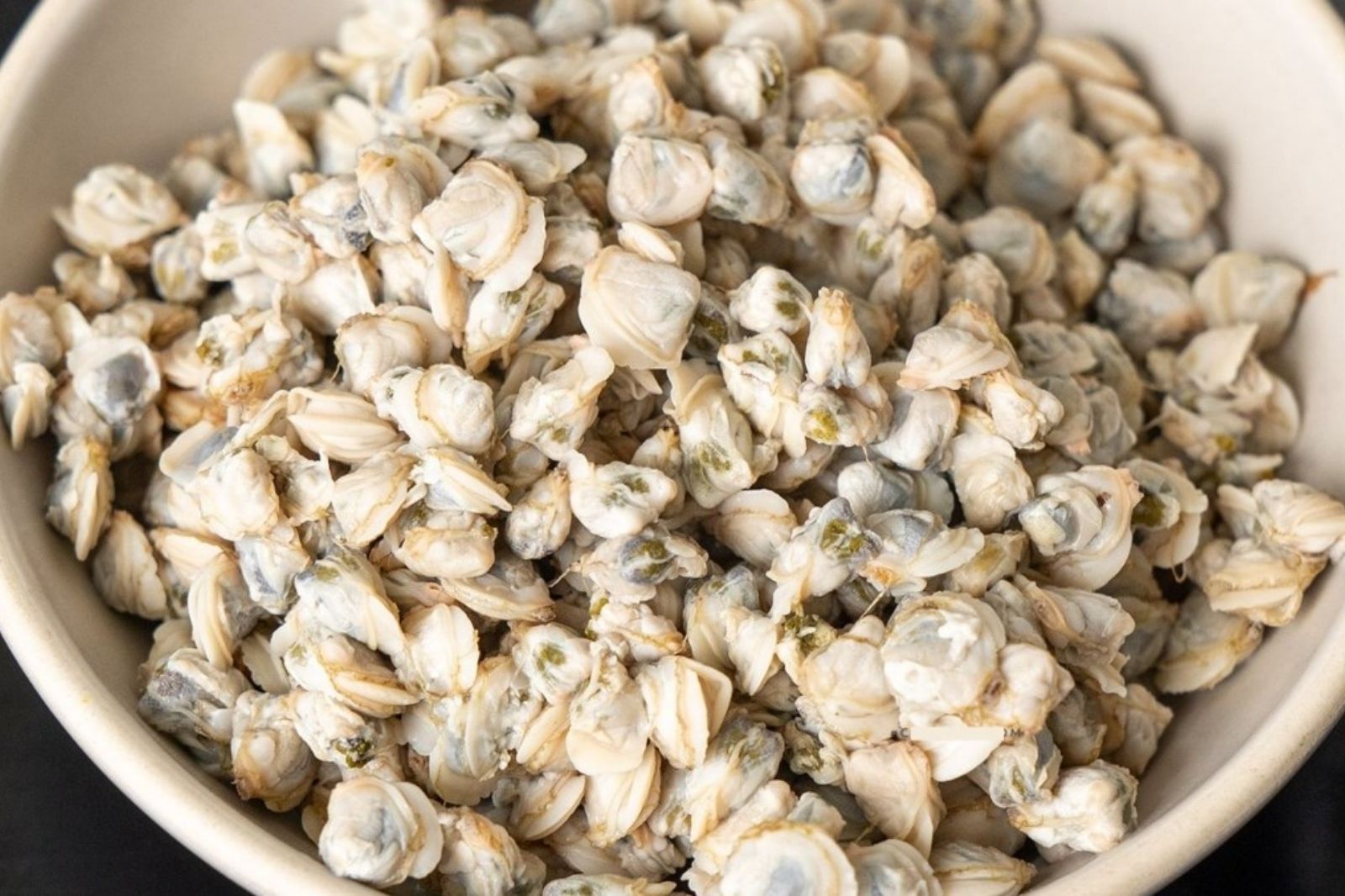
'Chat chat', a type of brackish water baby clam smaller than regular clams, is the soul of the dish. Living under the muddy sand of the Thach Han and Hieu rivers, they carry a distinct sweet and savory taste and are rich in nutrients such as protein, iron, copper, and vitamin B12. After being harvested, the clams are soaked in rice water to release sand and slime, then thoroughly scrubbed to remove mud from their shells. This process requires patience and dexterity to ensure the clams are completely clean.
Preparing the Broth
The clams are boiled, and the boiling water is kept and filtered to make the broth. This clam broth is the 'secret' to achieving a naturally light, sweet taste without adding any artificial additives. Fresh ginger and crushed chili are added to the broth pot to create a pleasant aroma and mild heat, highlighting the sweetness of the clams.
Combining Ingredients
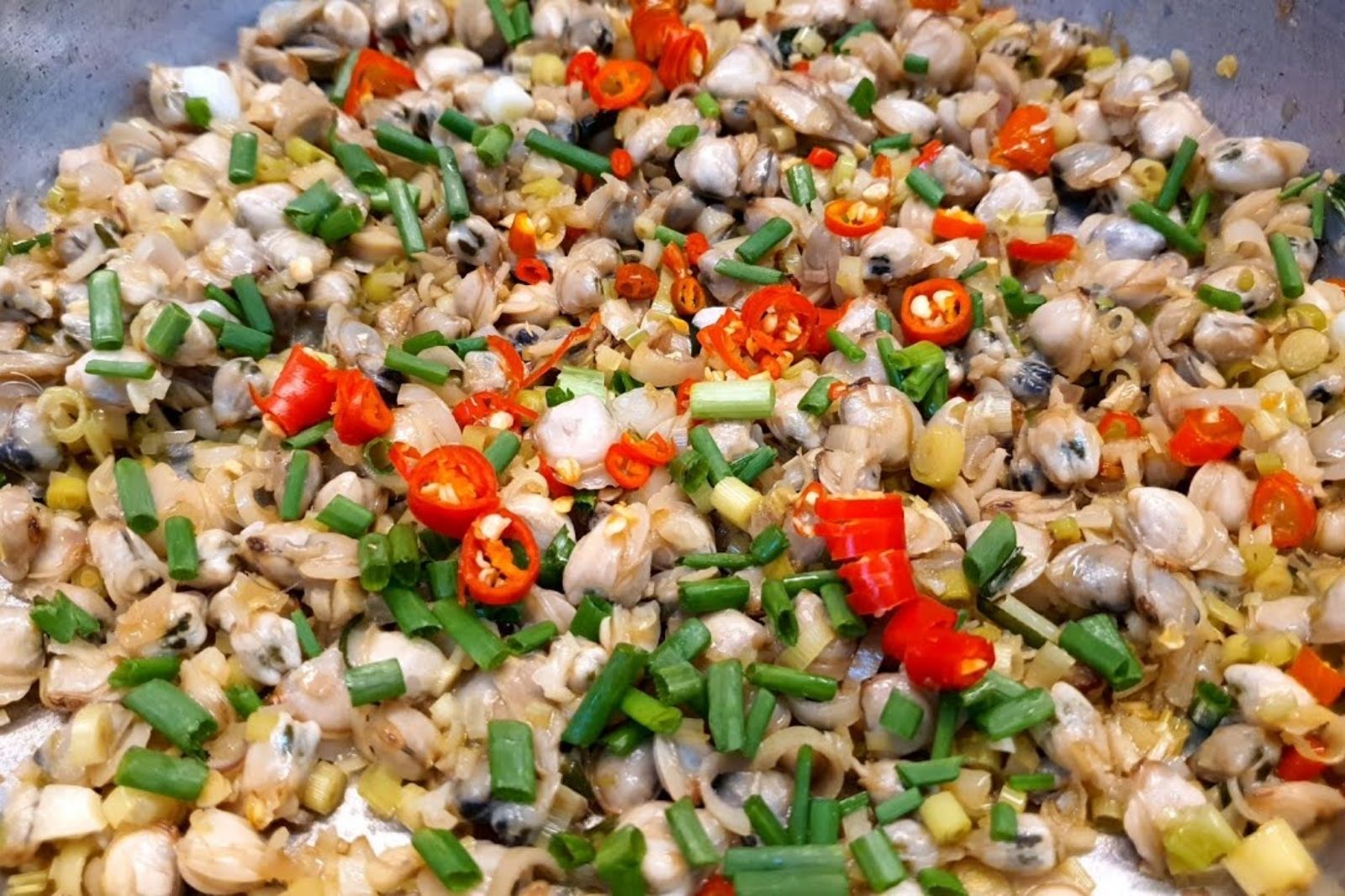
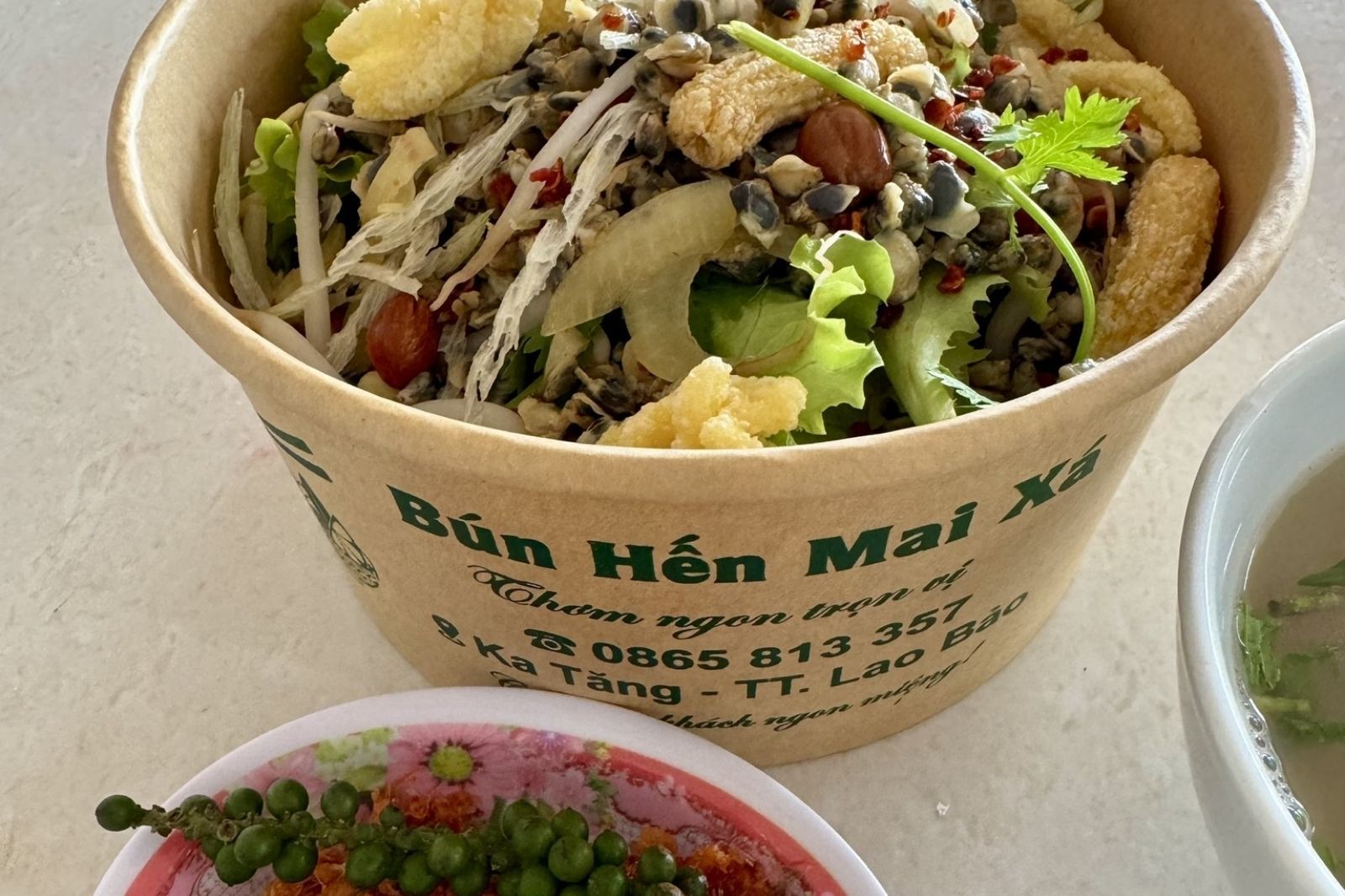
Thin, soft yet firm fresh rice vermicelli is the perfect choice to absorb the broth. The clam meat is stir-fried with fried shallots, fish sauce, salt, and pepper until firm and aromatic. Once assembled, the bowl of noodles is garnished with fresh herbs, fried shallots, crushed roasted peanuts, and an indispensable side of spicy ginger-chili salt or garlic-chili fish sauce – the 'magical' condiment that elevates its rustic flavor.
To fully experience the flavor, thoroughly mix the bowl of noodles with ginger-chili salt, add some fresh herbs, and a dash of soy sauce. Every bite is an experience: from the gentle sweetness of the clams, the nuttiness of the peanuts, to the fiery kick of chili, all blending to create an unforgettable sensation. Mai Xa clam noodles are not only delicious but were also honored in the Top 100 Typical Culinary Specialties of Vietnam (2020-2021) by the Vietnam Records Organization (VietKings) and included in the list of 121 Outstanding Vietnamese Culinary Dishes in 2022 by the Vietnam Culinary Culture Association (VCCA). This is not only a source of pride for the people of Quang Tri but also proof of the unique culinary cultural heritage of this land.