Marble Mountains: An Overview of Cultural and Spiritual Heritage

Central

Da Nang

Marble Mountains

Sovaba.travel

Updated at: 24/09/2026

1. Where are the Marble Mountains?

The Marble Mountains are located at No. 81 Huyen Tran Cong Chua Street, Hoa Hai Ward, Ngu Hanh Son District, Da Nang City. The complex lies right on the Da Nang – Hoi An route, bordered by the East Sea to the east with fine white sand, and the Co Co River to the west and south.

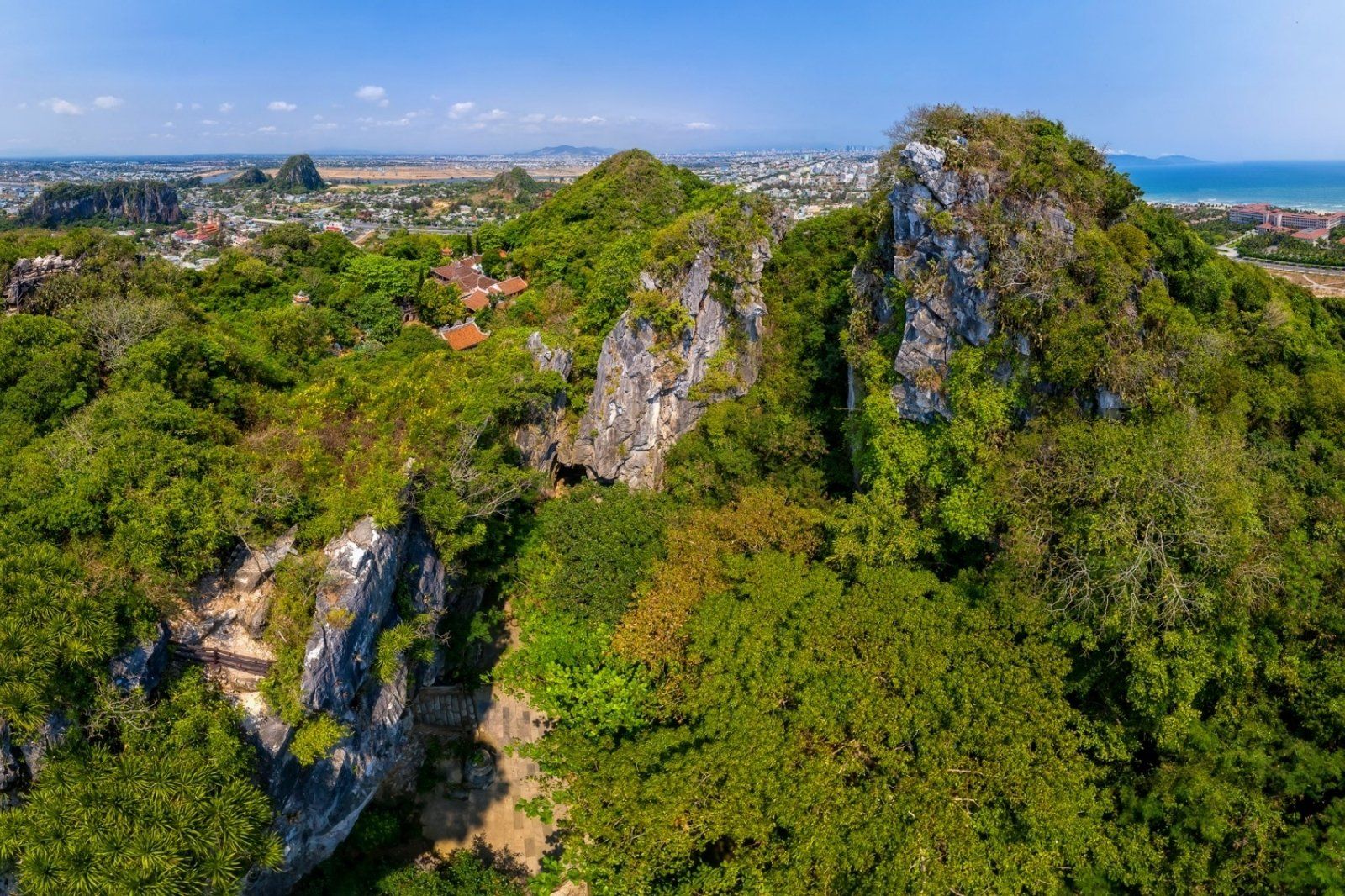
The most special feature of the Marble Mountains is the complex of 6 limestone (marble) peaks rising amidst the coastal sand dunes over an area of about 2 km²:

  • Thuy Son (Water Mountain): The largest, tallest (160 m), most beautiful, and the main sightseeing center.
  • Moc Son (Wood Mountain): Sparse vegetation, white rock.
  • Hoa Son (Fire Mountain): Consists of two peaks, Duong Hoa Son and Am Hoa Son.
  • Kim Son (Metal Mountain): Features Quan Am Cave.
  • Tho Son (Earth Mountain): The lowest, longest, shaped like a lying dragon.

Each mountain carries a characteristic stone color according to the five elements, creating a vivid natural picture. This place is not only a geological heritage but also a "fairyland" featuring a system of caves, pagodas, and the traditional Non Nuoc stone carving craft village with a history of over 400 years.
Geological masterpiece complex
Photo: Geological masterpiece complex

2. The history and meaning of the name Marble Mountains

The name "Ngu Hanh Son" (Marble Mountains) appeared later than the folk name "Non Nuoc", first recorded in historical documents such as Hoang Viet nhat thong du dia chi in 1806. In 1825, King Minh Mang officially named them after the five elements (Kim, Moc, Thuy, Hoa, Tho) based on the orientation and topography of the mountains, carving the names onto rock for posterity. Prior to that, local people called them Non Nuoc Son, as seen in ancient folk verses: "Every afternoon clouds cover Son Tra, Thunder roars over Non Nuoc as rain draws near". The French called them "Les montagnes de marbre" (The Marble Mountains) due to their characteristic stone material, while the Cham people named them Ngu Uan Son or Ngu Chi Son (five fingers pressed into the earth).

The legend of the origin of the Marble Mountains is closely linked to Viet - Cham folklore. According to legend, an old fisherman (or hermit) from the North came to the East Sea shore and witnessed a sea dragon (or Naga goddess) lay a giant egg. The Golden Turtle God (Kim Quy) buried the egg in the sand and handed a claw to the old fisherman for protection. When the egg hatched, the shell broke into five pieces that turned into five multi-colored marble mountains, while inside was a beautiful young maiden (a drop of Long Quan's blood). The maiden was later married by a Cham king, and the Golden Turtle God took the old fisherman to heaven. This legend not only explains the majestic formation of the complex but also emphasizes the harmony between nature and spiritual elements, serving as inspiration for many local festivals.

Tam Thai Pagoda on Thuy Son Mountain
Photo: Tam Thai Pagoda on Thuy Son Mountain

3. Cultural and spiritual values of the Marble Mountains complex

The Marble Mountains are a convergence of multiple layers of unique cultural and historical sediment. Here, researchers have found traces of the Sa Huynh culture, along with clear influences of ancient Cham Pa culture, exemplified by the image of Thien Y A Na – the goddess revered by the Cham people. Through historical periods, this area continued to become an important Buddhist center of Dang Trong (Inner Realm), while also being associated with numerous resistance relics. Around the 17th – 19th centuries, the Marble Mountains were considered a major Buddhist center of Central Vietnam, with a system of 14 large and small pagodas still existing today.

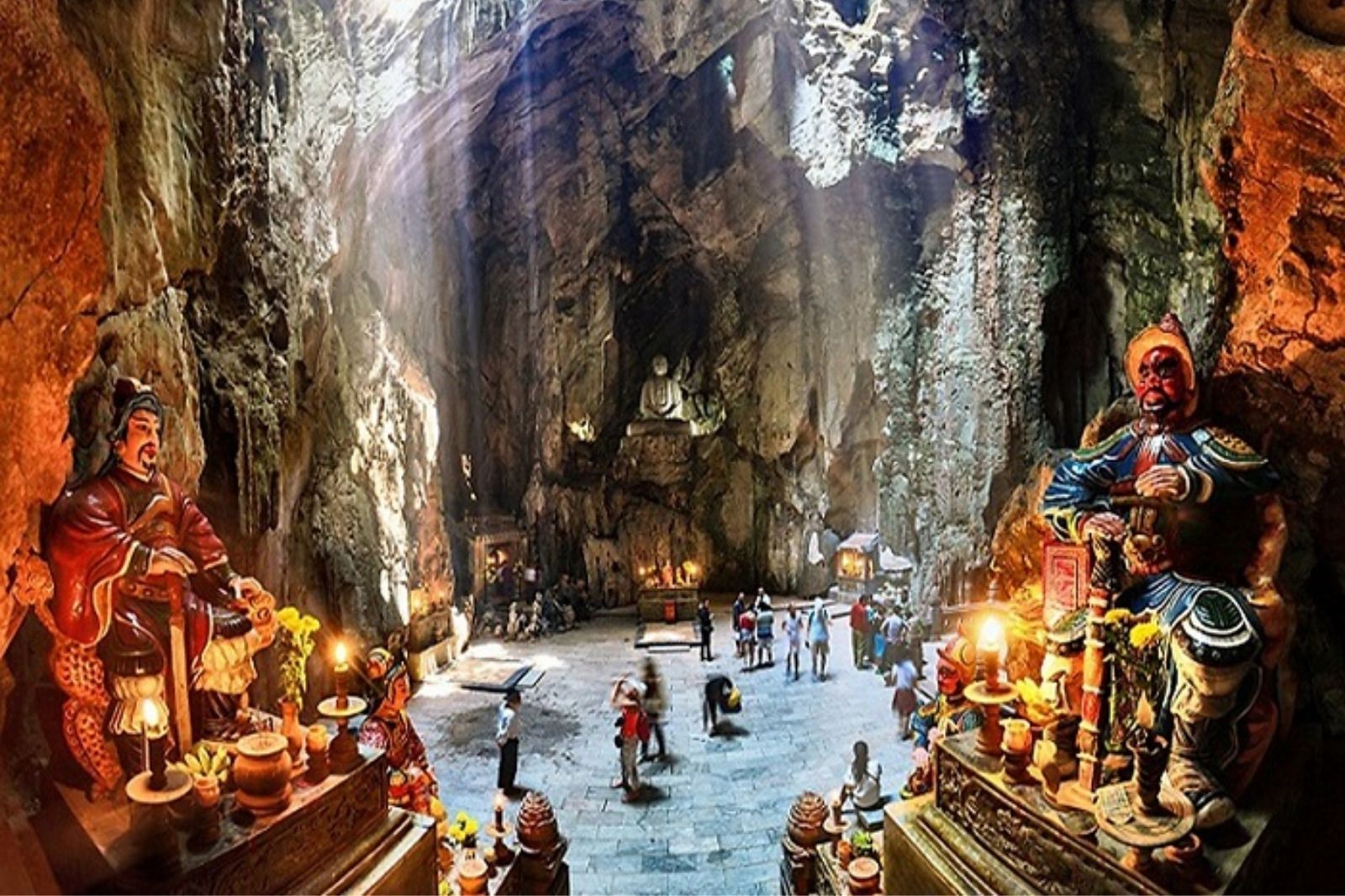
The spiritual value of the Marble Mountains is clearly demonstrated in the blend of natural scenery and religious space. Many natural caves inside the mountains have been used as places of worship for the Buddha, Avalokiteshvara Bodhisattva, and deities, creating an exceptionally sacred space. In addition, the system of stele inscriptions carved into cliff walls dating from the Nguyen Dynasty, along with calligraphic writings by kings and lords and annual Buddhist festivals, has contributed to affirming the cultural and spiritual heritage value of the scenic area. Therefore, the Marble Mountains are not only a famous landmark but are also regarded as a "sacred land", where visitors come to pay homage, practice meditation, and feel peace amidst nature.

A place where cultural sediments from many eras are preserved intact
Photo: A place where cultural sediments from many eras are preserved intact

4. Temple architecture and prominent relics at the Marble Mountains

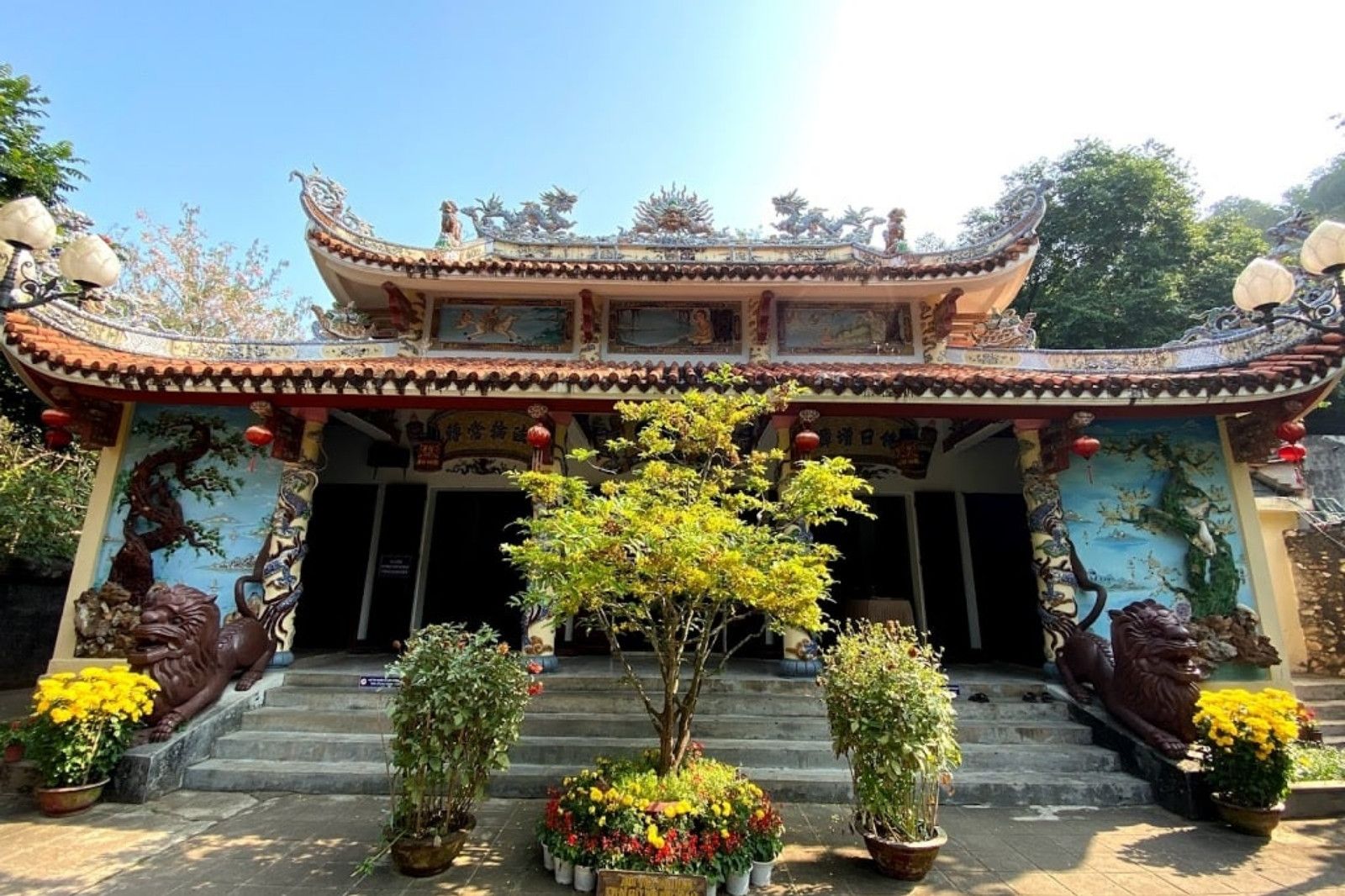
The pagoda architecture here bears the distinct style of the Nguyen Dynasty: curved roofs, wooden pillars, exquisite horizontal lacquered boards and parallel sentences, backing against the mountain and facing the sea or river.

  • Tam Thai Pagoda (Thuy Son – Upper Thai): The oldest pagoda (built around 1630), considered a "National Pagoda". This is where the royal gold plaque of King Minh Mang and the Pho Da Son Linh Trung Phat stele (1640) are preserved.
  • Linh Ung Pagoda (Thuy Son – Lower Thai): One of the three famous Linh Ung Pagodas in Da Nang, featuring a 7-story Xa Loi Tower, a 10-meter-high Shakyamuni Buddha statue, and Vong Hai Dai (Sea Viewing Subpeak).
  • Other pagodas: Linh Son, Pho Da Son (Hoa Son), Quan Am (Kim Son), Long Hoa – Hue Quang (Tho Son).

Additionally, there are Hanh Cung (Royal Lodge), Vong Giang Dai (River Viewing Subpeak), Vong Hai Dai, and ancient Cham Pa relics. Each architectural work stands as a vivid testament to the cultural intersection among Viet, Cham, and Buddhist traditions.

Exploring inside the caves of the Marble Mountains
Photo: Exploring inside the caves of the Marble Mountains

5. The mysterious cave system in the Marble Mountains

The cave system is the "soul" of the Marble Mountains, eroded by rainwater over millions of years. Most prominent on Thuy Son are:

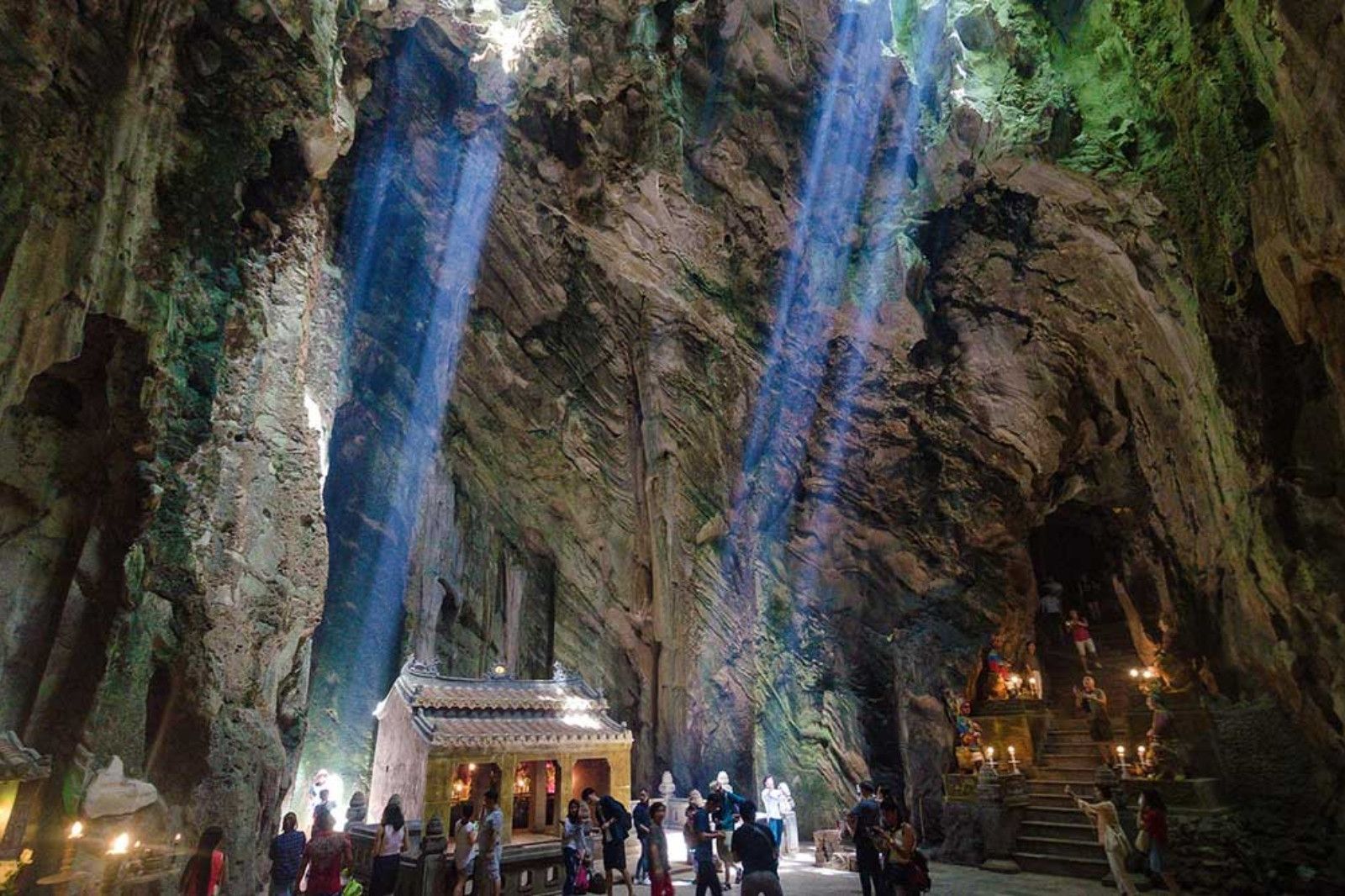
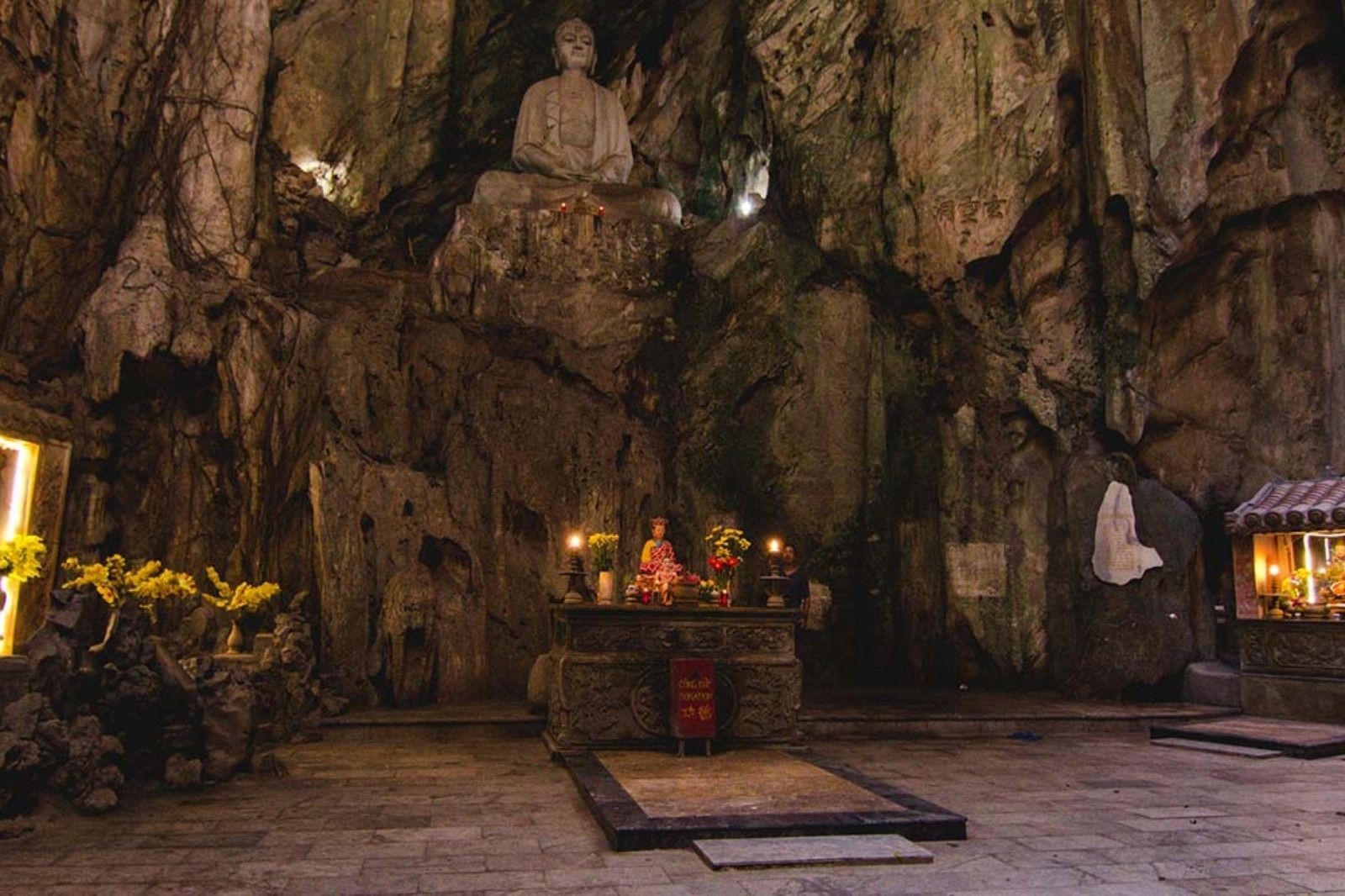
  • Huyen Khong Cave: An open-air cave (with a natural skylight), where sunlight streams down onto shimmering stalactites. Inside, Shakyamuni Buddha and Ksitigarbha Bodhisattva are worshipped.
  • Hoa Nghiem Cave: Houses a statue of Thien Y A Na (Cham) and intricate bas-relief carvings.
  • Van Thong Cave (Ascending to Heaven Cave), Thien Long Cave (Dragon Cave), Linh Nha Cave, Tang Chon Cave.
  • Am Phu Cave (Hell Cave - Tho Son): A deep, mysterious cave associated with legends of the underworld.

Each cave features fascinating shapes combined with places of worship, evoking a feeling that is both mystical and sacred. Visitors can thread through stone pathways, admire stalactites, and feel the marvel of nature.

6. The natural beauty and unique landscape of the Marble Mountains

The Marble Mountains stand out with a rare landscape of "majestic mountains and picturesque waters", where five marble peaks of different hues rise amidst the coastal white sand strip. Surrounding the mountain complex are the turquoise waters of the East Sea and the softly winding Co Co River, creating a harmonious natural picture of mountains, rivers, and sea. From the peak of Thuy Son, visitors can take in a panoramic view of Da Nang city, looking towards the Son Tra Peninsula and even Hoi An Ancient Town in the distance.

Not only valuable in terms of scenery, this area also possesses a diverse ecosystem with many precious plant species such as cycads and wild orchids, along with characteristic animals such as monkeys and swiftlets. At the foot of the mountain lies the Non Nuoc Stone Carving Village, which still preserves a long-standing traditional stone carving craft. The works crafted from marble here carry not only artistic value but also contribute to creating a unique cultural identity associated with the Marble Mountains complex.

Mysterious natural caves
Photo: Mysterious natural caves  

The Marble Mountains are not merely a pure natural landmark, but an exquisite harmony of "majestic mountains and picturesque waters", the Five Elements philosophy, and centuries of historical and cultural sediment. From Vong Giang Dai peak on Thuy Son, visitors can capture a perfect picture: a place where legendary marble mountains, ancient pagodas, and the traditional Non Nuoc craft village coexist harmoniously beside the East Sea coast and the Co Co River. Recognized as a Special National Relic, the Marble Mountains are not only an attractive stopover but also a unique cultural and spiritual symbol of Da Nang, forever a pride of Central Vietnam. Experiencing a Marble Mountains tour is the best way to fully discover the beauty and historical depth of this heritage site on a journey connecting World Heritage sites.

Loading......

Featured destinations