Mausoleum of Le Thanh Hau Nguyen Huu Canh - A Journey Back to the Roots

Central

Quang Binh

Sovaba.travel

Updated at: 02/10/2026

1. Where is the tomb of Marquis Le Thanh Nguyen Huu Canh?

The mausoleum of Le Thanh Hau Nguyen Huu Canh is located in Truong Thuy Commune, Le Thuy District, Quang Binh Province. Specifically, it sits on a high hill in the An Ma mountain range, with its back against the mountain and its front facing the upper reaches of the Kien Giang River. This location is about 25km from the center of Le Thuy District, and around 70-80km from Dong Hoi City (the capital of Quang Binh).

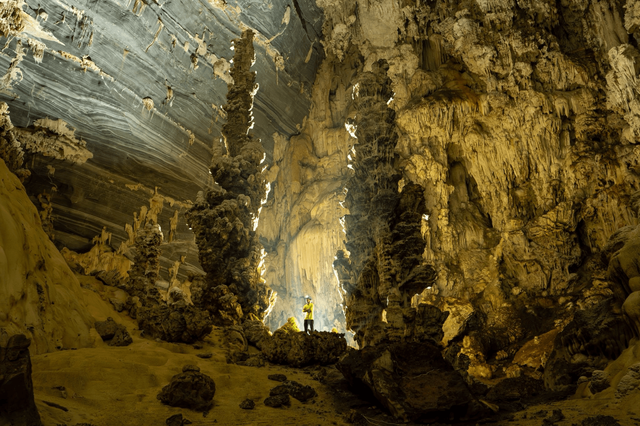
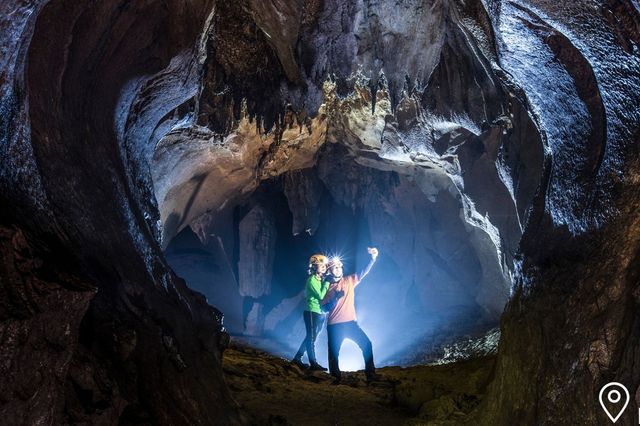
To get here, you can travel by car or motorbike along the eastern branch of the Ho Chi Minh Highway or Provincial Road DT10. The mausoleum grounds have been expanded to 4.9 hectares following restorations, featuring a lotus pond, jade stone bridge, pine hill, and fruit orchards, creating a peaceful space in harmony with nature. This is an ideal destination for history and spiritual tourism enthusiasts, especially when combined with other Quang Binh landmarks such as Son Doong Cave or Nhat Le Beach.

The mausoleum has a good feng shui location
Photo: The mausoleum has a good feng shui location

2. Who was Marquis Le Thanh Nguyen Huu Canh?

Le Thanh Hau Nguyen Huu Canh (1650-1700), real name Nguyen Huu Kinh (later pronounced as Canh), taboo name Le or Thanh, was a prominent general during the Nguyen Lords period. Born in Phuoc Long Village, Chuong Tin Commune, Phong Loc District (now Van Ninh Commune, Quang Ninh District, Quang Binh Province), he was the third son of the renowned general Nguyen Huu Dat – who contributed greatly to the resistance against the Trinh Lords.

From a young age, Nguyen Huu Canh studied martial arts and military strategy under his father. He began his military career under Lord Nguyen Phuc Tan, participating in the pacification of Champa in 1692-1693, transforming this land into Thuan Thanh Garrison (now Ninh Thuan - Binh Thuan). In 1698, he was appointed Commander-in-Chief and Special Envoy of Dong Nai, establishing Gia Dinh Prefecture, Phuoc Long District (Tran Bien Garrison, now Bien Hoa) and Tan Binh District (Phien Tran Garrison, now Saigon). He recruited over 40,000 households from Central Vietnam to move South to reclaim land, establish villages, regulate taxes, and harmonize the Viet - Chinese - Khmer ethnic groups.

In 1699-1700, he pacified Chenla, captured Longvek, and forced Nack Thu to surrender. He passed away suddenly at Sam Khe (Rach Gam, Tien Giang) in 1700 at the age of 51, and was posthumously awarded the title Hiep Tan Cong Than with the posthumous name Trung Can. His career not only expanded the territory but also laid the foundation for the socio-economic development of the Southern region, guided by the spirit of "uy duc" – conquering through virtue rather than violence.

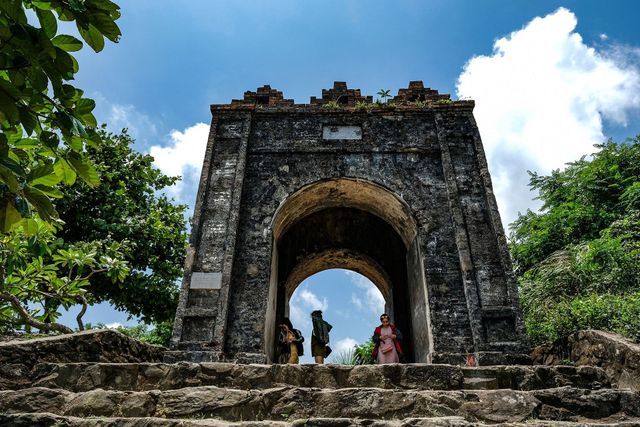
Mausoleum architecture deeply imbued with Vietnamese cultural identity
Photo: Mausoleum architecture deeply imbued with Vietnamese cultural identity 

3. What is unique about the architecture of Marquis Le Thanh Nguyen Huu Canh's tomb?

The architecture of Le Thanh Hau Nguyen Huu Canh's mausoleum carries a simple yet solemn style, harmonizing with nature and reflecting the construction style of the late Nguyen Dynasty. The rectangular grounds feature a backing against An Ma Mountain and an eastern orientation towards the Kien Giang River, creating a feng shui position of "leaning against the mountain and facing the water".

The highlight is the tomb area surrounded by a circular wall, behind which stands a blue stone screen meticulously carved with dragon motifs. The entrance features a pair of vividly carved stone kylins, symbolizing majesty and protection. The blue stone stele stands 1.2m high (including the base), inscribed with three lines of Chinese characters: "Nguyen trieu so thac Nam tung khai quoc cong than thuong cap" (The one who expanded to the South, First-Class Founding Meritorious Official of the Nguyen Dynasty), erected by his fourth-generation descendant in 1925.

In front of the tomb is a carved blue stone altar table, a stele house, and ceremonial pillars. The area is paved with bricks and planted with greenery, alongside expanded features such as a lotus pond, jade stone bridge, pine hill, and fruit orchards. The main temple (under new construction) covers an area of 300m² in Hue architectural style, housing a 3m-tall bronze statue of him. Overall, the architecture is unpretentious yet exudes solemnity, setting it apart from more elaborate royal tombs.

Tombstone of Nguyen Huu Canh
Photo: Tombstone of Nguyen Huu Canh 

4. The significance of Nguyen Huu Canh's tomb to Southern Vietnam

Nguyen Huu Canh's mausoleum holds profound significance for the Southern region, serving as a symbol of gratitude to the hero who "gave birth" to this land. He was the first to establish Gia Dinh Prefecture in 1698, turning a wild land into an economic and political center, with Saigon - Ben Nghe becoming the wealthiest urban area in Vietnam today. His contributions went beyond territorial expansion to land reclamation policies, encouraging people from Central Vietnam (Quang Binh, Quang Tri...) to move South to settle, shaping the cultural diversity of the region.

The spiritual significance is immense as the mausoleum is a place where descendants and Southern people return to their roots to express gratitude. Many temples dedicated to him in the South (such as in Bien Hoa, Chau Doc, Can Tho) prove that he is revered as a protective guardian deity ("phuc than"). Historically, the mausoleum affirms his role in unifying the Viet, Chinese, and Khmer communities, contributing to the formation of Southern identity: open, dynamic, and prosperous. Visiting the mausoleum helps people of the South better understand the journey of territorial expansion and fosters national pride.

5. Best time to visit the tomb of Marquis Le Thanh Nguyen Huu Canh

The ideal time to visit the mausoleum of Le Thanh Hau Nguyen Huu Canh is from March to August, when the weather in Quang Binh is dry and warm, making it easy to travel and explore the lush green complex. Spring (March-May) is particularly beautiful with blooming flowers and cool air, perfect for spiritual trips. Summer (June-August) brings golden sunshine, ideal for photography and picnics near the lotus pond or pine hill.

Avoid the rainy and flood season from September to November, when roads become slippery, mountain passes are dangerous, and flooding may occur. February (after Lunar New Year) is also a good time, coinciding with local festivals or his death anniversary (the 20th day of the 6th lunar month), when the atmosphere is lively with worship rituals. Check the weather forecast before your trip to ensure safety.

6. Tips for visiting the tomb of Marquis Le Thanh Nguyen Huu Canh

To have a smooth and meaningful visit to the mausoleum of Le Thanh Hau Nguyen Huu Canh, keep the following practical tips in mind:

  • Transportation: From Dong Hoi, rent a motorbike or car (about 1-2 hours). The winding mountain pass roads require an experienced driver. You can combine your visit with a boat trip on the Kien Giang River for scenic views.
  • Visiting duration: Spend 1-2 hours exploring. Start from the wide courtyard, cross the stone bridge to the tombstone and burial site. Stop by the temple to offer incense.
  • Attire and rules: Dress respectfully and modestly (long pants, sleeved shirts). Maintain cleanliness, do not pick flowers, and keep noise to a minimum. Admission is free, but donations for preservation are welcomed.
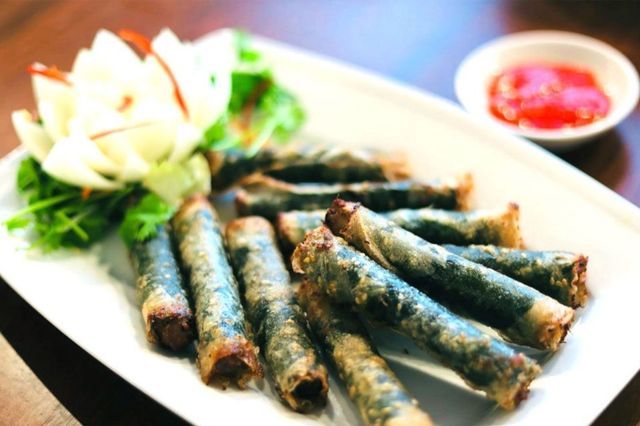
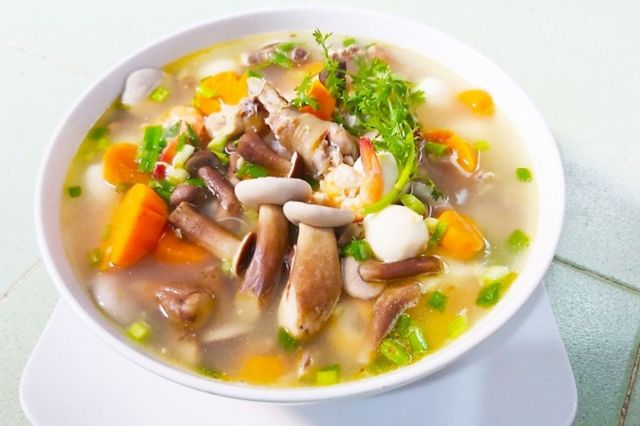
  • Combining locations: Visit his temple in Quang Ninh District or other historical sites in Quang Binh such as Vung Chua - Yen Island (tomb of General Vo Nguyen Giap). Food: Try local delicacies like banh loc and chao canh in Le Thuy.
  • Useful tips: Bring drinking water, sunscreen, and comfortable shoes due to the hilly terrain. If traveling in a group, hire a local guide to hear detailed historical stories. Avoid visiting during the hot midday hours.
Surrounding the mausoleum complex are lush green mountains and forests
Photo: Surrounding the mausoleum complex are lush green mountains and forests 

Bring an open heart when visiting Quang Binh, to listen to the story of the founding hero through the rustling pine breeze, the gentle scent of lotus, and the peaceful breath of nature. Do not forget to stop by the Nguyen Huu Canh temple in Van Ninh Commune, about 25km from the mausoleum, to make your journey back to the roots even more complete and meaningful. This is not only a cultural stop, but also a place connecting travelers with the heroic history of the resilient land of Quang Binh.

The Mausoleum of Le Thanh Hau not only preserves the memory of an expansion hero, but also acts as a sacred bridge between the past and the future. Like a sturdy ancient tree standing firm under the sky, the monument reminds us of gratitude to ancestors, of solidarity, and the aspiration to build the nation. Amid modern life, this place retains its rustic and poetic charm, resonating like an ancient poem in the heart of Quang Binh. Le Thanh Hau Nguyen Huu Canh, who sowed the seeds for the opening of the South, remains an everlasting flame, illuminating the path back to the nation's roots.

Featured destinations