Minh Hoa March Full Moon Festival – Traditional Cultural Identity

Central

Quang Binh

Sovaba.travel

Updated at: 24/09/2026

1. Learning about the Nguon people in Minh Hoa

Amidst the rolling mountain ranges of western Quang Binh, the Nguon people have preserved a unique cultural treasure for generations, contributing to the distinct identity of this land. They are an ethnic community living mainly in the former Minh Hoa district (now belonging to several localities in Quang Binh and Quang Tri following administrative boundary adjustments), with a population of around 35,000–40,000 people.

According to researchers, the Nguon people originated from waves of migration by inhabitants from Thanh Hoa, Nghe An, and Ha Tinh into the Bo Chinh region starting from the reign of King Le Thanh Tong and subsequent periods. Through centuries of integration with local residents, they formed a community with its own distinct identity, featuring the Nguon language, rustic traditional costumes, and a rich treasure trove of folklore such as Sac Bua singing, Ho Thuoc Ca (fish-poisoning chants), and Vi Dum singing... These values continue to be passed down through generations as an indispensable part of the spiritual life of the locals here.
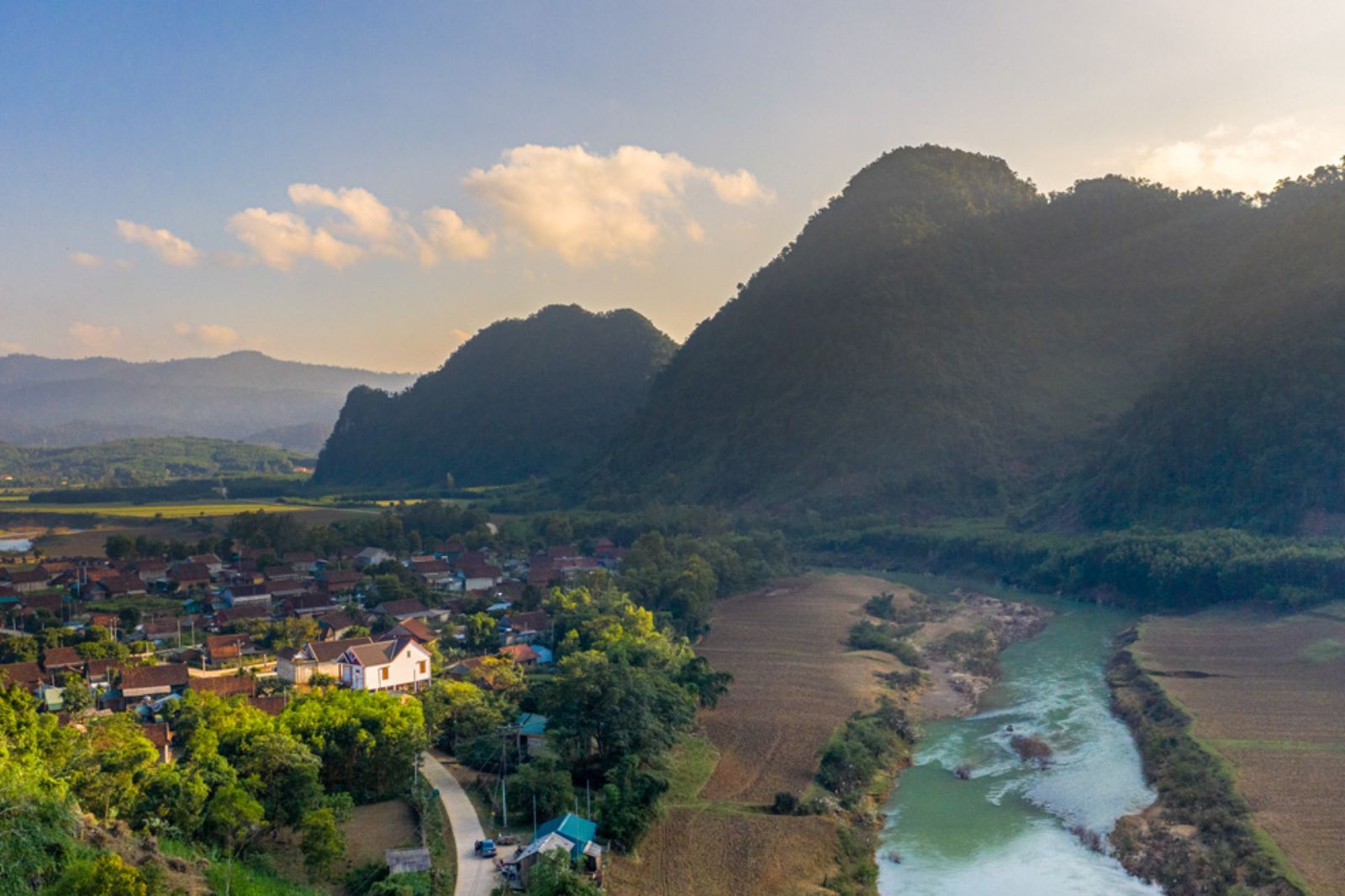
Nguon people in Quang Binh

Photo: Nguon people in Quang Binh

The life of the Nguon people is closely tied to the mountains, forests, slash-and-burn fields, and upstream streams. In labor as well as daily life, they are always known for their simplicity, gentleness, hospitality, and profound patriotism. History still records the solidarity of the Nguon people in responding to the Can Vuong Movement, supporting King Ham Nghi during the years of resistance against French colonialism.

Today, amidst the rhythm of modern life, the March Full Moon Festival remains the largest festival of the Nguon people. It is not only an occasion to meet and gather after days of hard work, but also a bond that unites the community—a place where customs, folk songs, and traditional values are continued. This is also how the Nguon people quietly preserve the soul of their culture, so that the identity of this mountain region is handed down through the ages.
2. Origins and legends of the March Full Moon Festival

The Nguon people in Minh Hoa recount that the March Full Moon Festival originated from an old story about two brothers in Yen Duc village. Legend has it that one day, the two brothers invited each other up Len Ong Ngoi Mountain to search for honey. The forest path was full of thorns and slippery rocky slopes, but their hearts were eager with the hope of finding the "sweet nectar of the forest."  

As the sunlight slanted toward the distant mountains, they unexpectedly discovered a pristine yet mysterious corner of the forest. There stood a statue resembling the Buddha, surrounded by 12 large rocks like guarding soldiers. At the foot of the statue was a babbling clear stream and a precious mandarin tree heavy with fruit, round as a child's fist. Finding it extraordinary, the two brothers agreed to bring the statue back to their village for worship. On the way back, they stopped by the stream to wash the statue, but strangely, the statue suddenly became "as heavy as a mountain" and could no longer be moved.  

When the villagers learned of this, they flocked to see it. They set up a simple altar right by the stream and burned incense in prayer. From then on, that place was named Thac But (or Buddha Waterfall), where the Nguon people believe a sacred deity resides to protect the land, village, and descendants.   The March Full Moon Festival gradually became an occasion for villagers to express gratitude to heaven, earth, ancestors, and deities. The story of Thac But and the two brothers of Yen Duc village is still passed down by the Nguon people as a reminder of the sacredness and the strong bond connecting humans with the forest and their roots.  

Origin of the Minh Hoa March Full Moon Festival
Photo: Origin of the Minh Hoa March Full Moon Festival

3. Special activities during the festival

The festival usually lasts from the 10th to the 15th day of the 3rd lunar month (around late April solar calendar), combined with the Culture - Sports - Tourism Week.

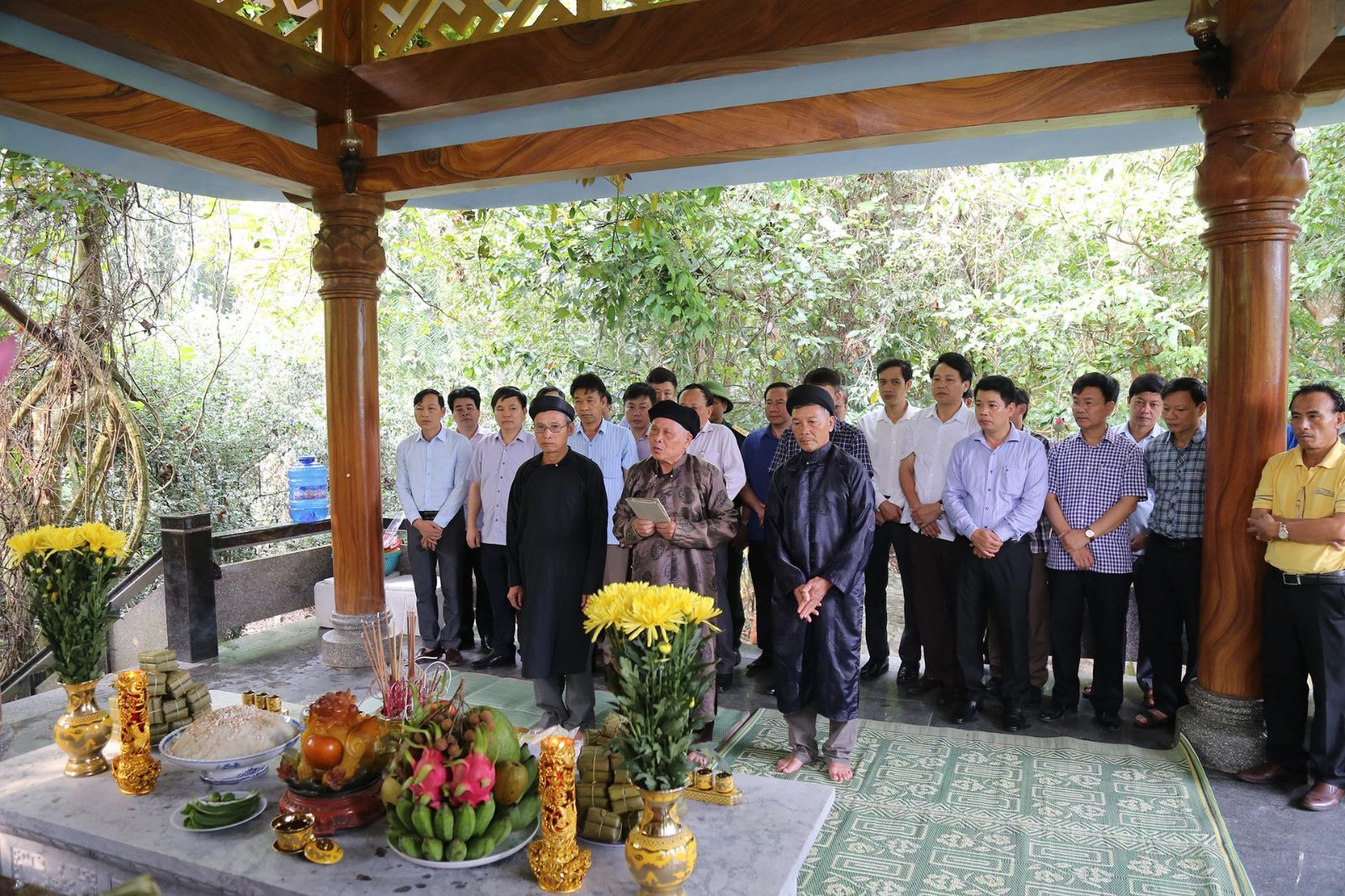
  • The Ritual Part (14th–15th day of the 3rd lunar month): Offering incense at Thac But with solemn rituals: palanquin procession, parasols, monks, and incense altars. Vegetarian offerings include fruits, sweet sticky rice, cakes, incense, and lamps. Villagers pray for favorable weather, bountiful harvests, good health, and peace. Afterward, a procession brings the sacred spirit back to the village temple for ceremonies.

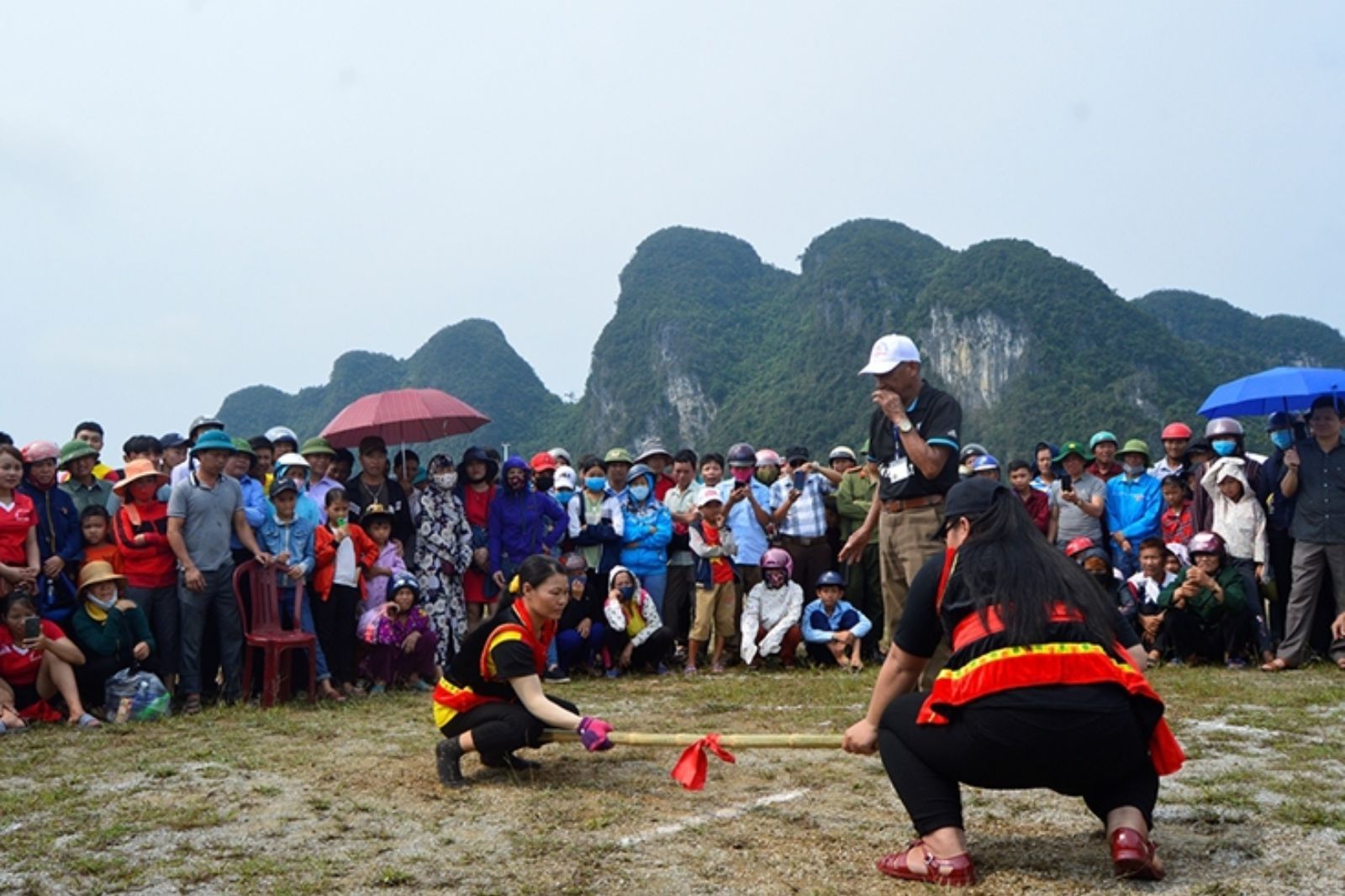
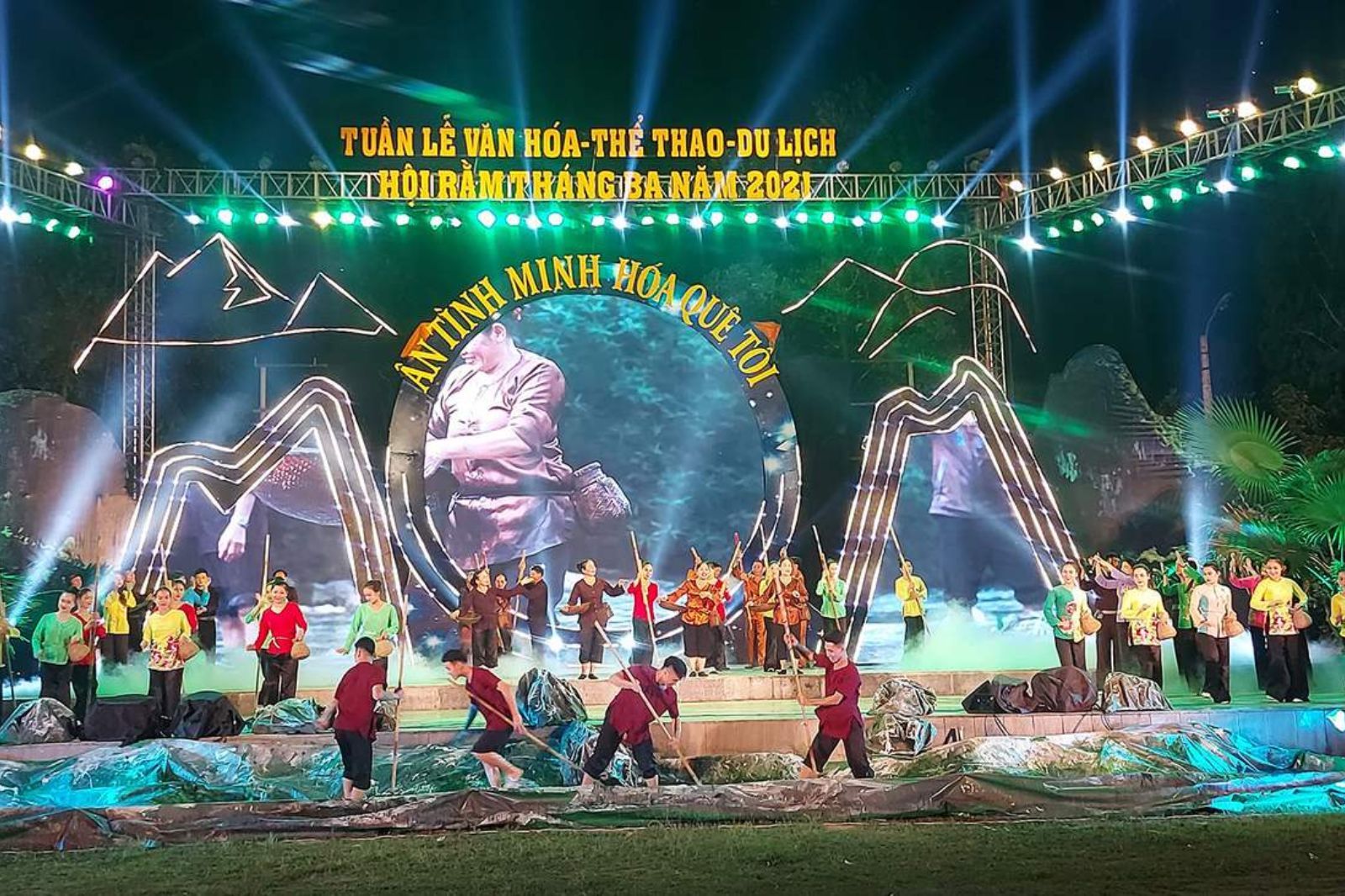
  • The Festive Activities and Folk Games: Sac Bua singing, Nha Tro singing, Ho Thuoc Ca chants, lion dances, and Vi Dum singing. Games include cross-bow shooting, tug-of-war, stick pushing, swinging, stilt walking, ring tossing, card chess, and bamboo pole dancing. Traditional men's and women's volleyball tournaments draw large crowds.

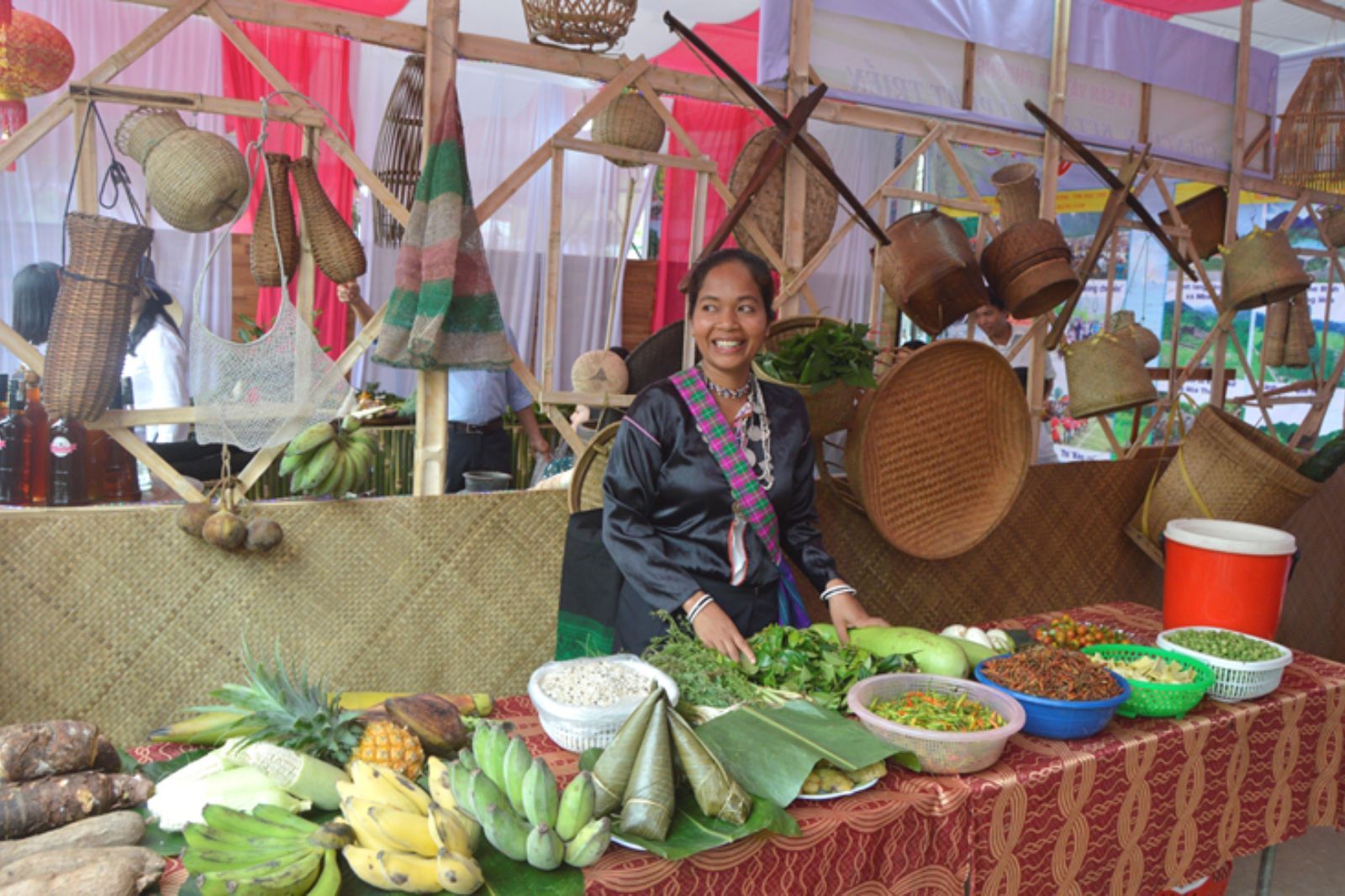
  • The Market Part (Full Moon Fair): A unique love market takes place on the 16th day of the 3rd lunar month in Quy Dat or central locations. People exchange forest products such as honey, bamboo shoots, mushrooms, stream snails, ant eggs, and wild vegetables. It is also a place for young men and women to date, sing love duets under the moon, and seek romantic matches.

Modern art programs such as “Minh Hoa - Echoes of the March Full Moon Festival,” combining real-scene staging, folk music, and contemporary elements, create a major attraction for visitors.

Ritual part of the Minh Hoa March Full Moon Festival

Photo: Ritual part of the Minh Hoa March Full Moon Festival

Local products brought to the festival by residents

Photo: Local products brought to the festival by residents

4. Cultural significance and community role

For the Nguon people in Minh Hoa, the March Full Moon Festival is not just a joyous occasion, but an invisible bond tying generations to their origins. It is not merely a ceremony to worship heaven, earth, and ancestors, but also a festival of neighborly affection, spiritual faith, and a deep connection to their native mountains and forests. Locals often joke with each other: "Better to lie sick at home than miss the March Full Moon Festival." It sounds lighthearted, but it is truly heartfelt. Whether near or far, whenever festival day arrives, everyone tries to return and participate to make the gathering larger and warmer.  

Exploring the unique features of the festival

Photo: The festive section with folk games

The March Full Moon Festival is also a time when oral stories like the Thac But legend are retold, both to preserve them and to teach the younger generation. The elders tell of the two brothers from Yen Duc village who found the Buddha statue by the clear stream, while the children gather around with wide, attentive eyes, listening as if the story had just happened yesterday.  

In every ritual, every lively gong stroke, and drum beat, there lies a deep reverence for ancestors, the mountains, and the roots of the Nguon people. The festival is an opportunity for adults to remember their roots and for children to better understand their ancestral land—a connecting thread not only between humans and nature, but also between people and people. In that place, there are no boundaries between rich and poor, no distance between far and near, only warm, harmonious human kindness.  

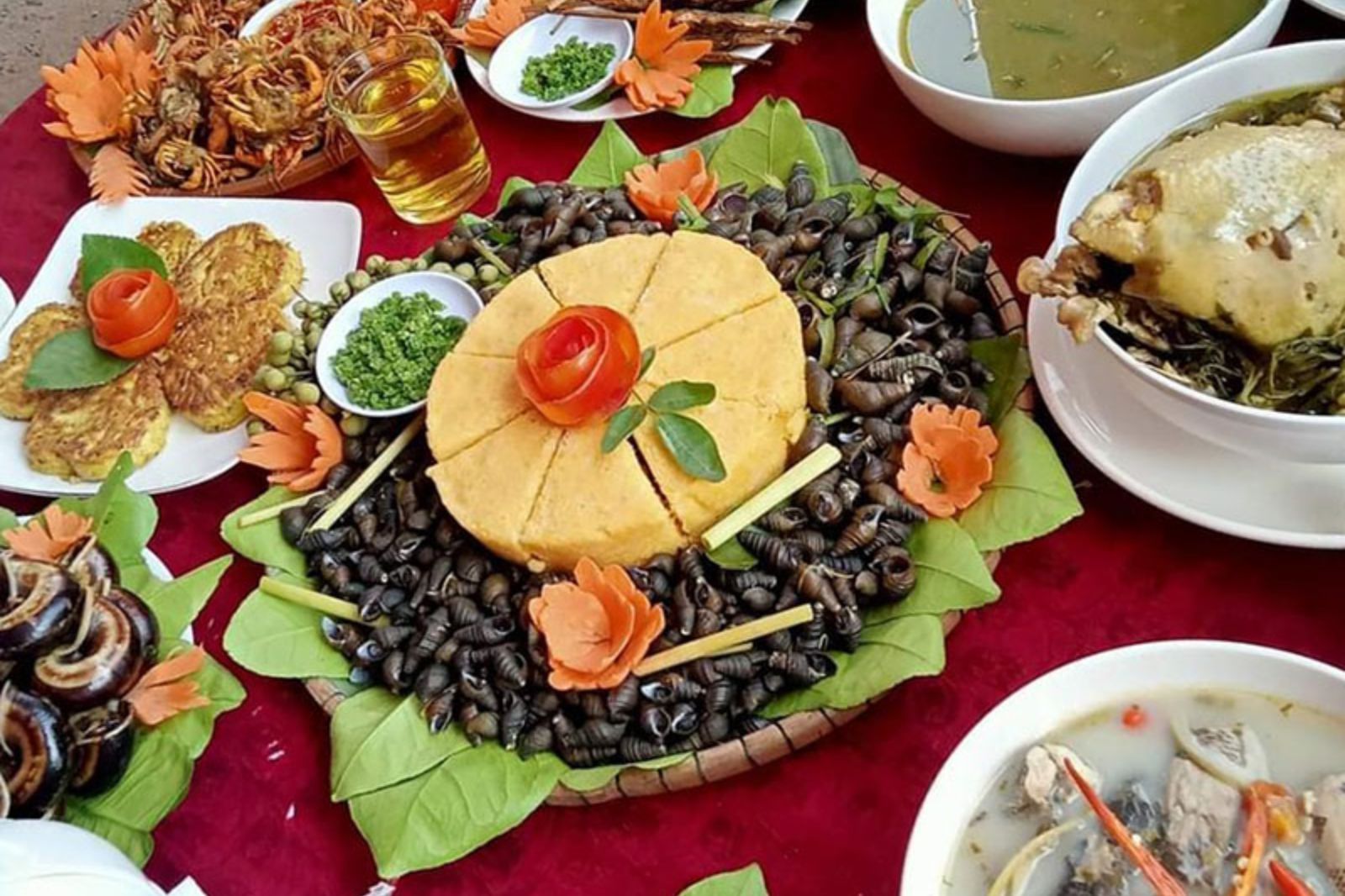
Rustic dishes of the local people

Photo: Rustic dishes of the local people

The March Full Moon Festival is usually held on the exact 15th day of the 3rd lunar month every year. If you wish to join and experience the authentic traditional atmosphere of this festival, you can visit local residents in Minh Hoa to ask for more information. The people here are very hospitable and ready to share stories and give dedicated directions. In addition, you can contact travel companies in Quang Binh such as Sovaba Travel for support and a more complete itinerary.  

Loading......

Featured destinations