Non Nuoc Stone Carving Village – The Essence of Vietnamese Stone Sculpting

Central

Da Nang

Sovaba.travel

Updated at: 24/09/2026

1. History and the founders of the craft

Non Nuoc stone carving craft village has a history of nearly 400 years, dating back to the late 17th - early 18th century. The pioneer who founded and passed down this craft was the artisan Huynh Ba Quat, a native of Thanh Hoa who migrated to the Non Nuoc region.
Non Nuoc craft village has a history of nearly 400 years
Photo: Non Nuoc craft village has a history of nearly 400 years
  • Origins: Mr. Huynh Ba Quat was the first to discover the potential of marble in the Marble Mountains area. Taking advantage of the abundant raw materials with high durability and beautiful colors, he began crafting stone products and passed on the techniques to his descendants and villagers, gradually shaping the craft village.
  • Glorious Development: By the early 19th century, during the Nguyen Dynasty, the high demand for constructing mausoleums and palaces created favorable conditions for the craft village to thrive. Many talented artisans were favored by the royal court, awarded the Ninth-Rank title, and invited to participate in building major works across the country.
  • National Heritage: Through many ups and downs, the craft village has continuously expanded and innovated. In 2014, Non Nuoc stone carving was recognized by the Ministry of Culture, Sports and Tourism as a National Intangible Cultural Heritage, affirming its unique historical, artistic, and cultural value.

From the first products crafted by the Thanh Hoa artisan Huynh Ba Quat, through the favored period under the Nguyen Dynasty, Non Nuoc stone village has written a glorious chapter in the history of Vietnamese handicrafts. The landmark of National Intangible Cultural Heritage status in 2014 officially recognized a journey of nearly 400 years of preservation and creativity, turning Non Nuoc craft village into a vivid testament to the country's unique historical and artistic values.
2. The art of exquisite carving

The essence of Non Nuoc craft village lies in the skillful, masterful hands and dedication of its artisans, who breathe life into raw marble blocks to create artworks of high aesthetic and spiritual value.

Materials and Crafting Process

Initially, the main raw material was marble extracted directly from the Marble Mountains, featuring various beautiful colors and patterns (red, black, white). However, since 1990, stone quarrying at the Marble Mountains has been banned to protect the landscape, and materials have since been imported from other regions.

The crafting process goes through many meticulous steps:

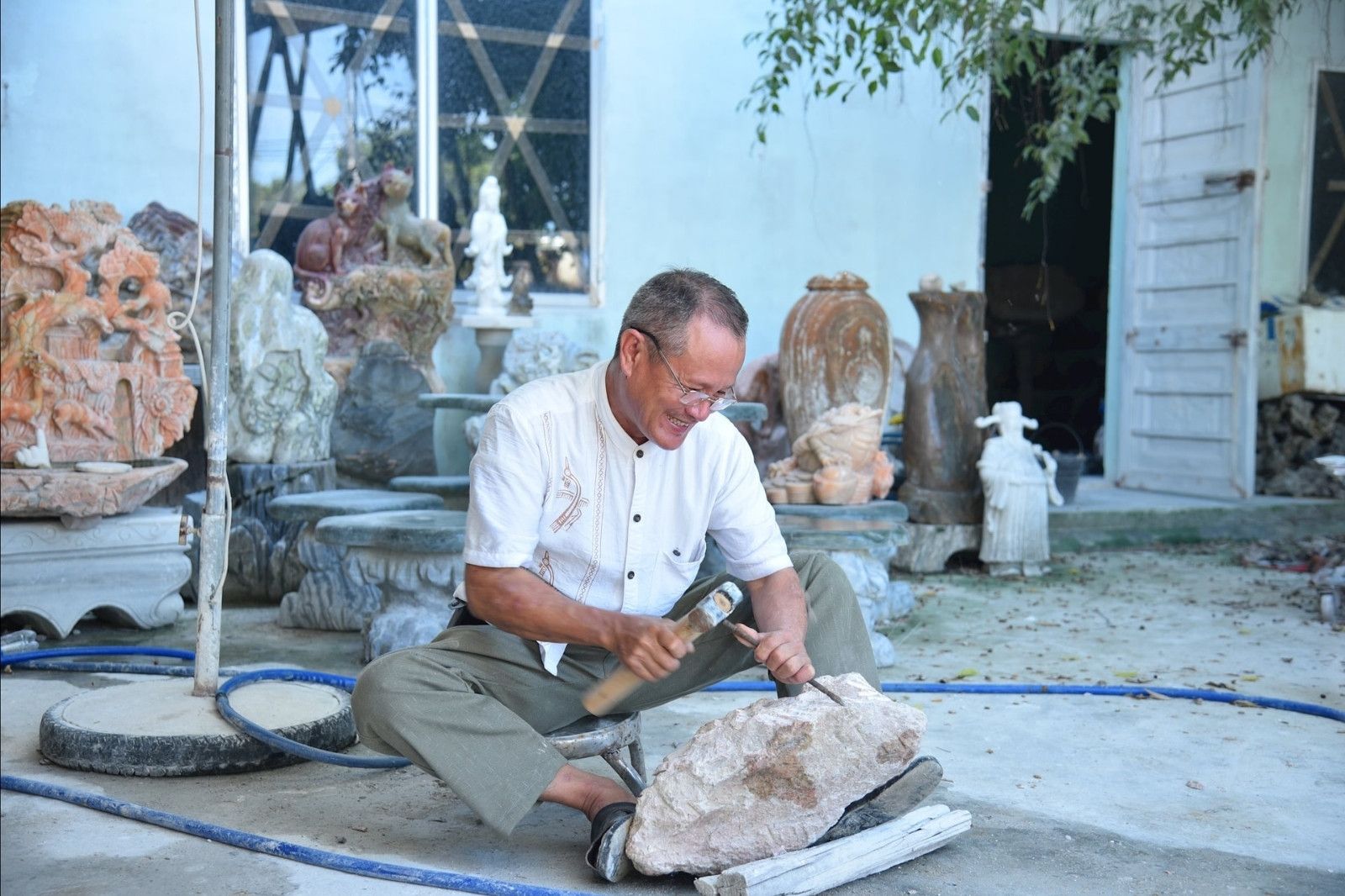
  • Rough Shaping (The stage of "Ong Van"): Shaping the product in rough form, from finding a flat surface, establishing reference points, drafting on paper and transferring onto stone, to rough chiseling.
  • Detail Finishing: This is the stage requiring the highest level of skill, where the craftsman carves contours, decorates patterns, and demonstrates dexterity and sophistication.
  • Grinding and Polishing: Finally, the polishing stage gives the product a beautiful and durable appearance.
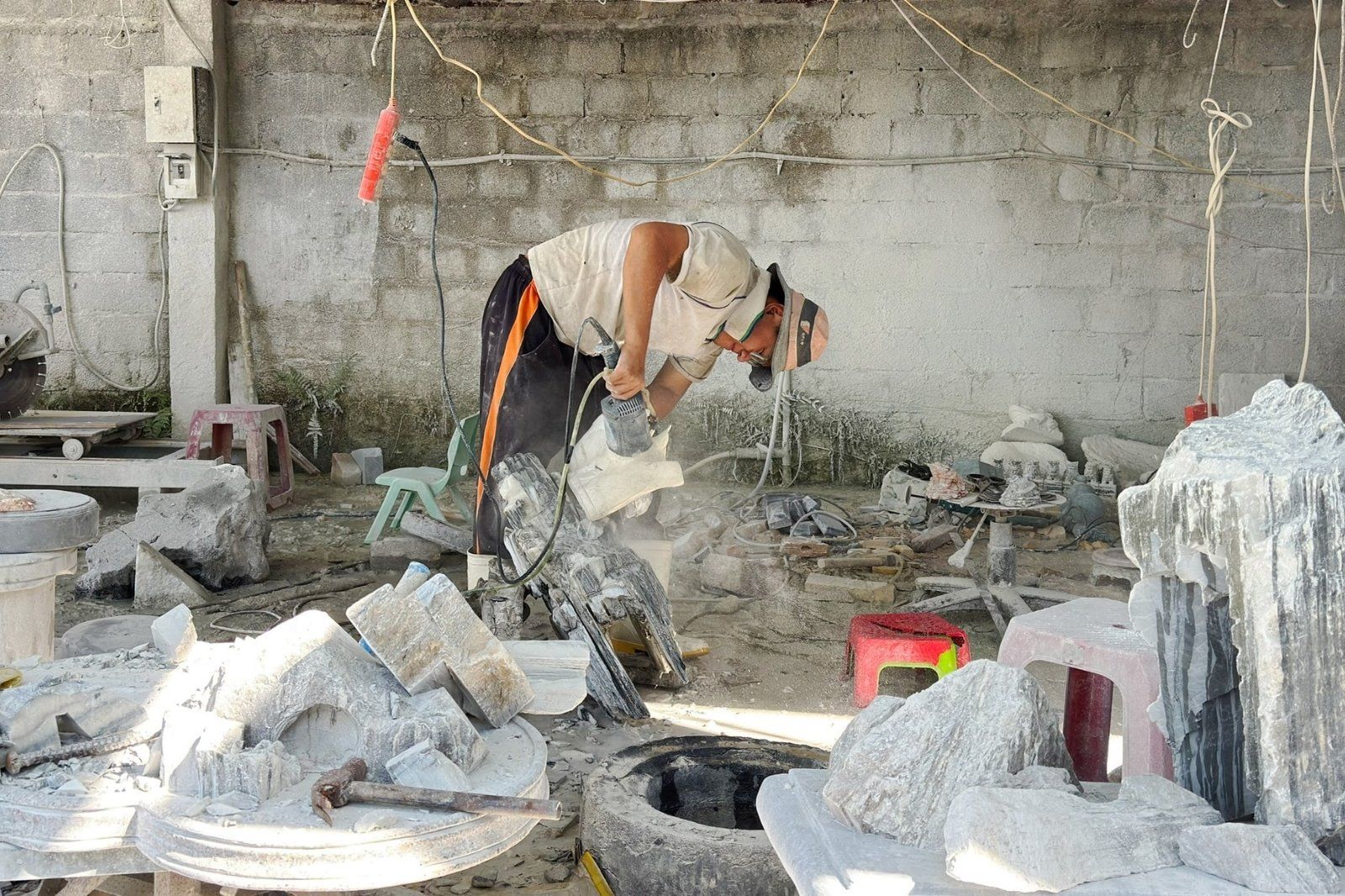
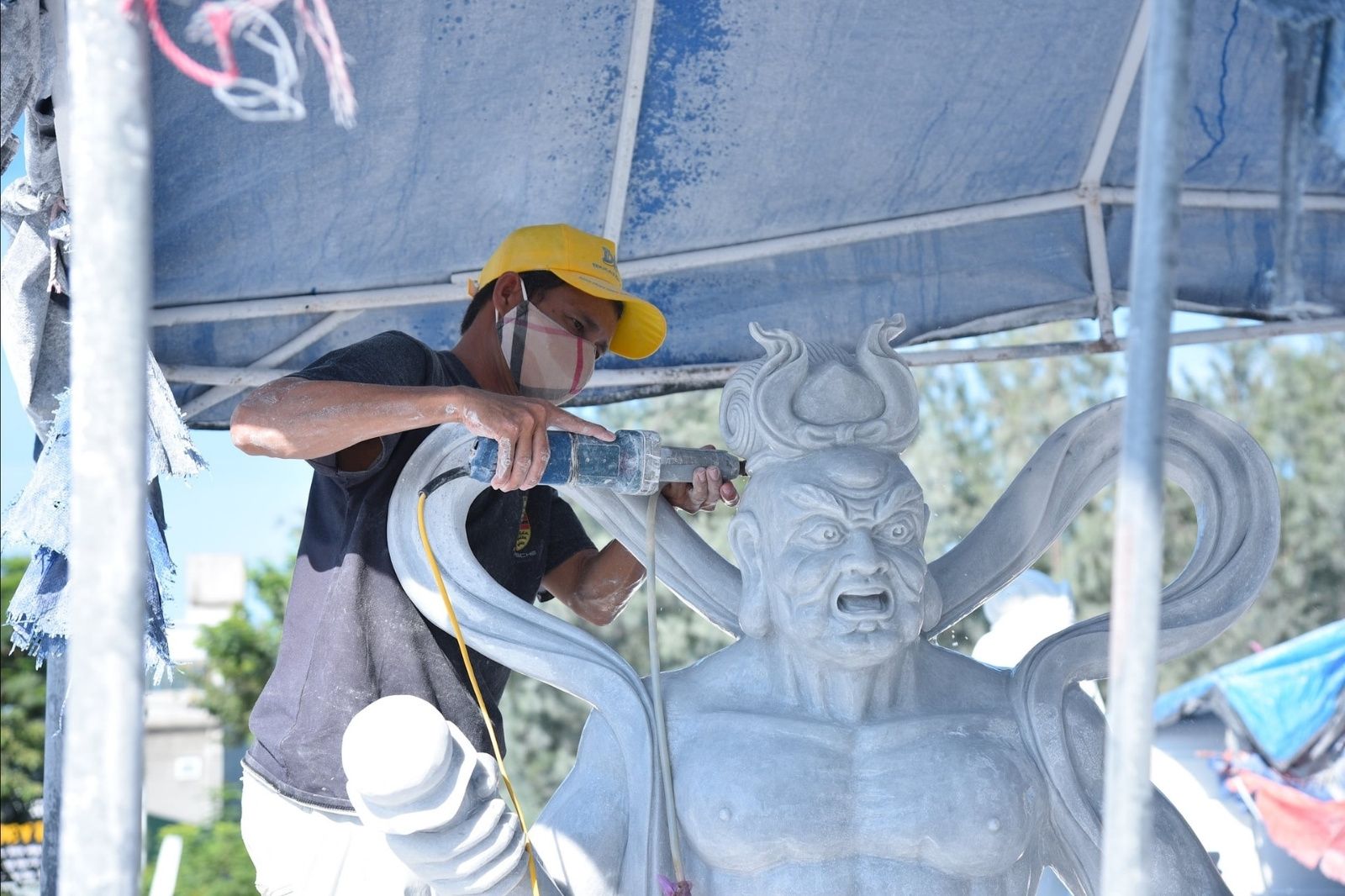
  • Use of Tools: Nowadays, artisans combine traditional hand tools (hammers, chisels, pointed chisels, gouges, etc.) with modern mechanical machinery (cutting machines, lathes, hand drills, etc.) to enhance productivity and quality.
Artisans breathing life into every block of stone
Photo: Artisans breathing life into every block of stone

Signature Products

Non Nuoc fine arts stone products are diverse in types and sizes, serving a wide variety of needs:

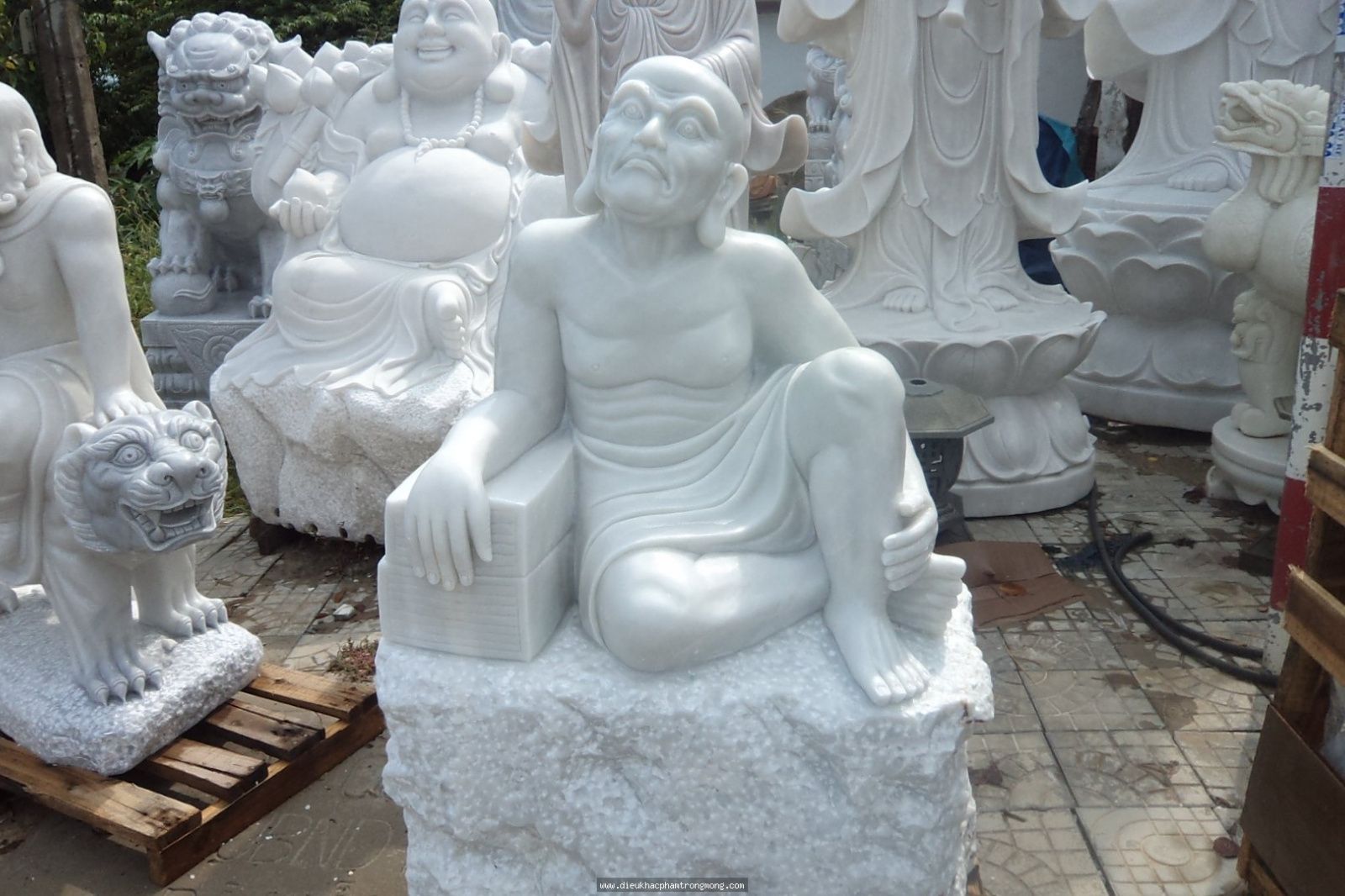
  • Buddhist Statues and Spiritual Items: Most famous are the statues of Maitreya Buddha, Shakyamuni Buddha, and Avalokiteshvara Bodhisattva crafted from marble, possessing a benevolent, serene beauty and profound spiritual value.
  • Feng Shui Products: Including mythical creature statues such as dragons, phoenixes, qilins, lions, turtles, and other Feng Shui items, symbolizing luck, peace, and wealth attraction.
  • Interior and Decorative Products: Items such as stone tables, chairs, shelves, decorative lamps, planters, etc., bringing luxurious, refined, and durable beauty to living spaces.
  • Artworks and Souvenirs: Ranging from bas-reliefs, statues of famous figures, natural landscapes to small souvenirs like bracelets, rings, keychains, etc.

From precious marble materials and through an elaborate crafting process harmoniously combining traditional techniques with modern tools, inanimate stone blocks are "infused with soul" to become unique works, ranging from spiritual Buddha statues and Feng Shui mascots to furniture and souvenirs. It is the sophistication, diversity, and profound artistic value in each product that affirm the irreplaceable status and sculpting essence of Non Nuoc stone carving craft village.

3. Cultural intersection of Champa and ancient Vietnam

A special highlight that creates the uniqueness of Non Nuoc stone carving craft village is the harmonious fusion of Champa and ancient Vietnamese cultures in its artworks.

  • Champa Imprint: Many works are deeply influenced by Champa sculpture art, featuring patterns and symbols commonly found at My Son Sanctuary such as Linga - Yoni statues, the mythical bird Garuda, the sacred bull Nandin, and graceful, supple Apsara dancers.
  • Ancient Vietnamese Touch: Ancient Vietnamese culture is clearly depicted through images of dragons, phoenixes, and turtles on tombstones, pagodas, and mausoleums, expressing Vietnamese beliefs and reverence for ancestors and deities.

This combination bestows Non Nuoc stone products with a beauty that is both mysterious and ancient of Champa, as well as deeply spiritual and traditional of Vietnam.

Works depicting the cultural fusion of Champa and Ancient Vietnam
Photo: Works depicting the cultural fusion of Champa and Ancient Vietnam

4. Craft village preservation and tourism development

Non Nuoc stone village not only plays a role in preserving and promoting traditional crafts but is also an attractive tourist destination in Da Nang:

  • Location: Located in Ngu Hanh Son Ward, about 8 km southeast of the city center, right at the foot of the Marble Mountains.
  • Experience: Visitors can witness firsthand the elaborate crafting process of the artisans and learn about the history and techniques of stone carving.
  • Economy: With over 500 production units providing employment for thousands of workers, the village's products not only serve domestic demands but are also exported to major markets such as the US, Japan, and Europe, generating hundreds of billions of VND annually and boosting the local economy.

With its prime location at the foot of the Marble Mountains, Non Nuoc stone village has transcended the role of a mere craft village to become a vibrant economic and tourism center. It not only offers visitors a rare opportunity to explore the vivid art of stone carving but also serves as clear evidence of sustainable development, where traditional cultural values go hand in hand with stable income and international market reach, consolidating its position as a must-visit destination in Da Nang.

Artisans tirelessly carving to preserve the cultural heritage of the craft village
Photo: Artisans tirelessly carving to preserve the cultural heritage of the craft village

Non Nuoc stone carving craft village is not just a location on the Da Nang tourist map, but a place that fully preserves the soul of a traditional craft that has existed for nearly four centuries. From the footsteps of its founder Huynh Ba Quat, through the talented hands of generations of artisans, blocks of marble have been gifted a soul, becoming a bridge connecting ancient Vietnamese beliefs with Champa fine arts. Recognized as a National Intangible Cultural Heritage, Non Nuoc craft village today represents a perfect blend of heritage preservation and sustainable economic development—a resounding testament to the creative, persistent labor spirit of the Vietnamese people, truly worthy of being the Essence of Vietnamese Stone Sculpting enduring through time alongside the iconic Marble Mountains.

Loading......

Featured destinations