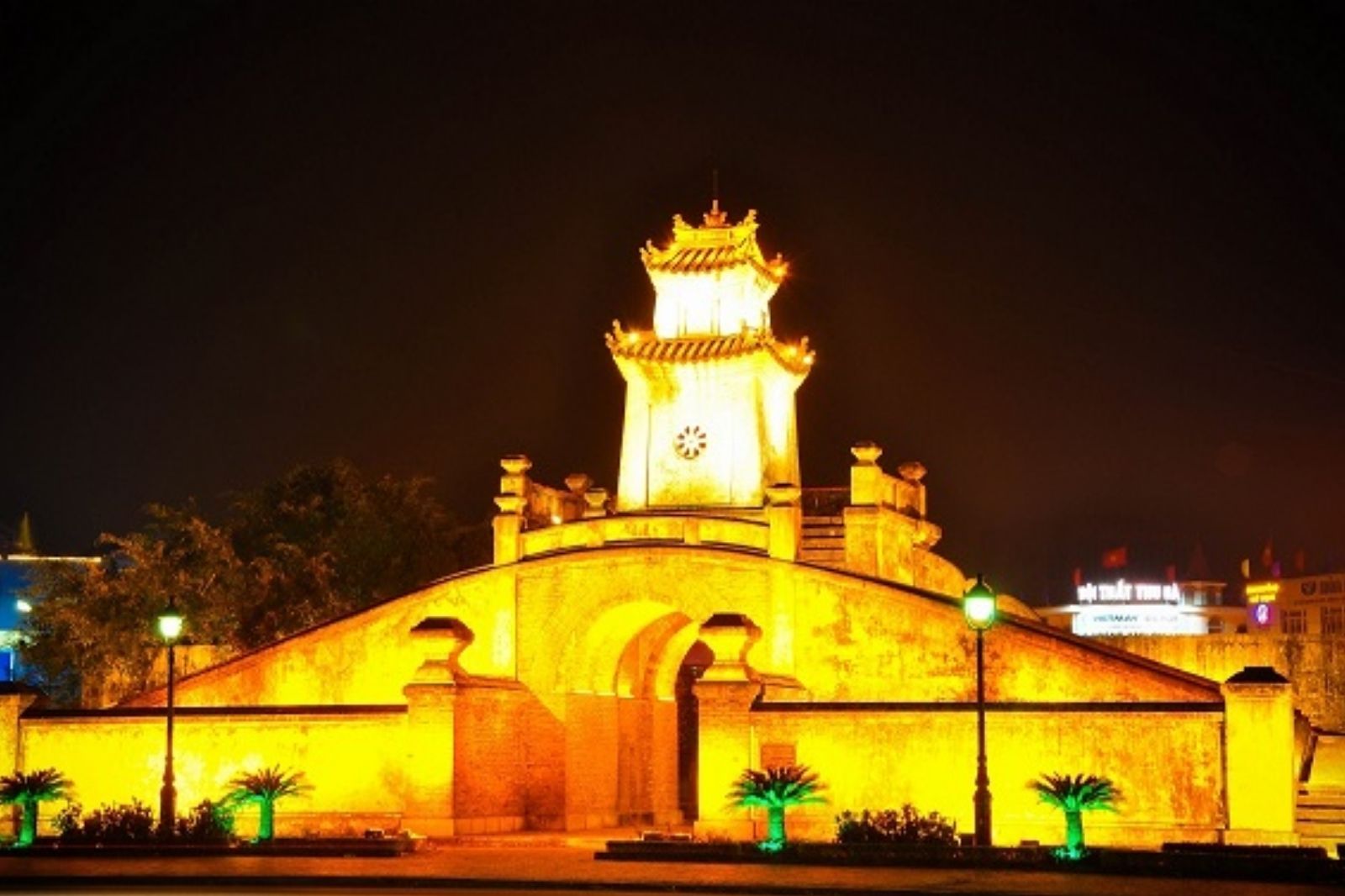
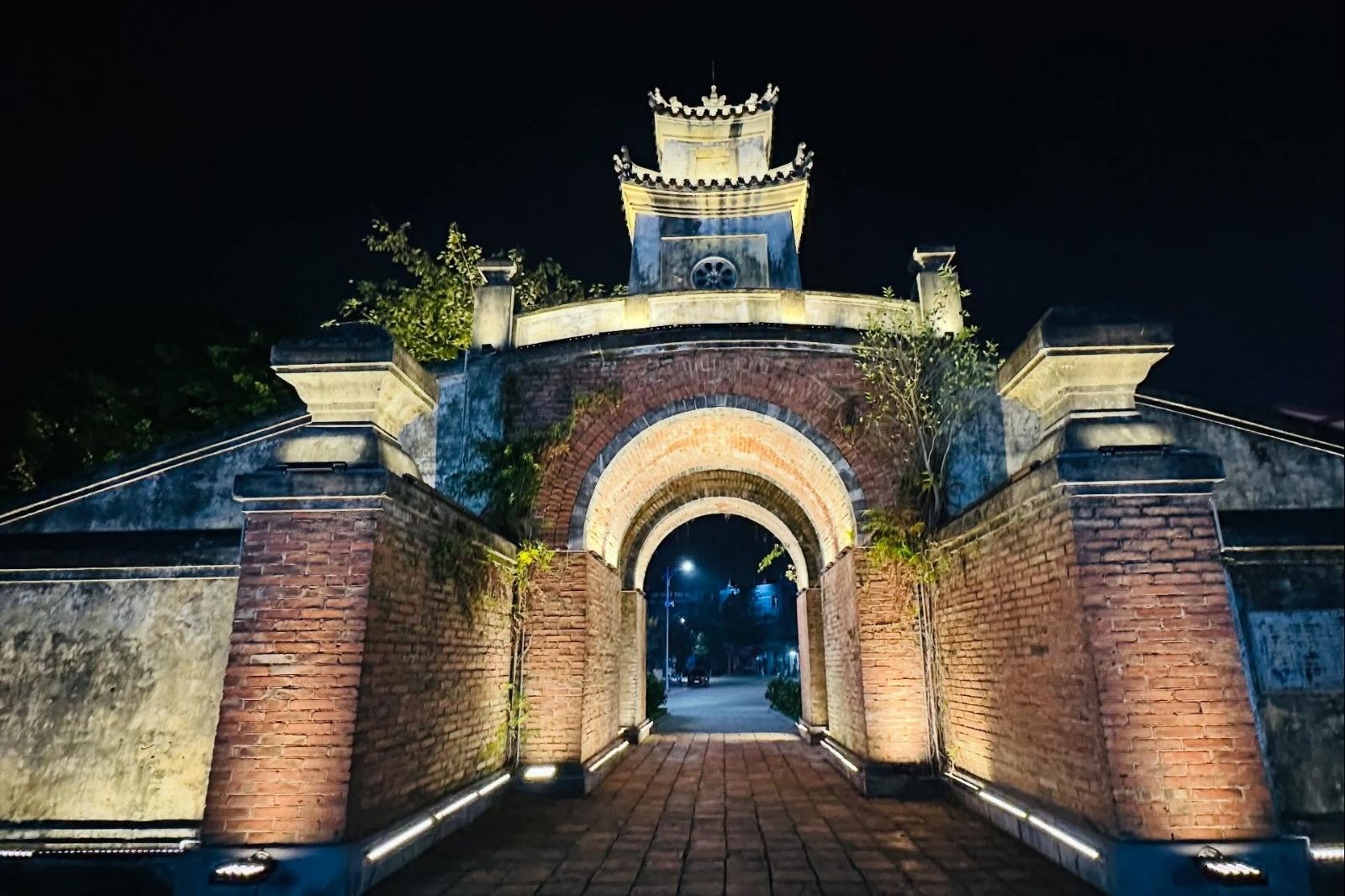
Not only bearing the appearance of a defense structure, Quang Binh Quan also demonstrates a clever combination of military thinking and architectural art of the ancients. Each layer of ramparts, citadel gates, and moats was arranged in a continuous system, creating both a solid defense line and a majestic appearance for the gate in the land of Dong Hoi.
Initially, the structure was built with earthen ramparts. Later, the defense system was reinforced with sturdy fired bricks, combined with a watchtower above the gate. The entire structure consisted of the main gate, outer rampart, moat, and arched brick bridge, forming multiple consecutive protective layers. Nguyen Dynasty records show that the scale of the gate and outer defense was quite large, reflecting the importance of the structure in the defense system of that era.
Most notably is its strategic geographical location. Quang Binh Quan was located at the Dong Hai river mouth area, linked with the Nhat Le – Le Ky river system and connected to the Dau Mau – Nhat Le rampart sections. The terrain surrounded by mountains, rivers, and natural streams once created a treacherous defense line, making advancing from the North more difficult. It was precisely the utilization of terrain combined with multi-layered defense architecture that created the special value of Quang Binh Quan. This is a place where military functionality is inseparable from aesthetic elements: a grand gate, prominent watchtower, and brick-and-stone structure create a work that is both fortified and visually inspiring.
After many times of damage and restoration, Quang Binh Quan today still retains its ancient and majestic appearance in the heart of the modern city. Standing before the structure, visitors not only encounter an ancient architectural trace, but can also picture part of the stature of a gate that once held an important position in the land of Quang Binh.
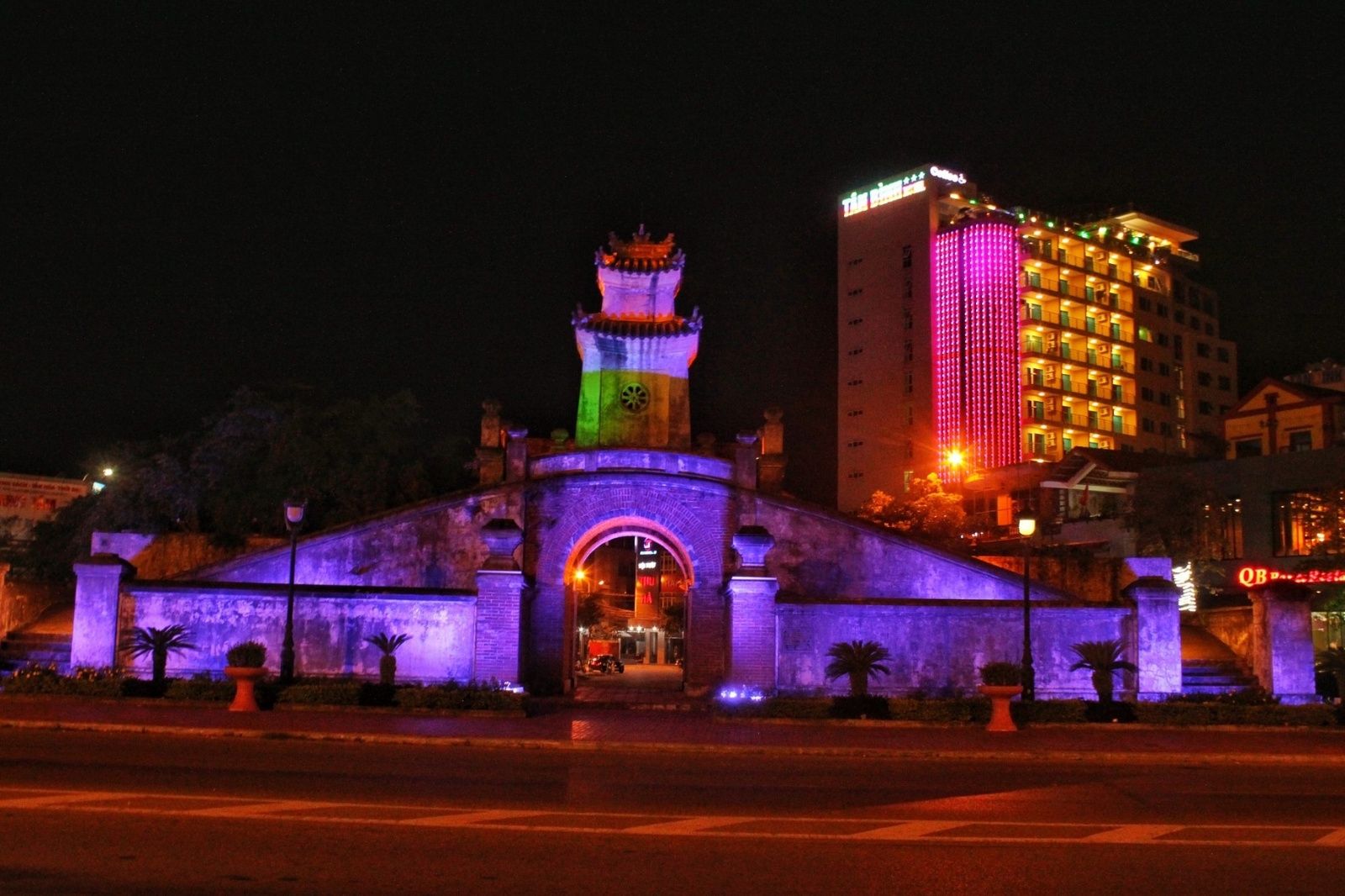
Photo: Mysterious Quang Binh Quan under Quang Binh's night scenery