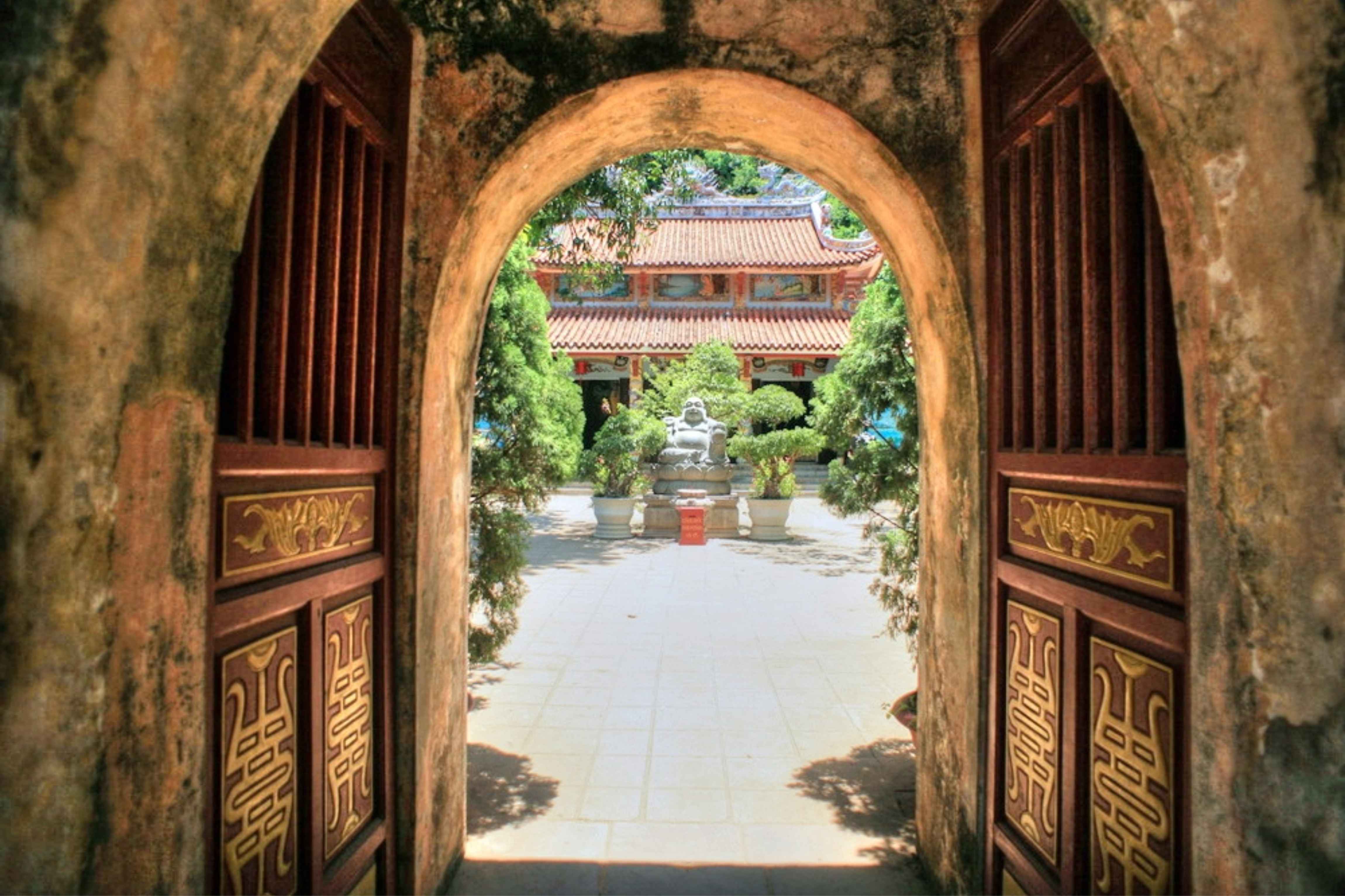
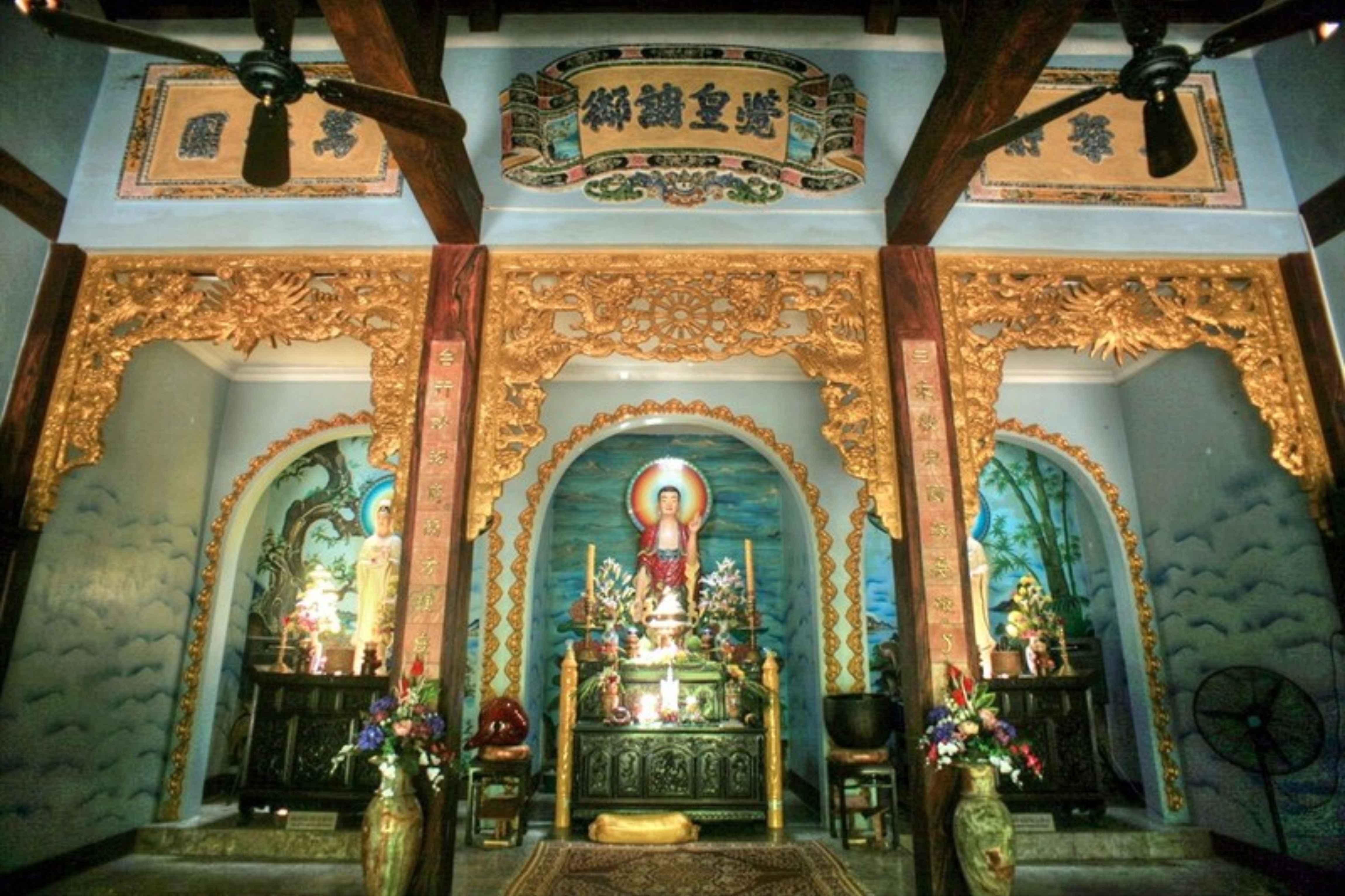
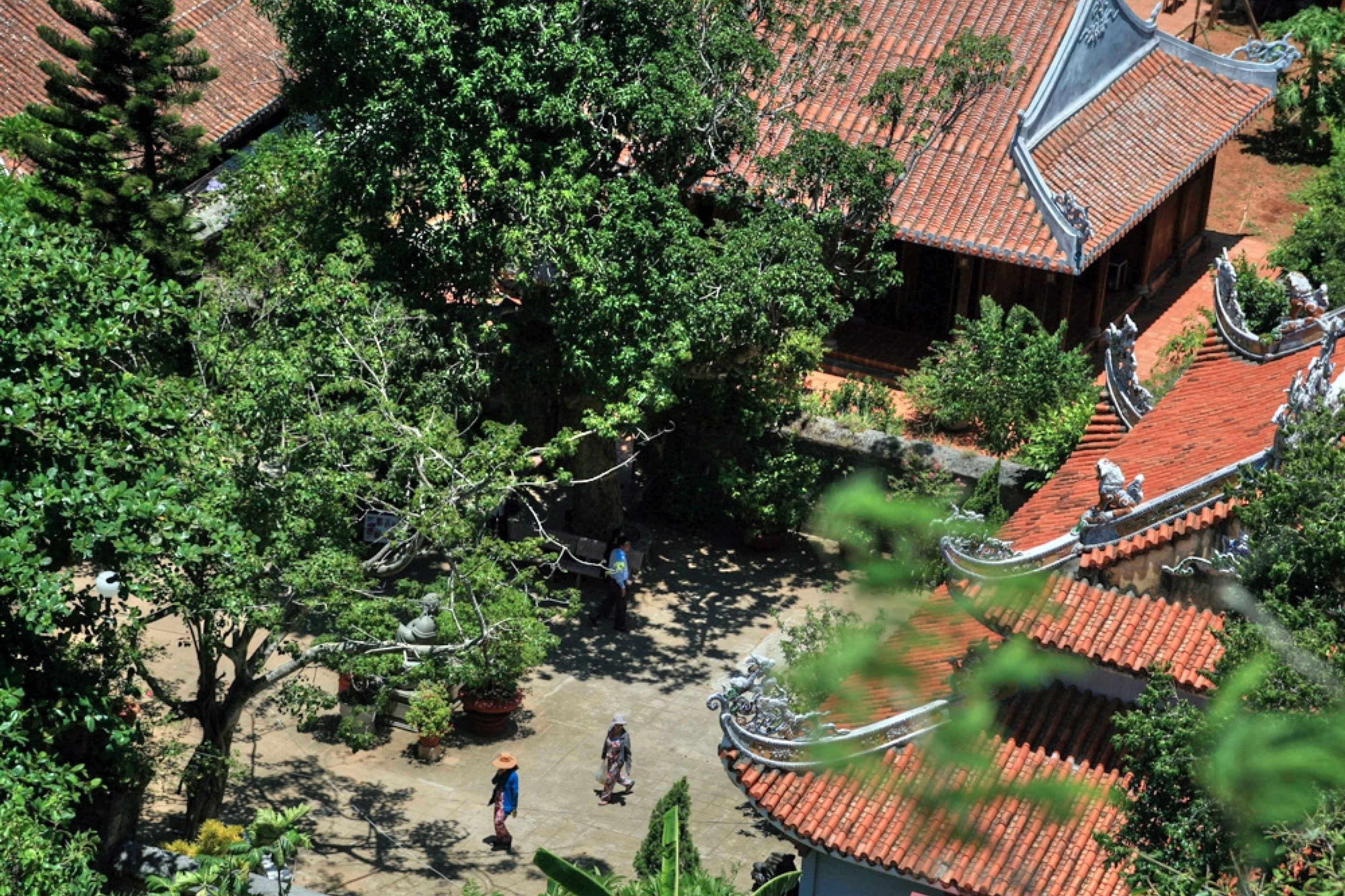
According to historical documents and remaining inscriptions, Tam Thai Pagoda was founded around 1630 during the Later Le dynasty, when the Dang Trong region was gradually becoming a bustling commercial and cultural hub. From a mountain temple, Tam Thai progressively became a center for practice and Dharma propagation by many generations of monks, including Zen master Hung Lien – a notable figure in the history of Dang Trong Buddhism in the late 17th century.
Zen master Hung Lien is credited with playing a crucial role in spreading the Cao Dong Zen sect in Dang Trong and establishing a practice community at Tam Thai. Since then, the temple has not only served as a place of Buddha worship but has also held a significant position in contemporary Buddhist life. The name Tam Thai originates from the terrain of the mountain itself. Three small hills on the peak of Thuy Son connect sequentially to form three topographic tiers, reminiscent of the Tam Thai constellation in ancient astronomical concepts.
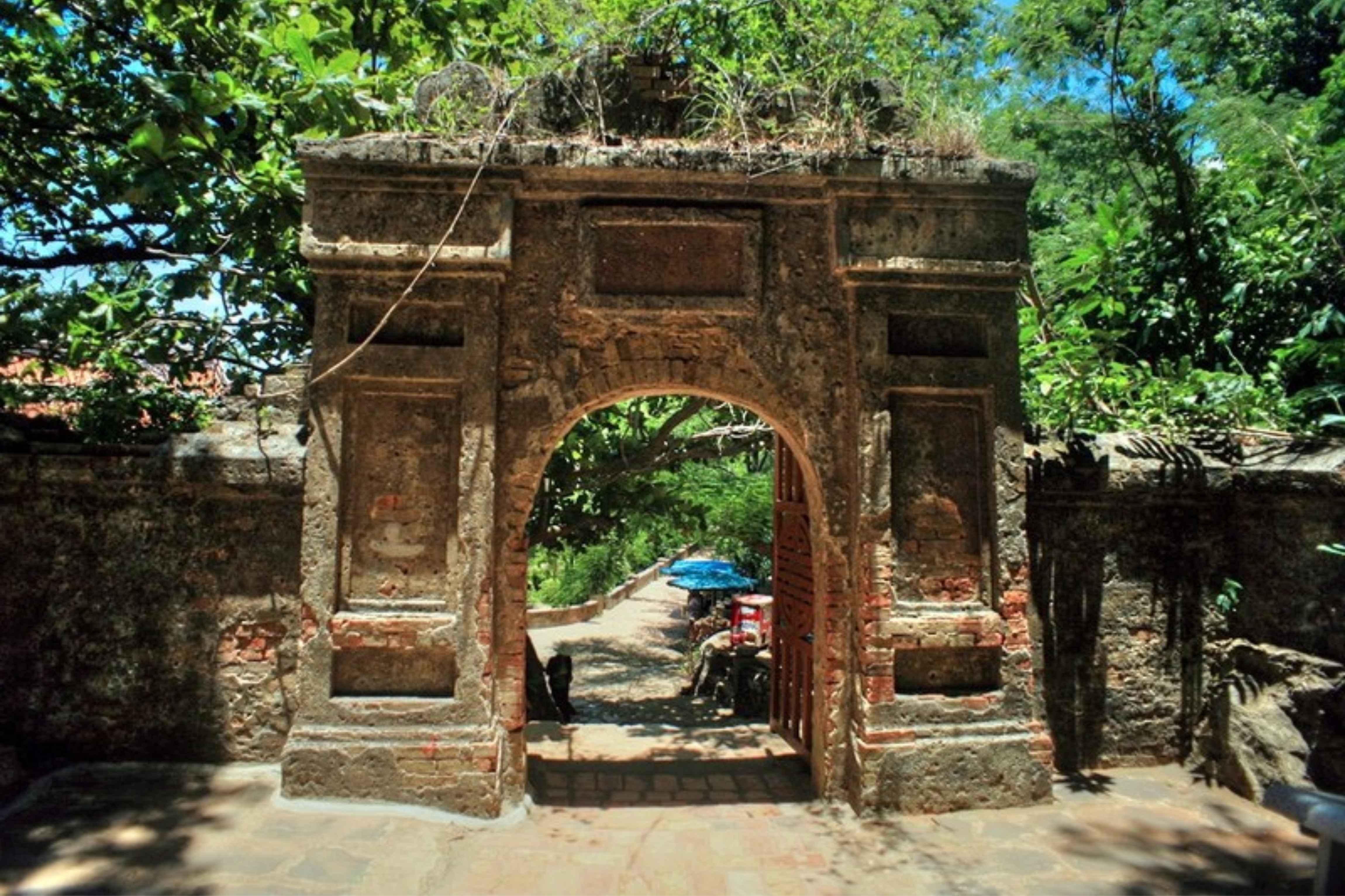
The history of the temple has also undergone many upheavals. During the Tay Son period, Tam Thai was heavily damaged by war. In 1825, under the reign of Emperor Minh Mang, the temple was rebuilt on a large scale. The emperor bestowed the royal decree title of National Pagoda (Quoc Tu), along with a plaque reading “Imperial Commissioned Tam Thai Pagoda” ("Ngu che Tam Thai Tu") and a heart-shaped fire-gold medallion inscribed with the royal handwriting. These relics are still preserved at the temple to this day.
Subsequently, Tam Thai Pagoda continued to suffer damage and underwent multiple restorations. A major storm in 1901 nearly destroyed the structure; by 1907, the temple was restored thanks to the contributions of monks, nuns, and Buddhists. Restoration phases in 1964, 1968, 1995–1996, and later years helped preserve the structure to the present day, while retaining some of the ancient appearance of a temple that has stood on Thuy Son for centuries.