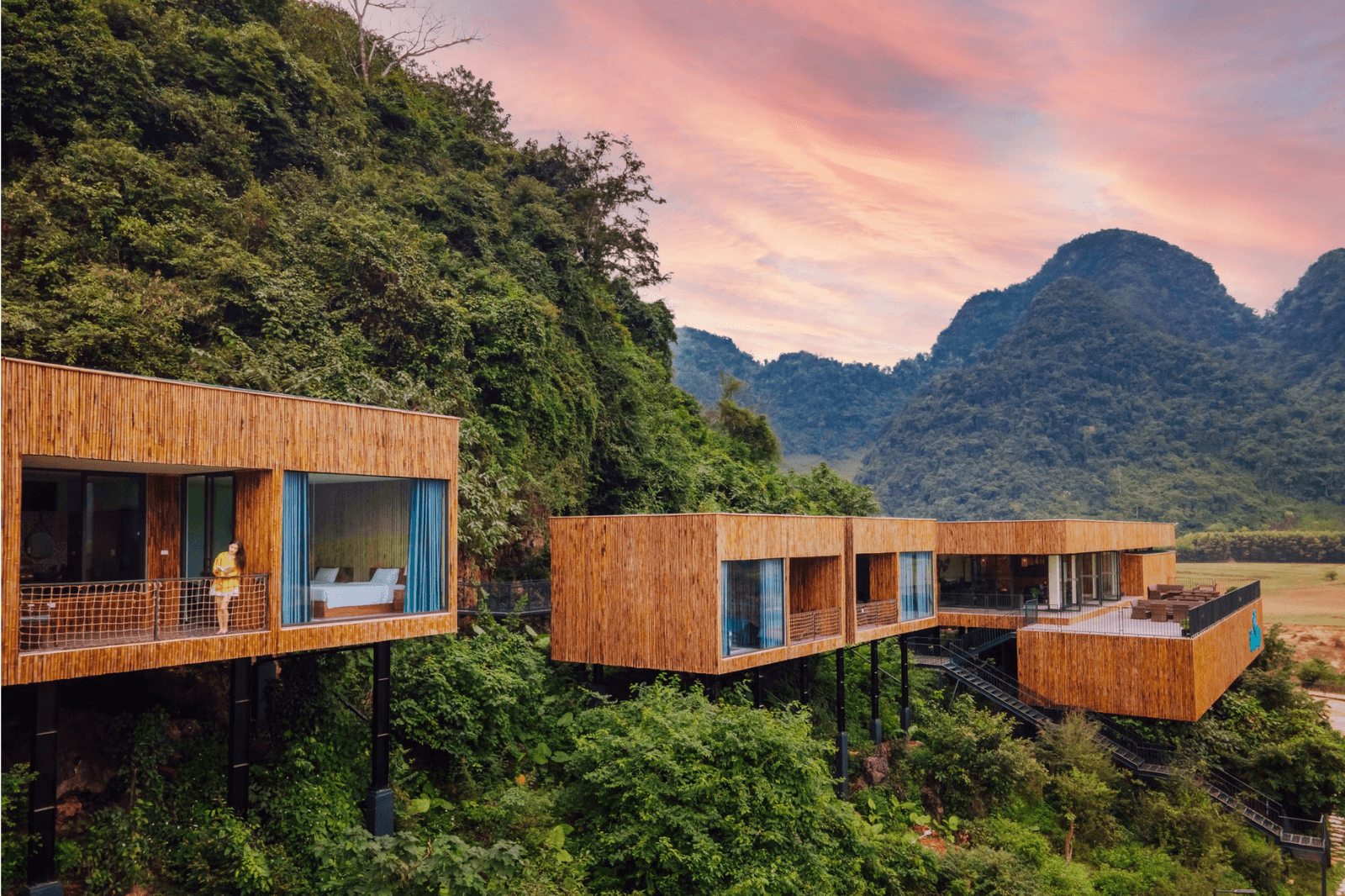
Tan Hoa, a peaceful valley in Minh Hoa District, Quang Binh Province, lies nestled amidst towering limestone mountain ranges covering over 7,400 hectares. It is home to nearly 3,364 people (according to 2022 statistics), mostly the Nguon people – a branch of the Viet ethnic group with a long-standing indigenous culture. Every year, the region experiences two to three major floods. However, instead of panicking, the people of Tan Hoa calmly embrace it, as flooding has become a way of life, a natural cycle they have learned to live with and adapt to.
When the floodwaters rise, Tan Hoa transforms into an inland "Ha Long Bay" as limestone peaks emerge from a vast expanse of water, creating a natural landscape that is both pristine and magical. From upstream, the fast-flowing Rao Nan River brings clear emerald waters, submerging fields, villages, and roads, turning the once-dry valley into a vast waterland.
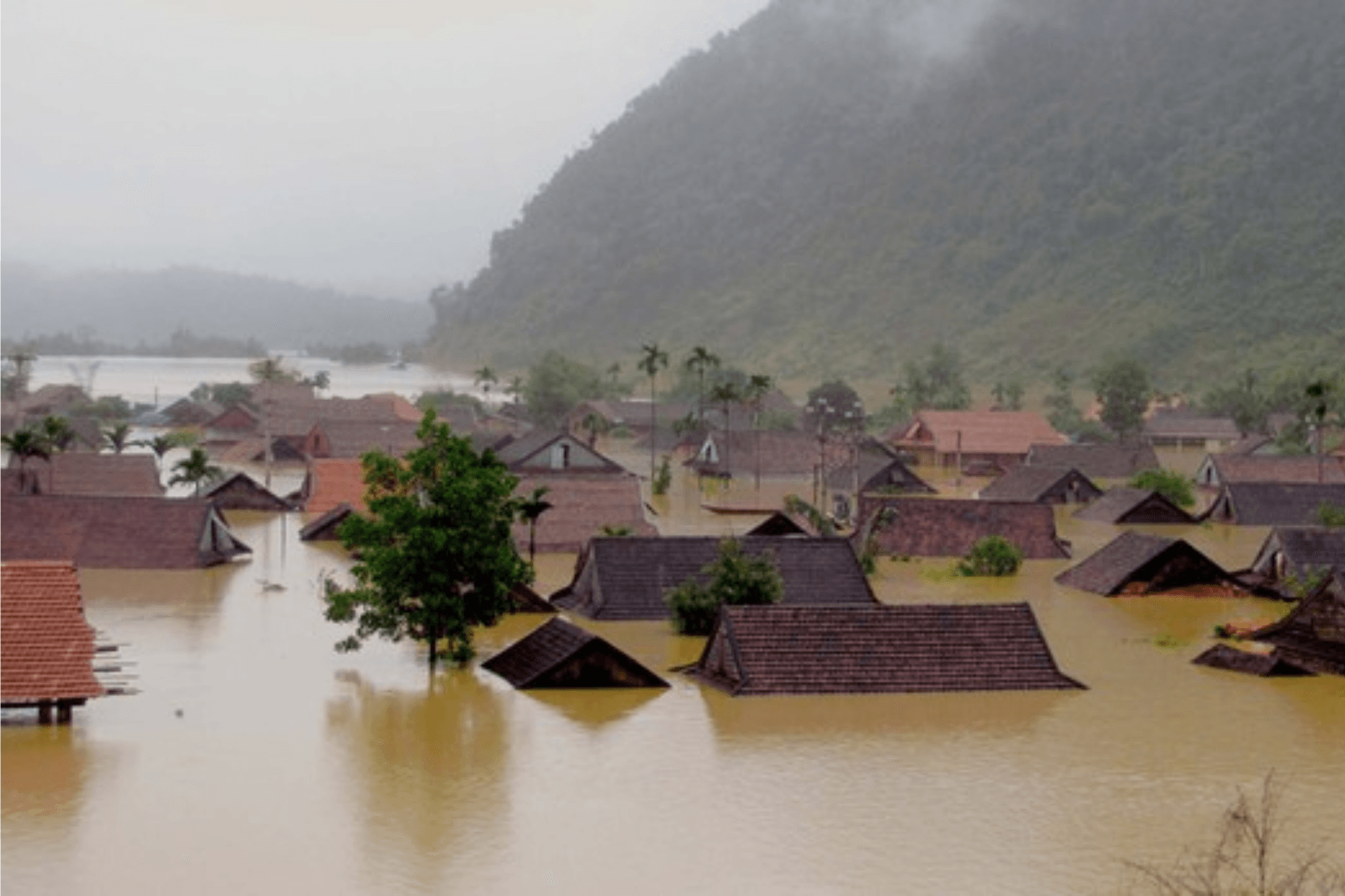
This river is not only the lifeline nourishing crops, but it has also been closely tied to the lives of local residents for generations. In the past, during every flood season, people had to retreat together along the mountainsides to seek temporary shelter while waiting for the water to recede. Before the invention of weather-adapted floating houses, the Nguon people built houses with buried posts, traditional frame houses, and flexible structural beams to cope with rising water levels. Those who were better off built sturdier Đinh-shaped houses roofed with palm leaves to withstand natural destruction.