The Construction Process of Vinh Moc Tunnels: A Legend in the Fire Land of Quang Tri

Central

Quang Tri

Vinh Moc Tunnels

Sovaba.travel

Updated at: 24/09/2026

1. The historical context leading to the creation of the Vinh Moc Tunnels

Following the 1954 Geneva Accords, Vinh Linh became a frontline border region, located just north of the Ben Hai River. It was the “forefront of the Socialist North” as well as a crucial strategic location for supplying the South and protecting Con Co Island. From 1965, after the Gulf of Tonkin incident, the US expanded its destructive war using air forces and artillery. Vinh Linh became a primary target, bombarded with over 700,000 tons of bombs and shells between 1965 and 1972. On average, each resident endured approximately 7 tons of bombs and bullets.

Vinh Moc Village was situated near the sea, about 7 km from Cua Tung, making it a “death zone” frequently bombarded by aircraft and naval fleets. Above ground, the village was flattened. In that very matter of life and death, the slogan “Not an inch to leave, not a millimeter to move. Every village and commune is a fortress” became the driving force for the soldiers and people of Vinh Linh to shift their lives from above ground to deep underground.
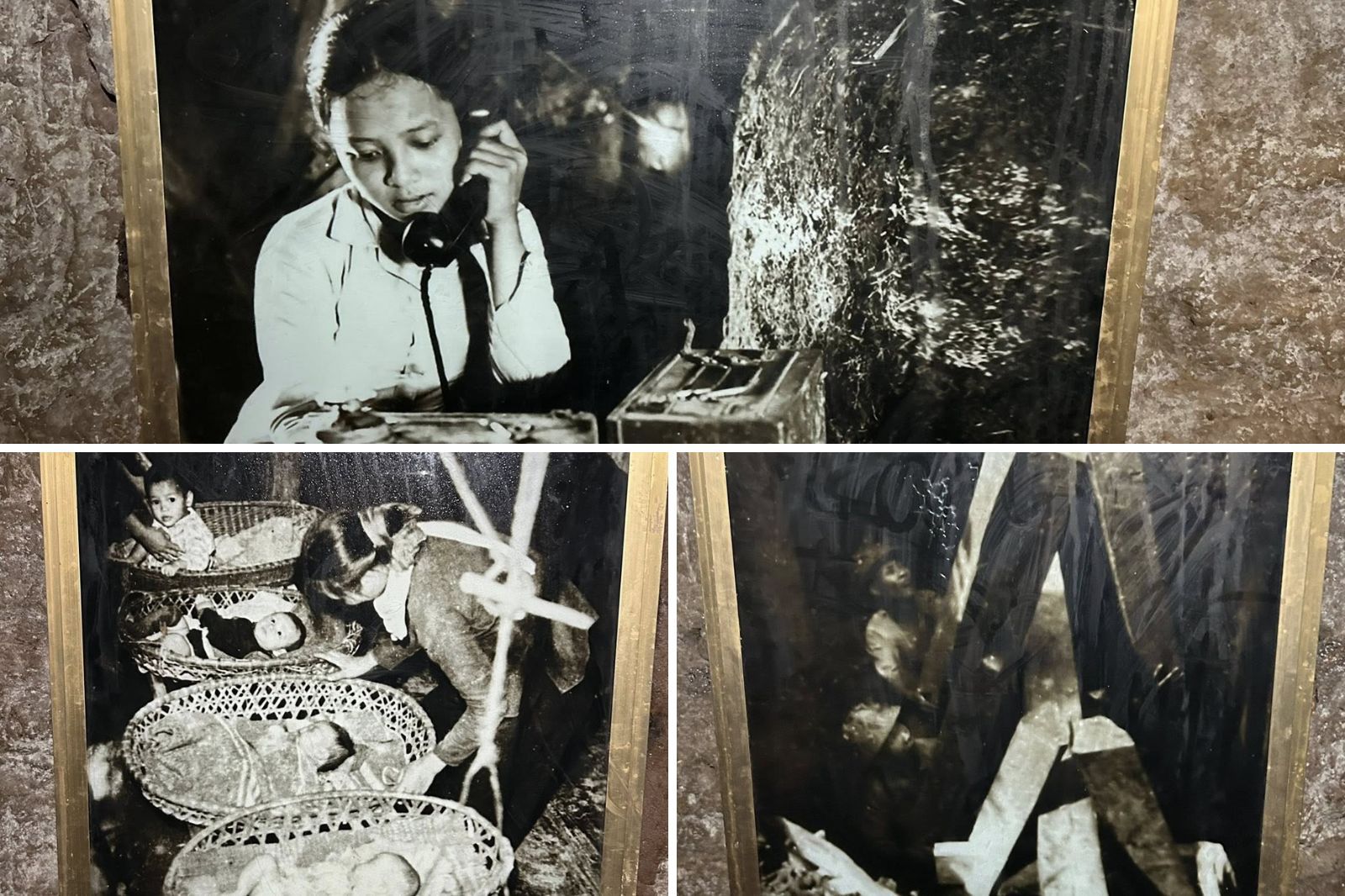
Photos displayed along both sides of the tunnel pathway
Photo: Photos displayed along both sides of the tunnel pathway 

2. How the people of Vinh Linh began constructing the Vinh Moc Tunnels

Amid the increasingly fierce war in the Vinh Linh area, in late 1963, Mr. Tran Nam Trung – representative of the Central Office for South Vietnam – during a business trip to the region, suggested researching and applying the Cu Chi tunnels model to build an underground defense system. From this suggestion, the Vinh Linh Party Committee promptly directed the implementation of a tunnel construction plan to protect local people and sustain combat forces.

The person entrusted with surveying and organizing the construction was Mr. Le Xuan Vy – Head of the 140th People's Armed Public Security Post. Despite having only a primary education and an old compass as his sole technical tool at the time, he personally surveyed the terrain and chose the red basalt hill adjacent to Vinh Moc beach as the construction site. This type of soil had high cohesion, suitable for deep digging and ensuring the durability of the structure.

On July 25, 1965, the first hoe stroke was struck by party committee member Ngo Tran, marking the start of this extraordinary historical project. Initially, the digging was experimental, involving only a few youth union members. However, faced with the urgent demands of war, the movement quickly expanded with widespread public participation under the motto: “militarize the entire population, fortify the entire region”.

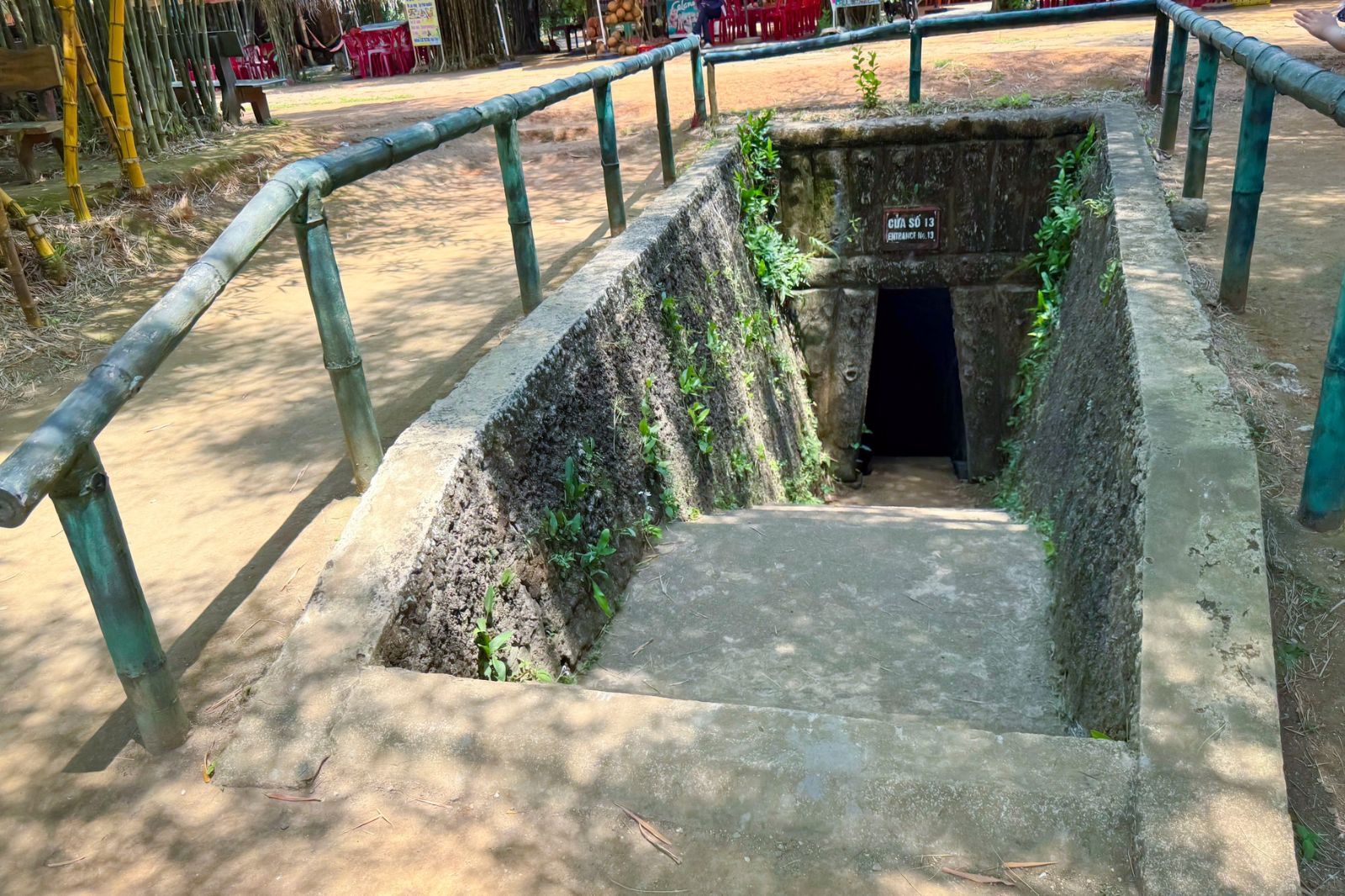
One of the exit gates of the tunnel system
Photo: One of the exit gates of the tunnel system

3. The process of digging the tunnels amidst a rain of bombs and bullets

The construction process spanned nearly 2 years (1965–1967), mainly from mid-1966 to late 1967, requiring 18,000 workdays and the removal of over 6,000 m³ of soil and rock. People worked in shifts: 2 diggers, 1 scooper, and 1 transporter. Digging continued day and night. Each person could only excavate about 0.45 m³/day due to crude tools (hoes and shovels made from bomb casings, bamboo baskets). To avoid detection, excavated soil was dumped into the sea or covered with sand. Digging followed the rule: “Stop digging during enemy raids; resume digging when the enemy retreats.” Even when bombs exploded directly overhead, the people persevered.

Today, Vinh Moc Tunnels have become a famous tourist attraction
Photo: Today, Vinh Moc Tunnels have become a famous tourist attraction 

4. The unique structure of the Vinh Moc Tunnels system

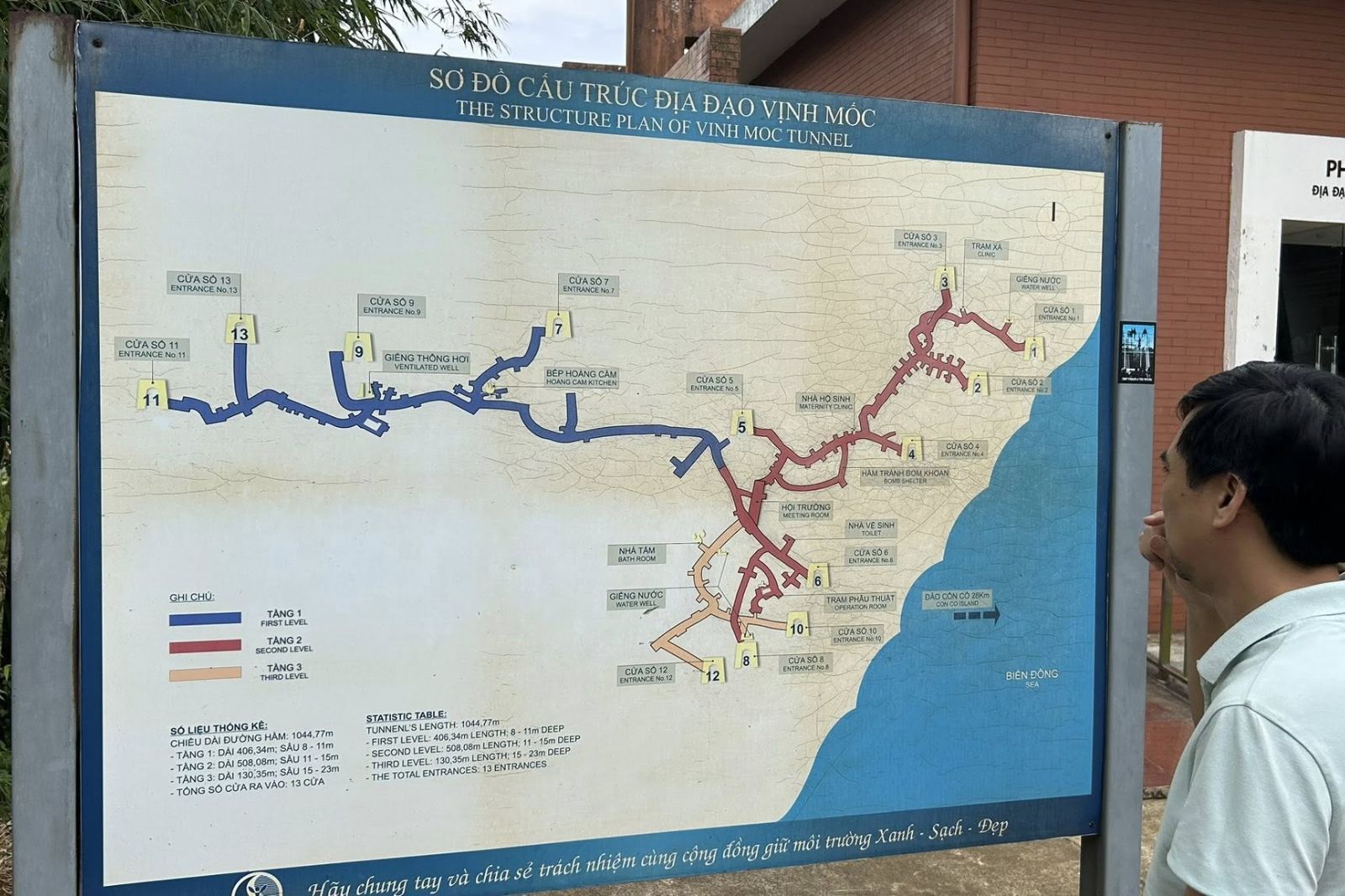
Vinh Moc Tunnels were built deep inside the red basalt soil with a total length of about 2,000 m, consisting of 3 interconnected levels serving various wartime purposes.

  • Level 1 (10–15 m): used for combat and temporary shelter.
  • Level 2 (around 18 m): main living area for residents and the command headquarters, featuring small “apartments” for each family.
  • Level 3 (22–23 m): used to store food, weapons, and logistical supplies for Con Co Island.

The tunnel system features 13 discreetly camouflaged entrance/exit gates, vaulted passages providing good drainage, and interior facilities including water wells, kitchens, a nursery, a meeting hall, and a scientific ventilation system.

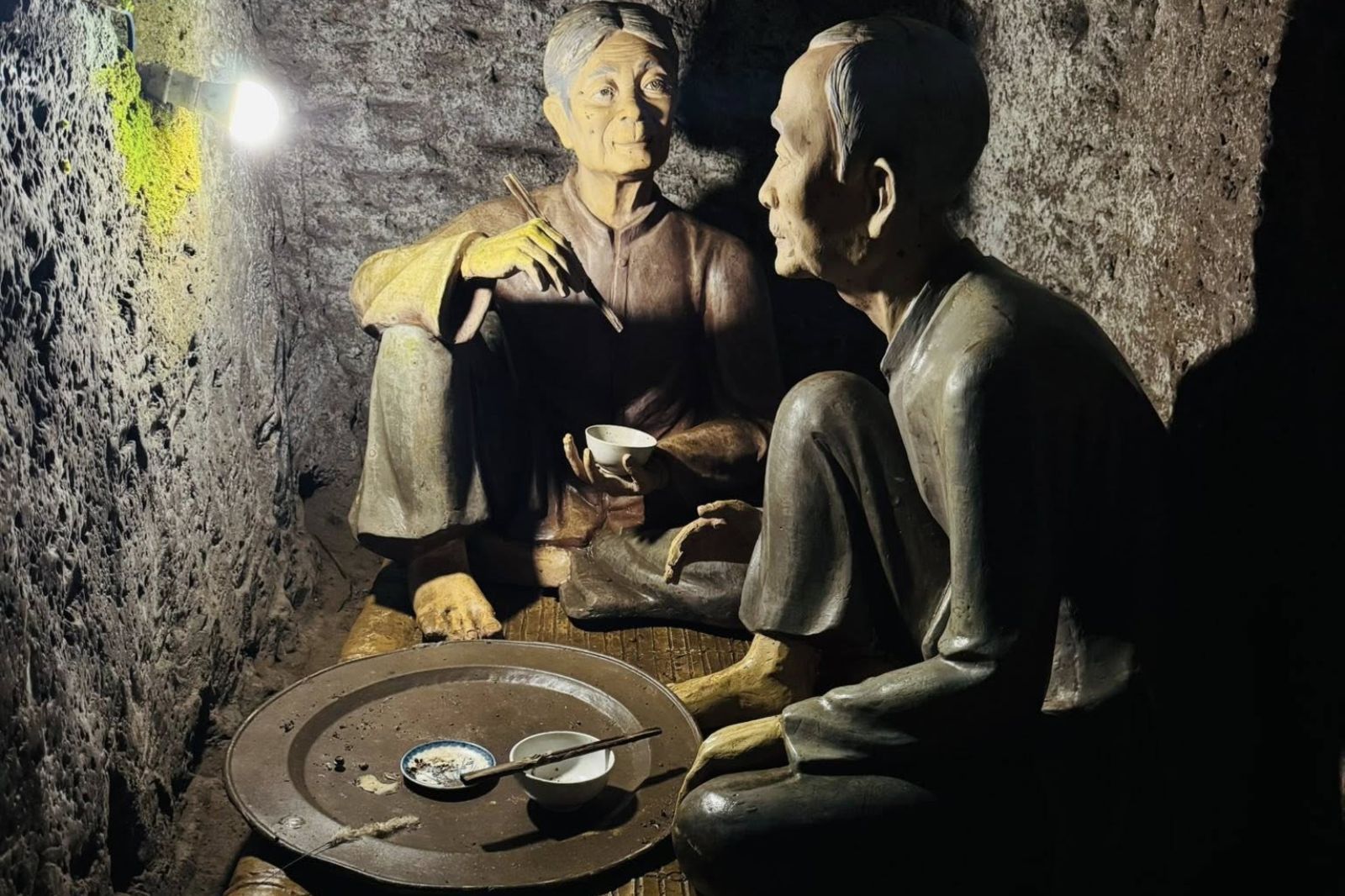
Not only a unique military construction, Vinh Moc Tunnels are also considered an “underground village”, reflecting the resilient will and enduring vitality of the soldiers and people of Quang Tri during the war.

5. The difficulties and challenges during the construction of the tunnels

The construction of Vinh Moc Tunnels took place under extremely harsh conditions, amidst fierce warfare and severe shortages of everything. This was not only an extraordinary military project but also proof of the resilient determination of the military and citizens of Vinh Linh.

  • Relentless bombardment: Working under a rain of bombs, many other shelters in Vinh Linh collapsed, causing casualties (hundreds of people in other tunnel networks).
  • Crude tools: No machinery, lack of light (using oil lamps, bamboo torches), and lack of oxygen when digging deep.
  • Geology and engineering: Digging 15-20 m deep required ensuring tunnel connections from two directions met accurately using only a compass and an arc stick.
  • Living conditions: Over 600 people lived long-term in narrow, oxygen-deprived, and damp spaces. Remarkably, 17 babies were born inside the tunnels.
The tunnels became an underground village
Photo: The tunnels became an underground village 

Vinh Moc Tunnels are not only a magnificent architectural work but also a testament to the strength of will and patriotism of the Vietnamese people. With simple pickaxes, they crafted an “ancient castle beneath the ground”, preserving stories of sacrifice, resilience, and the desire to live. Joining Vinh Moc Tunnels tours, you will feel the breath of history and take pride in a heroic nation that overcame all hardships to protect its homeland. 

Loading......

Featured destinations