Traditional Nam O Fish Sauce Making Process – Family Secrets
Central
Da Nang
Nam O Traditional Fish Sauce Village
Sovaba.travel
Updated at: 24/09/2026
1. History of the Nam O fish sauce craft village
Nam O Village originated from the Champa era and later became the “southern gate” of Dai Viet in the 14th century, when King Che Man offered O and Ly prefectures as wedding gifts for his marriage to Princess Huyen Tran. Fish sauce making here has existed since the Dang Trong (Cochinchina) period. In 1621, Italian missionary C. Borri noted a type of “balaciam” – a rich, pungent extract fermented from fish and salt, used as a dipping sauce and able to be preserved for a long time.
By the late 19th – early 20th century, Nam O fish sauce had become famous across many regions. In 2009, the product was granted trademark protection by the Intellectual Property Office of Vietnam; in 2019, it was recognized as a National Intangible Cultural Heritage. Currently, over 100 households still preserve the traditional craft using artisanal methods, producing various products meeting 3–4 star OCOP standards. The core value making Nam O fish sauce unique lies in family secrets – perseverance, subtlety, and respect for natural ingredients, something industrial products can hardly replace.
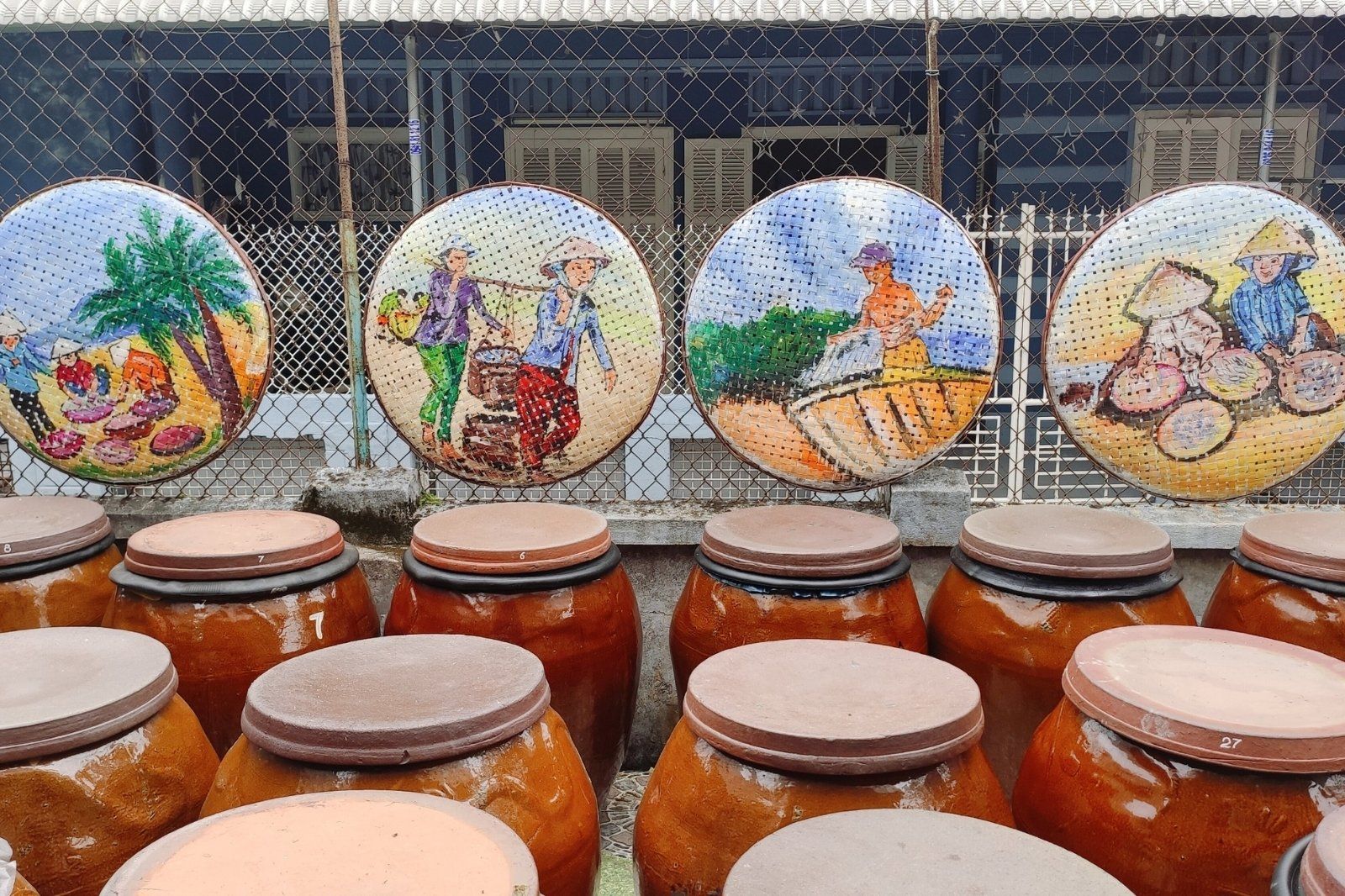
Photo: National Intangible Cultural Heritage associated with an ancient fishing village over 700 years old
2. Ingredients for making Nam O fish sauce
In the traditional Nam O fish sauce making process, the core factor creating superior quality is the simplicity yet meticulous selection of raw ingredients. For hundreds of years, local artisans have remained loyal to the original formula consisting solely of fish and salt, distilled from generations of experience and family secrets.
Black anchovies – the “soul” of Nam O fish sauce: This is a small fish with firm flesh, rich in protein, caught directly in the waters of Da Nang and neighboring areas like Hoi An and Quang Ngai. The ideal harvest season runs from the 1st to the 3rd lunar month (sometimes extending into the 7th–8th months), when the fish reaches peak freshness. Selected fish must be fresh, finger-sized, and especially not washed in fresh water to retain the natural salty flavor of the sea (many households even keep the natural slime layer intact). The low fishiness, firm flesh, and abundant natural enzyme content of black anchovies during this season create the characteristic sweet aftertaste of the fish sauce.
Sea salt – the balancing and preserving element: The salt used is typically Ca Na (Ninh Thuan) or Sa Huynh (Quang Ngai) salt – famous for its large, aged, clean white grains. Before processing, the salt must be aged for 6–12 months to reduce bitterness and harshness, ensuring a stable salinity. A key requirement is that the salt must be dry, pure, and free from rainwater contamination.
The 3:1 “golden” ratio – family secret: The combination of fish and salt strictly follows the ratio of 3 parts fish : 1 part salt (3:1). This key formula ensures the fish absorbs salt evenly and ferments naturally without spoiling, while creating a harmonious, rich flavor.
Notably, the entire process does not use any sweeteners, flavorings, or industrial enzymes. This very purity creates the distinctiveness of Nam O fish sauce: a mild salty taste, a clear sweet aftertaste, and a refined, non-pungent aroma—a standard hard to replace in traditional Vietnamese cuisine.
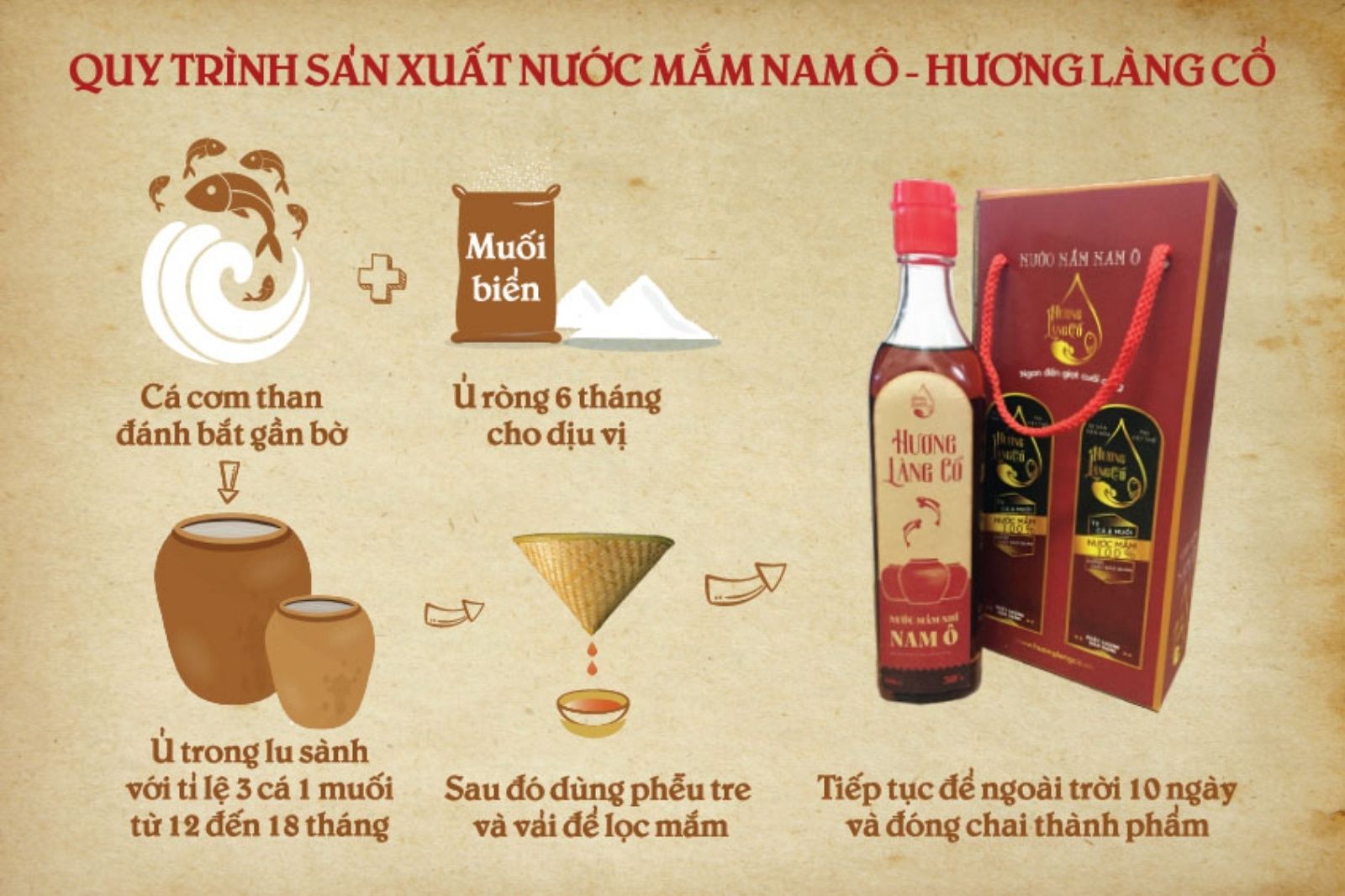
Photo: Nam O fish sauce production process
It is the meticulousness, elaborate effort, and absolute fidelity to handcrafted methods without chemicals—from selecting black anchovies and aged salt, fermenting in clay jars for a full 12 months, to filtering through bamboo funnels—that distills pure grade 1 Nam O first-press fish sauce with an amber-red color and natural sweet flavor, creating an irreplaceable brand value.
3. Traditional Nam O fish sauce making process
The process is entirely manual, requiring patience and ancestral experience. The whole process takes 12-24 months, with no machinery intervention.
Step 1: Selection and preparation of fish Fresh black anchovies are carefully selected (removing damaged fish and impurities). Rinsed clean with seawater or gently wiped, avoiding fresh water which destroys natural enzymes.
Step 2: Salting Mix fish with salt in a 3:1 ratio by hand, stirring thoroughly so salt penetrates each fish evenly. This stage determines the uniform ripening of the mash. Some households sprinkle a thin layer of salt on top to block air.
Step 3: Fermentation (anaerobic fermentation) The mixture is placed into fermentation vats made of Loi Boi wood (reinforced with wild rattan ties) or traditional terracotta jars (from Lai Thieu pottery village). Sealed tightly and stored in a cool, dry place. Fermentation period: 12-18 months (some batches ferment up to 24 months). No stirring or heavy pressing during the initial stage so natural enzymes in the fish (from the digestive system and flesh) break down protein into amino acids.
Step 4: Monitoring and caring for the mash Artisans check periodically (aroma, color, maturity). This is the “family secret” – the experience to recognize when the mash reaches standard quality without modern equipment.
Step 5: Extraction and filtration of fish sauce When the mash matures, the first-press fish sauce is drawn out. Filtered manually through bamboo funnels and clean cloth multiple times (2-3 times) until clear, ranging from straw-yellow to amber color, with a characteristic rich aroma. The remaining fish residue can be further extracted for second-run fish sauce...
Step 6: Second aging (depending on family secrets) The first-press fish sauce is further aged in terracotta jars to evaporate naturally, mellowing the taste and enhancing the sweet aftertaste.
Step 7: Quality inspection and bottling Testing natural protein content (usually 30-40 degrees N), color, and flavor. Bottled manually with clear labeling.
In summary, each drop of Nam O fish sauce is the result of time, dedication, and family secrets—a strict handcrafted process creating a unique value that no industrial product can replace.
4. How to identify authentic Nam O fish sauce
In the context of a market flooded with blended and industrial products, identifying authentic Nam O fish sauce becomes especially important to ensure quality and nutritional value. Below are criteria to help you easily distinguish and choose the true traditional flavor:
Natural color: Authentic Nam O fish sauce has a color ranging from straw-yellow to amber, crystal clear, with no unusual turbidity or sediment.
Characteristic aroma: A rich yet pleasant aroma, deeply carrying the breath of the sea, without foul fishiness or chemical odors.
Harmonious flavor: When tasting, you will clearly feel the saltiness on the tip of your tongue, which then spreads into a lingering sweet aftertaste—characteristic of natural fermentation.
Light viscosity: The fish sauce has moderate viscosity, pouring slowly and sticking slightly, not watery like diluted products.
Clear labeling: Authentic products always state full information: “Nam O Fish Sauce”, origin Da Nang, containing no additives. Priority should be given to products achieving OCOP certification or bearing traditional craft village labels.
Folk tip: An interesting test is to drop a few grains of cold cooked rice into the fish sauce; if the rice grains float, it is usually a sign of good quality fish sauce.
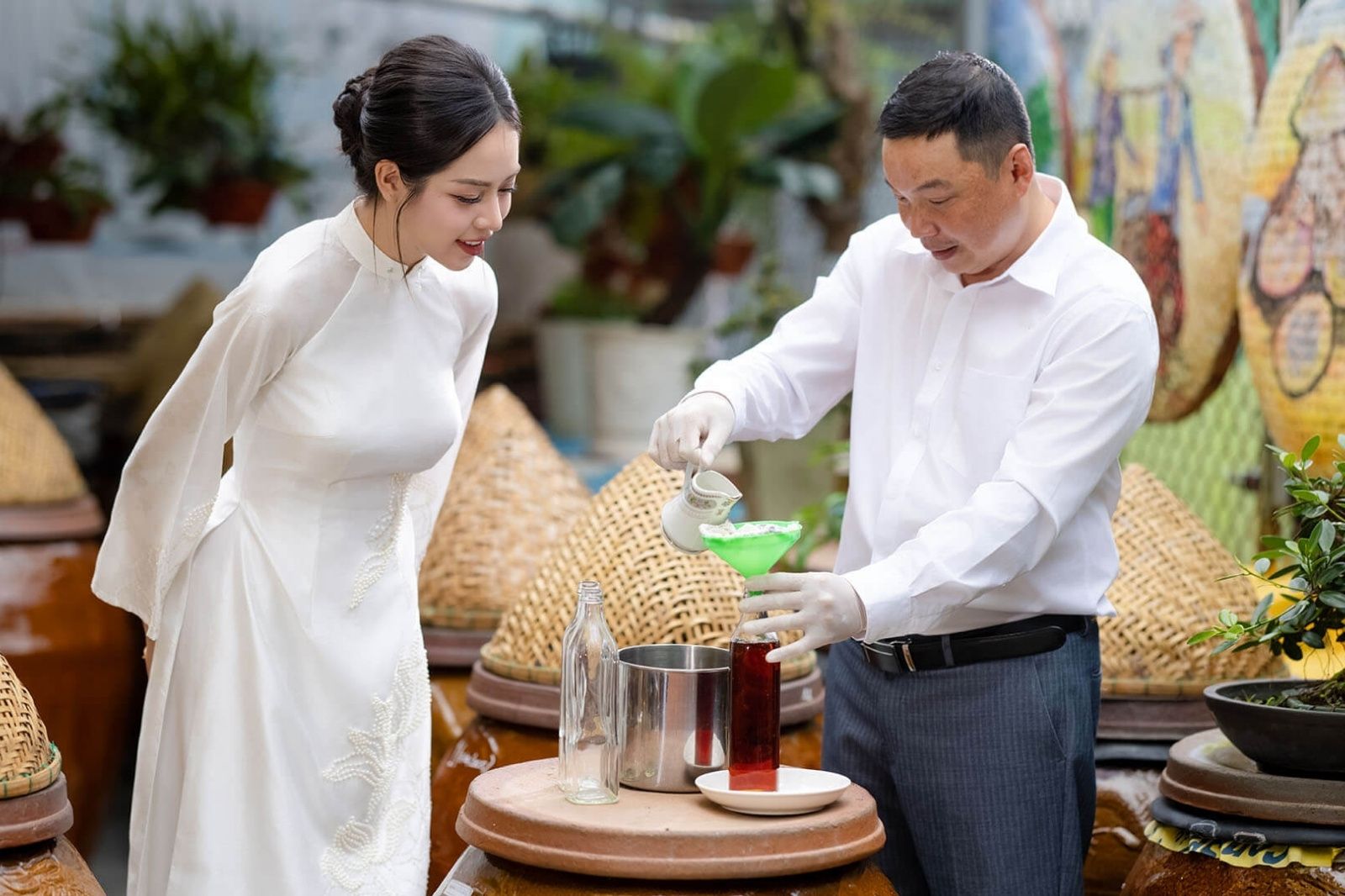
Photo: Nam O fish sauce over the centuries has become an indispensable part of the craft village
The endurance of Nam O fish sauce making, spanning centuries and honored as a National Intangible Cultural Heritage, proves that family secrets lie not in modern technology but in dedication and steadfast adherence to traditional handcrafted processes. Those amber-colored drops of first-press fish sauce with their natural sweetness are not only a culinary essence and a cultural beauty of the Quang region, but also a sustainable economic foundation for 92 craft village households.
Because of these profound dual values, Nam O not only invites diners to savor its flavor, but also opens up a meaningful journey of discovery. Visitors can fully explore the history, folk knowledge, and unique production process through Nam O fish sauce village tours, where heritage and local livelihoods blend to create a unique cultural and tourism destination, worthy of preservation and promotion for generations to come.