What is special about the cuisine of the Bru โ€“ Van Kieu people? Traditional dishes not to be missed

Central

Quang Tri

Quang Binh

Sovaba.travel

Updated at: 24/09/2026

1. Highlights of Bru - Van Kieu cuisine

The cuisine of the Bru โ€“ Van Kieu people was formed from their close bond with the Truong Son mountains and forests, where every dish reflects a simple lifestyle, community spirit, and gratitude toward nature. Not elaborate in preparation, the meals of the local people make diners remember forever because of their pristine flavors and sincerity in every arrangement. The main ingredients are harvested directly from the mountains, forests, and fields, such as upland sticky rice, wild vegetables, bamboo shoots, banana shoots, rattan shoots, stream fish, stream shrimp, hill-raised chicken, along with characteristic spices like wild chili and wild lime leaves. To the Bru โ€“ Van Kieu people, these are not just a source of food, but also precious gifts bestowed by nature. Therefore, cooking methods prioritize preserving the most natural flavor, from grilling over red-hot coals, steaming in forest leaves, cooking soup with vegetables and fish, to roasting in bamboo tubes, while minimizing deep-frying with excess oil.

The dining space also bears a strong imprint of local culture. Everyone gathers around bamboo trays or banana leaves, eating with their hands, sharing each dish, cup of tube wine (ruou can), and folk songs echoing through the mountains and forests. A meal is thus not merely to fill the stomach, but also an occasion to bond families and communities, and to extend the warm hospitality of the Bru โ€“ Van Kieu people to guests from afar.

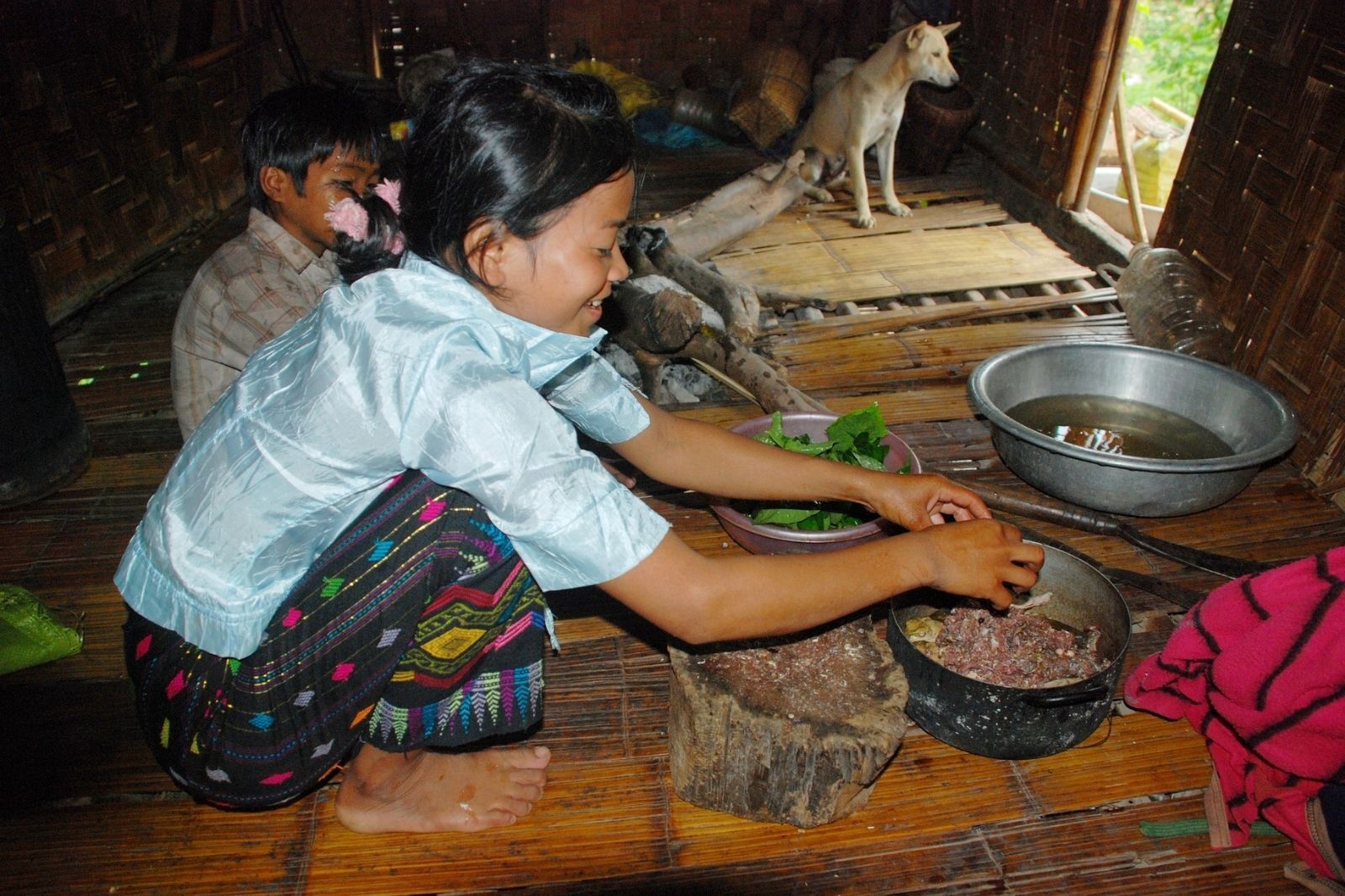
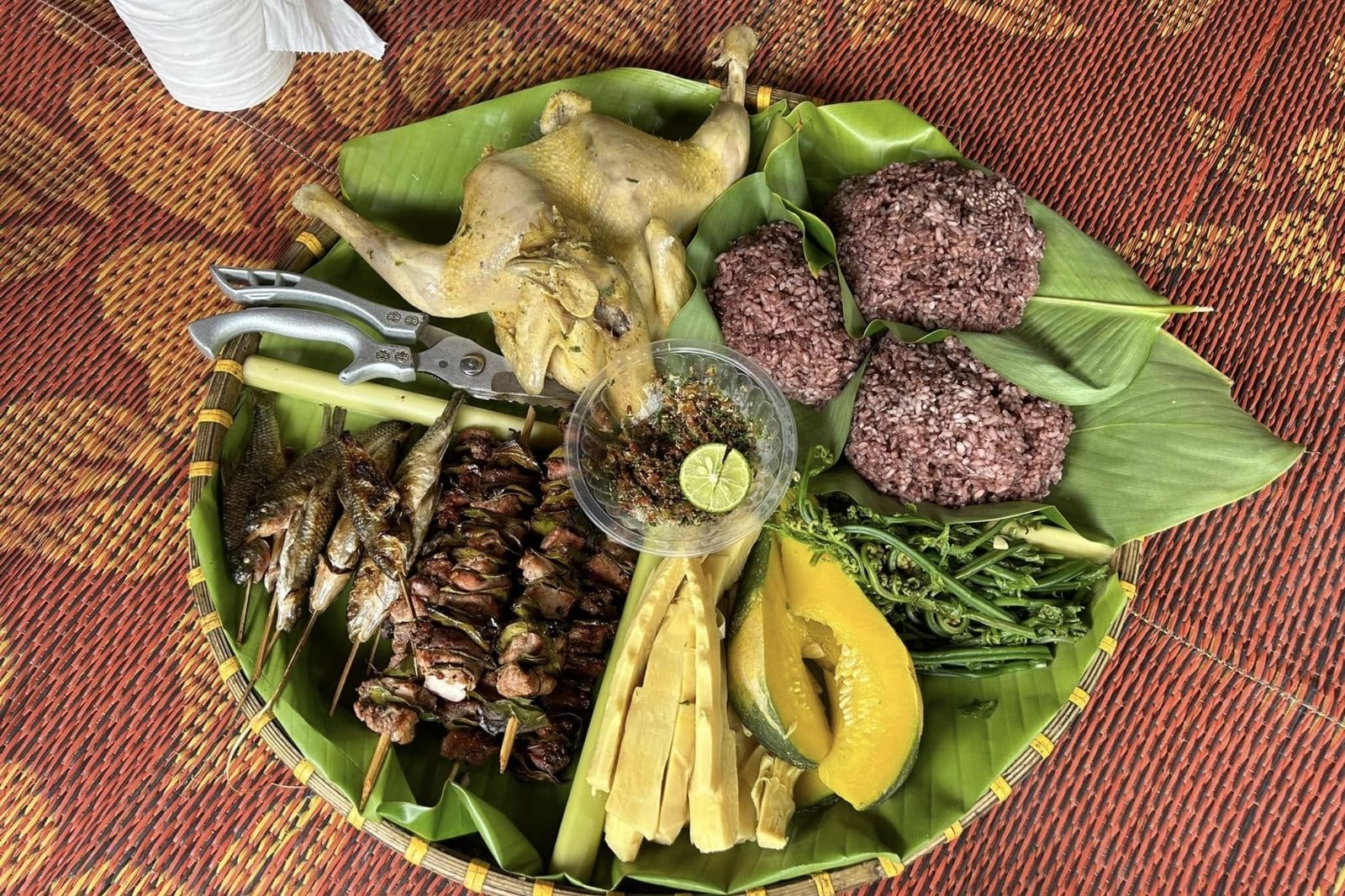
Dishes of the Bru - Van Kieu people originate from the mountains and forests
Photo: Dishes of the Bru - Van Kieu people originate from the mountains and forests 

In particular, many dishes only appear on important occasions such as weddings, traditional festivals, or the new rice festival around the 10th โ€“ 11th lunar months. Each dish carries its own meaning, symbolizing abundance, peace, and gratitude to ancestors and nature for protecting and nurturing life in the deep forest.

Perhaps that is why Bru โ€“ Van Kieu cuisine has never been just about food and drink. In every grain of sticky rice, every tube of sticky rice, or bowl of wild vegetable soup lie the memories of the village, the warmth of the hearth, and the way the people preserve and pass down precious cultural values through generations. Anyone who has sat at the dining table of the Bru โ€“ Van Kieu people will understand that what remains most deeply is not only the flavor of the food, but also the rustic human affection and appreciation for nature and origins.
2. Must-try traditional Bru - Van Kieu dishes

Bru โ€“ Van Kieu cuisine is the crystallization of the Truong Son mountains and forests, where simple ingredients, through the skillful hands of the people, become dishes steeped in cultural identity. Each flavor not only reflects daily life but also contains stories of affection, community cohesion, and gratitude to nature.

Ayoh Cake

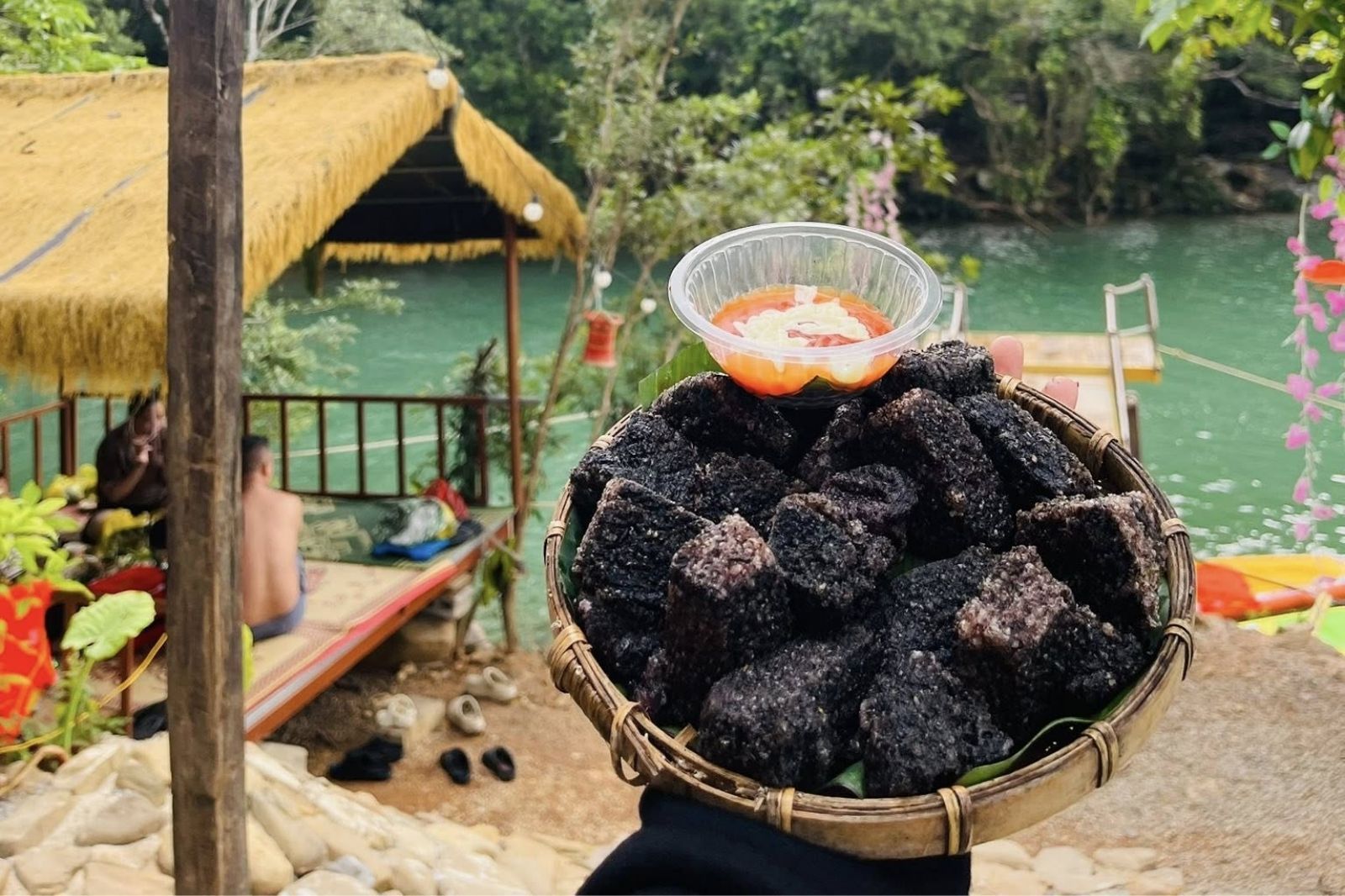
Considered the most characteristic cake of the Bru โ€“ Van Kieu people, Ayoh cake often appears on important occasions such as weddings, Tet, festivals, or to entertain honored guests. The cake is made from steamed upland sticky rice pounded thoroughly in a wooden mortar, combined with fragrant roasted black sesame. Without filling or sugar, the cake conquers diners with the soft, chewy texture of sticky rice, the rich nutty flavor of sesame, and the rustic scent of wood smoke. For the Bru โ€“ Van Kieu people, Ayoh cake also symbolizes fidelity, devotion, and the bond between people.

A-Du cake covered with a layer of black sesame seeds
Photo: A-Du cake covered with a layer of black sesame seeds 

Taro soup, boiled rattan shoots, boiled banana shoots

Wild vegetables are an indispensable component in the daily meals of the Bru - Van Kieu people. Dishes such as taro soup, boiled rattan shoots, or boiled banana shoots are prepared simply yet retain their natural sweetness. The vegetables are picked from the forest, washed clean, boiled until cooked, and served with chili salt or fish sauce.

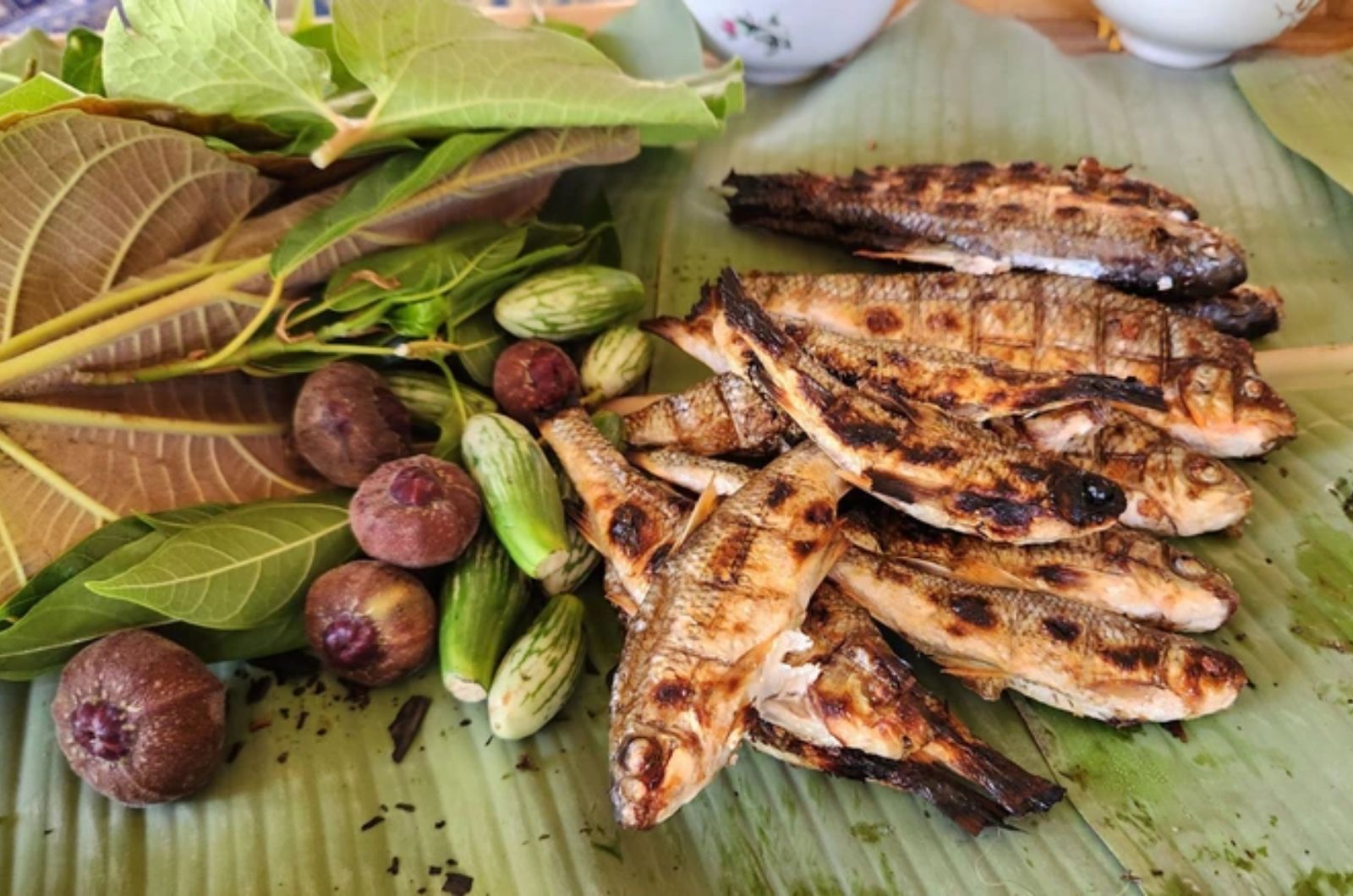
Dishes like stream fish are often eaten with forest vegetables
Photo: Dishes like stream fish are often eaten with forest vegetables 

Wild rat meat cooked in mock-dog style (Gia cay)

Wild rat meat is a unique dish that often appears during festivals or when entertaining guests. The wild rats are cleaned, marinated with lemongrass, chili, and forest leaves, then cooked mock-dog style or grilled over charcoal. The dish has a rich, fragrant flavor with firm meat, often eaten with sticky rice. The wild rats must be those that feed on natural crops, not field rats, to ensure safety and flavor.

Grilled stream fish 

Mat fish and stream fish living in the clean water sources of the mountains bring a very distinct, delicious taste. Fish is usually grilled whole over red-hot coals or prepared into braised dishes or soups cooked with bamboo shoots and wild vegetables. The fish meat is firm, sweet, and rich, eaten with chili salt and local wild greens to create an unforgettable culinary experience for anyone who has tasted it.

Grilled stream fish
Photo: Grilled stream fish  

Forest leaf grilled chicken and steamed stream shrimp

Hill-raised chickens are marinated with salt, chili, and wild lime leaves before being grilled over a hot charcoal stove, creating golden crispy skin and sweet, flavorful meat. Meanwhile, fresh stream shrimp are steamed with forest leaves to preserve their natural mild sweetness. These two simple dishes clearly show the sophistication in the culinary preparation of the Bru โ€“ Van Kieu people, where ingredients are always respected and kept in their original flavors.

Rustic dishes steeped in village identity

Beside the prominent dishes, the daily meal of the Bru โ€“ Van Kieu people also features boiled rattan shoots and banana shoots dipped in chili salt, wild vegetable soup cooked with fish or frogs, bamboo-tube grilled meat, alongside a glass of aromatic tube wine or corn wine. Simple as they are, each dish contributes to a rich culinary tapestry, reflecting the harmonious relationship between humans and nature.

If you have the opportunity to visit the villages of the Bru โ€“ Van Kieu people, do not just enjoy the food with your taste buds. Listen to the stories by the hearth, feel the sincerity in their hospitality, and let those rustic flavors lead you closer to the cultural life of a community that has preserved its identity over generations. Because sometimes, understanding a land begins with its most simple dishes.

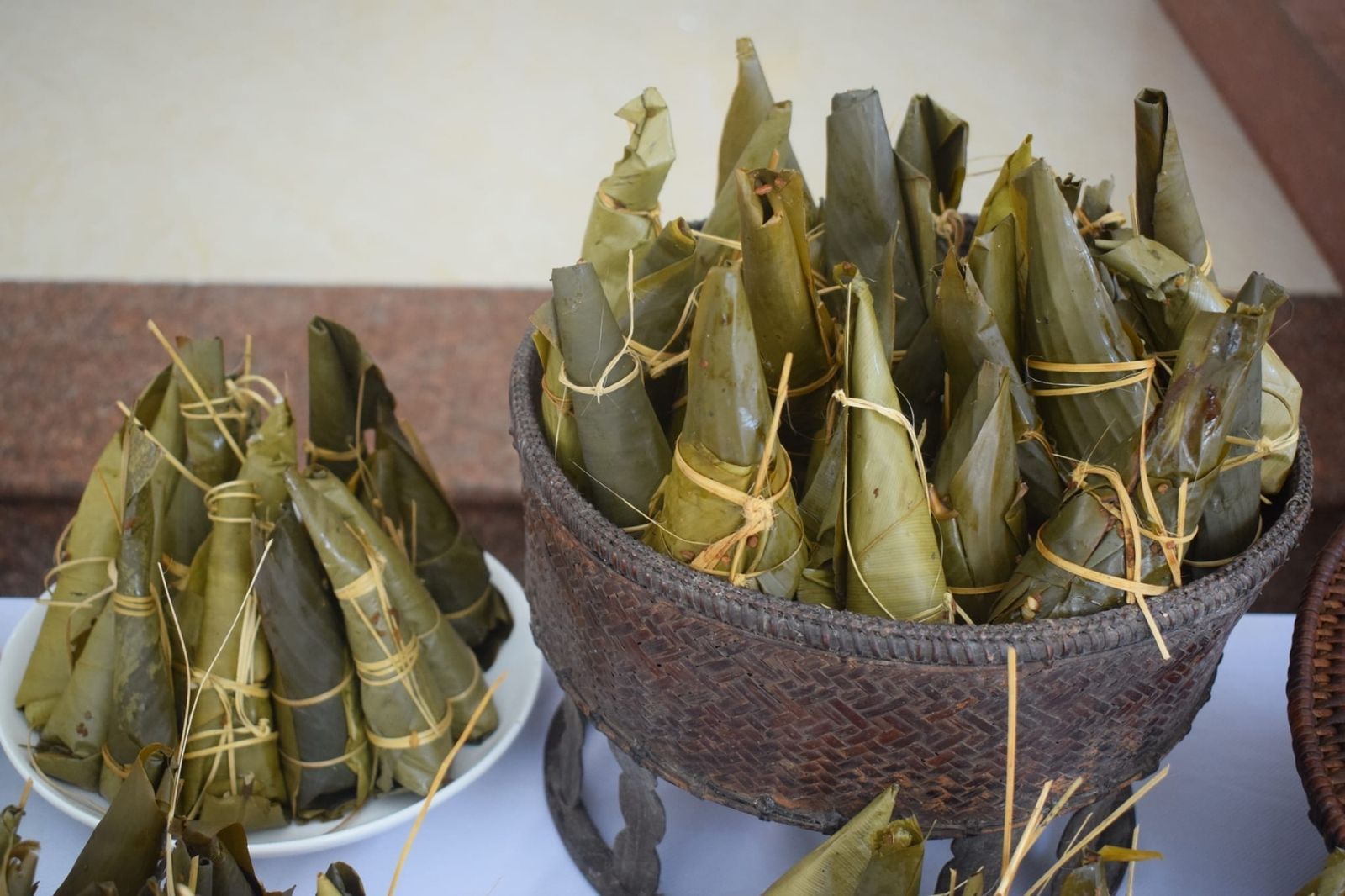
A Choi cake of the Bru - Van Kieu people
Photo: A Choi cake of the Bru - Van Kieu people 

3. Where to experience Bru - Van Kieu cuisine?

To fully appreciate the culinary flavor of the Bru โ€“ Van Kieu people, visitors should seek out villages that still strongly preserve the traditional culture of this community. Not only will you get to enjoy local dishes, but you will also have the opportunity to learn about the lifestyle, customs, and stories associated with the Truong Son mountains and forests.

In Quang Binh, visitors can visit Ha Lec commune (Bo Trach district) or villages in Kim Thuy commune. In Quang Tri, the Khe Sanh area, Huong Hoa, along with community-based tourism models like Ho Rum, are prominent destinations for exploring Bru โ€“ Van Kieu culinary culture. In addition, several villages in the border area of Quang Tri โ€“ Hue still preserve many unique traditional values.

Currently, many localities have developed community tourism programs, offering exciting 'A Day as a Bru Person' experiences. Visitors can join local people in making Ayoh cakes, grilling stream fish, enjoying tube wine by the hearth, and listening to rustic folk songs amidst the peaceful mountain space.

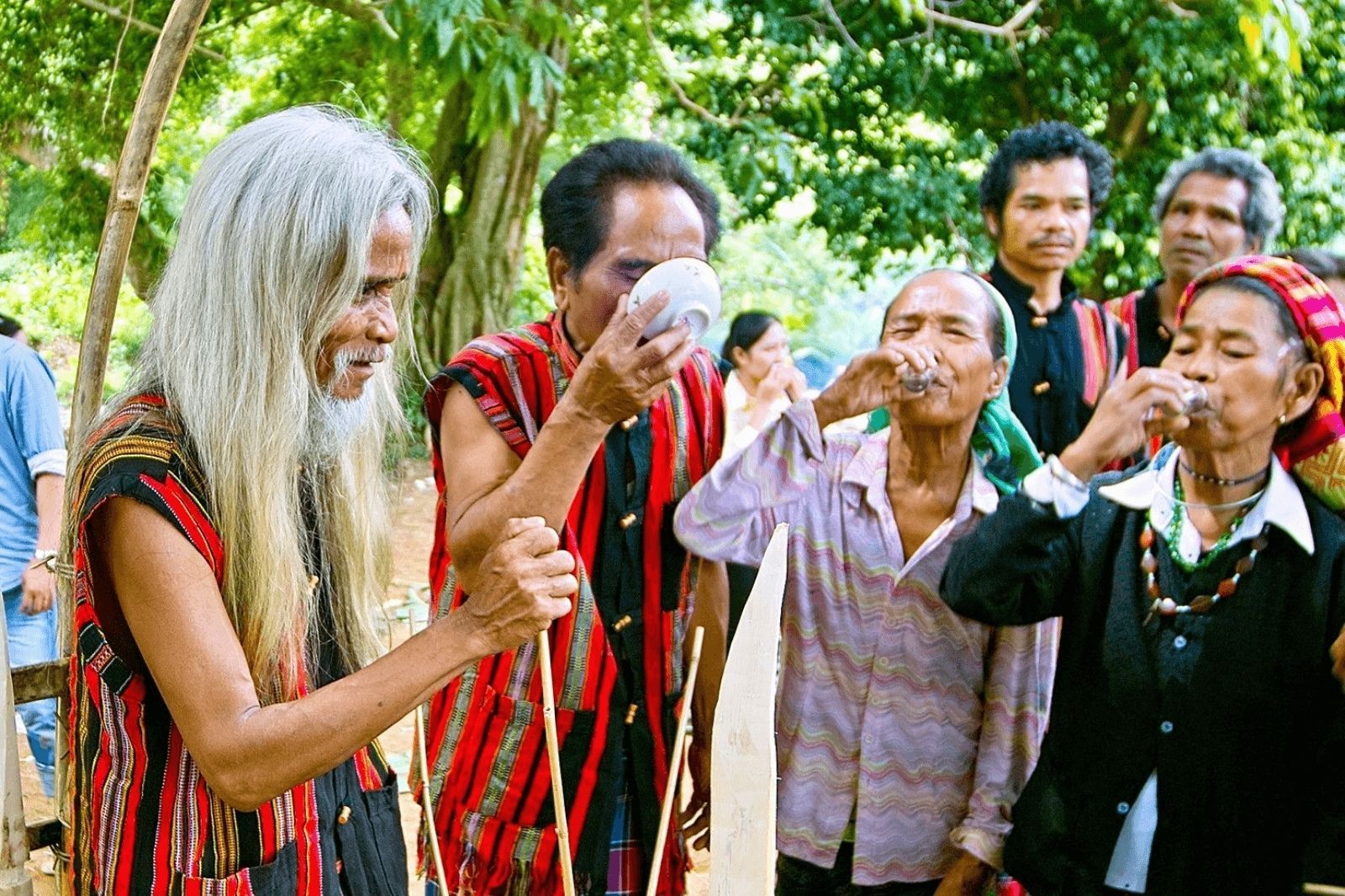
Delicious dishes often used to treat guests
Photo: Delicious dishes often used to treat guests 

The traditional cuisine of the Bru - Van Kieu people in Quang Binh and Quang Tri is an inseparable part of ethnic culture, carrying the breath of the Truong Son mountains and the soul of the local people. From aromatic bamboo-tube sticky rice, savory stream fish lap to sweet A-Du cakes, each dish tells a story of connection with nature, faith, and community. Just like cuisine, the art of brocade weaving by Bru โ€“ Van Kieu women is also an indispensable part of cultural life. A warm meal in the village, alongside the clacking sound of the loom and the vibrant colors of traditional dresses, is when you truly feel the soul of the highlands.

 If you have the chance to visit Quang Tri, stop by the Bru โ€“ Van Kieu villages, where you can not only taste the flavors of the mountains and forests but also listen to cultural stories directly from the people who preserve them every day.

Loading......

Featured destinations