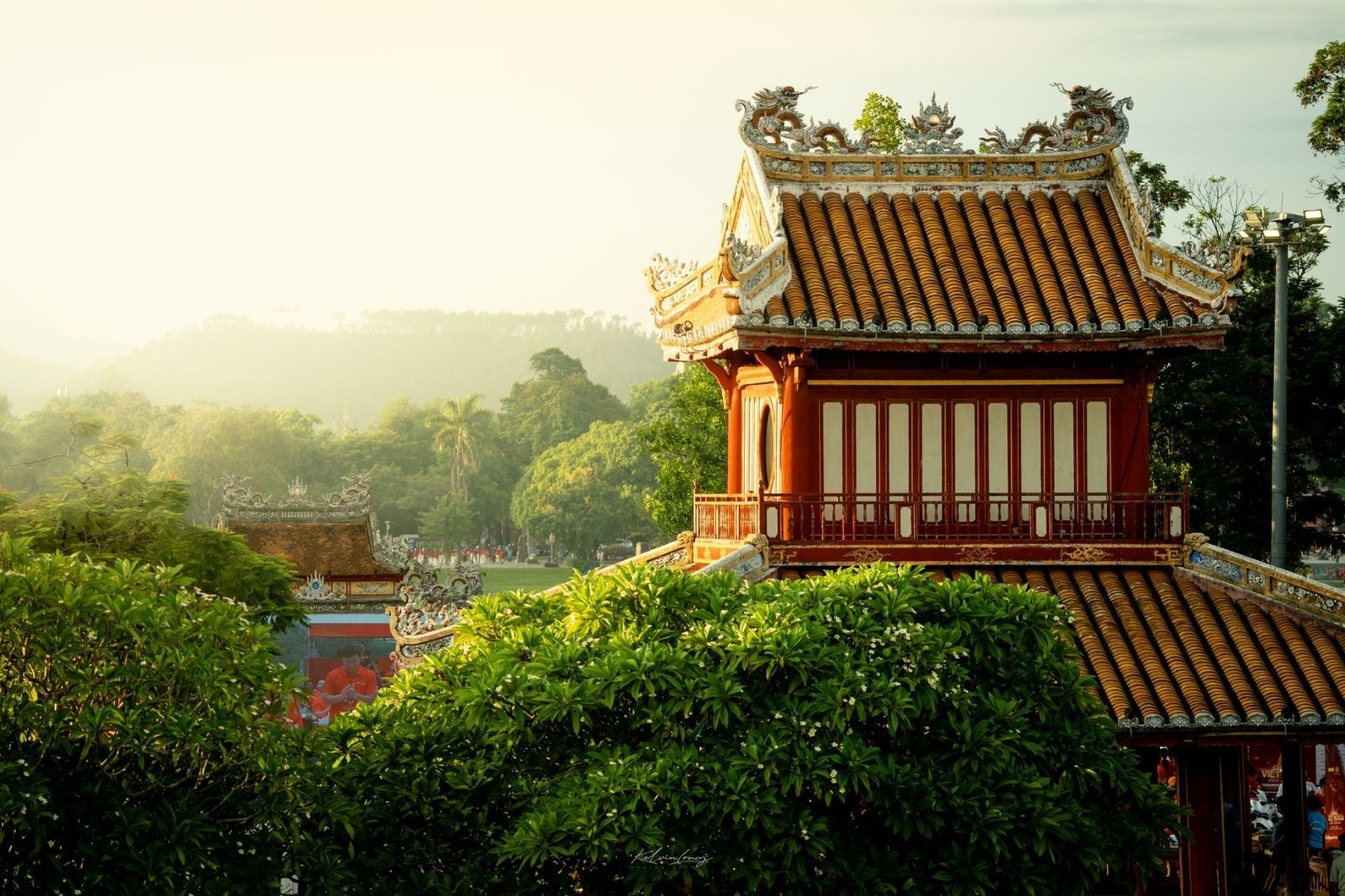
|

Back Home

What makes the architecture of the Hue Imperial City special? Scale and prominent structures

Central

Thua Thien Hue

Hue Imperial Citadel

Sovaba.travel

Updated at: 28/08/2026

1. Overview of Hue Imperial City

The Hue Imperial City (Dai Noi Hue), also known as the Hue Royal Citadel, is the heart of the Hue Citadel - the capital of the Nguyen Dynasty from 1802 to 1945. It is the largest surviving royal architectural complex in Vietnam, located on the north bank of the Perfume River in Hue City, Thua Thien Hue Province. Built in the early 19th century under King Gia Long and completed over subsequent reigns, the Imperial City served as the administrative, political, and religious center of the country.

The complex comprises three main concentric wall layers: the Citadel (Kinh Thanh - outer city), the Royal Citadel (Hoang Thanh or Dai Noi - Imperial City), and the Forbidden Purple City (Tu Cam Thanh - private living quarters of the royal family). According to historical sources, the Hue Imperial City once featured over 100 architectural structures of various sizes, planned according to ancient Eastern feng shui principles, with Ngu Binh Mountain as the "front screen" and the Perfume River as the "bright hall". Today, despite suffering through war and time, the Imperial City maintains its majestic beauty, making it an unmissable destination when visiting Hue.

Hue Imperial City was the administrative center of the Nguyen Dynasty
Photo: Hue Imperial City was the administrative center of the Nguyen Dynasty 

2. Unique Architectural Features of Hue Imperial City

The architecture of the Hue Imperial City is the crystallization of Vietnamese cultural essence, influenced by Chinese, Champa, and modern Western techniques. Below are the highlights of this complex's architectural style:

Planning based on Eastern Philosophy

  • South Orientation – The Direction of Sovereigns: All structures within the Imperial City face south, based on the principle in the Book of Changes (I Ching): “The sovereign faces south to govern the world.” This demonstrates the supreme power and majesty of the monarchs.

  • Symmetrical Layout and Feng Shui: The Imperial City was constructed adhering strictly to feng shui principles, with areas harmoniously arranged according to Black Tortoise (North), Vermilion Bird (South), Azure Dragon (East), and White Tiger (West). The sacred central axis running from Ngo Mon Gate through Thai Hoa Palace to Tu Phuong Vo Su Pavilion creates a balanced space in harmony with nature.

  • Moat and Rampart System: The Citadel is surrounded by the Ho Thanh Ha canal, over 7 km long, serving as both a defense moat and a waterway transportation route. The walls were constructed using the French Vauban style, featuring 24 bastions, embrasures, and evenly positioned cannons, ensuring optimal defensive capabilities.

East-West Cultural Fusion

  • Influence of Western Military Architecture: The Vauban-style rampart construction technique, featuring protruding bastions and deep moats, was learned by King Gia Long from French engineers, helping the Hue Citadel be not only beautiful but also of high strategic military value.

  • Royal Decorative Arts: Structures in the Imperial City utilize gilding, lacquer, ceramic mosaic inlay, and glass artwork, which developed particularly under King Khai Dinh. For example, Chuong Duc Gate is decorated with ceramic mosaic art reaching exquisite refinement, marking an important milestone in Nguyen Dynasty fine arts.

  • Indochine Style: Certain structures built in the 20th century, such as Kien Trung Palace, feature the Indochine style—blending traditional Vietnamese architecture with modern French touches, creating a unique synthesis within the overall complex.

Harmony with Nature

The Hue Imperial City was designed to blend seamlessly with the natural landscape, featuring lakes, flower gardens, stone bridges, and greenery that create a poetic ambiance. Co Ha Royal Garden, restored in 2012, is a prime example covering 16,800 m², offering a sense of tranquility and closeness to nature.

3. Overall Scale of Hue Imperial City

The Hue Imperial City is grand in scale, with the entire Citadel spanning approximately 500 hectares, of which the Royal Citadel accounts for about 315 hectares (according to UNESCO data). The complex is enclosed by a 20-30 meter wide moat and fortress walls 6-8 meters high and over 10 km long, featuring 10 main entrance gates.

Inside, the Imperial City once housed over 150 functional structures, divided into 10 main areas such as the Outer Court (working areas), the Forbidden Purple City (royal living quarters), and ancestral temples. Today, following historical conflicts, around 50 structures of various sizes remain intact or have been restored, with a total preserved area of approximately 315 hectares and a buffer zone of 71 hectares. This impressive scale makes the Imperial City one of the largest royal monument complexes in Southeast Asia, comparable to the Forbidden City in Beijing in terms of historical significance, though smaller in dimension.

Hue Imperial City seen from above
Photo: Hue Imperial City seen from above 

4. Spatial Layout and Sacred Axis of Hue Imperial City

The spatial layout of the Hue Imperial City was designed according to the traditional rule of "left for men, right for women" (ta nam huu nu), with the sacred central axis (North-South axis) running continuously from Ngo Mon Gate to Thai Hoa Palace and the Forbidden Purple City. This axis symbolizes sacredness, connecting heaven, earth, and royal authority, with the Perfume River serving as a natural boundary.

The space is divided into distinct zones: To the South is the Outer Court with main ceremonial halls; to the North is the Inner Court and the Forbidden Purple City containing over 50 individual structures. Systems of lotus ponds, royal gardens, and artificial mounds were arranged to ensure harmony according to five elements (wu xing) and geographical feng shui principles. UNESCO emphasizes that this layout is not only practical but also reflects the cosmological philosophy of ancient Vietnamese people, helping the complex withstand floods and natural disasters effectively.

Ngo Mon Gate Hue

Photo: Ngo Mon Gate Hue 

5. Architectural Style of Hue Imperial City through the Reigns of Nguyen Kings

The architectural style of the Hue Imperial City evolved through 13 reigns of the Nguyen kings, starting with King Gia Long (1802-1820) featuring a purely Sino-Vietnamese style utilizing wood, curved tile roofs, and traditional folk motifs. By the reign of Minh Mang (1820-1840), structures acquired more refined elements, such as Thai Hoa Palace featuring golden yellow glazed tile roofs.

Under the reigns of Thieu Tri and Tu Duc (1841-1883), architecture assumed high artistic expression, incorporating poetry and sculpture, as seen in Hien Lam Pavilion—the tallest structure in Southeast Asia at the time. Under later kings such as Khai Dinh (1916-1925), French influence emerged clearly in hybrid European-Asian buildings featuring concrete and Western decorative motifs. Overall, the architectural style shifted from traditional to modernized forms, reflecting cultural integration across different reigns.

6. Notable Architectural Structures within Hue Imperial City

Within the Hue Imperial City, among hundreds of structures, several stand out prominently:

  • Ngo Mon Gate: The main southern gate, 5 stories high, featuring granite stone architecture and glazed roof tiles, symbolizing imperial power. This was the venue for grand ceremonies, featuring a symmetrical design flanked by lotus ponds.
  • Thai Hoa Palace: The center of royal court affairs, featuring 80 ironwood pillars painted in red and gold lacquer, with a glazed tile roof. This palace was where the king held court audiences, representing the pinnacle of Vietnamese woodcarving artistry.
  • Hien Lam Pavilion: The highest pavilion in the Imperial City (17m), built in 1824 to honor meritorious mandarins. Built with 3 tiers of ironwood, it stands as a symbol of loyalty and refined craftsmanship.
  • Forbidden Purple City: The private realm containing around 50 structures, including Can Chanh Palace (for banquets) and various queen's residences. Although many parts were destroyed, it retains its secluded layout embodying royal secrecy.
  • Thai Hoa Palace: Located right behind Ngo Mon Gate on the sacred central axis, Thai Hoa Palace houses the royal throne and served as the venue for major ceremonies such as coronations, royal birthdays, and grand court audiences.
  • Duyet Thi Duong Royal Theater: Located within the Forbidden Purple City, Duyet Thi Duong was the venue for royal Tuong opera performances for the king, royal family, and court officials. The structure consists of two levels, with the lower level for the king and the upper level for palace maidens and eunuchs.

These structures are not only aesthetically remarkable but also embody deep historical significance.

Duyet Thi Duong was the venue for royal Tuong opera performances
Photo: Duyet Thi Duong was the venue for royal Tuong opera performances 

7. Historical and Cultural Value of Hue Imperial City's Architecture

The Hue Imperial City possesses immense historical value, serving as proof of Vietnam's last feudal dynasty, from the nation's unification under the Nguyen Dynasty to colonial and revolutionary periods. It witnessed crucial historical events such as coronation ceremonies and resistance struggles against French and American forces.

Culturally, the Imperial City is a treasury of Vietnamese arts, hosting elements such as Hue Royal Court Music (UNESCO Intangible Cultural Heritage) and architecture reflecting Eastern philosophy. UNESCO recognized it under Criterion (iv) as an outstanding example of an East Asian feudal city. Today, the Imperial City contributes to preserving national identity, promoting tourism, and educating history. To protect it, authorities have employed traditional restoration techniques, ensuring this monument remains an inspiration for future generations.

The Imperial City has become a famous tourist destination attracting large numbers of visitors
Photo: The Imperial City has become a famous tourist destination attracting large numbers of visitors  

The Hue Imperial City is not just an architectural creation but a "living witness" to the nation's heroic history. This site witnessed momentous events, such as the historic 1945 negotiations between the revolutionary government and Emperor Bao Dai, leading to the abdication of the Nguyen Dynasty. Despite enduring war and time, the Imperial City retains its grand and majestic character, serving as the pride of the people of Hue and Vietnam. That is why a Hue Imperial City Tour is always an indispensable choice on a journey to explore Central Vietnam—taking you from the ancient, majestic beauty of the former royal court to vivid historical stories echoing to this day.

Loading......

Featured destinations