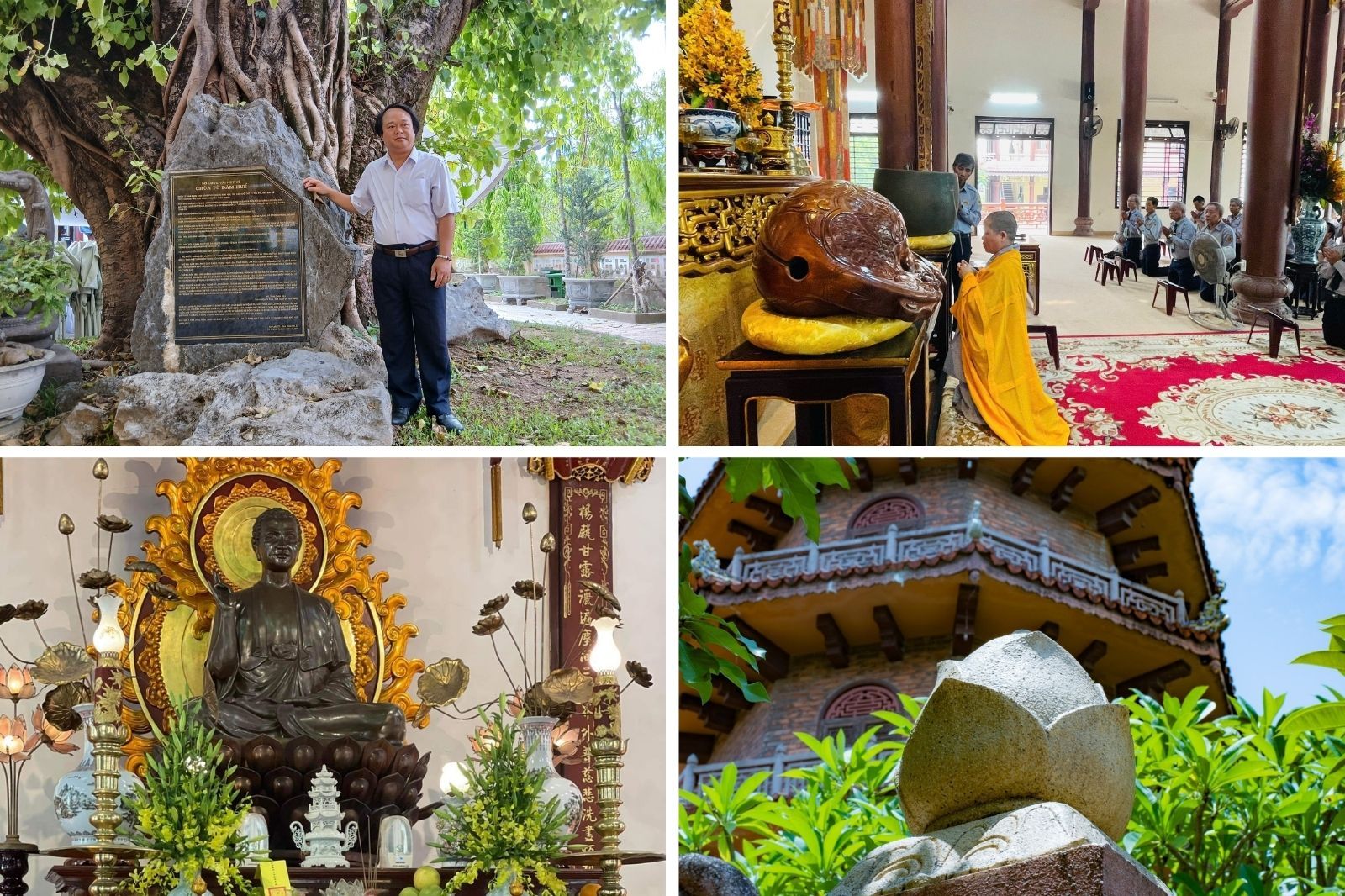
sovaba
TRAVEL GUIDETu Dam Pagoda VN

Visit Tu Dam Pagoda and embrace peaceful moments amidst dignified Buddhist surroundings and the rich cultural heritage of Hue. Discover this historic sanctuary with over 300 years of history, once the cradle of the Vietnamese Buddhist revival movement and a spiritual beacon for devotees throughout Central Vietnam. Characterized by modest yet graceful architecture, Tu Dam Pagoda offers a tranquil atmosphere ideal for those seeking serenity, meditation, or a deeper appreciation of the spiritual lifestyle unique to the people of Hue.

Check out self-guided travel tips for Tu Dam Pagoda from Sovaba Travel – a trusted tour operator in Hue, to plan a seamless and meaningful journey. From selecting the best visiting season and convenient transportation routes by motorbike or car to combining nearby city sights and must-do activities – such as paying homage in the main sanctuary, discovering An Ton Stupa, browsing the memorial room, or capturing peaceful moments across the serene grounds. Thorough preparation will ensure an effortless, memorable visit to Tu Dam Pagoda – an extraordinary spiritual destination nestled in the heart of the ancient imperial city.
History of Tu Dam Pagoda

Tu Dam Pagoda, situated at No. 1 Su Lieu Quan Street, Truong An Ward, Hue City, is one of the most venerable pagodas with profound influence throughout the history of Vietnamese Buddhism. The pagoda was founded in the late 17th century by Zen Master Minh Hoang – Tu Dung and was originally named An Ton Tu, carrying the meaning of "taking the transmission of the mind as the essence of practice." In 1841, under the reign of Emperor Thieu Tri, the pagoda was renamed Tu Dam Tu, meaning "auspicious cloud of the Dharma," a poetic metaphor for compassion and enlightenment.

More than just a place of tranquil meditation, Tu Dam Pagoda has long served as a vital Dharma propagation center for Buddhism in Thua Thien Hue Province. Spanning more than 300 years, the pagoda has witnessed numerous landmark events in Vietnamese Buddhist history – most notably during the Buddhist revival movement of the 1930s and the movements advocating for religious freedom in the 1960s. These indelible imprints have established Tu Dam not only as a place of monastic tranquility but also as an enduring symbol of dedication and steadfastness for both Dharma and nation.

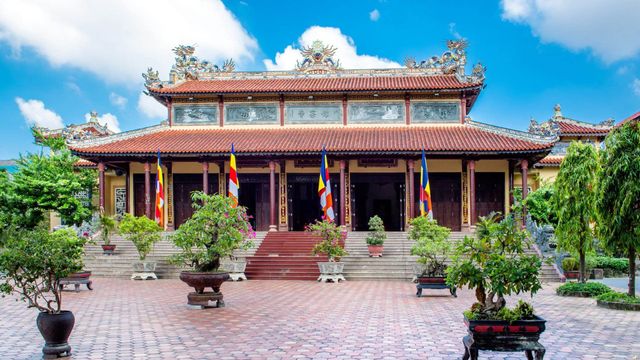
Chùa Từ Đàm ở Huế
Photo: Tu Dam Pagoda in Hue 

Guide to Getting to Tu Dam Pagoda

Tu Dam Pagoda is located approximately 2–3 km from downtown Hue, making transportation very convenient. Below are recommended transport options and routes:

Means of Transportation

  • Motorbike: Renting a motorbike for around 120,000–150,000 VNĐ/day is a popular option for independent exploration. From central Hue, follow Le Loi Street to Dien Bien Phu Street, turn right onto Su Lieu Quan Street, and continue for 500 meters to reach the pagoda.
  • Bus: City bus line No. 05 will take you close to the pagoda. You can ask the bus attendant for assistance with the correct stop.
  • Taxi/Grab: Taxi services such as Mai Linh, Vinasun, or Grab ride-hailing cost approximately 50,000–100,000 VNĐ from the city center.
  • Bicycle: If you prefer a leisurely pace, bicycles can be rented for 30,000–50,000 VNĐ/day.

Suggested Routes

  1. From central Hue: Take Ha Noi Street, turn right onto Le Loi Street, continue onto Dien Bien Phu Street, and turn right into Su Lieu Quan Street.
  2. Alternative Route: Take Ngo Quyen Street, continue onto Phan Boi Chau Street, and turn right into Su Lieu Quan Street.

Best Time to Visit

  • Dry Season (January–May): The weather in Hue is pleasantly cool and comfortable during this period, ideal for outdoor exploration.
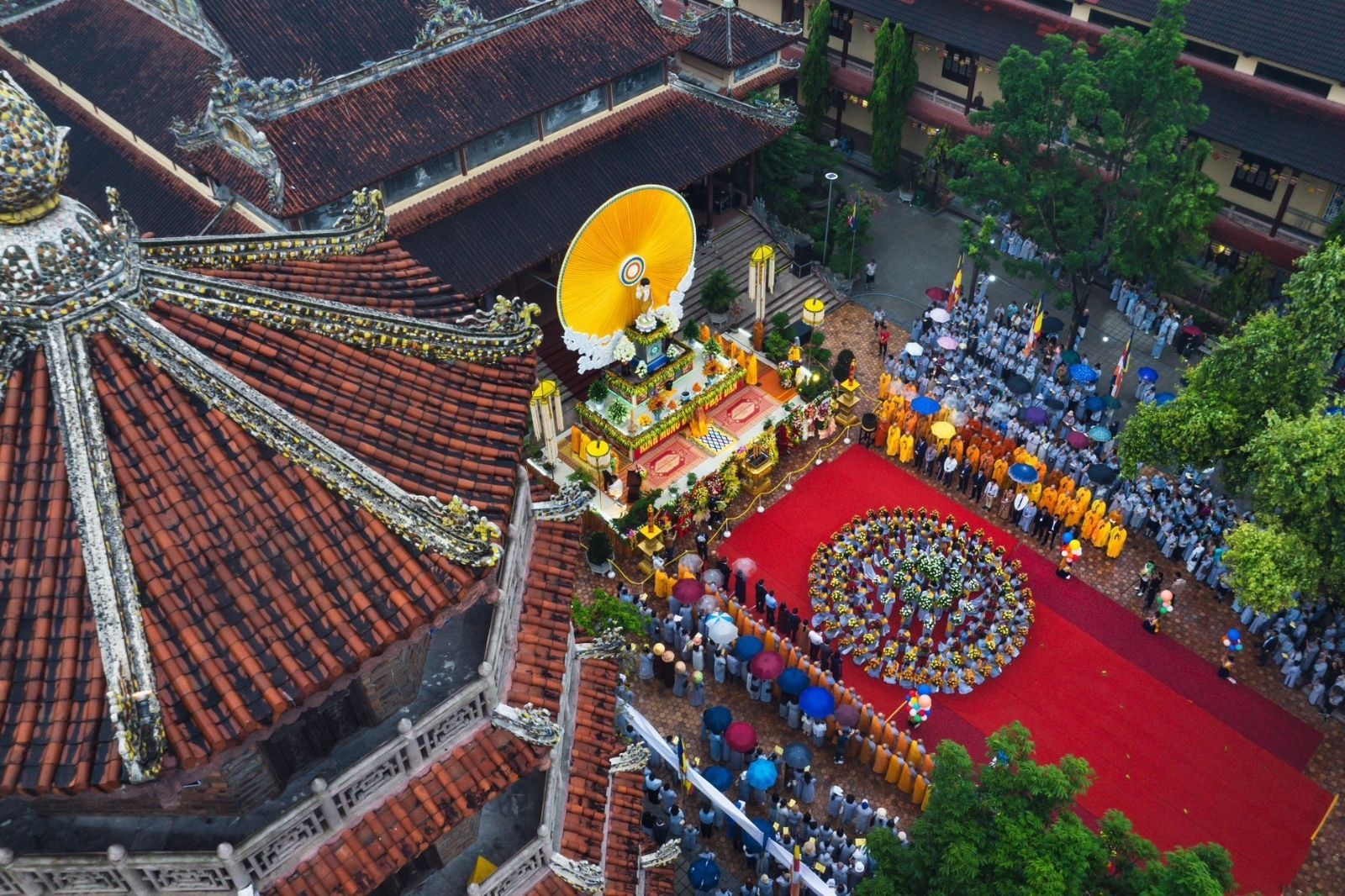
  • Festivals: Vesak (Buddha's Birthday, on the 15th day of the 4th lunar month) and major holidays like the Lunar New Year are times when the pagoda hosts vibrant spiritual celebrations.
Chùa Từ Đàm dịp lễ Phật Đản
Photo: Tu Dam Pagoda during Vesak 

Architecture and Key Highlights at Tu Dam Pagoda

Tu Dam Pagoda stands out for its harmonious blend of antique and modern touches, characteristic of the assembly pagoda style in Hue. Here are the key areas you should discover:

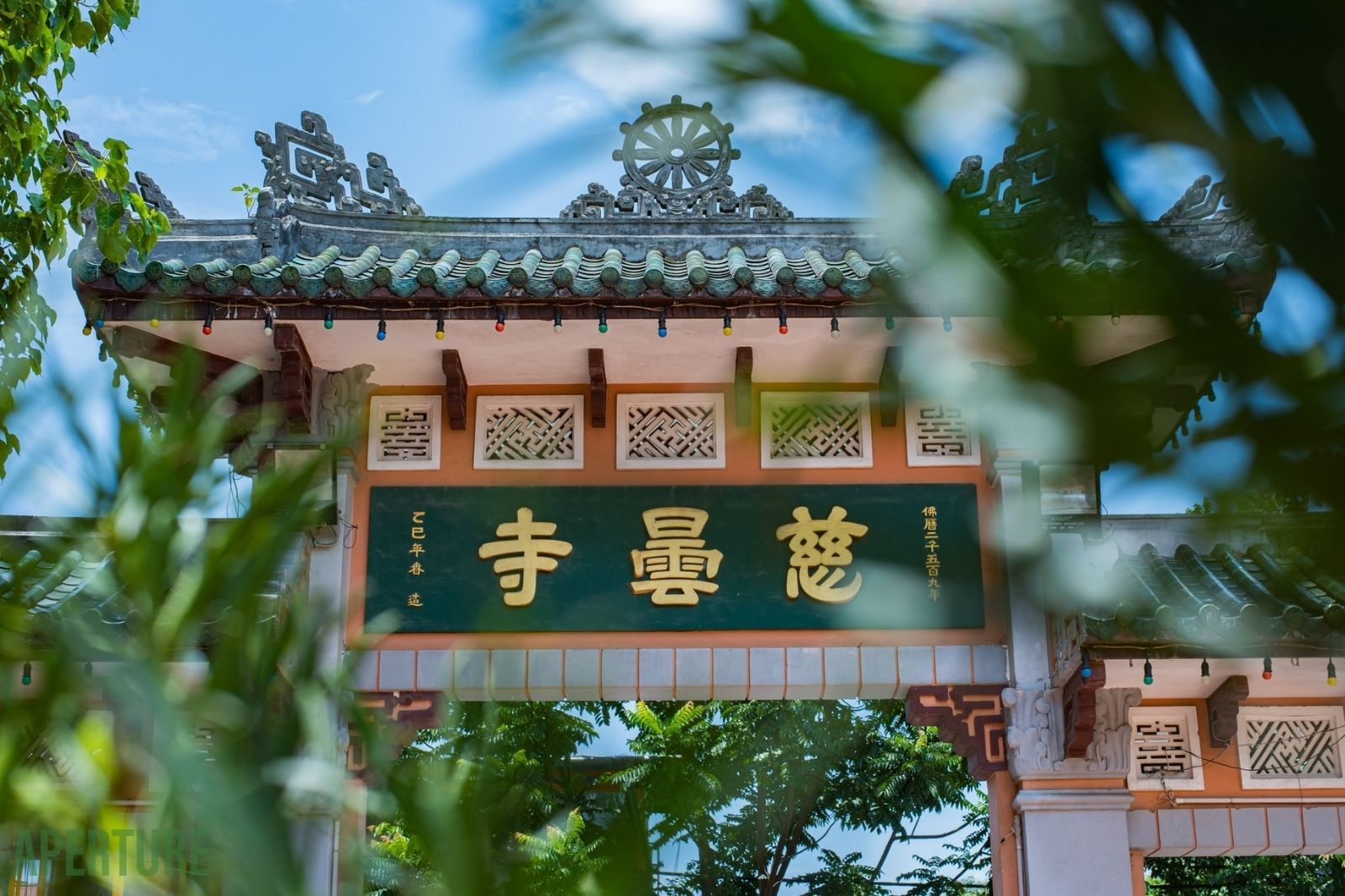
Triple Gate (Tam Quan Gate)

  • Erected in 1965, the triple gate serves as the main entrance, carrying symbolic Buddhist meanings (Emptiness, Non-action, Formlessness).
  • It features curved tiled eaves with intricate carvings, crowned at the top with the motif of "two dragons flanking the moon."

Pagoda Courtyard

  • The spacious courtyard is paved with smooth flagstones, accommodating thousands of devotees during major festivals.
  • To the right of the courtyard stands a sacred Bodhi tree grown from a cutting brought from Bodh Gaya (India), where Shakyamuni Buddha achieved enlightenment.

Main Pagoda Complex

  • Includes the front hall, the main sanctuary, and the ancestral hall.
  • The front hall is built on a 1.5-meter-high granite foundation, with double-eaved roofs adorned with embossed reliefs depicting the life of the Buddha.
  • The main sanctuary enshrines a single bronze statue of Shakyamuni Buddha, 1.32 meters high, seated on a lotus throne in the Samadhi mudra. Flanking both sides are bas-reliefs of Manjushri and Samantabhadra Bodhisattvas.
  • Hanging in the main sanctuary is a red-lacquered, gold-gilded plaque inscribed with three Chinese characters reading "An Ton Tu."

An Ton Stupa

  • Inaugurated in 2010, the 7-story, 27-meter-high octagonal stupa enshrines a bronze Buddha statue on each floor.
  • It is a modern architectural highlight representing the continuous development of the pagoda through various historical periods.

Memorial Room

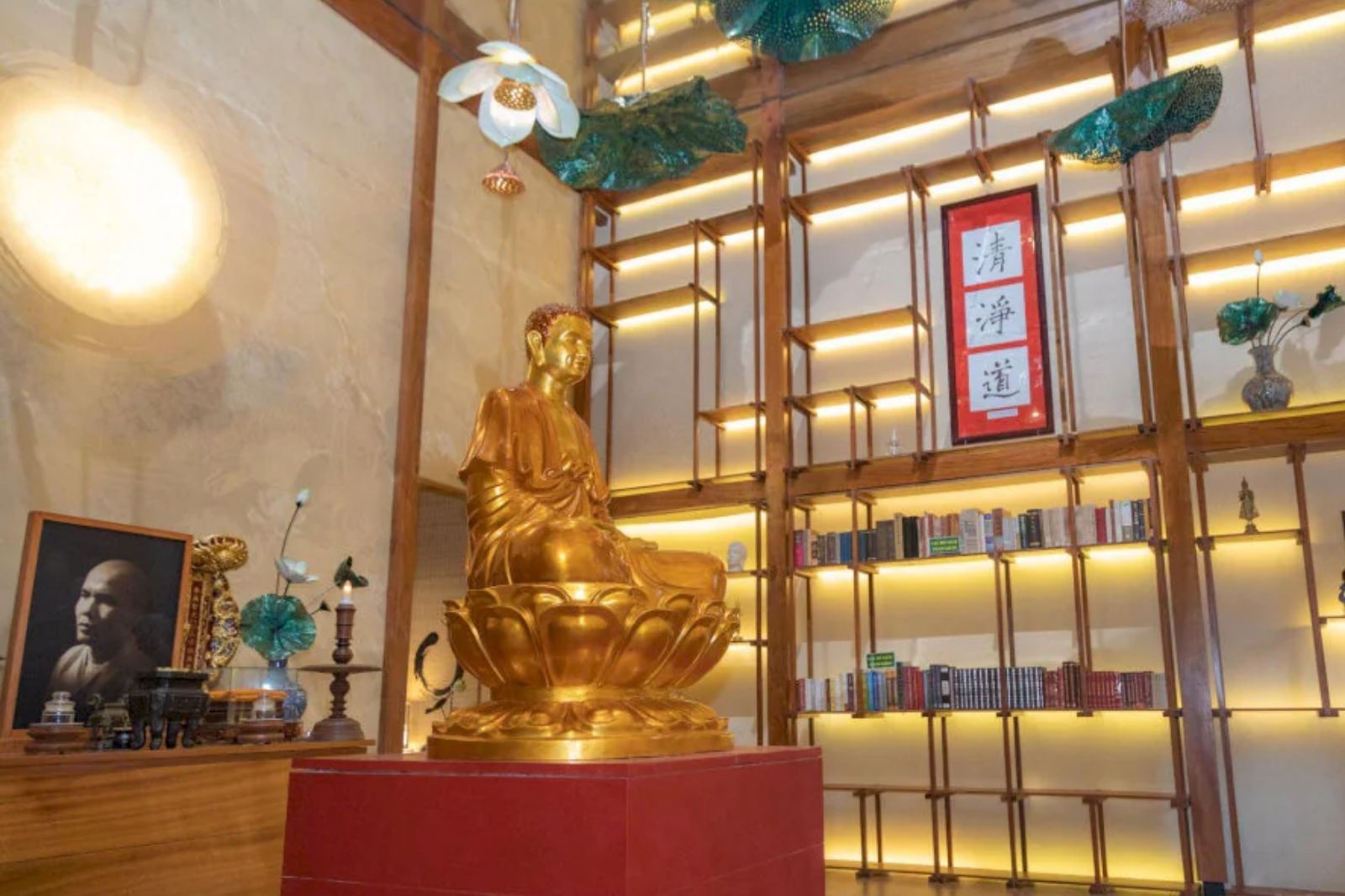
  • Designed as a miniature museum, displaying precious historical artifacts connected to the pagoda and Vietnamese Buddhism.
  • The solemn setting with soft lighting offers an ideal atmosphere to learn about the formation and historical growth of the pagoda.

Tam Minh Garden

  • Located in front of the guest hall, this modest garden features a bronze bust of lay Buddhist Tam Minh - Le Dinh Tham, who made monumental contributions to the Buddhist revival movement.

Each corner of Tu Dam Pagoda reflects not only distinctive architectural merit but also the spiritual depth and historical legacy of Vietnamese Buddhism.

Chùa Từ Đàm với nét đẹp cổ kính và giá trị tâm linh sâu sắc
Photo: Tu Dam Pagoda with its timeless beauty and profound spiritual value 

Historical and Cultural Significance of Tu Dam Pagoda

Tu Dam Pagoda is not merely a place of worship, but an enduring historical witness of Vietnamese Buddhism:

  • 17th Century: Zen Master Minh Hoang - Tu Dung founded the pagoda on Hoang Long Hill. In 1703, Lord Nguyen Phuc Chu conferred the honorary plaque inscribed "Sac Tu An Ton Tu."
  • 1938: The pagoda became the headquarters of the Annam Buddhist Association, marking the Buddhist revival movement in Central Vietnam.
  • 1951: The historic conference establishing the General Association of Vietnamese Buddhism took place at the pagoda, attended by 51 delegates representing all three regions of Vietnam.
  • 1960s: The pagoda served as the nerve center for movements defending religious freedom against discriminatory policies of the Ngo Dinh Diem administration.

Tu Dam Pagoda also houses numerous valuable relics, including historical records of the Annam Buddhist Association and precious artifacts from the Buddhist revival era.

Phòng tưởng niệm là nơi yên tĩnh để suy ngẫm
Photo: The memorial room is a tranquil space for contemplation

Tu Dam Pagoda is not only a sacred pilgrimage destination but also an enduring guardian of valuable history, culture, and iconic Buddhist architecture in Hue. With this detailed A–Z travel guide, we hope you will enjoy a complete and meaningful journey. If you wish to save time and experience a professionally organized itinerary, be sure to explore the Tu Dam Pagoda tour organized by Sovaba Travel – an ideal choice to discover the spiritual and cultural depth of the ancient capital with well-curated itineraries and knowledgeable tour guides.

Articles related to Tu Dam Pagoda VN

  • Discovering the Architecture of Tu Dam Pagoda in Hue: An Ancient Temple Embodying the Soul of Hue
  • Discover Tu Dam Pagoda in Hue – A Serene Spiritual Destination