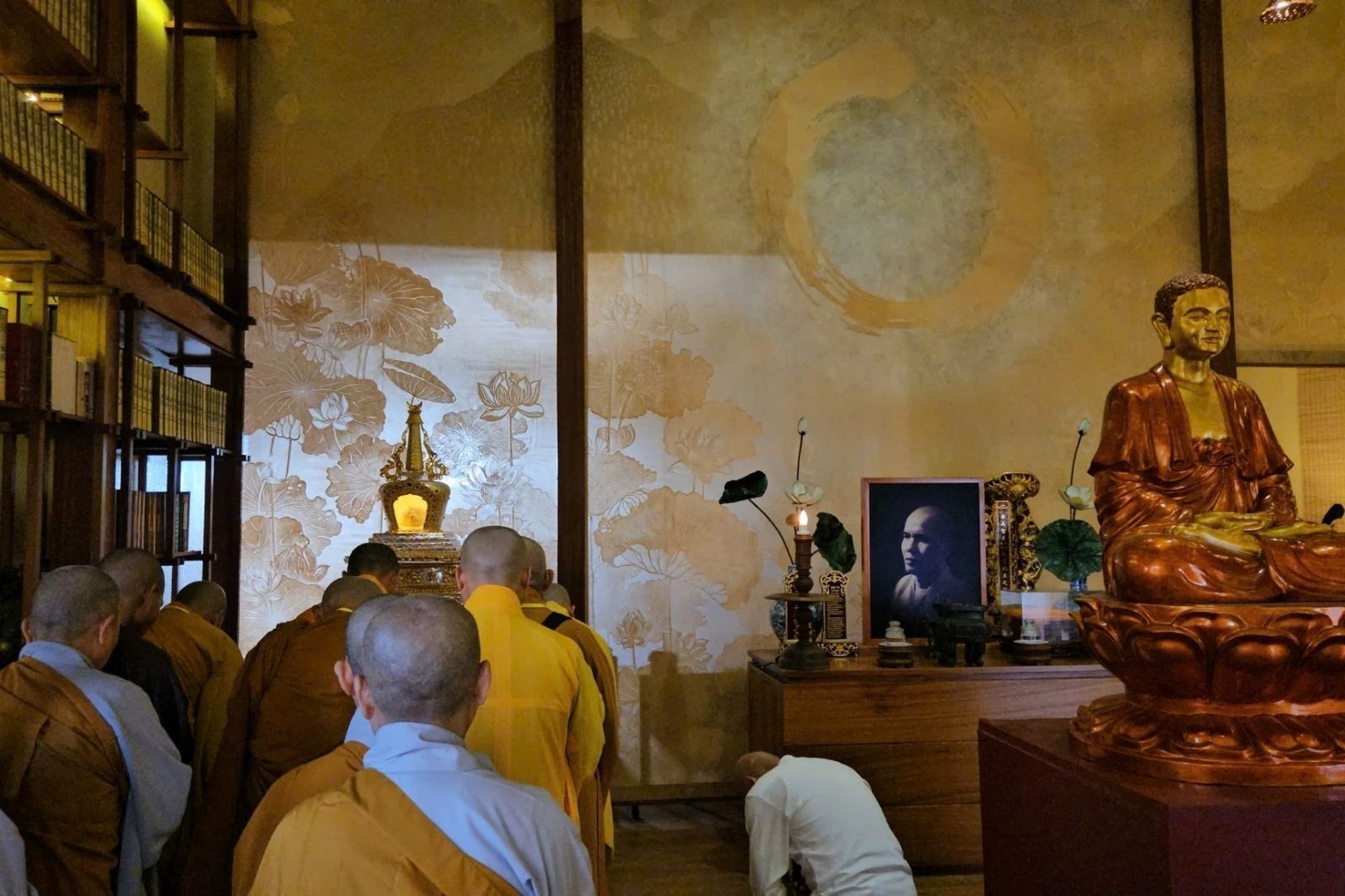
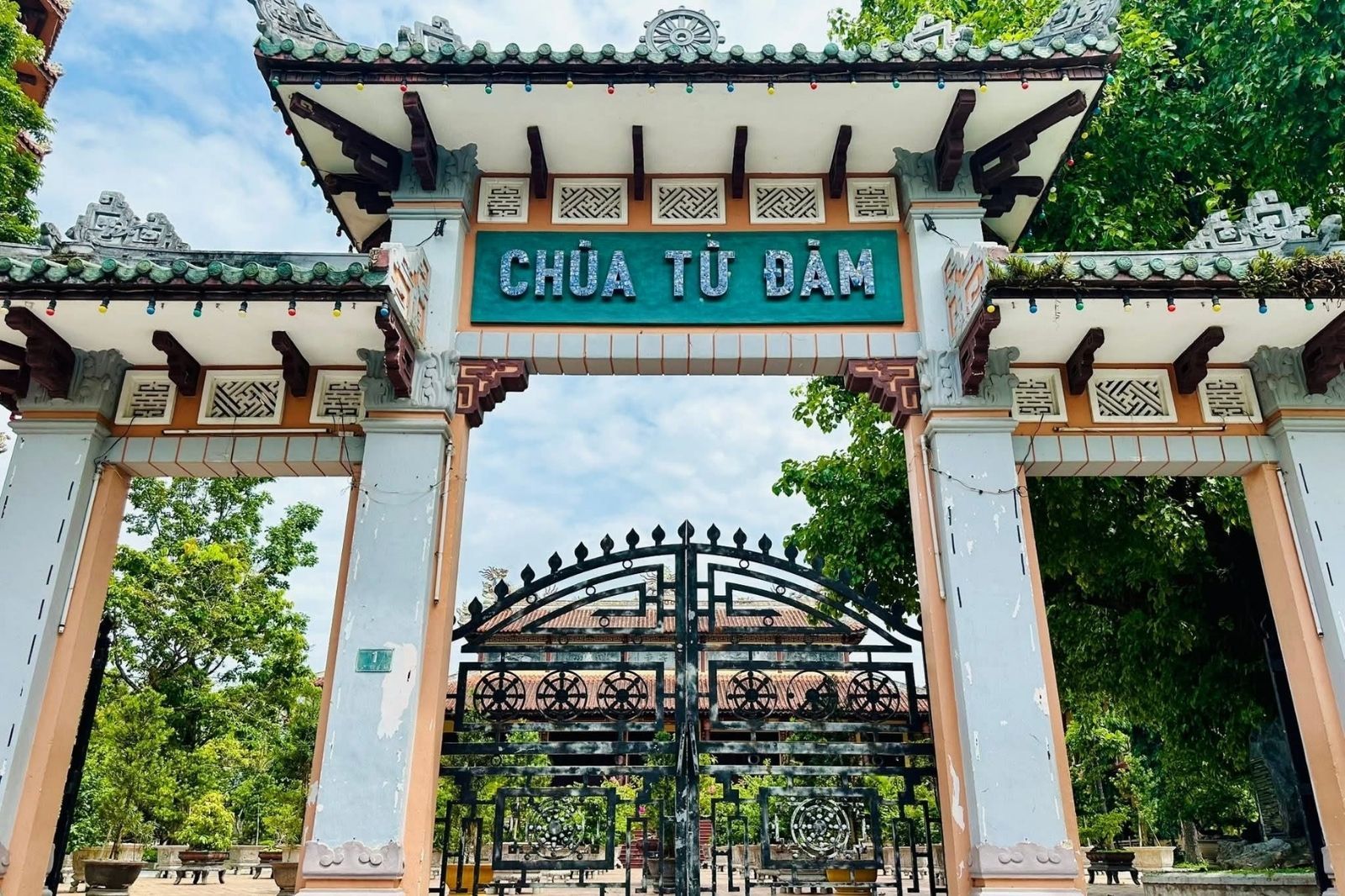
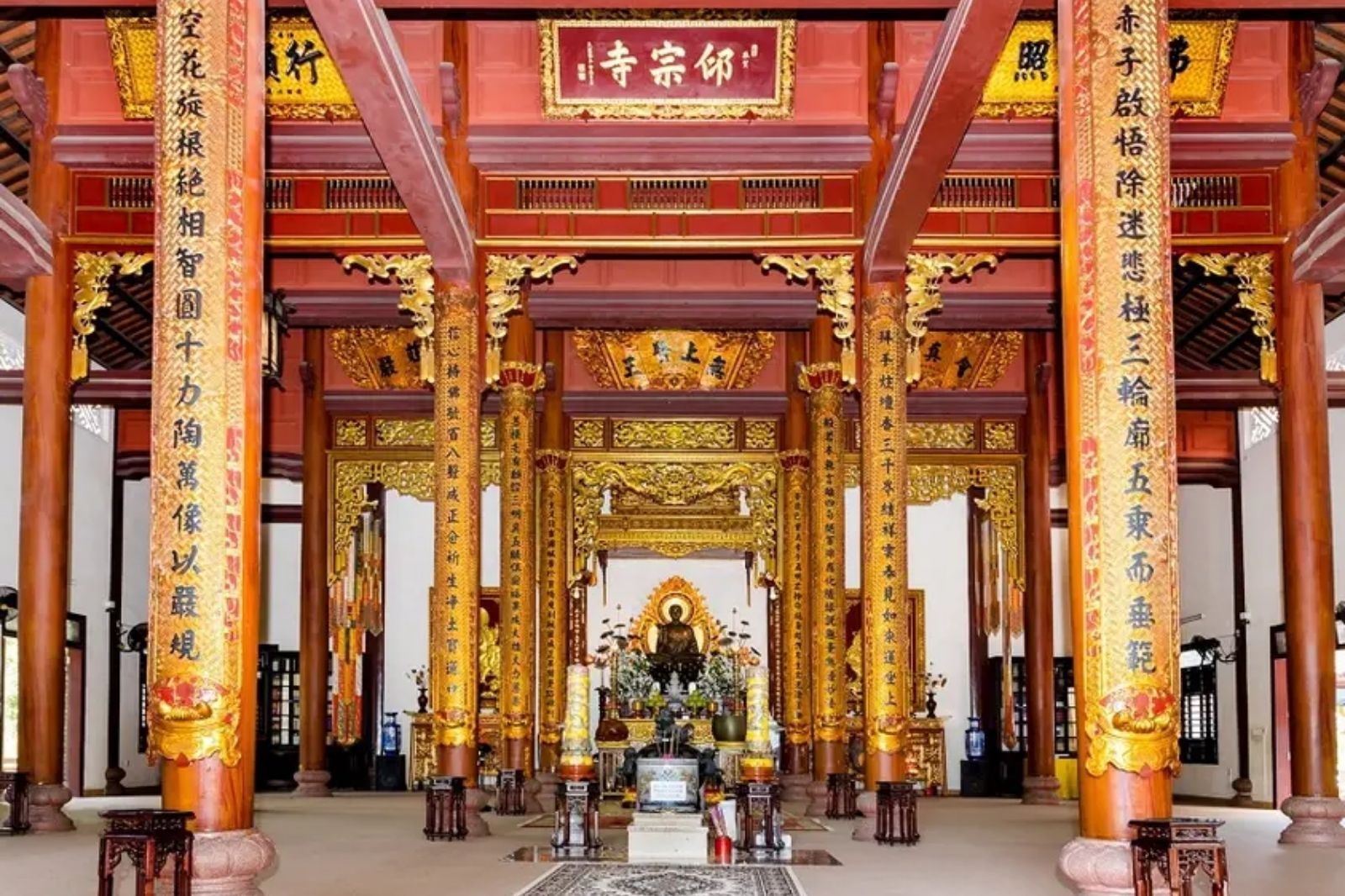
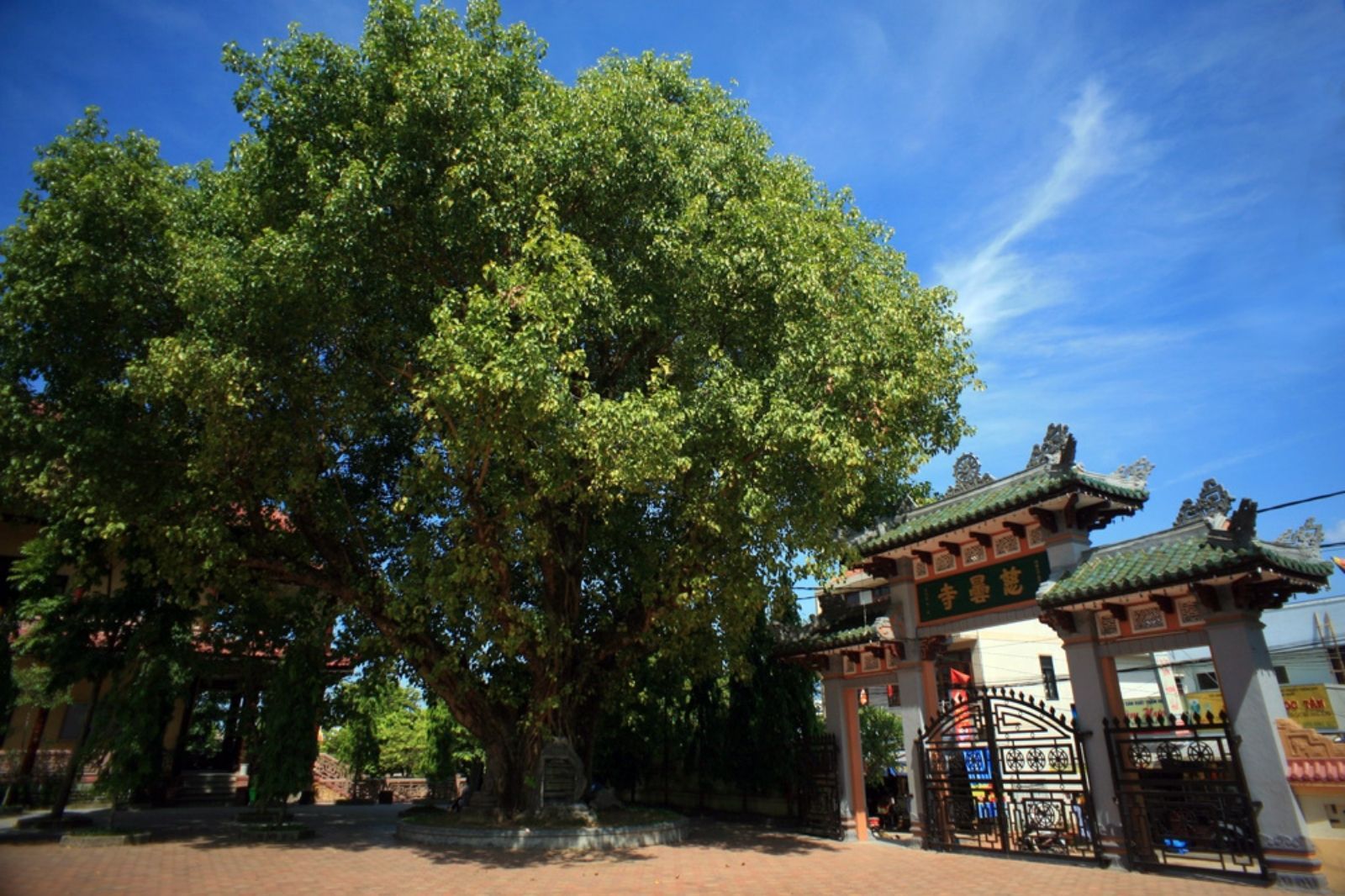
Tu Dam Pagoda stands as one of the most venerable and influential Buddhist temples in Vietnam. It was founded in the late 17th century by Zen Master Minh Hoang - Tu Dung on Hoang Long Hill during the reign of Lord Nguyen Phuc Thai. Originally, it was a modest hermitage named An Ton Tu, signifying the core Buddhist path of enlightenment and heart-to-heart transmission of the Dharma. In 1703, Lord Nguyen Phuc Chu bestowed the royal plaque 'Sac Tu An Ton Tu,' marking a significant milestone in its history. This was also where Zen Master Lieu Quan studied and received the Dharma transmission, laying the foundation for the Tu Dung - Lieu Quan Zen lineage—one of the most influential Zen traditions in Dang Trong.
Through numerous historical upheavals, especially during the Tay Son wars, the pagoda suffered extensive damage and underwent several restorations. In 1841, Emperor Thieu Tri renamed it Tu Dam Tu, meaning "auspicious cloud of the Dharma," a name it proudly retains today.
Entering the 20th century, Tu Dam Pagoda became the epicentre of the Vietnamese Buddhist Revival Movement. It served as the headquarters of the Annam Buddhist Association, the venue for the Inaugural Congress of the General Buddhist Association of Vietnam in 1951, and the site of key events in the movement for religious freedom during the 1960s.