An Truyen Village and the Traditional Autumn Ceremony – A Journey Back to Culture
Central
Thua Thien Hue
Tam Giang Lagoon
Sovaba.travel
Updated at: 24/09/2026
1. Where is An Truyen Village?
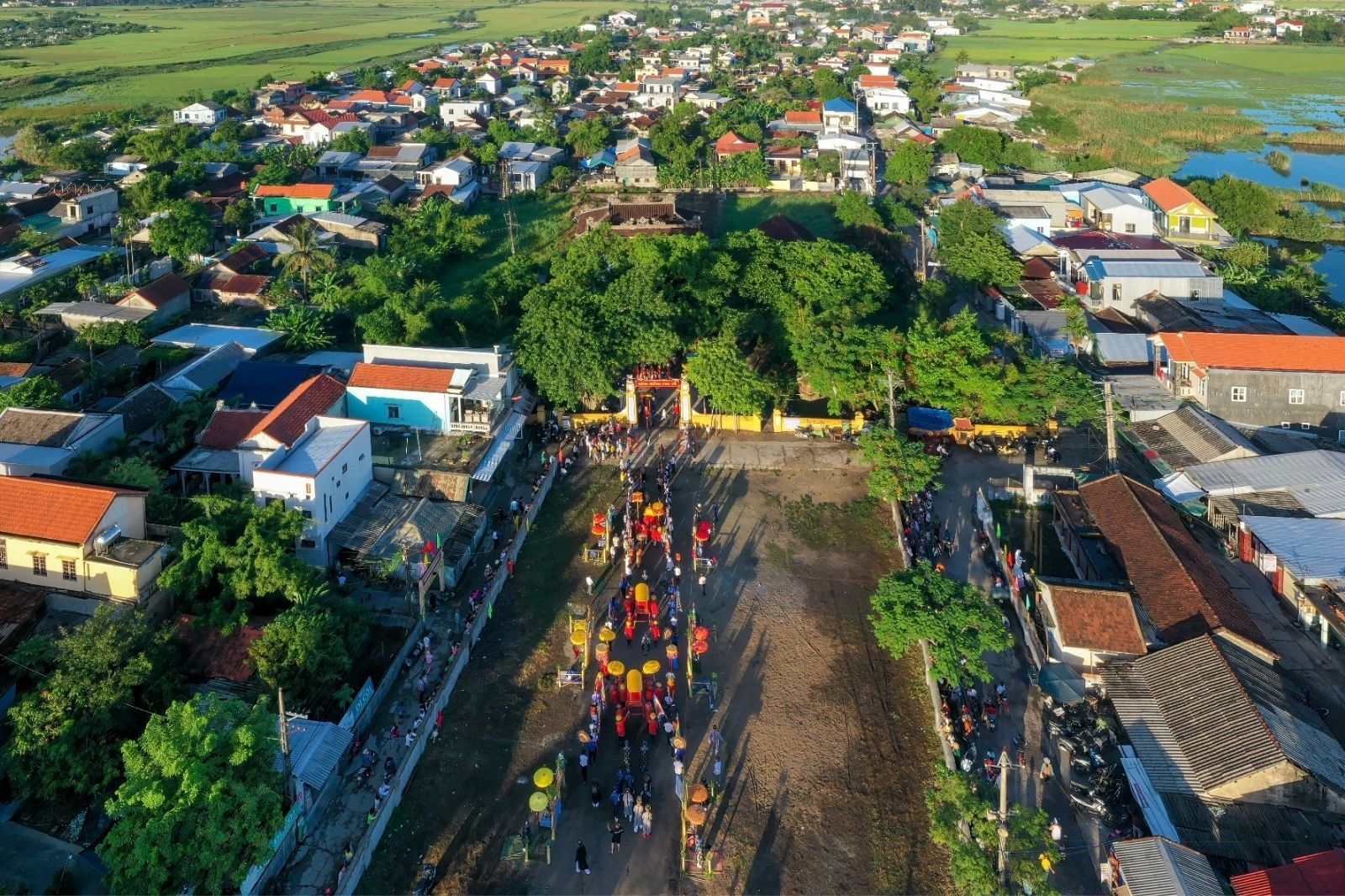
An Truyen village belongs to Phu An commune, Phu Vang district, Thua Thien Hue province, about 8-10km east of Hue city center. The village is located adjacent to Chuon Lagoon – part of the largest Tam Giang Lagoon system in Southeast Asia, creating a poetic natural picture with picturesque mountains and waters.
An Truyen Village is known as a refined "cultural heritage village" with ancient ruong house architecture, a solemn communal house, and a peaceful countryside space. This place is famous for traditional agriculture, fresh seafood from the lagoon, and especially the autumn ceremony, one of the most important festivals of the community.
Photo: An Truyen Village
2. The history and cultural values of An Truyen Village
An Truyen village has a history of hundreds of years, formed during the Later Le dynasty, with many prestigious families such as the Ho Dac family – a famous lineage that produced many doctors and mandarins under the Nguyen dynasty. The village was once dubbed the "aristocratic village" thanks to its tradition of studiousness and preservation of Hue's elite culture. The cultural value of the village lies in its ancient ruong house architecture, An Truyen Communal House (a national architectural and artistic relic), and intact preserved customs. This is one of the rare ancient villages that still fully retains its system of communal houses, pagodas, garden houses, and shrines, reflecting the harmonious bond between humans and the nature of Hue.
Photo: The Autumn Ceremony is an important ritual of An Truyen Village
3. The Autumn Ceremony in An Truyen Village
The autumn ceremony (also known as Le Te Thu) is the most important traditional annual ritual in Vietnamese villages, especially in Hue. This is an occasion for villagers to express gratitude to heaven and earth, the agricultural deity, the village tutelary god, and the founding ancestors who blessed them with favorable weather and bumper crops. The origin of the autumn ceremony stems from wet-rice agricultural beliefs, influenced by Confucianism and ancestor worship. In An Truyen village, the ceremony carries deep spiritual significance: showing gratitude to ancestors, praying for national peace and prosperity, while educating the young generation on the principle of "when drinking water, remember the source".
An Truyen village's autumn ceremony takes place annually in the middle of the 7th lunar month, usually lasting for 3 days: 15, 16, and 17th of the 7th lunar month. The 17th day is the main ceremony day (Chanh te) – the most important part of the festival. This is the time when villagers living far from home gather, creating a warm reunion atmosphere.
Escorting the ancestral tablets
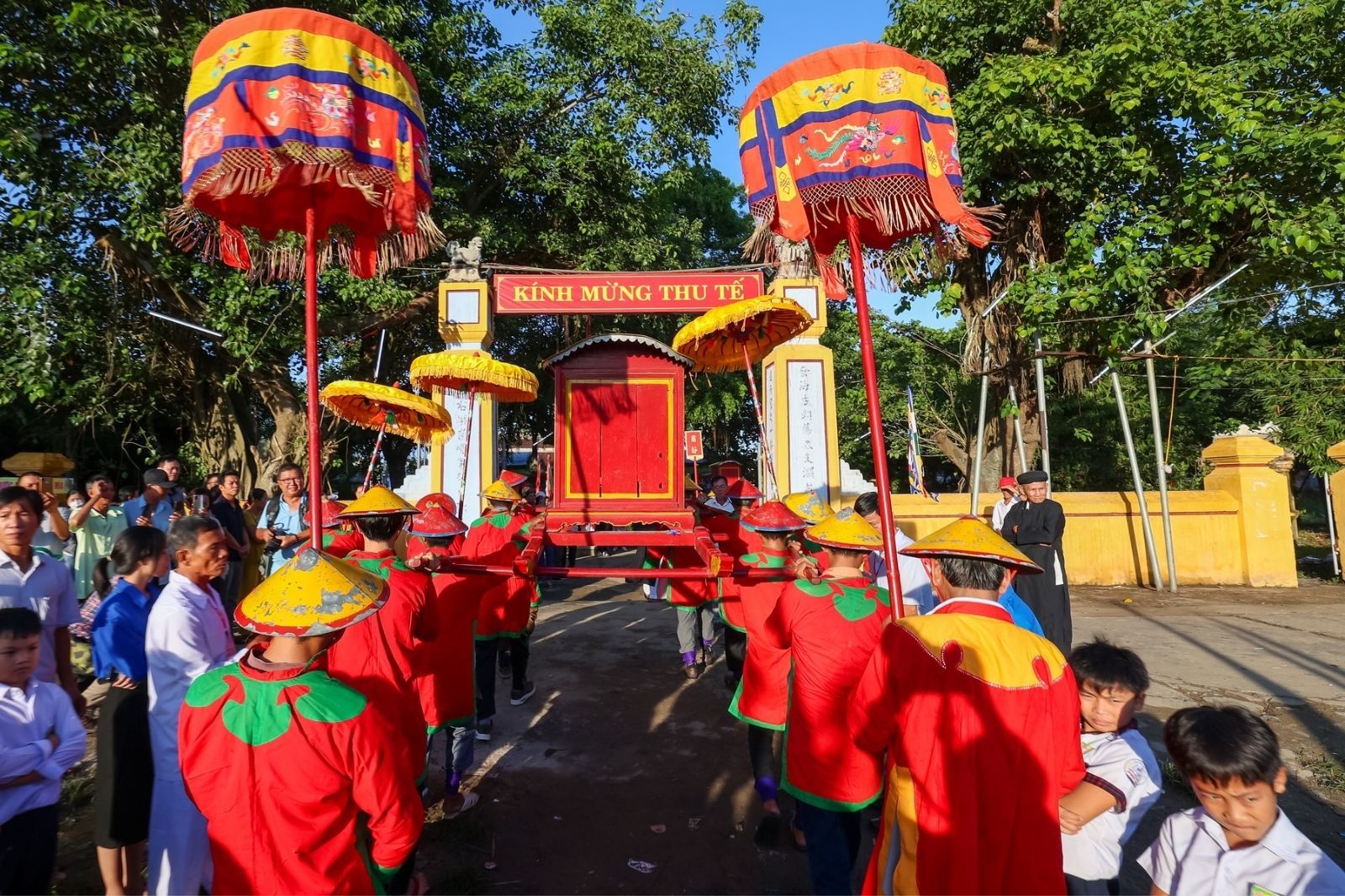
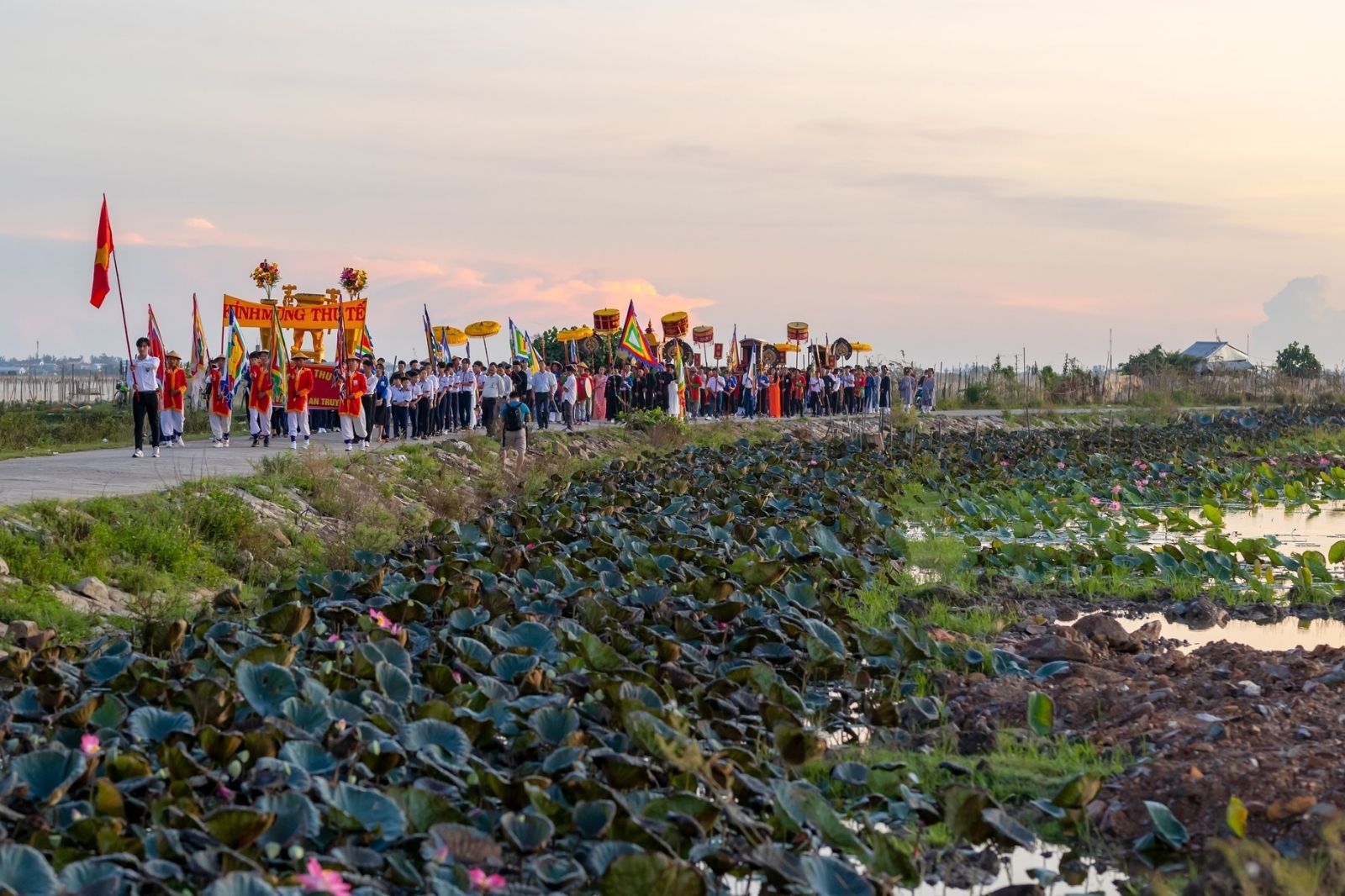
On the main festival day, villagers in neat traditional attire perform the ritual of welcoming and escorting the tablets of the founding ancestors from the village shrine in Dong Mieu (near Chuon Lagoon) to An Truyen Communal House. The solemn procession with flags, ceremonial music, and offerings such as flowers, incense, and wine creates a sacred yet bustling atmosphere.
Photo: Escorting the ancestral tablets from the village shrine in Dong Mieu
Setting up the incense altars
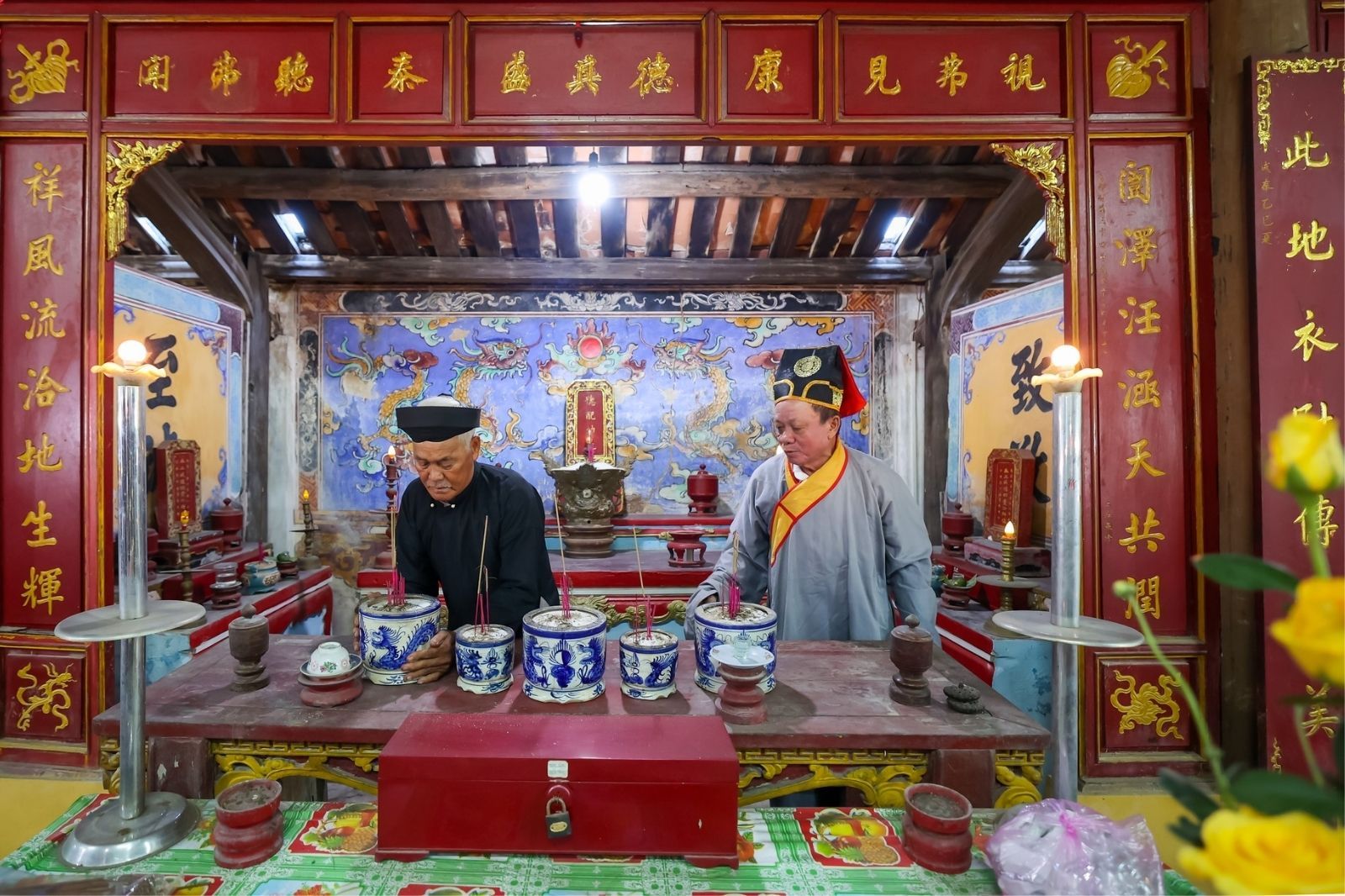
Along the procession route, at the head of each hamlet, people set up triple-arch gates, hang lanterns, arrange flowers, and display incense altars. In front of the communal house, the incense altars of 7 clans are solemnly arranged, representing the solidarity and respect of the Chuon village community.
Ceremonial rituals
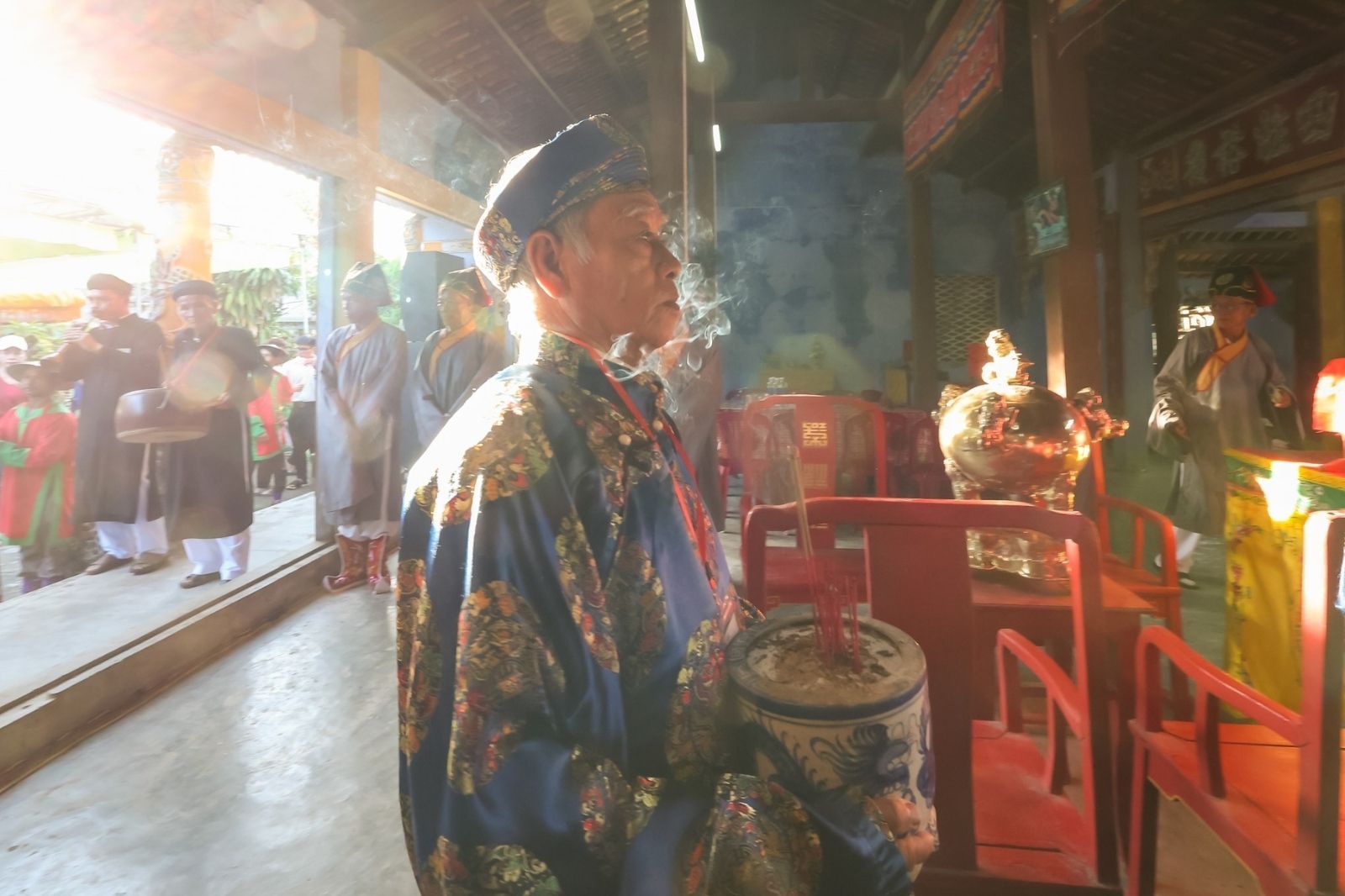
From the afternoon of the 16th day of the 7th lunar month, villagers begin their pilgrimage and present offerings. Elders stand in front of the incense altars, performing bowing rituals as the procession passes. The rituals at the communal house include reading ceremonial prayers, offering incense, wine, and offerings such as square and round sticky rice cakes, fruits, and the three sacrificial animals (beef, goat, pork).
Community participation
Not only local villagers, but the festival also attracts descendants living far from home to return and reunite. This is an occasion to connect generations, review traditions, share cultural values, and strengthen village solidarity.
The Autumn Ceremony is not only a religious ritual but also a highly community-oriented cultural activity. It reflects the bond between generations, between humans, ancestors, and nature. The rituals during the ceremony, such as palanquin procession, reading ceremonial prayers, or hanging lanterns and decorating flowers, all carry symbolic meaning, reflecting gratitude and aspirations for a peaceful and prosperous life.
In addition, the Autumn Ceremony is also an opportunity to promote Hue culture to the world. With the participation of domestic and international tourists, this festival not only helps preserve intangible cultural heritage but also contributes to promoting cultural tourism in Thua Thien Hue.
Photo: The festival helps preserve intangible cultural heritage
4. Experiences for visitors attending the An Truyen Autumn Ceremony
During the autumn ceremony season, An Truyen village dons a solemn and lively beauty. The communal house becomes the center filled with incense smoke and resounding drumbeats and gongs. Shaded village roads, ancient ruong houses, and the glistening water of Chuon Lagoon create a poetic and peaceful setting.
If visiting Hue in the 7th lunar month, visitors should not miss the opportunity to participate in the autumn ceremony of An Truyen village and experience cultural activities such as:
Observing the procession and main ritual ceremonies from early morning.
Visiting Chuon Lagoon: A beautiful spot to admire the scenery and learn about the lives of the lagoon residents.
Tasting mam ruoi: A famous specialty of An Truyen village with a rich, distinctive Hue flavor.
Exploring traditional craft villages: Chuon village is also famous for handicraft products such as bamboo mats, conical hats, and rustic dishes.
Photo: The Autumn Ceremony is an occasion for villagers to revisit traditional values
In the context of modernization and urbanization, the Autumn Ceremony in An Truyen village still retains its original features and traditional cultural values. However, to maintain and promote this ritual, local authorities and the community have made significant efforts, from organizing promotional programs to encouraging the younger generation to participate in cultural activities.
An Truyen Village and the traditional Autumn Ceremony are a journey back to the roots, where cultural, religious, and community spirit values are preserved and honored. This is not only a source of pride for the people of Thua Thien Hue but also a cultural highlight, attracting tourists who want to discover Vietnamese identity. Along with Sovaba Travel, you will have the opportunity to deeply experience Vietnamese identity through the festivals, customs, and tranquil scenery here.