Ariêu Ping Festival of the Pa Cô People in Quảng Trị: Mystery and Unique Cultural Beauty
Central
Quang Tri
Sovaba.travel
Updated at: 24/09/2026
1. What is the Ariêu Ping Festival?
Ariêu Ping (also written as A-riêu-Ping or Ariêu Piing) is the largest and most significant festival of the Pa Cô people (also known as Tà Ôi or Pa Kô) in Đakrông and Hướng Hóa districts, Quảng Trị province. The festival is also known as the tomb house ritual, reburial ceremony, or exhumation ritual. According to traditional beliefs, the Pa Cô people believe that after passing away, the deceased enter their own world. The festival is held to move the remains of loved ones from temporary graves (often scattered in the forest) to be reburied for a second time in sturdy, intricately decorated tomb houses (mausoleums). This helps the souls of the departed achieve liberation and brings peace and good fortune to their descendants.
The festival is not celebrated annually but depends on the financial conditions of the clan, typically held once every 10 to 15 years, or even 20 to 30 years. It serves as an occasion for entire clans, villages, and guests from neighboring regions to gather, demonstrating a powerful sense of community spirit.
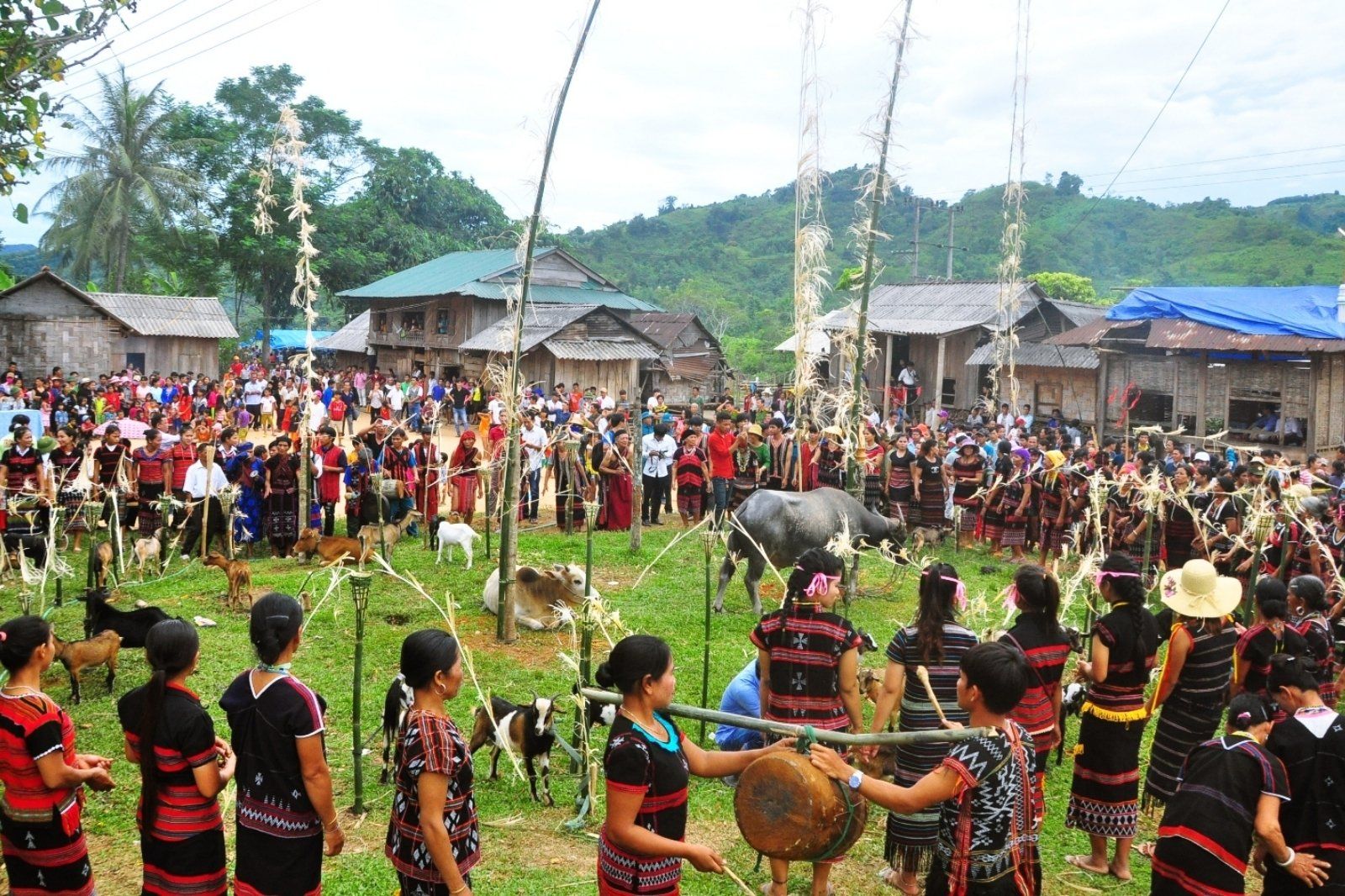
Photo: Ariêu Ping Festival
2. Unique rituals of the festival
In Quảng Trị, the Ariêu Ping festival of the Pa Cô people is prepared with meticulous care. It is not only a traditional ceremony but also an opportunity for the community to remember the departed and strengthen village bonds. One of the most important parts is the exhumation ritual held 3–5 years after a loved one's passing, moving the remains to a communal tomb house called Ân Trạp. These tomb houses are usually erected in spacious areas with streams running year-round, as the Pa Cô believe this provides a cool, serene resting place that makes it convenient for spirits to return and rest long-term.
Unlike many other regions, tomb houses in Quảng Trị are sturdily built with solid cement corrugated roofing, where the front roof is raised higher than the back, creating a distinctive profile. On the wall surfaces, the Pa Cô decorate with red and white patterns carrying deep spiritual significance that stand out strikingly against the dark green backdrop of the mountains and forests. These simple yet meaningful carvings give the scene a solemn yet vibrant atmosphere, like a symphony between humanity and nature.
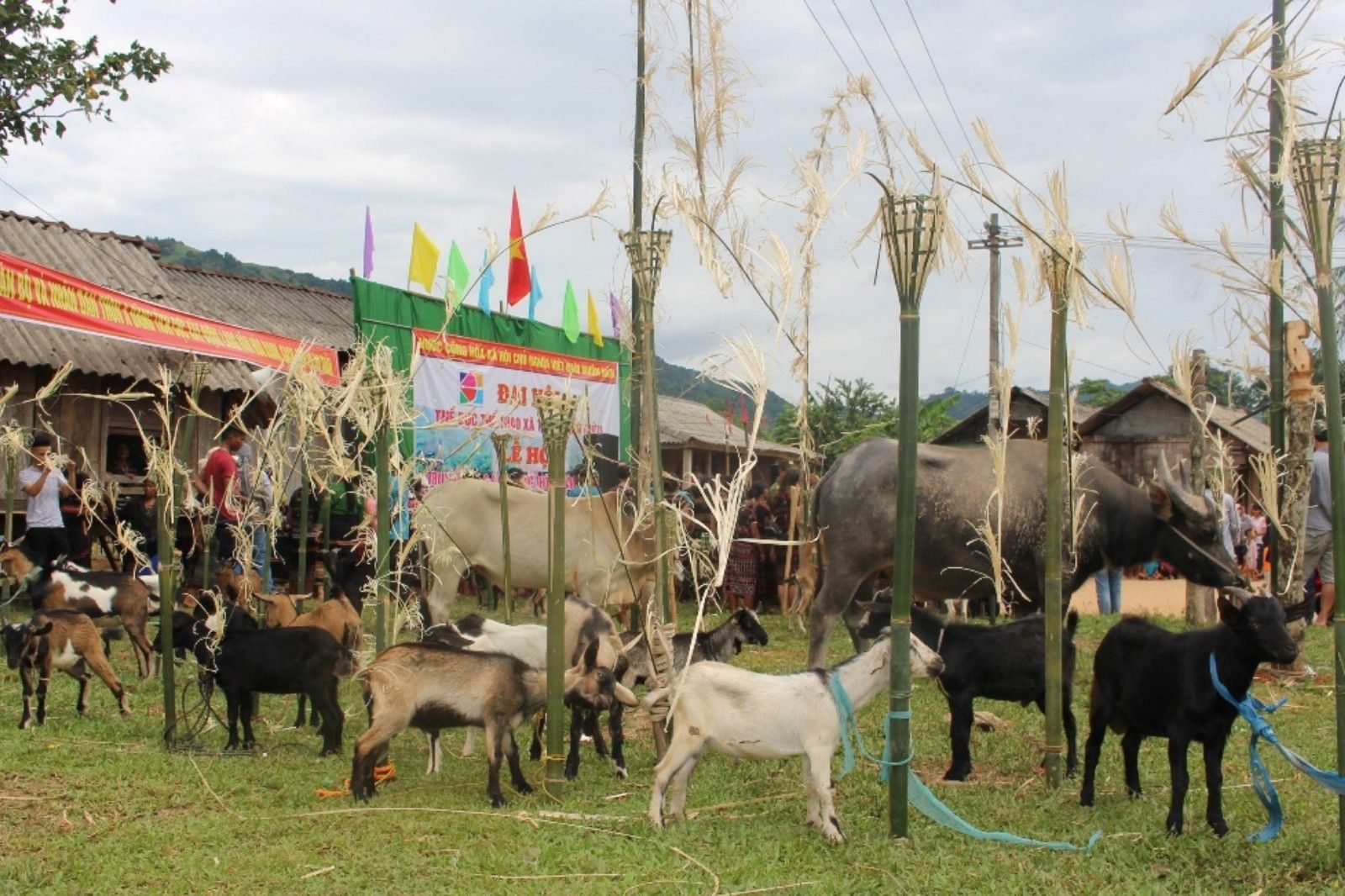
Photo: Ariêu Ping Festival meticulously prepared
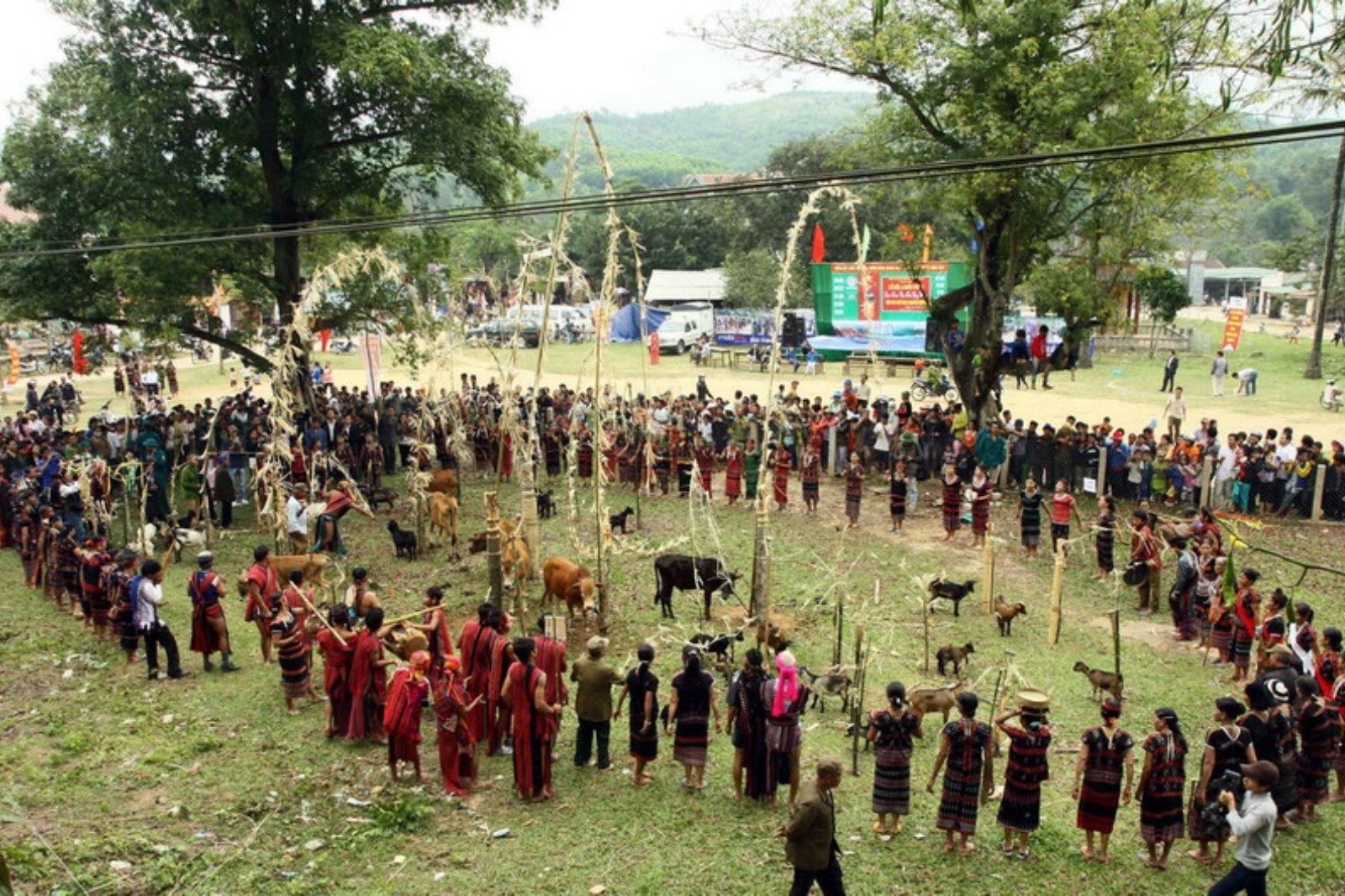
On the first day of the festival, villagers in districts like Hướng Hóa or Đakrông gather to construct the Ân Trạp, marking the start of three solemn yet lively days of celebration. The second day brings a festive surge of energy with the buffalo sacrifice ritual, Rzooc dance, and resonant echoing sound of gongs and drums reverberating across the mountains. On the final day, the soul farewell ceremony is solemnly performed amidst continuous gong and drum beats, sounding like messages of farewell, send-off, and gratitude dedicated to the ancestors.
During the buffalo sacrifice ritual, tall sacred poles (cây nêu) are erected by the clans of the deceased, to which sacrificial animals such as buffaloes, cows, goats, and pigs are tethered. The person performing this ritual directly is called an Ariehs, typically a respected figure holding high prestige in the community. When the ritual blow lands on the animal, cheerful cheers erupt, wine pours freely, and everyone moves together, immersing themselves in the rhythm of the festival. Afterward, the sacrificed meat is divided and cooked on the spot as a sacred bridge connecting the living and the departed, and to welcome the Ra Gioóc delegation—guests who arrive with deep respect and devotion.
3. Gong culture and decorative arts
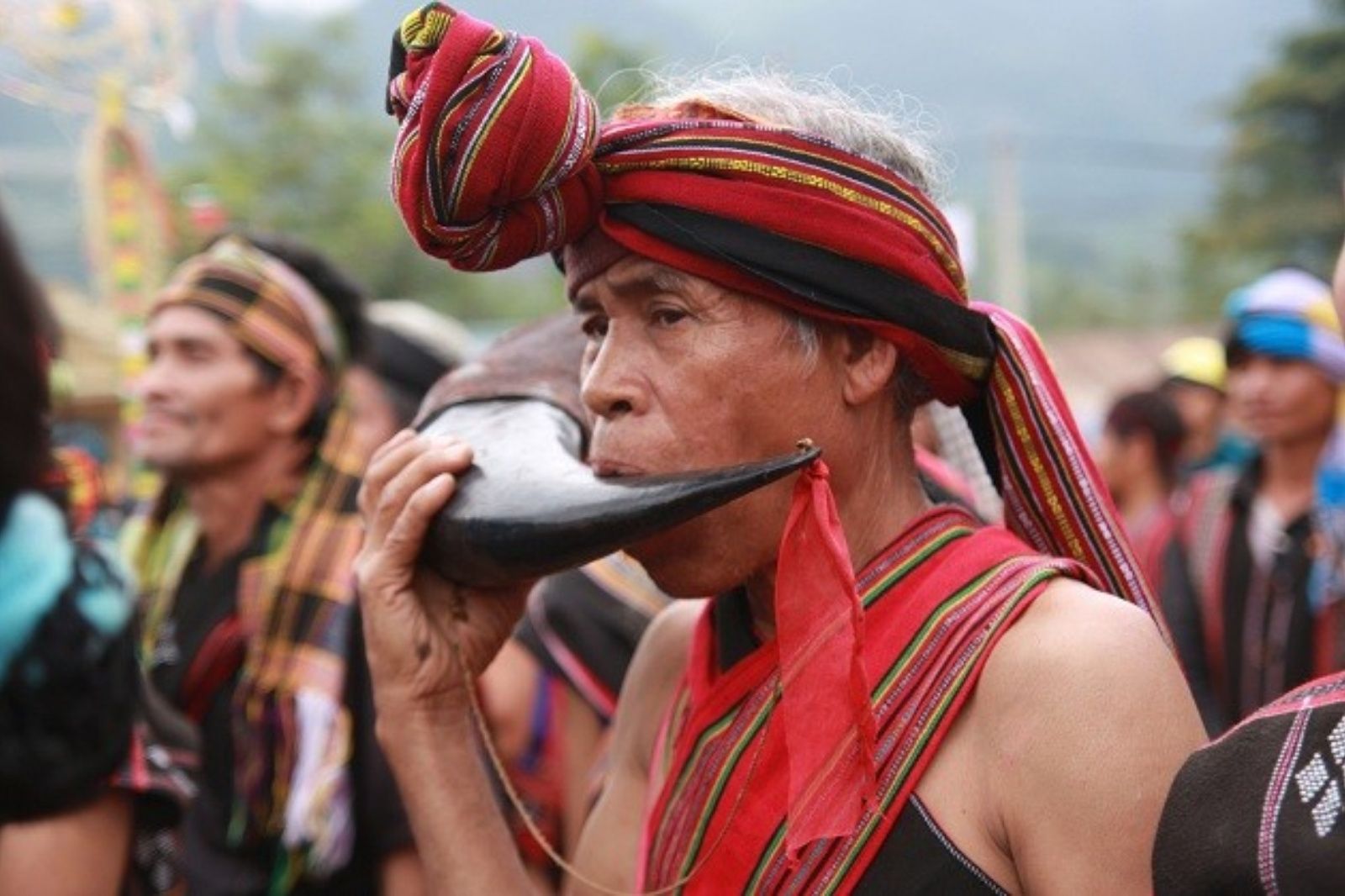
Gongs are the soul of the Ariêu Ping festival. The echoing gong beats resonate continuously day after day without interruption, as it is believed to ward off evil spirits and bring joy to the departed souls. The Pa Cô use various traditional musical instruments such as buffalo horn bugles, panpipes (khèn), ta lư lutes, ta ngát, and drums... combined with folk dances and songs (Xiêng, Klơi, Cha Chấp, Ra Doác...).
Decorative arts are prominently displayed through:
Brocade costumes: Women wear traditional skirts (xin/xấn) and ado shirts featuring flora, fauna, and natural patterns (predominantly red and black). Young girls wear bright colors, while married women wear darker tones. Beaded and silver jewelry enhances their beauty.
Tomb houses and Ân Trạp: Elaborately built and decorated with characteristic patterns.
Sacred poles (Cây Nêu) and ritual items: Creating a vibrant setting in the heart of the mountains.
The decorative art in the Ariêu Ping festival in Quảng Trị is a special highlight. Sacred poles (Tar tong) are raised, representing a connection between humans, deities, and ancestors. Intricately carved wooden statues depict people, wild animals, and nature, expressing hopes for a prosperous life. The red and white patterns on tomb houses not only provide aesthetic flair but also hold profound spiritual meaning.
4. Cultural significance and national heritage values
On November 10, 2023, the Ariêu Ping festival of the Pa Cô people was recognized by the Ministry of Culture, Sports and Tourism as a National Intangible Cultural Heritage, affirming the unique value of this ceremony in Quảng Trị. This is a source of pride for the Pa Cô people and an inspiration for younger generations to continue preserving their heritage. The festival not only honors ancestors but also helps descendants recognize their relatives, preventing consanguineous marriages, and resolving customary and land issues within the community.
In the context of modernization, preserving the Ariêu Ping festival in Quảng Trị presents challenges. Some young Pa Cô individuals occasionally forget to look back at their roots. However, thanks to the efforts of village elders and local authorities, the Ariêu Ping festival is being restored and preserved. Folk songs and dances such as tân i, tân boi, cha chấp, and the melodies of bamboo reed pipes (khèn bè) echo once again, carrying the spirit of the Quảng Trị mountains.
Photo: Aside from the festival, folk song melodies also contribute to preserving cultural identity
5. Connecting tourism with the Ariêu Ping Festival in Quang Tri
With its unique cultural beauty, the Ariêu Ping festival is becoming a highlight of tourism in Quảng Trị, particularly in Hướng Hóa and Đakrông districts. Activities such as gong dancing, folk games, and tomb house decorative arts attract visitors from far and wide. Recognition as a national intangible cultural heritage opens opportunities to promote Pa Cô culture to the world while encouraging sustainable tourism development in Quảng Trị.
Photo: The festival has become a cultural highlight of the Pa Cô people
If you have the chance to visit Quảng Trị during the festival season, you will be immersed in the vibrant gong rhythms, admire artistic wooden statues, and feel the filial piety of the Pa Cô people. It is a journey of cultural discovery where you witness the harmony between past and present, humanity and nature.
The Ariêu Ping festival of the Pa Cô people in Quảng Trị is not only a spiritual ceremony but also a vivid cultural tapestry where traditional values are preserved and spread. From the echoing sounds of gongs to wooden sculptures symbolizing rebirth and fertility, the festival is a testament to the enduring vitality of the Pa Cô ethnic group at the foot of the Truong Son range. Experience Ariêu Ping in Quảng Trị at least once to feel the mysterious and profound beauty of Pa Cô culture, where filial gratitude and community solidarity endure forever.