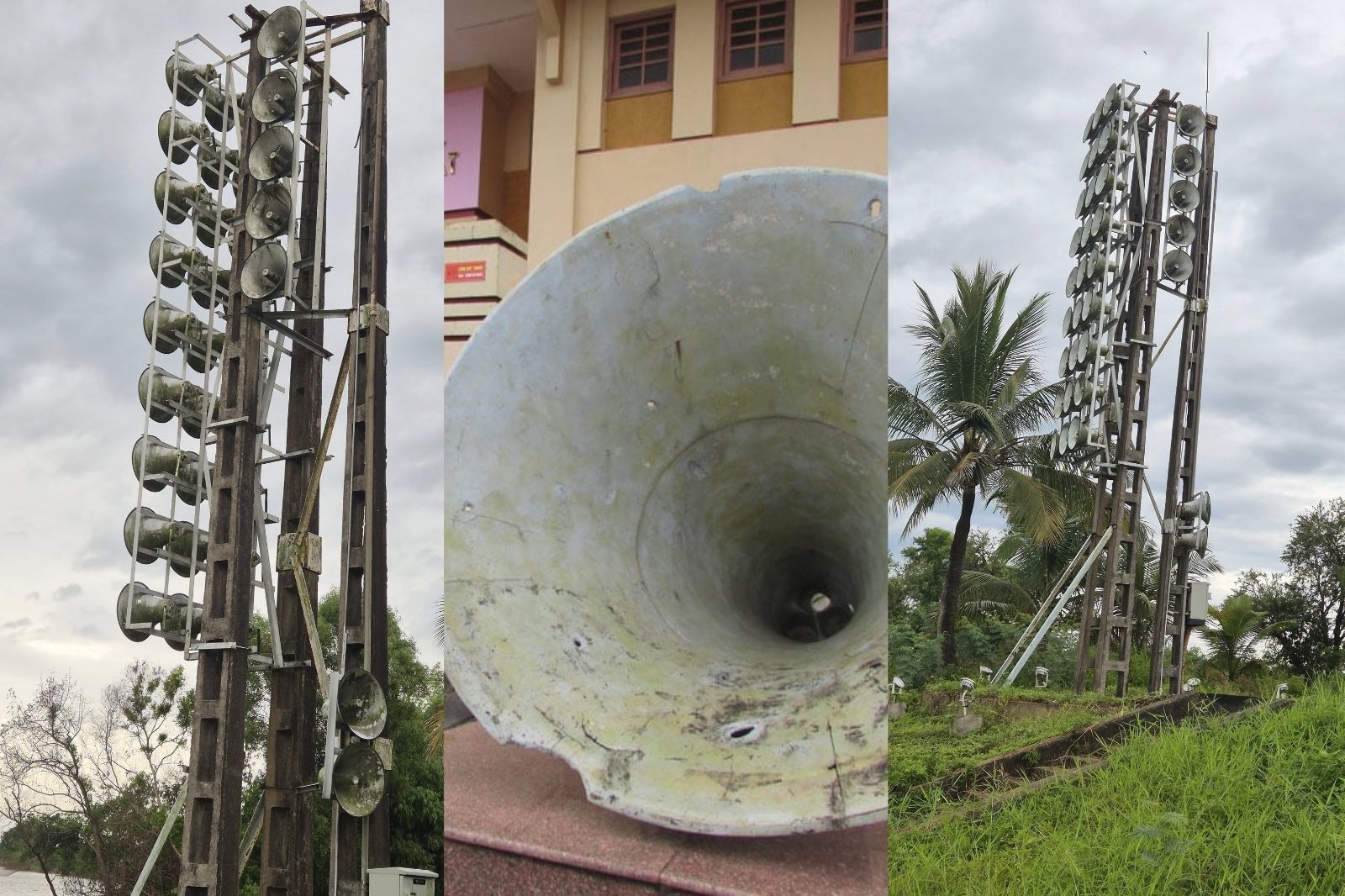
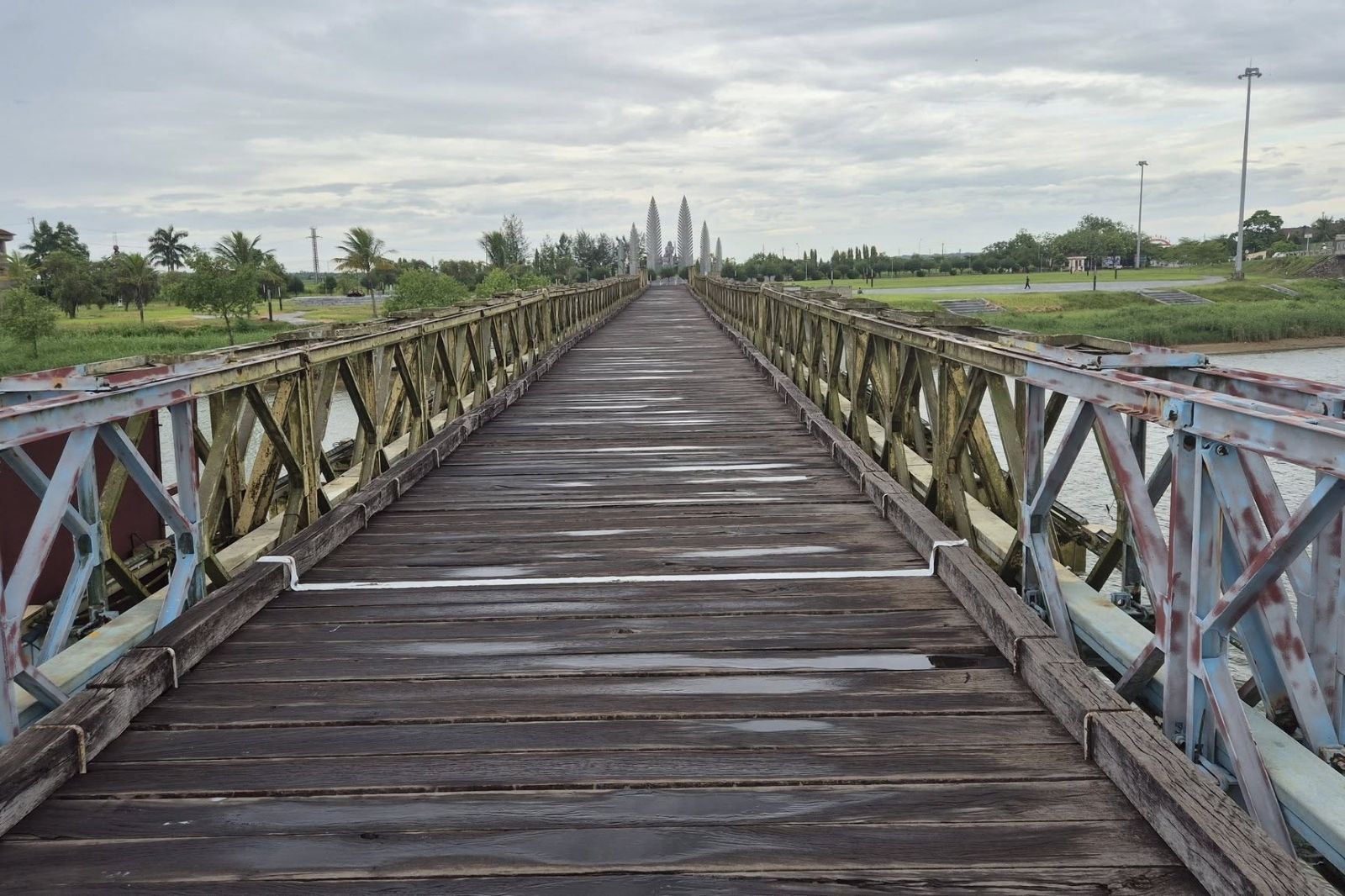
The "flag battle" was one of the most prominent events at Hien Luong Bridge, lasting for 14 years (1954-1968). This was a confrontation over the height and size of the flagpoles between the two regions, demonstrating an unyielding spirit and the aspiration for national reunification.
- Background: After the demarcation line was drawn, the flagpoles on the North bank (Democratic Republic of Vietnam) and the South bank (Republic of Vietnam) became symbols of power and will. Both sides continuously upgraded their flagpoles to assert their presence.
- Developments:
- Initially, the flagpole on the South bank was built 35 meters high. Refusing to let their flag fly lower than the enemy's, in 1962, the Democratic Republic of Vietnam commissioned the Vietnam Machinery Erection Corporation to manufacture a 38.6-meter-high flagpole on the North bank. The red flag with a yellow star, measuring 134 m² and weighing 15 kg, was raised to the top, becoming the tallest flagpole along the demarcation line.
- Throughout 1956-1967, police officers along the North bank demarcation line raised up to 267 flags of various sizes, defying bombs, shells, and sabotage from the US and puppet forces. Every time the flagpole was bombarded, the people and soldiers of Vinh Linh erected a new one, ensuring that the national flag always flew proudly.
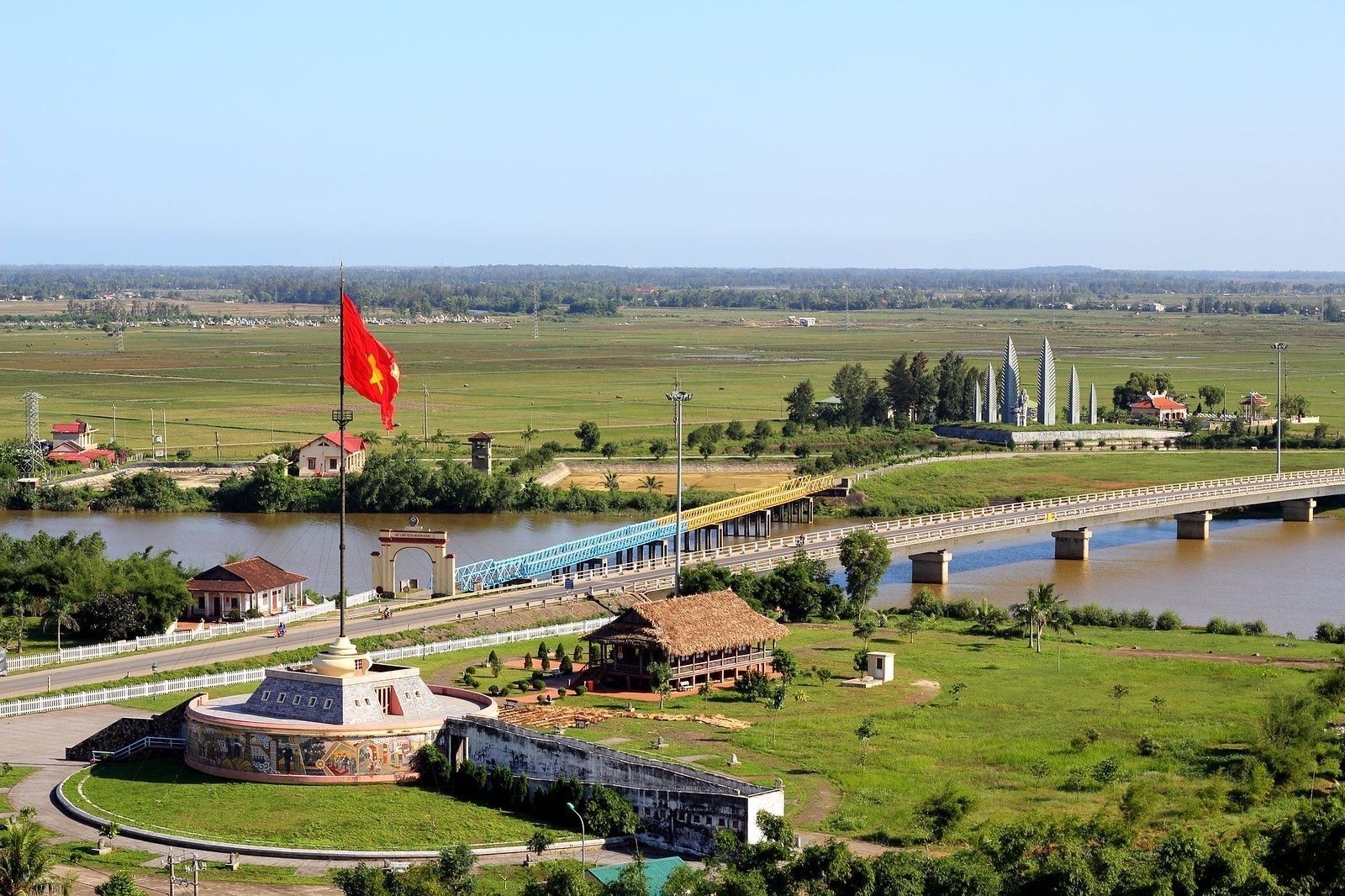
The "flag battle" was not only a race of height but also a symbol of unyielding spirit, patriotism, and the aspiration for unification. The red flag with a yellow star fluttering on the North bank flagpole motivated the people of both regions, especially those on the South bank, in their struggle for national liberation.