|

Back Home

Why is Hien Luong – Ben Hai called a "symbol of the pain of division"?

Central

Quang Tri

Hien Luong Bridge - Ben Hai River

Sovaba.travel

Updated at: 28/08/2026

1. The Geneva Accords and the 17th Parallel Demarcation Line

Located in the heart of Quang Tri, the two banks of Hien Luong – Ben Hai are not only a geographical landmark, but also a vivid witness to a painful yet proud period of national division. What makes Hien Luong – Ben Hai special is the way it was "divided" right on the bridge itself. According to the Geneva Accords, the bridge was divided in half in the middle: the Northern half painted green (Democratic Republic of Vietnam), the Southern half painted yellow (Republic of Vietnam), with a 1cm wide white horizontal line serving as the boundary. This is the only bridge in the world painted in two different colors – a vivid symbol of division.

According to the accords, this was only a temporary boundary for 2 years, pending general elections to reunify the country in 1956. However, with the intervention of the US and the Ngo Dinh Diem regime, the general elections were not held, turning Hien Luong – Ben Hai into a boundary dividing the country for 21 years (1954-1975).

Hien Luong Bridge, spanning the Ben Hai River, became the clearest symbol of division. The bridge is 183.65m long, with each side 89m under the control of the two regions, painted in two different colors: the North painted green, the South painted yellow. The image of the two-color bridge has been deeply etched in the minds of the Vietnamese people as a symbol of separation and parting.
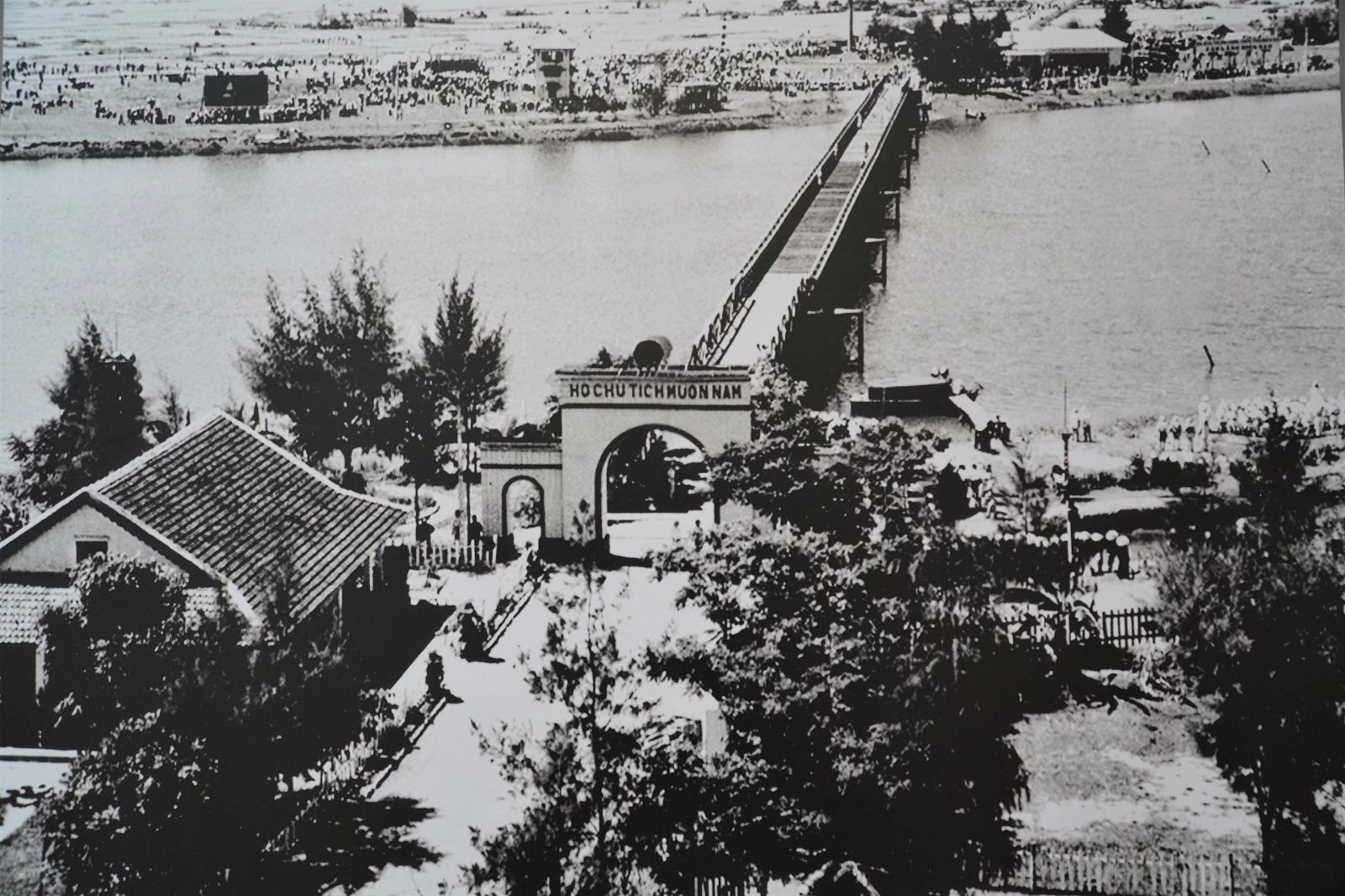
Old archival photos of Hien Luong Bridge
Photo: Old archival photos of Hien Luong Bridge 

2. The Pain of National Separation

Ben Hai River and Hien Luong Bridge not only divided the country geographically but also caused unhealable spiritual pain. Verses such as: “Separated by a river yet yearning for each other / Sharing a bridge span yet kept far apart” vividly depicted the grief of separated families, with husbands in the North, wives in the South, and children far from parents. The “Desire for Unification” Monument on the South bank of the Ben Hai River, featuring the image of a woman looking toward the North, is a living testament to longing and the yearning for reunion.

During the war years, the South bank of the Ben Hai River became a “white belt” with the McNamara Line electronic barrier, filled with spikes and landmines, preventing connections between the two regions. Many Southerners risked their lives crossing the river to reach the North, but many perished under bombs and bullets. One of the most tragic events was the military operation by the US and the Republic of Vietnam forces from May 18-20, 1967, which caused many innocent civilians to lose their lives while trying to cross the Ben Hai River.

Loudspeaker display site
Photo: Loudspeaker display site 

3. The Nation's Aspiration for Reunification

Despite bearing the pain of division, Hien Luong – Ben Hai is also a symbol of the aspiration for national reunification. Throughout 21 years, people on both banks of the river still found ways to send love through signals, keepsakes, and folk chants. The song “Cau ho ben bor Hien Luong” (Chant on the Bank of Hien Luong) by composer Hoang Hiep, written in 1957, became the voice of millions of Vietnamese hearts, with yearning lyrics: “Oh boat, do you remember the wharf? / The wharf steadfastly awaits the boat”.

The Hien Luong – Ben Hai Banks Historical Relic Complex, designated as a Special National Monument in 2013, is not only a place preserving painful memories but also a symbol of resilient will and aspiration for peace. Structures such as the Exhibition House “17th Parallel and Desire for Unification”, the Flagpole on the North Bank, and the “Desire for Unification” Monument help visitors better understand the nation's heroic and tragic history.

4. Hien Luong Bridge – Ben Hai River Today

Today, after the reunification of the country in 1975, Hien Luong Bridge and Ben Hai River have been "untied" from their painful mission. This place has become a spiritual and historical tourist destination, where domestic and international visitors come to reflect on a turbulent historical era. Events such as the Cycling Festival for Peace (2024) or the “For Peace” Festival organized by Quang Tri province have spread the message of peace from Hien Luong – Ben Hai to the world.

On major holidays, many people flock here to visit and learn
Photo: On major holidays, many people flock here to visit and learn 

Hien Luong Bridge and Ben Hai River are not just a landmark, but an eternal symbol of the pain of division and the desire for national reunification. Over 21 years, this place witnessed tragic stories, bloodless battles, and the resilient will of the Vietnamese nation. Today, Hien Luong Bridge – Ben Hai River serves as a reminder of the value of peace and unity, a destination where every Vietnamese can reflect on history and pay tribute to the sacrifices of their forefathers.

If you have the opportunity to visit Central Vietnam, take the time to stop here on the Hien Luong Bridge - Ben Hai River tour so that a trip is not merely sightseeing, but a moment of quiet reflection.

Loading......

Featured destinations