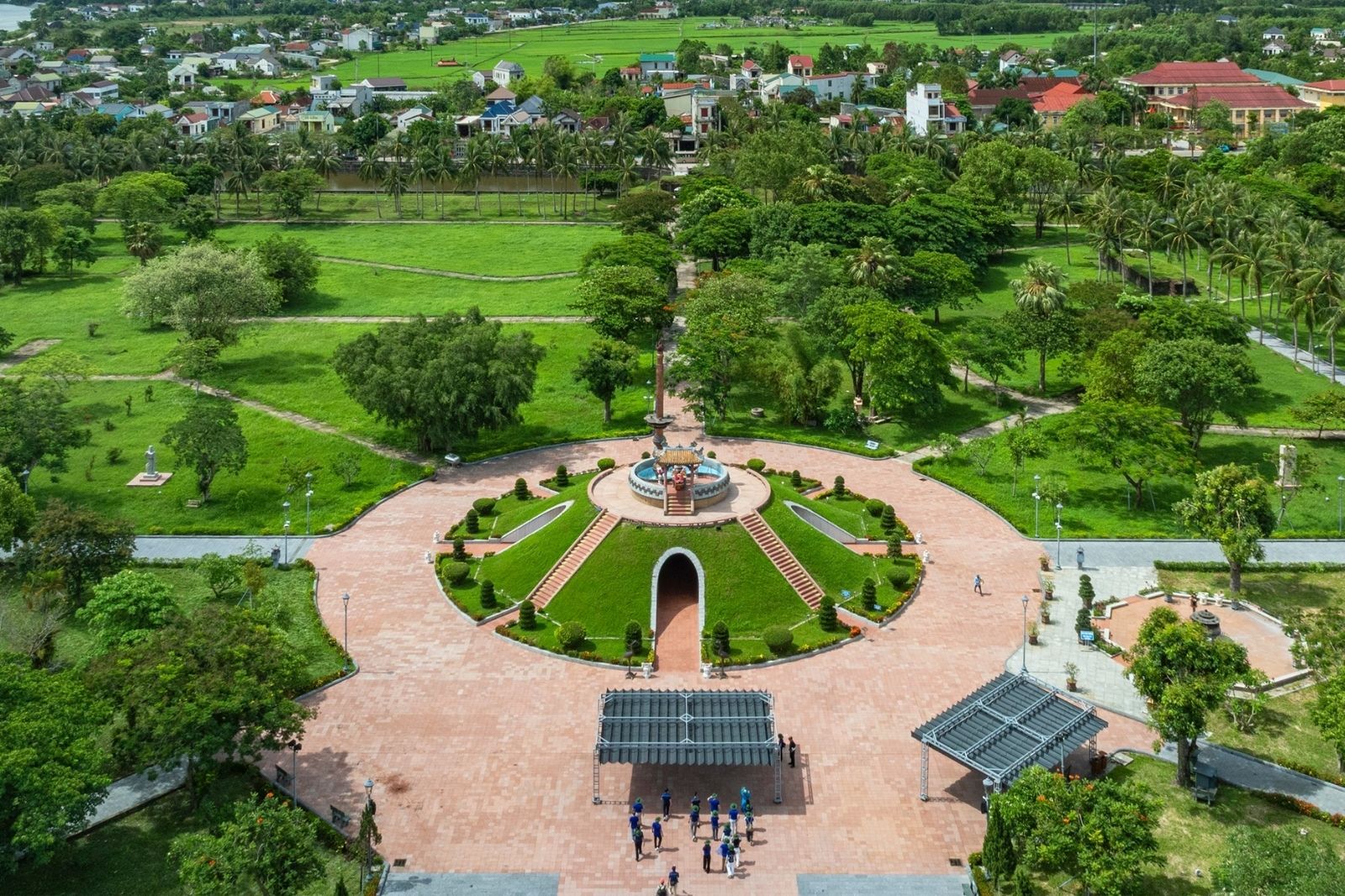
Central Monument of Quang Tri Ancient Citadel – A Symbol of Remembrance for Martyrs

Central

Quang Tri

Quang Tri Ancient Citadel

Sovaba.travel

Updated at: 24/09/2026

1. History of the central monument of the ancient citadel

The history of the monument is closely linked to Quang Tri Ancient Citadel, a structure built in 1809 under King Gia Long, originally made of earth, and completed in brick in 1837 under King Minh Mang following Vauban architecture—a type of European defensive fortress. The citadel served as the administrative, political, and military center of Quang Tri province for 135 years. However, its historical pinnacle was the fierce 81-day-and-night battle in 1972, where thousands of soldiers sacrificed their lives to protect the Citadel during the Red Fiery Summer.

After the war, starting in February 1992, the Ministry of Culture and Information (now the Ministry of Culture, Sports and Tourism) invested in restoring the Ancient Citadel, including constructing the central monument as part of a memorial park. The monument was completed to mark the 81 days and nights, becoming a symbol of remembrance and gratitude toward heroic martyrs. Today, the entire complex has been completed with items such as a museum, memorial steles, and an outdoor display area.
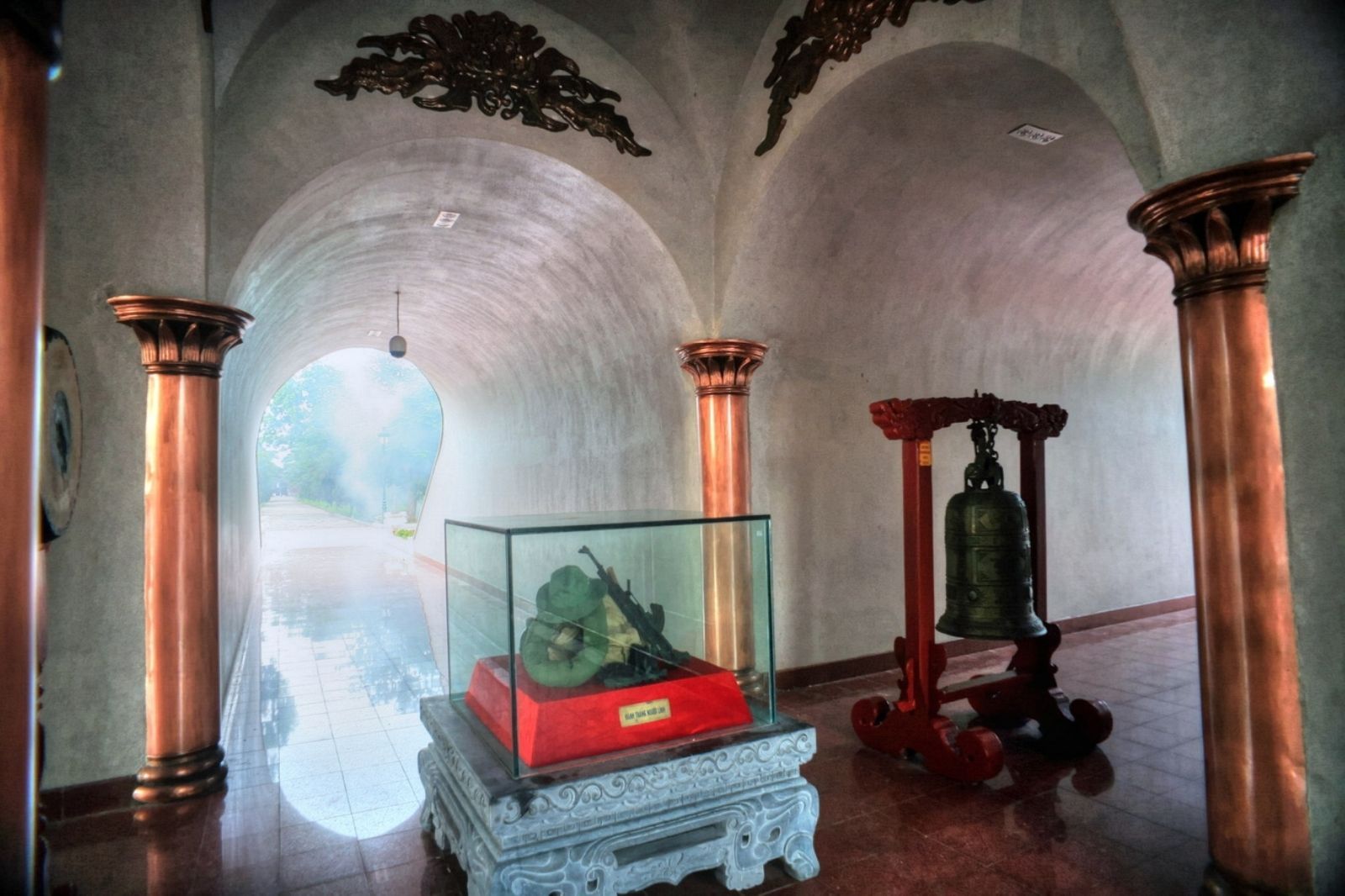
Sacred symbol
Photo: Sacred symbol 

2. Symbolic meaning of the central monument of Quang Tri Ancient Citadel

The monument is not only an architectural work but also carries deep spiritual value. It is considered a communal, tombless grave for thousands of martyrs who sacrificed their lives here. Every inch of land in the Ancient Citadel is soaked with the blood and bones of patriotic citizens. The 81 steps leading up to the monument symbolize the 81 days and nights of heroic battle, reminding future generations of the value of peace and independence. The monument embodies the spirit of "When drinking water, remember its source", educating the younger generation in patriotism and national pride. Annually, especially on July 27th (Wounded and Fallen Soldiers' Day), tens of thousands of people gather to offer incense in gratitude.

3. Unique architecture of the monument

The central monument is designed according to Eastern Yin-Yang and Five Elements philosophy, deeply imbued with Vietnamese cultural identity:

  • Octagonal shape at the base: Symbolizes the Eight Trigrams (Bagua), representing cosmic balance.
  • Four stairways: Represent the Four Symbols (Si Xiang) (Greater Yang, Lesser Yang, Greater Yin, Lesser Yin).
  • Dual polarities (Liangyi) layer and a stylized communal house roof with a Taiji vase: Symbolize transcendence and Yin-Yang harmony.
  • 81 steps: Directly connected to the historical event.
  • At the top is a symbolic altar lamp or memorial bell tower (nearly 10m high, with a bronze bell weighing 9 tons).

This architecture is not only aesthetic but also carries deep philosophical meaning, harmoniously combining tradition and modernity to create a solemn, sacred space.

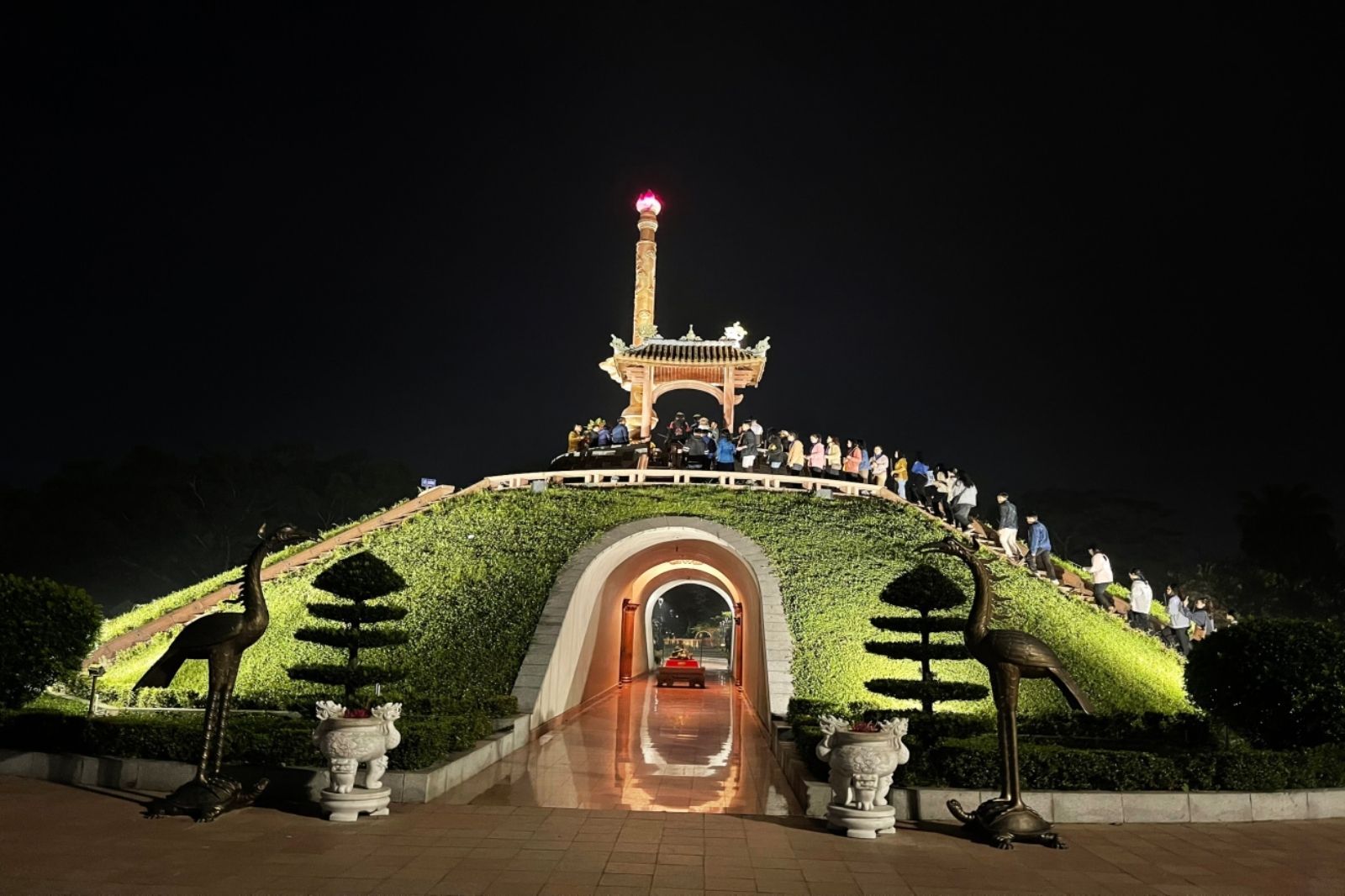
The monument at night
Photo: The monument at night 

4. Role of the monument in the Quang Tri Ancient Citadel relic complex

The central monument is the heart of the Quang Tri Ancient Citadel historical complex (covering an area of about 18-25 hectares). It connects with other items such as:

  • Four reconstructed gates: Front (Tien) - Back (Hau) - Left (Ta) - Right (Huu).
  • Moat system, bomb crater vestiges, and prison cells.
  • Exhibition house (Citadel Museum).
  • Memorial stele dedicated to fallen students and pupils.

Together, they form a living museum of national history, serving traditional education, spiritual tourism, and historical research. The monument helps visitors gain a clearer visualization of the 81-day-and-night battle through space and artifacts.

5. Commemoration and tribute activities at Quang Tri Ancient Citadel

At Quang Tri Ancient Citadel, commemoration and gratitude activities take place regularly, attracting numerous participants. Annually, on September 16th (the end date of the 81-day-and-night battle) and July 27th (Wounded and Fallen Soldiers' Day), incense-offering and mass candle-lighting ceremonies are held at the Monument, attended by leaders, veterans, and local people. Visitors can participate in releasing flower garlands and flower lanterns on the Thach Han River.

In addition, the exhibition house holds documentary exhibitions and offers historical storytelling through tour guides. Events such as flag-raising ceremonies, traditional educational workshops, and night tourism with mystical lighting are also organized to pay tribute and spread historical values. These activities not only commemorate but also connect the community and promote cultural tourism.

Visitors can come here to burn incense
Photo: Visitors can come here to burn incense 

6. Important notes when visiting the Monument

When visiting the central Monument of Quang Tri Ancient Citadel, please follow proper etiquette to show respect. Wear polite and modest attire (long sleeves, long pants), maintain silence, and refrain from laughing or talking loudly.

Note: Do not climb citadel walls, pick flowers, or deface property to preserve the monument. Bring drinking water, hats, and sunscreen due to the spacious area. If hiring a tour guide (about 350,000 VND/group), listen attentively to gain deeper insight. Avoid visiting during peak hot hours and help maintain general hygiene.

The monument is located right in the center
Photo: The monument is located right in the center 

If you are looking for a journey not just to sightsee, but to understand, feel, and express gratitude, consider booking a Quang Tri Ancient Citadel tour. The trip will not only take you to the central monument, but also open up a vivid cultural & historical space, helping you better understand the heroic yet deeply moving pages of the nation's history.

Loading......

Featured destinations