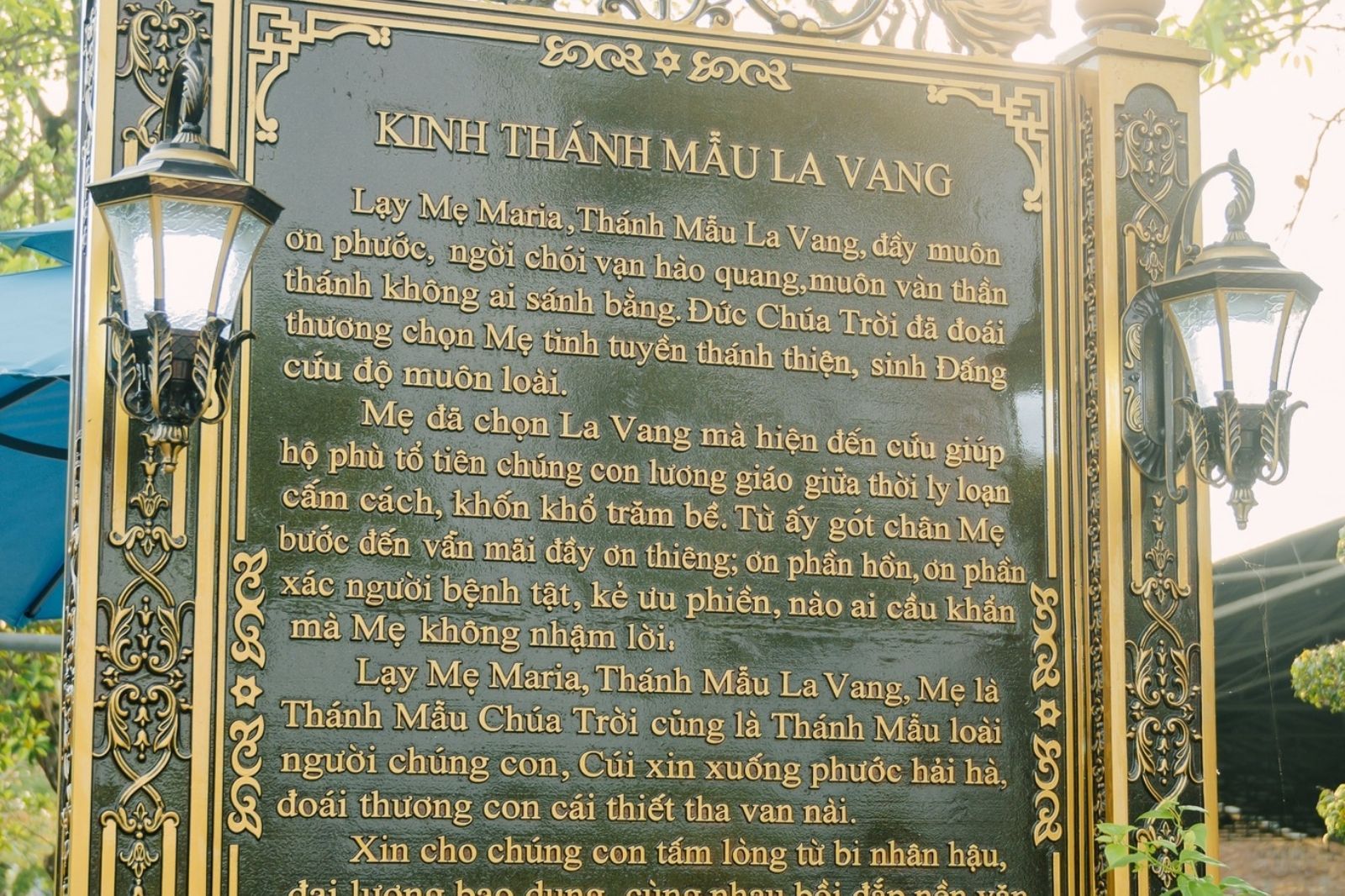
The spiritual foundation of La Vang Holy Land originates from the apparition of the Blessed Virgin Mary in 1798, amid the severe persecution of Catholicism under the Tay Son dynasty (King Nguyen Quang Toan). Many parishioners from Quang Tri fled to the remote mountainous area of La Vang (formerly known as Dinh Cat) to take refuge.
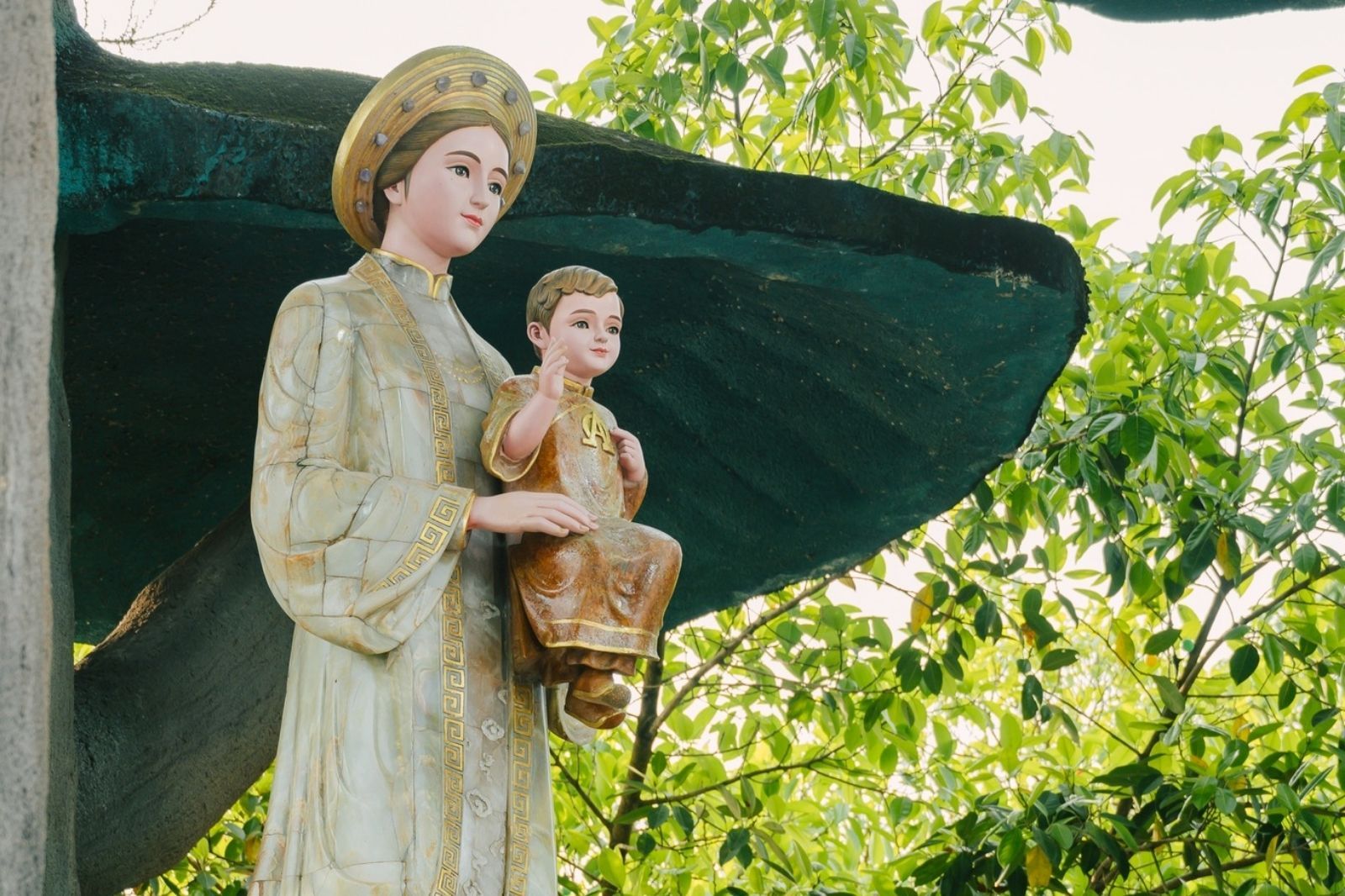
According to tradition, while a group of parishioners was praying under a banyan tree, Our Lady appeared, dressed in traditional Vietnamese attire, holding the Infant Jesus, with an angel on each side. She comforted them: “Have faith and be willing to suffer. I have accepted your prayers. From now on, whoever comes to pray to me in this place will have their petitions granted.” Our Lady also instructed them to pick 'la vang' leaves (huangjiang leaves) and boil them to drink as medicine to cure their illnesses.
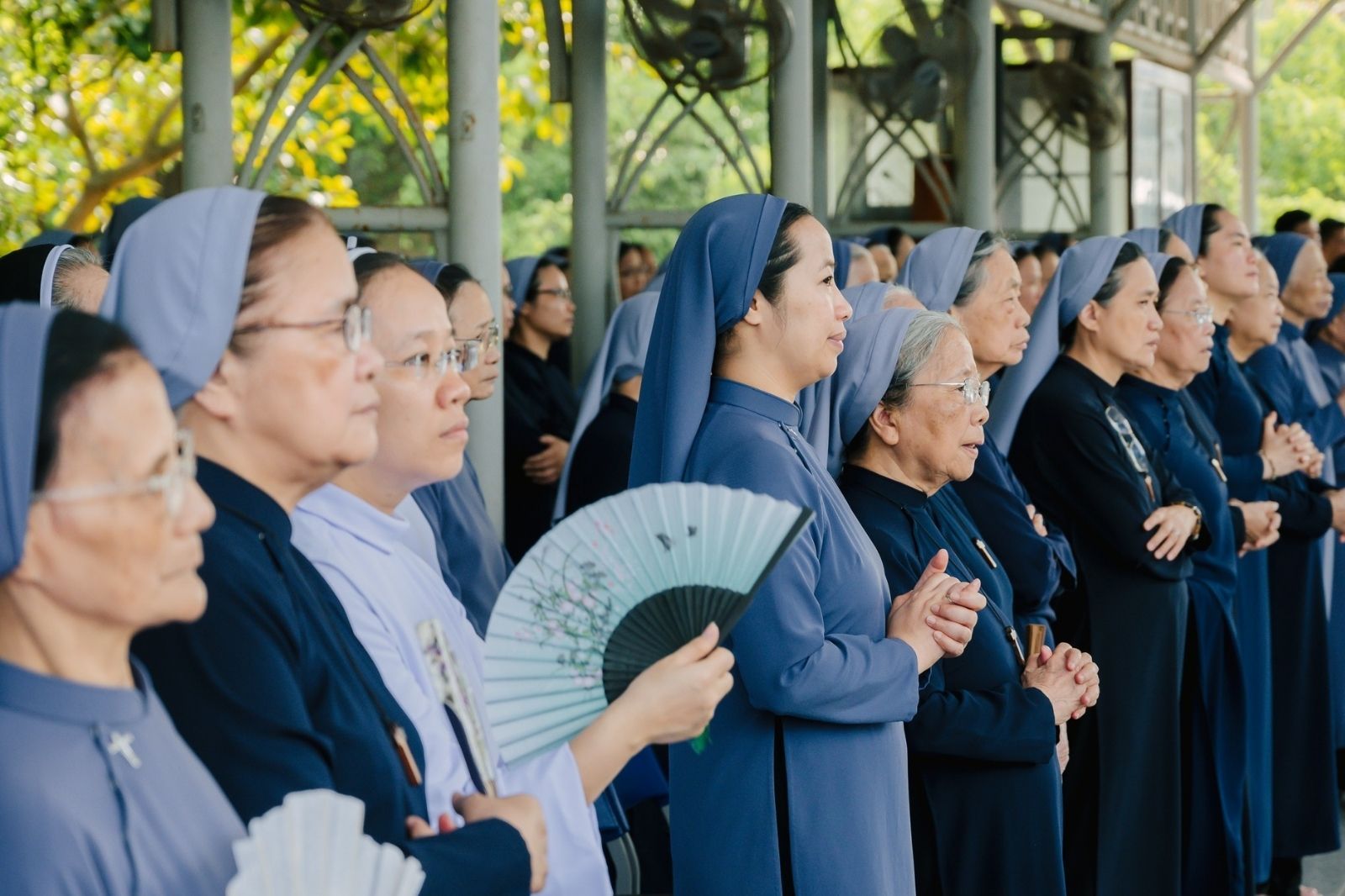
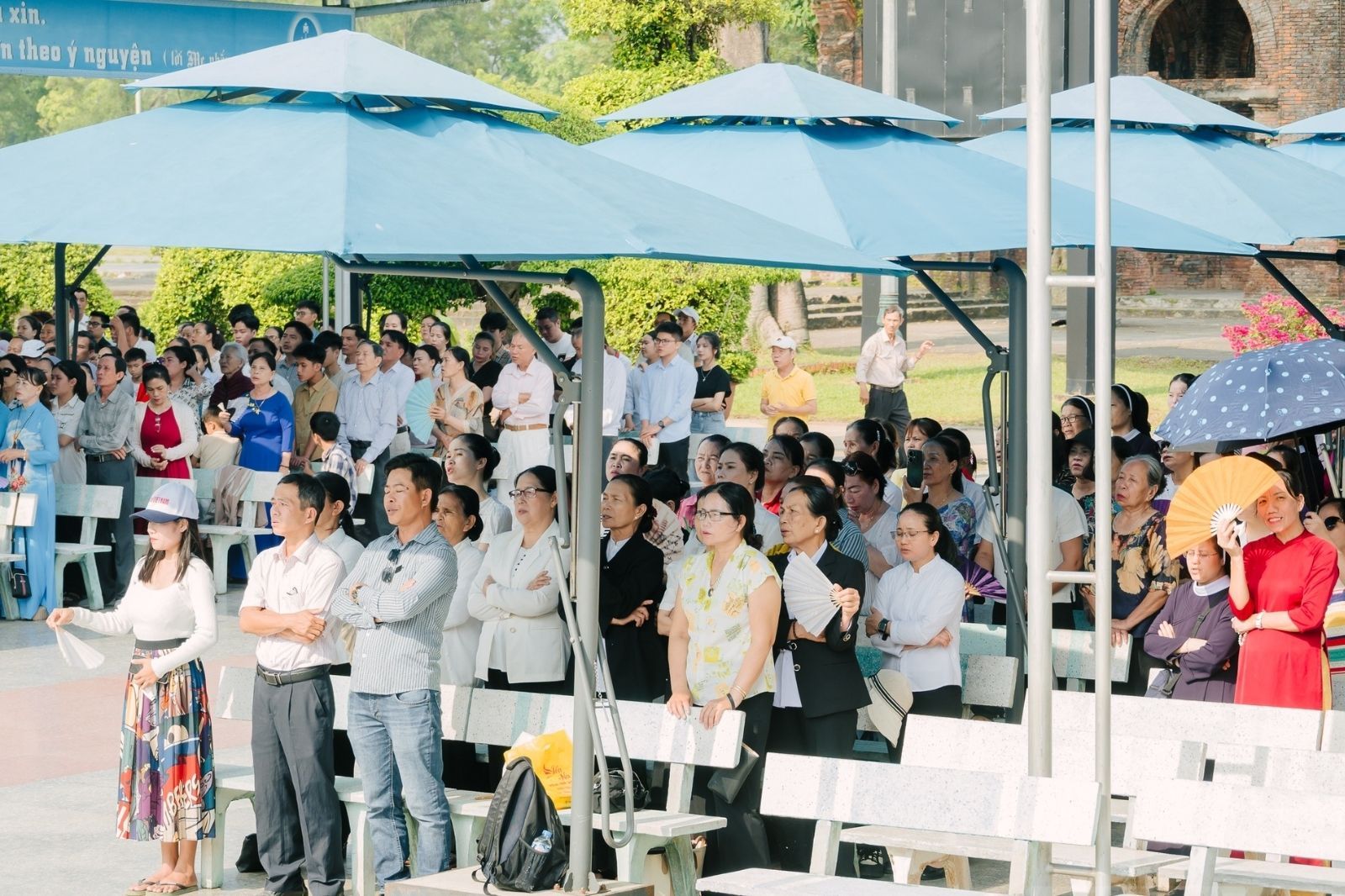
This event carried not only physical healing significance but was also a source of spiritual strength. It reminded Catholics that in times of hardship and trials, Our Lady is always present as a loving Mother protecting her children. La Vang became a symbol of hope, perseverance, and trust in Divine Providence through the intercession of Our Lady. This value deepened further when Our Lady of La Vang was honored as the Patroness of the Catholic Church in Vietnam. The image of Our Lady in Vietnamese attire reflects deep inculturation: the Christian faith harmoniously blends with national identity, helping Vietnamese Catholics feel closer and a greater sense of belonging.