Did Mother Liễu Hạnh Really Exist? Unveiling the Mystery of the Holy Mother in Vietnamese Folk Beliefs
Central
Quang Binh
Sovaba.travel
Updated at: 24/09/2026
1. Who is Mother Goddess Lieu Hanh?
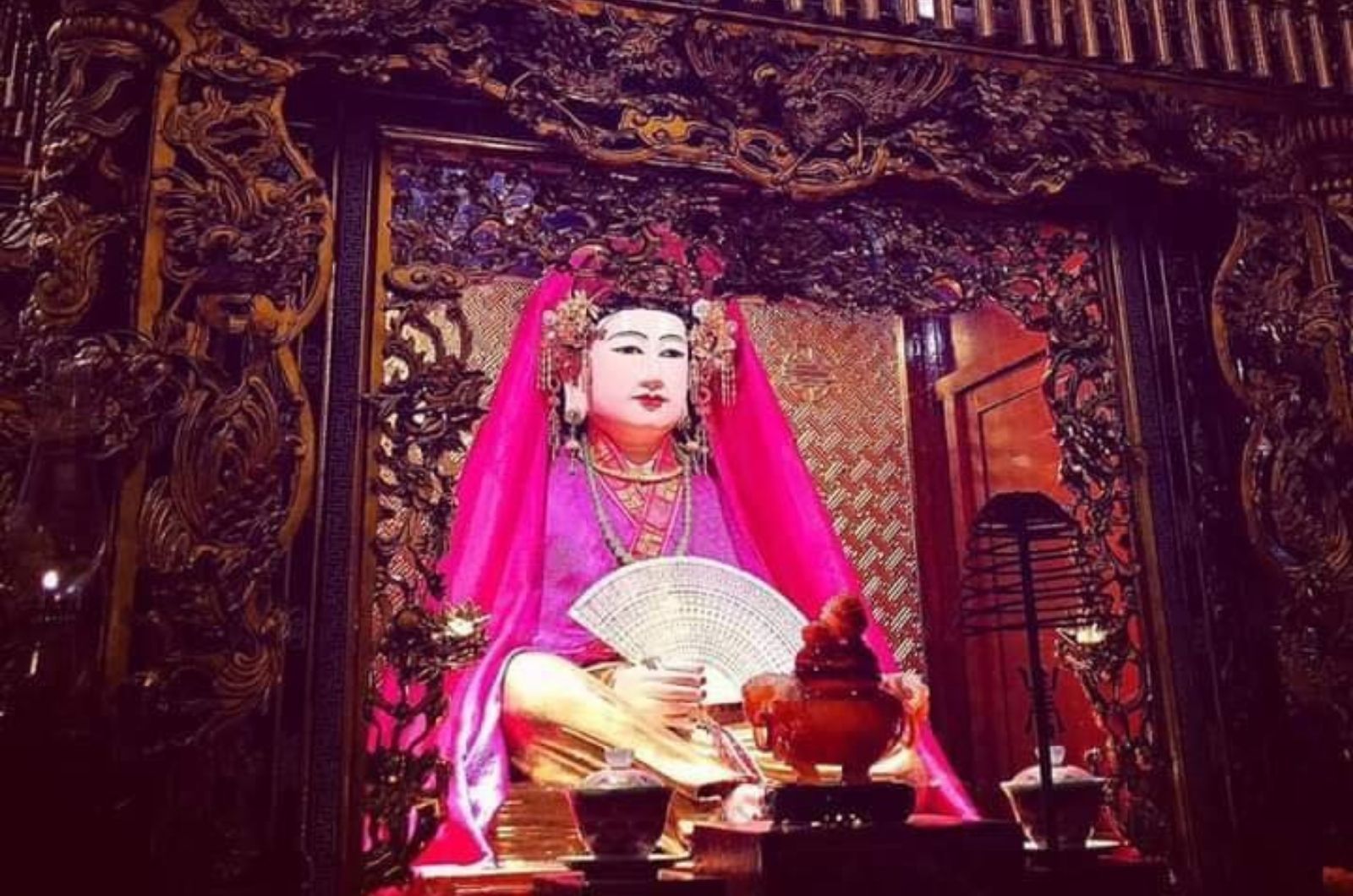
Holy Mother Liễu Hạnh, also known as Bà Chúa Liễu or Mẫu Thượng Thiên (Mother Goddess of the Heavens), is an important deity in Vietnamese Mother Goddess worship (Đạo Mẫu). According to folk legends, she was the second daughter of the Jade Emperor, sent down to Earth three times to save sentient beings. She is revered as one of the Four Immortals, alongside Saint Gióng, Chử Đồng Tử, and Mountain God Tản Viên. In Đạo Mẫu, Mother Liễu Hạnh is an incarnation of Mẫu Thượng Thiên, heading the Three Holy Mothers (alongside Mẫu Thoải and Mẫu Thượng Ngàn). She is widely worshipped at many temples and shrines, from Phủ Dầy (Nam Định) to Sòng Temple (Thanh Hóa), Tây Hồ Shrine (Hà Nội), and even in Quảng Bình and Huế.
Photo: Mother Liễu Hạnh, one of the Four Immortals of the Vietnamese people
2. The three earthly descents of Holy Mother Lieu Hanh
The legend of Mother Liễu Hạnh has been passed down through centuries, filled with mysterious and humane stories. Below is a summary of her three descents to Earth:
The First Descent to Earth
On the 6th day of the 3rd lunar month in 1434, by order of the Jade Emperor, the Second Fairy Maiden (Mother Liễu Hạnh) descended to Earth, reincarnating as a daughter in a virtuous Phạm family in Vi Nhuế village, Quảng Nạp hamlet, Trần Xá commune, Đại Yên district, Nghĩa Hưng prefecture, Sơn Nam province (now Vị Nhuế, Nam Định). The Jade Emperor had previously foretold her birth to Mr. Phạm Thái in a dream.
The girl, Phạm Thị Nga, grew up beautiful, talented, and dutiful. In 1464, after her parents passed away, she arranged a proper funeral and then traveled everywhere doing charitable works to help the people, such as building dikes, erecting pagodas, and giving alms. At the hour of Dần on the 2nd day of the 3rd lunar month in 1473, at the age of 40, she transformed into a deity and returned to heaven.
To commemorate her contributions, the villagers built two temples: Phủ Đại La Tiên Từ on her former house grounds and Phủ Quảng Cung in her mother's hometown.
The Second Descent to Earth
Upon returning to the heavenly court, missing the earthly realm, Mother Liễu Hạnh accidentally dropped a jade cup while serving wine to the Jade Emperor. Consequently, she was banished to Earth for a second time in 1557 (the Lê Thiên Hựu Đinh Tỵ era).
The Mother was born into the Lê family in Vân Cát village, An Thái commune, Thiên Bản district, Nghĩa Hưng prefecture, Nam Định province. Prior to this, Mr. Lê Thái had dreamt of the Second Fairy Maiden being banished. After his daughter was born, seeing her resemblance to the fairy in his dream, he named her Lê Thị Thắng, styled Giáng Tiên.
She grew up beautiful and proficient in music, chess, poetry, and painting. Although she preferred a life of religious devotion without worldly ties, she accepted marriage with Trần Đào Lang to fulfill her filial duty. However, at the age of 21, at the hour of Dần on the 3rd day of the 3rd lunar month in 1577 (Đinh Sửu year, 5th year of Gia Thái era under King Lê Thế Tôn), she suddenly passed away without any illness. Following this departure, local people built a temple and a mausoleum for the Mother at Phủ Dầy, Nam Định.
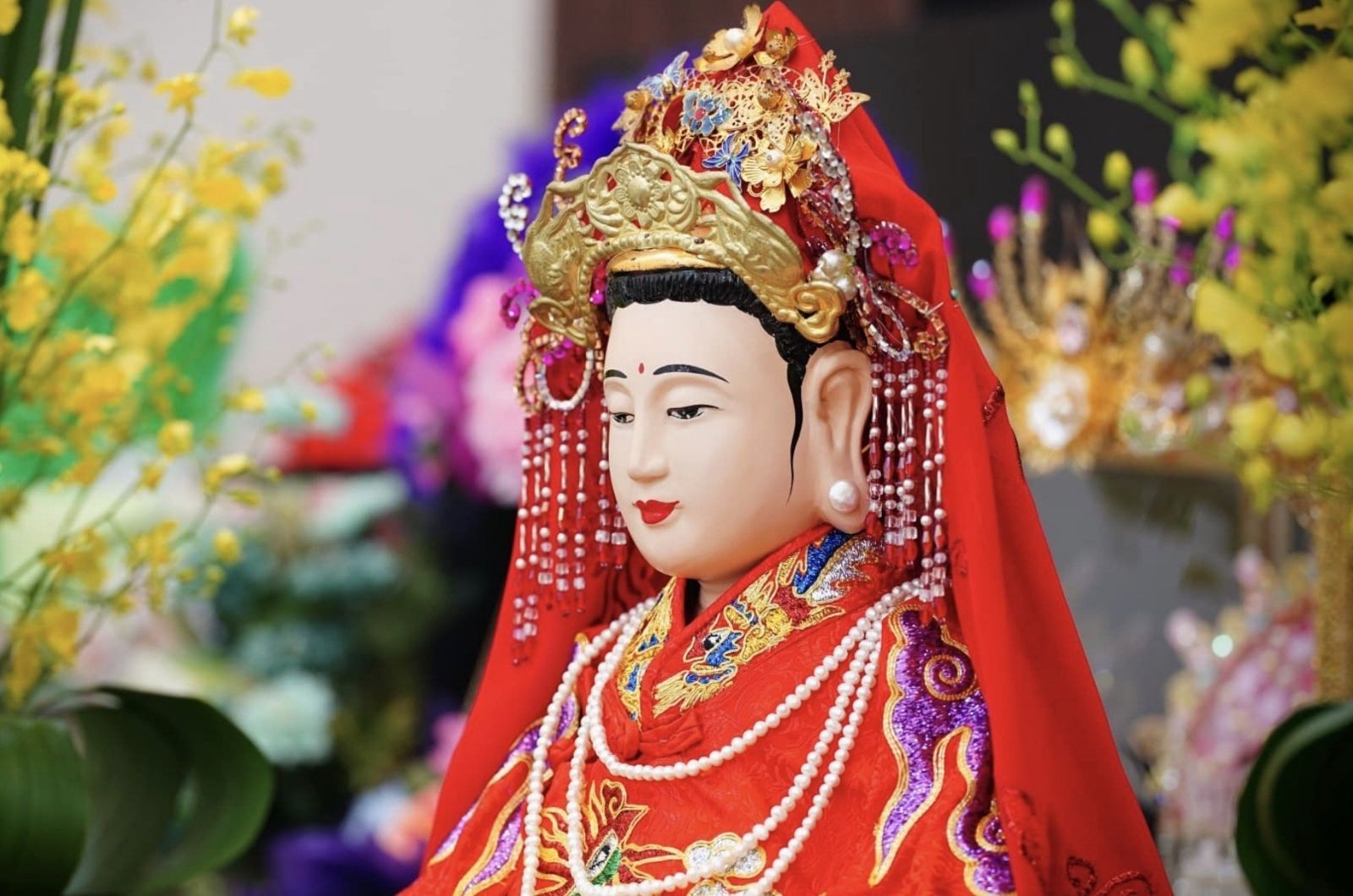
Photo: The Holy Mother and the legend of 3 descents to Earth doing good deeds and saving people
The Third Descent to Earth
After two descents to Earth, Mother Liễu Hạnh (Lê Thị Thắng) returned to heaven, but her heart remained attached to the mortal world. Seeing this, the Jade Emperor bestowed upon her the title "Princess Liễu Hạnh" and allowed her to descend to Earth in an extraordinary manner to relieve her sorrow.
The third time, the Mother manifested in Nga Sơn, Thanh Hóa in 1609 (Kỷ Mão year, 2nd year of Quang Hưng era under King Lê Thế Tôn), reuniting with Mai Sinh (the reincarnation of Trần Đào Lang). After more than a year, in 1610 (Canh Tuất year, 11th year of Hoàng Định era under King Lê Kính Tông), the Fairy Princess completed her term and returned to heaven.
Even after completing three cycles of reincarnation, Mother Liễu Hạnh still remembered the mortal world. Understanding his daughter's heart, the Jade Emperor allowed her to descend to Earth extraordinarily once more, exempt from the cycle of birth and death, to perform magic and help mankind. This time, she appeared with two other minor fairies in the Phố Cát region of Thanh Hóa, using magic to help the king, assist the people, and achieve enlightenment in Buddhism. She traveled far and wide saving people, punishing evil, and achieving Bodhisattva status. For these virtues, the royal court and the people built a shrine for her at Sòng Temple, Thanh Hóa.
Throughout her descents, Mother Liễu Hạnh was described as an extraordinarily beautiful, intelligent woman skilled in poetry, music, and painting, possessing a benevolent heart, a love for wandering amidst mountains and rivers, and bestowing blessings upon all living beings.
From these legends, Mother Liễu Hạnh was gradually elevated to become one of the Four Immortals of Vietnam, alongside Mountain God Tản Viên, Chử Đồng Tử, and Saint Gióng. Notably, she is the primary deity in the belief of Mother Goddess worship of the Three Realms and Four Realms – a deeply rooted indigenous belief of the Vietnamese people. Mother Liễu Hạnh is often identified with Mẫu Thượng Thiên (Quỳnh Hoa) or Mẫu Thoải Phủ, depending on the worship system. She is regarded as a deity who bestows fortune, health, and peace, as well as an ideal symbol of Vietnamese women and a sacred bridge between the earthly realm and the fairy realm.
3. Decoding the "real-life" existence of Mother Goddess Lieu Hanh from historical and cultural perspectives
The question of whether Mother Liễu Hạnh "really existed" remains a challenge for anyone seeking to understand the origins of this Holy Mother.
Mother Liễu Hạnh as "Real" in Religious Beliefs
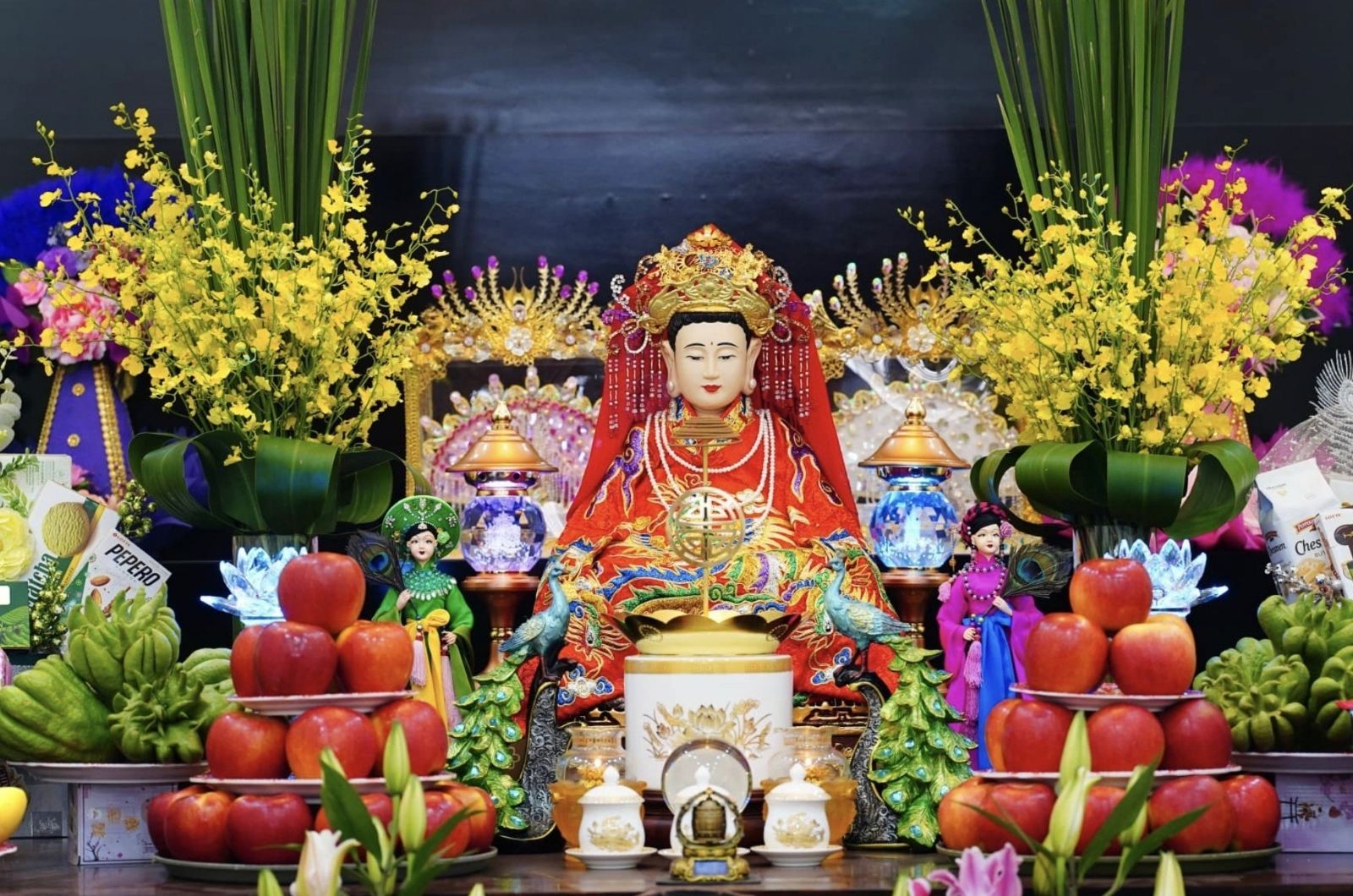
For millions of believers, Mother Liễu Hạnh is the embodiment of divine power, a deity who is always present to listen to prayers, protect, and bestow blessings. The "reality" of the Mother is felt through thousands of temples and shrines dedicated to her across Vietnam, from the sacred Phủ Dầy in Nam Định, the ancient Phủ Tây Hồ in Hanoi, to Sòng Temple in Thanh Hóa or the Holy Mother Liễu Hạnh Temple in Quảng Bình,... Every year, millions of pilgrims travel to these temples to show their devotion and seek blessings from the Mother. Stories of miraculous manifestations, mediumship rituals, and answered prayers have reinforced the belief in the Mother's existence in spiritual life.
Photo: The manifestation of the Holy Mother from various perspectives
Analysis from a Historical Perspective
In reality, there is no concrete historical evidence proving the physical existence of Mother Liễu Hạnh as a flesh-and-blood historical figure. The legends of Mother Liễu Hạnh were primarily transmitted orally, through divine records, family genealogies, and folk literature. These documents were often created and modified over centuries, reflecting the beliefs and desires of the people in different periods and regions.
The emergence and strong development of Mother Liễu Hạnh worship are clearly documented during the Later Lê dynasty (15th - 18th centuries) and reached its peak under the Nguyễn dynasty (19th - early 20th century). Feudal dynasties conferring titles on Mother Liễu Hạnh (such as the Nguyễn dynasty naming her "Chế Thắng Hòa Diệu Đại Vương") was not a historical validation, but rather a religious recognition aimed at consolidating divine authority and social stability.
Mother Liễu Hạnh: A Cultural Archetype and Symbol
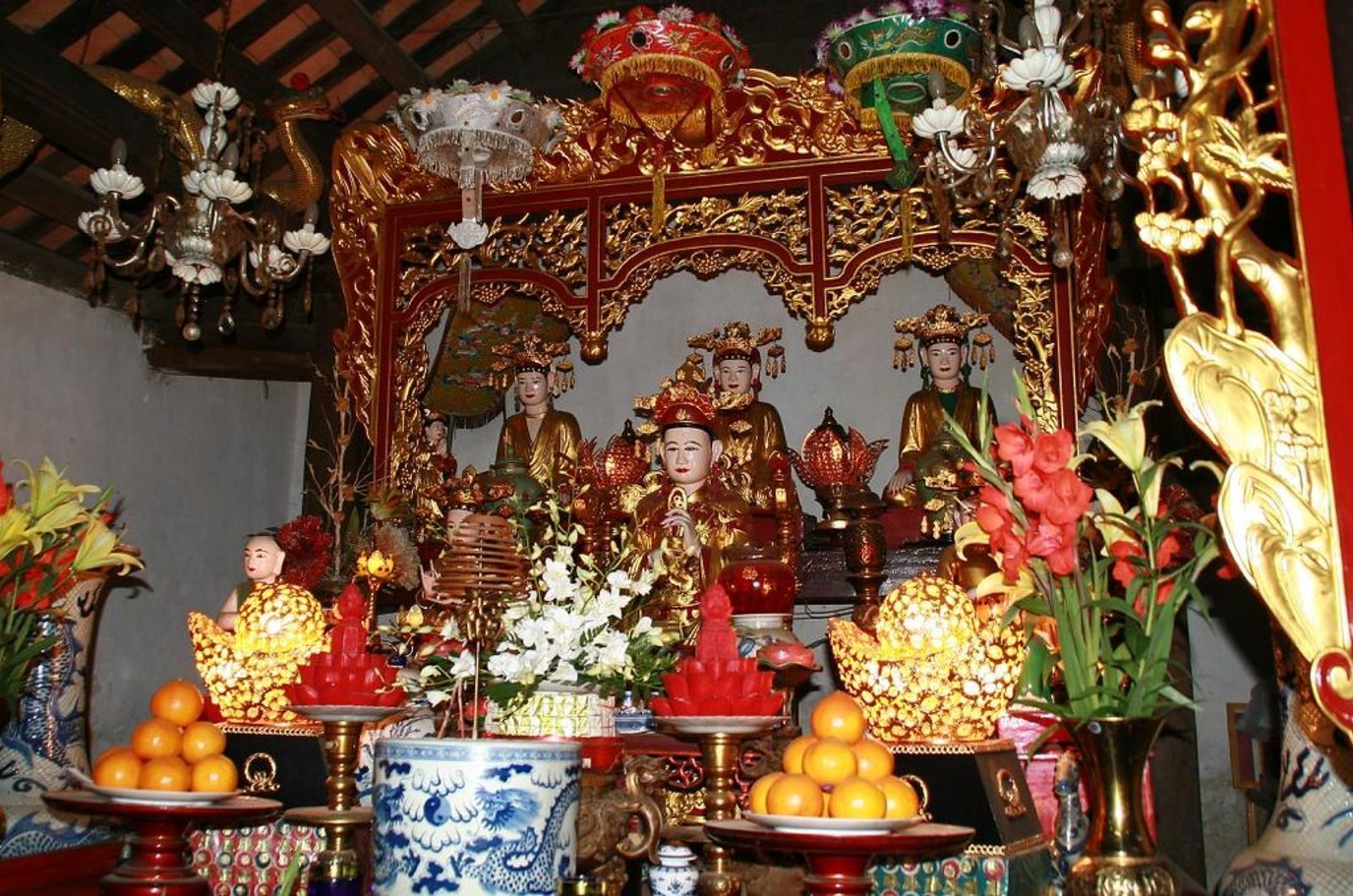
Despite the lack of specific historical proof, Mother Liễu Hạnh remains a crucial cultural archetype. She synthesizes many traits of the ideal Vietnamese woman: a benevolent mother, a dutiful wife, a talented and beautiful daughter, who also possesses a desire for freedom and strength, transcending the constraints of feudal society.
Photo: Mother Liễu Hạnh has become a long-standing folk cultural symbol
Mother Liễu Hạnh reflects the folk desire for a just world, sheltered by divine power so people can escape disasters, illnesses, and poverty. She also symbolizes the power and role of women in a society with many prejudices, expressing aspirations for honor, equality, and the freedom of self-expression.
In summary, the question of whether Mother Liễu Hạnh "really existed" lies on the boundary between myth and faith. Even without concrete historical evidence of a physical person, Mother Liễu Hạnh lives vividly in the spiritual life of millions of Vietnamese. She is a symbol of divine power, embodying wishes for protection, peace, justice, and serving as a cultural archetype of the talented and virtuous Vietnamese woman. Her existence is not recorded in history books, but etched deeply in faith, rituals, and thousands of sacred temples throughout Vietnam.
4. Heritages and festivals worshipping Mother Goddess Lieu Hanh
The belief system of worshipping Mother Liễu Hạnh has created a grand cultural heritage, clearly reflected through temples, shrines, and traditional festivals.
Major Temples and Shrines Dedicated to the Mother:
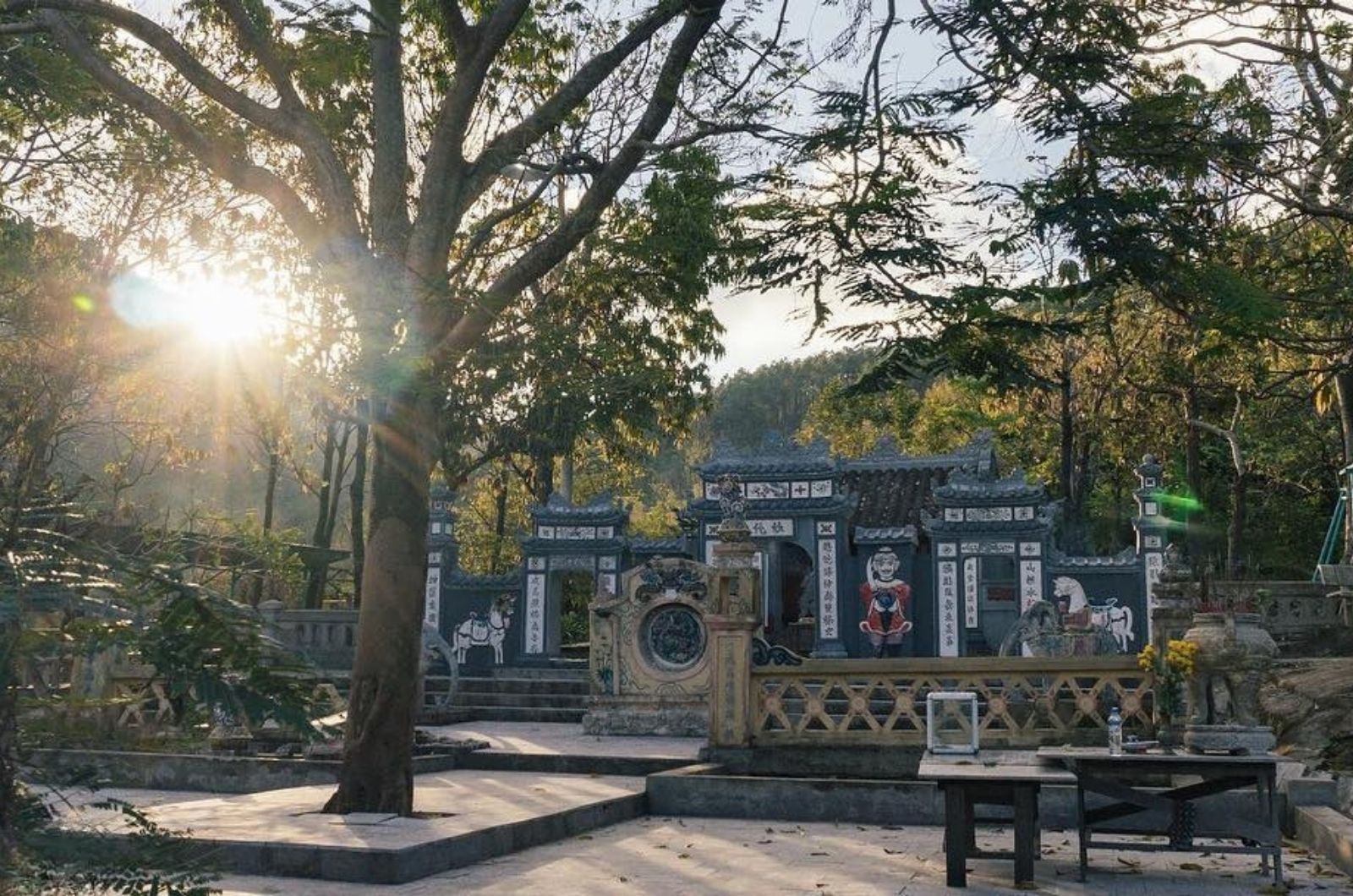
Holy Mother Liễu Hạnh Temple at Đèo Ngang (Quảng Bình): Located at the foot of Đèo Ngang Pass, backed by the Hoành Sơn mountain range, covering an area of nearly 350m², built with stone, brick, and lime. The temple is dedicated to Holy Mother Liễu Hạnh and other deities in Vietnamese folk belief.
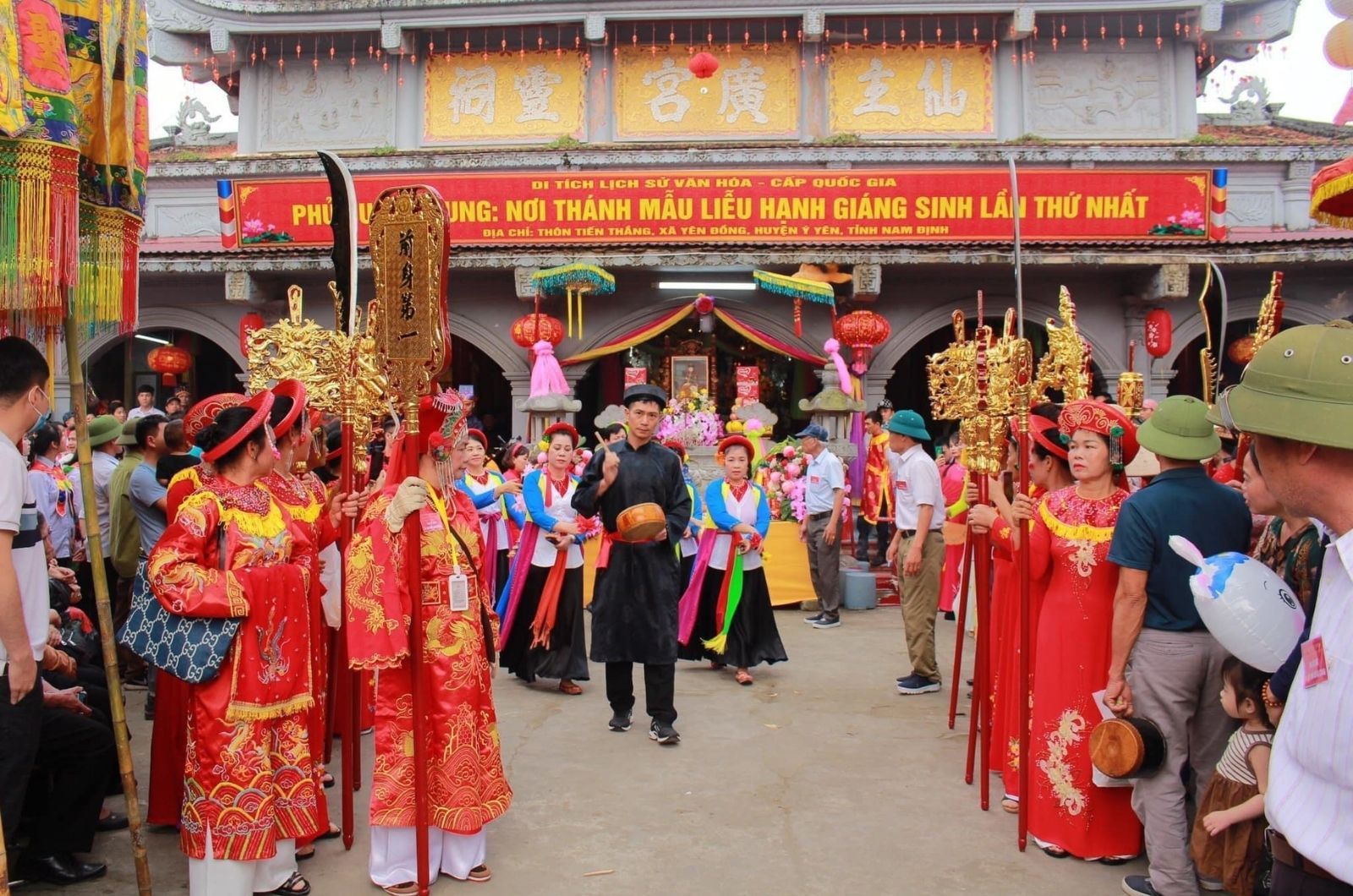
Phủ Dầy (Vụ Bản, Nam Định): This is the largest and most sacred center of Mother Liễu Hạnh worship. The Phủ Dầy relic complex includes many temples, shrines, and tombs such as Phủ Tiên Hương, Phủ Vân Cát, Lăng Mẫu, and Đền Công Đồng. Every year, the Phủ Dầy Festival takes place in the 3rd lunar month (the main festival runs from the 1st to the 10th), attracting hundreds of thousands of visitors from everywhere.
Phủ Tây Hồ (Hanoi): Situated on the scenic bank of West Lake, Phủ Tây Hồ is one of the most famous and sacred places worshipping Mother Liễu Hạnh in Hanoi, especially on the 1st and 15th days of the lunar month.
Sòng Temple (Bỉm Sơn, Thanh Hóa): A place worshipping Mẫu Thượng Thiên, one of the Three Holy Mothers, and also a major center of Mother Goddess worship.
In addition, there are numerous other Mother Liễu Hạnh temples across the country, demonstrating the popularity of this belief.
Phủ Dầy Festival: Besides offering incense and sacrifices, the festival includes unique folk cultural activities such as palanquin processions, dragon dances, cockfighting, and especially the hầu đồng (spirit possession) ritual.
Hầu đồng (spirit possession) ritual: This is the most characteristic and important ritual of Mother Goddess worship. The medium (thanh đồng) acts as an intermediary for deities (including Mother Liễu Hạnh) to descend, demonstrate divine power, and bestow blessings on people. This ritual is accompanied by chầu văn music, ceremonial singing, and sacred dances, creating a unique spiritual-cultural space.
Hoa trượng festival (character-forming procession): A ritual expressing respect and prayers to the Holy Mother.
Torchlight procession (Rước đuốc đăng long): This evening ritual features bright torches adding a lively and sacred atmosphere to the festival.
Palanquin procession to request sutras (Rước Mẫu thỉnh kinh): A ritual carrying the Mother from the main shrine to sacred sites to request sutras and offer prayers.
Various forms of worship, offering gifts, and praying are regular activities among believers.
Cultural and Social Values:
Mother Liễu Hạnh worship in particular and the Vietnamese worship of the Mother Goddesses of the Three Realms in general have contributed significantly to preserving and promoting traditional national cultural values. It not only fosters community cohesion and expresses reverence and gratitude to divine beings, but also serves as an endless source of inspiration for folk arts (poetry, music, theater).
Notably, on December 1, 2016, the Practices related to Vietnamese beliefs in the Mother Goddesses of Three Realms were officially recognized by UNESCO as an Intangible Cultural Heritage of Humanity, affirming the global value of a unique indigenous belief.
Photo: Many activities commemorating the contributions of the Holy Mother are still preserved and maintained today
Although it cannot be affirmed that Mother Liễu Hạnh "really existed" in a historical sense as a specific flesh-and-blood human, she is completely "real" in spiritual life and in the deep faith of millions of Vietnamese. Mother Liễu Hạnh is not only a divine deity, but also a great symbol of culture, faith, and noble aspirations of the Vietnamese nation.
From magical legends to her status as a sacred Holy Mother, from ancient temples to vibrant festivals, Mother Liễu Hạnh will forever be an indispensable part of the flow of beliefs and Vietnamese cultural identity. Her presence in the Vietnamese consciousness is eloquent proof of the vibrant vitality of faith, creativity, and the ability to turn myths into an inseparable part of life.