Discover Duc An Ancient House – A Unique Cultural Destination in Hoi An Ancient Town
Central
Da Nang
Hoi An
Sovaba.travel
Updated at: 24/09/2026
1. Where is Duc An Old House located?
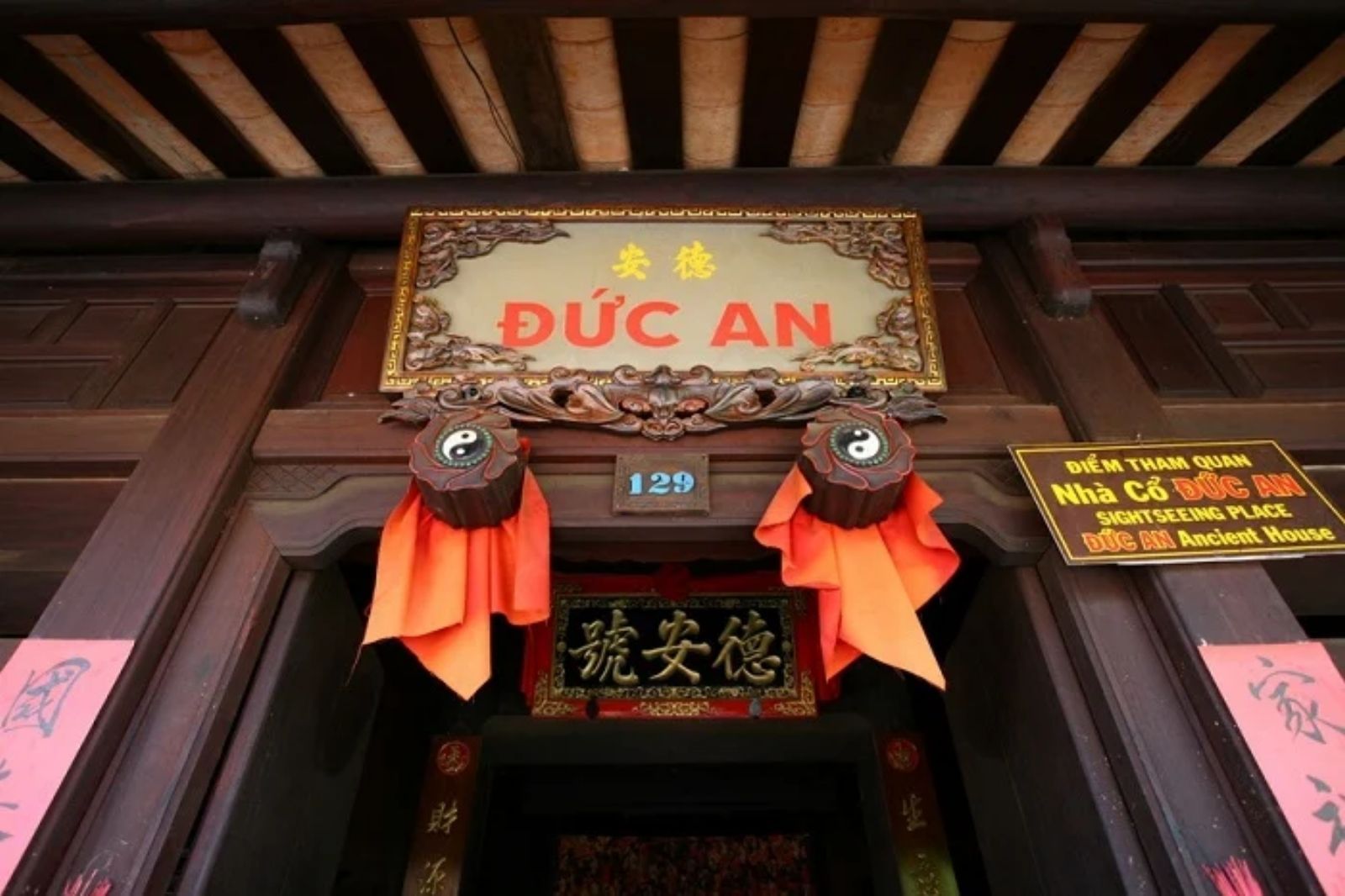
Duc An Ancient House is located right in the center of Hoi An Ancient Town, specifically at 129 Tran Phu Street, Minh An Ward, Hoi An City, former Quang Nam Province (now Da Nang City). This is one of the busiest streets in the area, located right next to the Hoai River and just a few steps away from the Covered Bridge (the symbol of Hoi An). This prime location makes Duc An Ancient House easily accessible, especially when you are strolling around exploring the ancient town.
From Da Nang, you can travel to Hoi An by motorbike, car, or bus in just about 30-45 minutes. Upon arrival, please buy Hoi An Ancient Town entrance tickets to enter the monuments, including Duc An Ancient House. The monument is open from around 8:00 AM to 5:00 PM daily, but it is best to visit in the morning to avoid crowds and enjoy the peaceful atmosphere.
Photo: Duc An Ancient House located at 129 Tran Phu Street
2. History of Duc An Old House
Duc An Ancient House was built in 1830, during the reign of King Minh Mang of the Nguyen Dynasty, and is now over 190 years old. The name "Duc An" carries a deep meaning: "preserving ethics for peace", while also being the name of the bookstore of the Phan family – the owners of the house. The founder of the Phan lineage was Mr. Phan Cong Thuyen, originally from Son Tay (Northern Vietnam), who migrated south in the 14th century and settled in Quang Nam. By the 15th generation (Later Le Dynasty), the family moved down to Hoi An town to trade and establish their career.
Initially, the house was a place for ancestor worship, where eight generations of the Phan family lived and grew up. In the late 19th century, it became Duc An Bookstore – the only bookstore in Quang Nam specializing in Han-Nom books and stationery. By 1908, following the failure of the anti-tax movement, the bookstore switched to selling Chinese herbal medicine (Hoa Bac). This was also the period when Duc An Ancient House became a "red address" of the patriotic movement, a gathering place for scholars such as Huynh Thuc Khang, Phan Chau Trinh, and Tran Quy Cap. They distributed progressive books and newspapers from China (Kang Youwei, Liang Qichao) and France (Chuong Re, Tan The Ky, Dong Phap Thoi Bao, Viet Nam Hon), disseminating bourgeois democratic and patriotic ideas.
Photo: Ancient house existing with a long history
In 1927, right here, revolutionary Cao Hong Lanh (real name Phan Hai Tham, alias Nam Them, born in 1906 – the youngest son of the 4th generation of the Phan family) established the Hoi An Vietnam Revolutionary Youth League. In 1929, the house witnessed the birth of the Provisional Provincial Committee of the Vietnam Revolutionary Youth League in Quang Nam. In early 1930, it was the location to discuss the establishment of the Communist Party in Quang Nam. However, in 1934, the French colonialists searched and closed it down, sentencing Phan Them in absentia to 15 years in prison. Afterward, his elder brother – Phan Ngoc Nhan – took over. In 2010, Duc An Ancient House was recognized as a city-level historical and cultural monument, commemorating Comrade Cao Hong Lanh, and opened its doors to visitors.
3. Architecture of Duc An Old House
Duc An Ancient House represents traditional Vietnamese architecture in the characteristic "tube house" style of Hoi An in the early 19th century, reflecting a simple and solemn Asian character. The house has a 7m wide facade and a current depth of 40m (originally about 70m), with the front facing Tran Phu Street and the back once bordering the river.
The layout of the house is symmetrical: the main door in the middle is for entry and exit, flanked by windows serving business activities, and above are two "door eyes" – a typical detail of Hoi An ancient houses, assisting in ventilation and lighting. The entire structure utilizes rare kien kien wood from Quang Nam, famous for its resistance to heat, humidity, and termites. The house was built in the style of Central Vietnam's Ruong houses combined with a coastal urban style, surrounded by solid brick walls and yin-yang tiled roofs.
The space is divided into several bays:
Outer bay: Business and guest reception area.
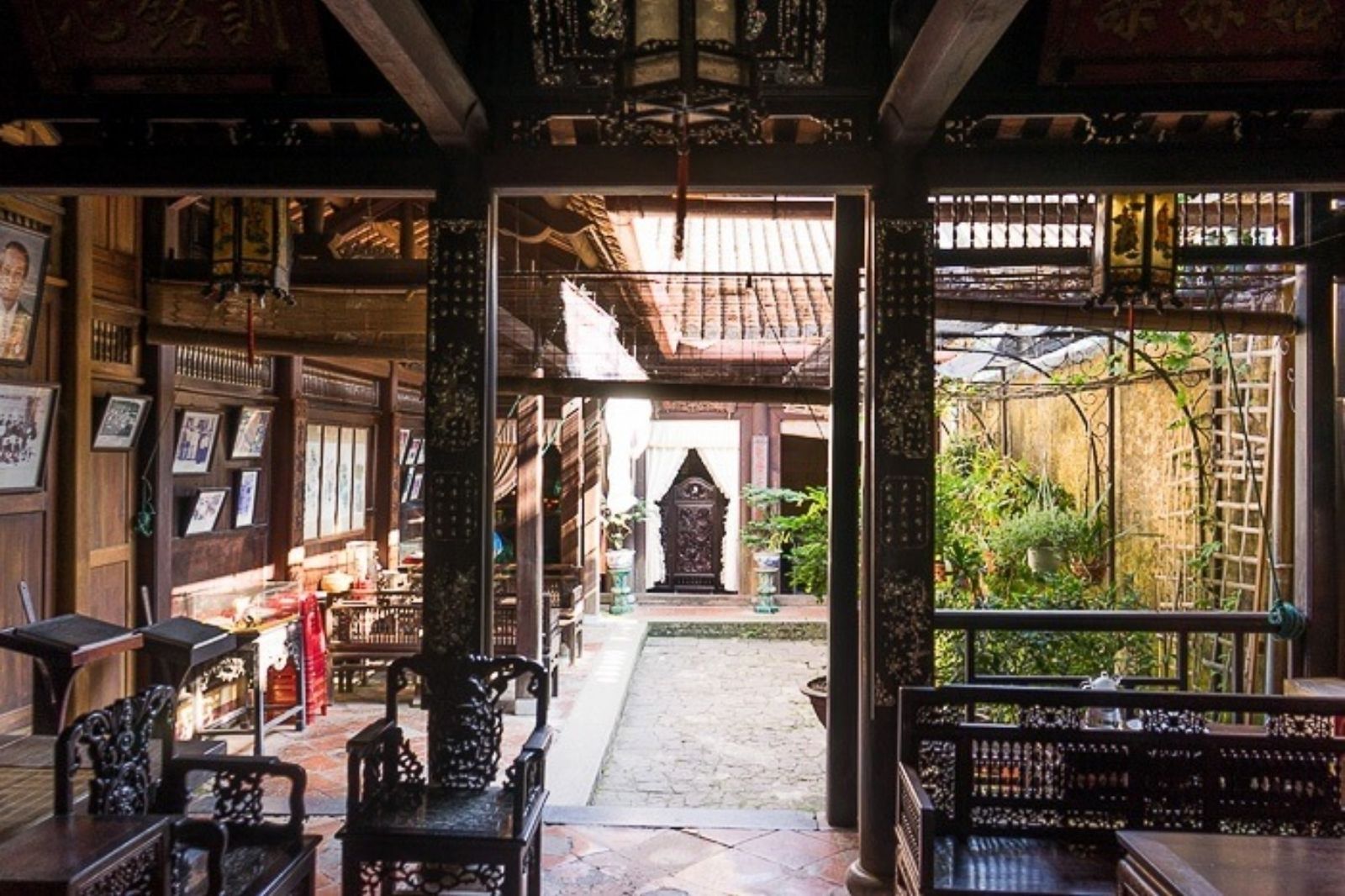
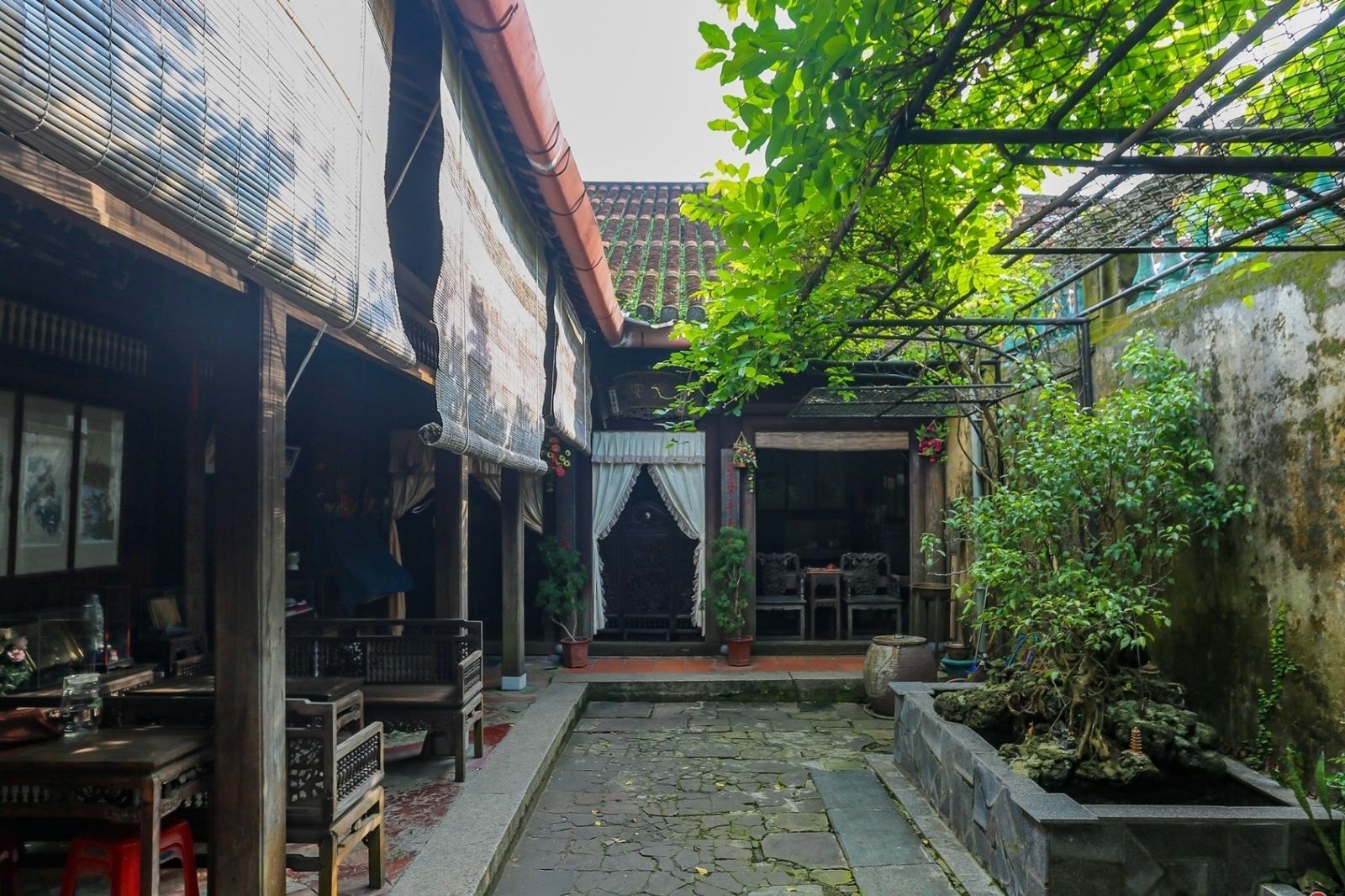
Middle bay: Worship room with the plaque "Phan Tong Duong" (Phan Family Ancestral Hall), connected by a large courtyard with a skylight, fish pond, and miniature landscape.
Rear bay: Family living area.
The unique feature is the "chong ruong - gia thu" (beam-on-beam structure) in the front wooden frame, the "mai chong tru doi" (roof supported by double pillars) for load-bearing, and the "mai chong mai tru lau" style in the middle house, a unique roof style remaining in Hoi An. The spaces are interconnected without partition walls, ensuring ventilation and harmony with nature. This architecture is not only durable through floods and time but also demonstrates the ingenuity of the ancients in blending life with the environment.
Photo: Duc An Ancient House was built in the traditional Ruong house style
4. Valuable artifacts and documents preserved at Duc An Old House
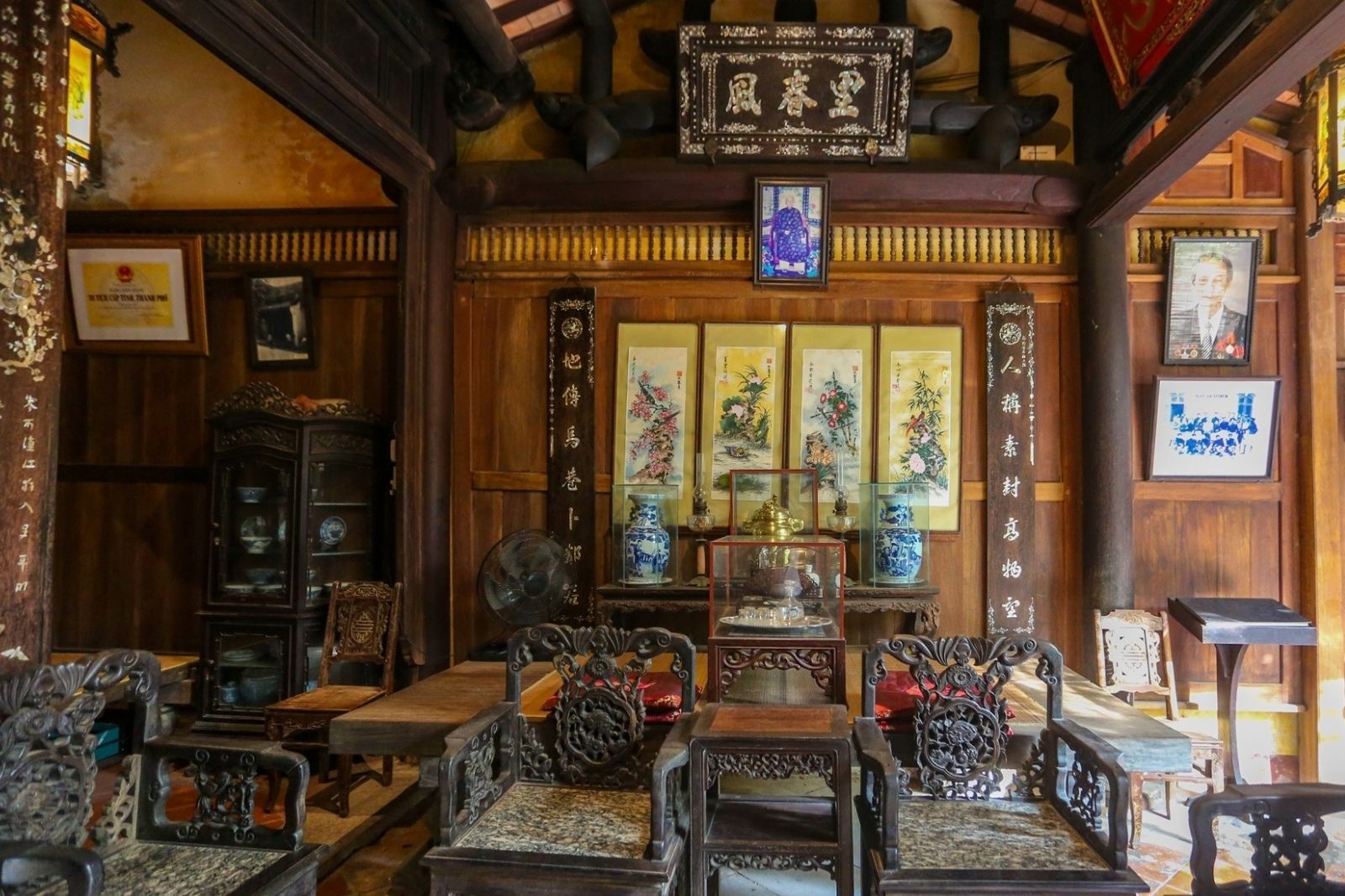
Duc An Ancient House is like a mini museum, housing a series of valuable artifacts associated with the history of the Phan family and the revolutionary movement. Prominent is the system of ancient horizontal lacquered boards and parallel sentences dating back over 200 years, intricately carved with moral educational meanings.
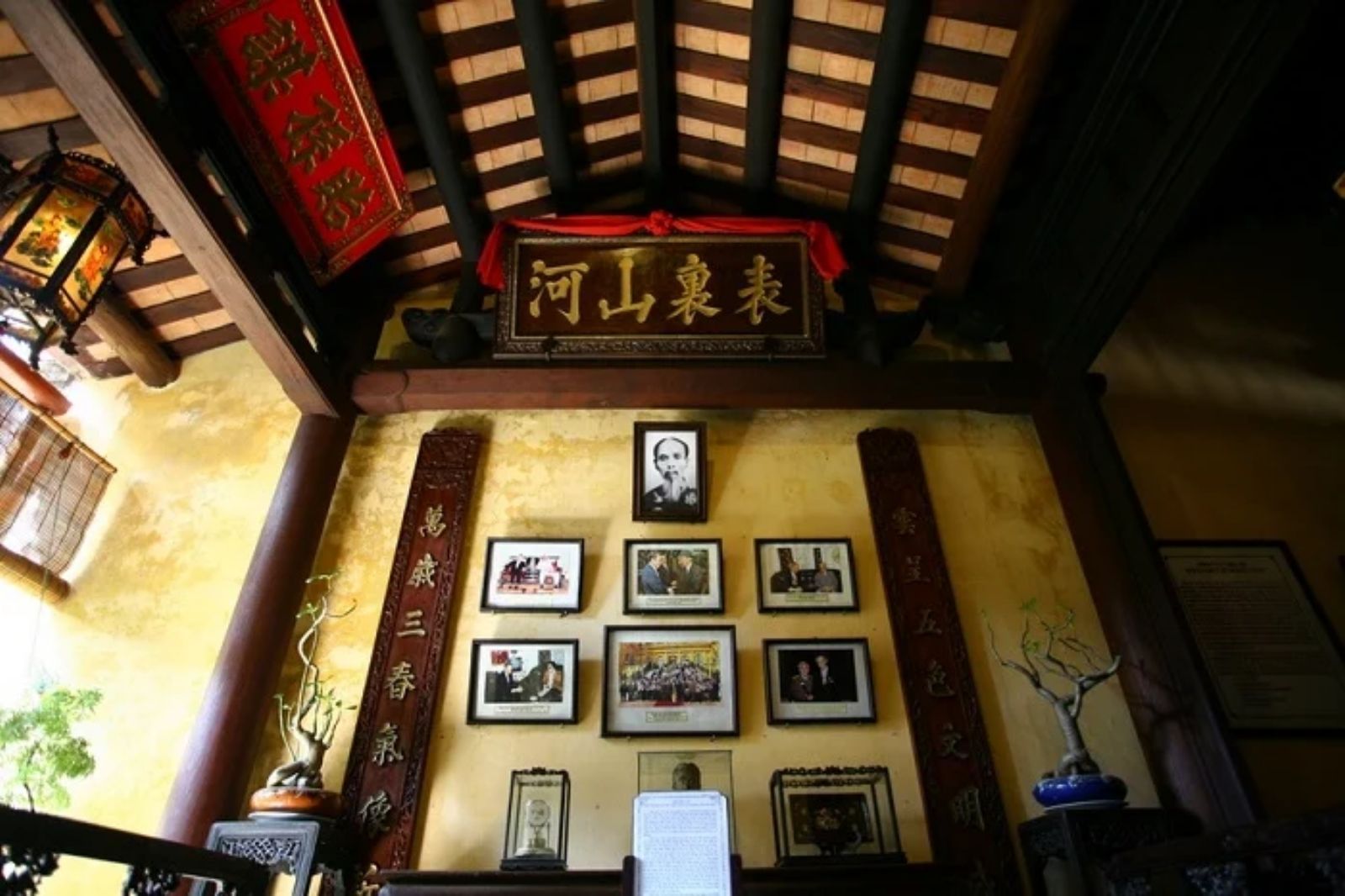
In particular, artifacts related to revolutionary Cao Hong Lanh include clothes, shoes, watches, radios, and personal items; along with commemorative photos taken with President Ho Chi Minh, General Vo Nguyen Giap, and high-ranking leaders. These items are displayed in glass cabinets, helping visitors get a clear picture of his revolutionary life – from participating in the Vietnam Revolutionary Youth League in 1923 to later leadership positions.
In addition, there are progressive books and newspapers once distributed at Duc An Bookstore, such as "Chuong Re", "Tan The Ky", "Dong Phap Thoi Bao", and "Viet Nam Hon". The Phan family's household items from multiple generations, such as ceramics and antique wooden tables and chairs, are also preserved intact, reflecting a simple lifestyle deeply imbued with Vietnamese identity.
Photo: The ancient house preserves many artifacts associated with the family clan
5. What is special about the experience of visiting Duc An Old House?
Visiting Duc An Ancient House is not just about admiring the architecture, but also a journey back in time, touching vivid historical stories. You will be guided by Mr. Phan Ngoc Tram – a 6th generation descendant of the Phan family – who will share the secrets of the house, from its role as a revolutionary base to how the family preserved it through many vicissitudes.
In particular, the quiet and ancient atmosphere will allow you to clearly feel the intimacy of past life: strolling through the green courtyard, admiring precious artifacts, and imagining scenes of patriots gathering to confer. Many visitors, especially the French, have expressed admiration for the ancient architectural craftsmanship, considering this a "living museum" of Hoi An.
Useful tip: Combine visiting Duc An Ancient House with nearby monuments such as Tan Ky Ancient House or Phung Hung Ancient House for a complete tour. Bring a camera to take photos (with permission), and spend at least 30-45 minutes exploring.
Photo: Courtyard area of Duc An Ancient House
Duc An Ancient House is one of the landmark structures in Hoi An Ancient Town, possessing both traditional architectural value and close historical ties to the patriotic movement of the early 20th century. The house still maintains its characteristic tube house structure, while storing many documents, newspapers, and artifacts reflecting urban life and business activities of Hoi An during an important developmental period. Visiting Duc An Ancient House Hoi An not only helps visitors understand more about the ancient residential-commercial house model, but also provides a clear perspective on the role of the ancient town in history. This is a suitable stop for those interested in culture, architecture, and documentary values.
If you want to explore Duc An Ancient House along with many other highlights such as the Covered Bridge, Fujian Assembly Hall, or traditional craft villages, you can refer to the all-inclusive Hoi An tour package with Sovaba Travel. The itinerary is thoughtfully designed, combining visits to historical sites, cultural experiences, and local cuisine, making your trip more convenient and time-saving.