Explore Phung Hung Ancient House: A 200+ Year Old Architectural Gem in Hoi An

Central

Da Nang

Sovaba.travel

Updated at: 24/09/2026

1. The history of Phung Hung Ancient House

Phung Hung Ancient House was built in 1780 by a Vietnamese merchant during a period when Hoi An was one of the most bustling trading ports in Southeast Asia. The name "Phung Hung" originates from the trade name of the original owner, meaning "prosperous" or "flourishing forever," expressing aspirations for thriving business and family prosperity. Originally, the house served as a shop trading in forestry and local products such as cinnamon, pepper, and salt, alongside silk, porcelain, and glassware—products actively traded with Japanese, Chinese, and European merchants.
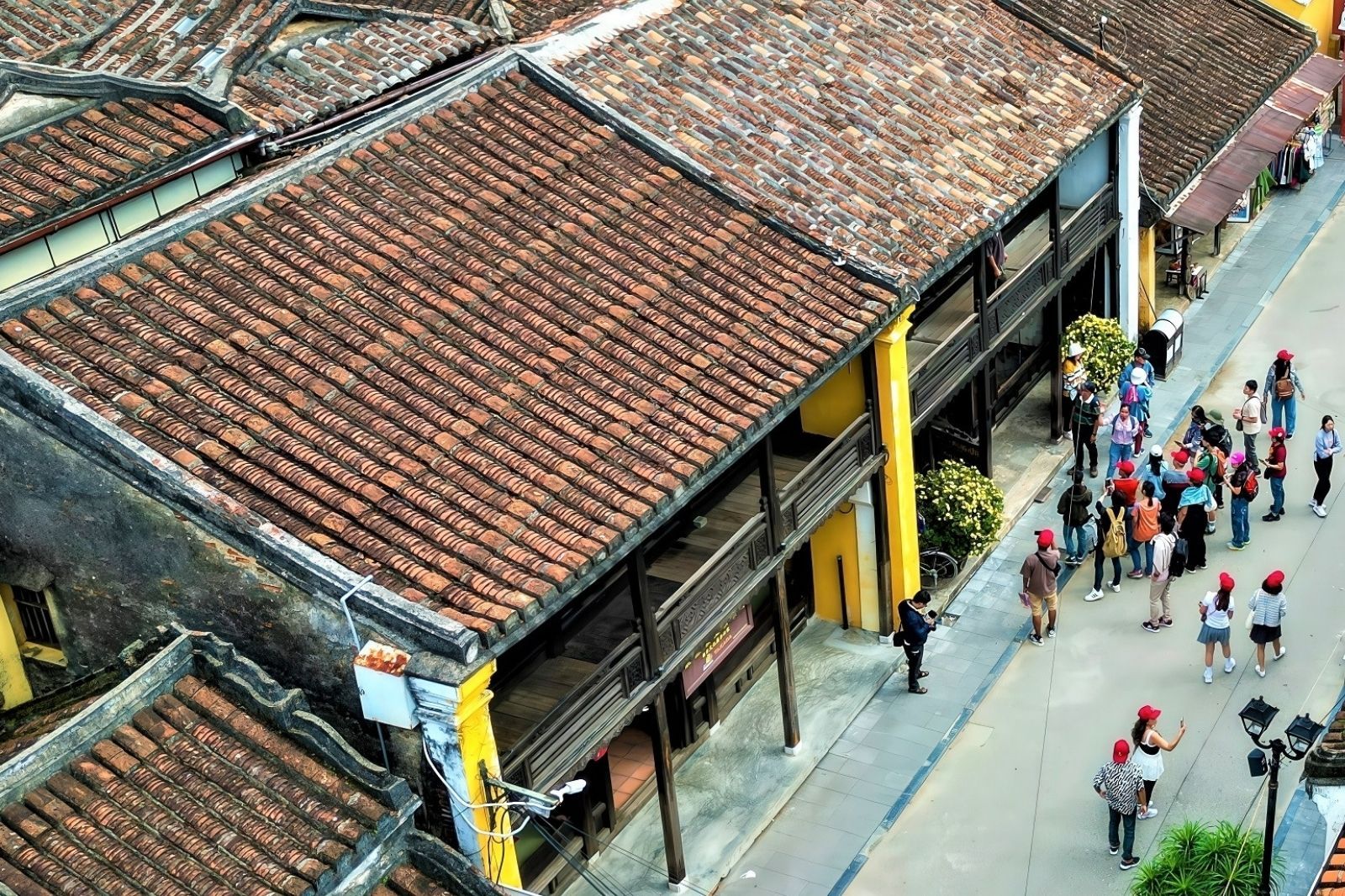
Phung Hung Ancient House was built by a Vietnamese merchant
Photo: Phung Hung Ancient House was built by a Vietnamese merchant 

Over its 240-plus years of existence, Phung Hung Ancient House has witnessed many ups and downs in Hoi An's history, from the peak era of the trading port to major floods. A notable example is the historic flood of 1964, when floodwaters rose to 2.5 meters and the house became a safe shelter for over 160 local residents for 3 days. In 1999, two major cataclysmic floods tested the structure once again, but thanks to its clever design, damage was significantly minimized. Today, the house has been inhabited across 8 generations and was recognized as a National Historical and Cultural Relic on June 29, 1993, contributing to the preservation of the ancient urban heritage of Hoi An—a UNESCO World Cultural Heritage site.
2. Where is Phung Hung Ancient House located?

To help visitors easily visualize and plan their visit to Phung Hung Ancient House, here is essential information regarding location and transportation presented clearly and concisely:

  • Address: Phung Hung Ancient House is located at No. 4 Nguyen Thi Minh Khai Street, Minh An Ward, Hoi An City, former Quang Nam Province (now Da Nang City).
  • Central location: The house is situated right in the heart of Hoi An Ancient Town, just one house away from the Japanese Covered Bridge.
  • Transport connections: The structure lies at the intersection of Nguyen Thi Minh Khai and Tran Phu streets, making it convenient to visit many adjacent heritage sites.
  • Historical location value: In the past, this was one of the most bustling areas of Hoi An trading port, where domestic and foreign merchants gathered to trade during the 18th and 19th centuries.
  • Getting there from Da Nang: The distance is about 30 km, taking around 45 minutes, and can be reached by bus, taxi, or motorbike.
  • Getting around the Ancient Town: It is best to walk or rent a bicycle to fully absorb the ancient atmosphere and easily combine your visit with Cantonese Assembly Hall, Hoi An Market, and many other neighboring destinations.

With its prime location and convenient connectivity, Phung Hung Ancient House is not only easy to find but also an ideal stopover on a journey to explore Hoi An Ancient Town through its historical and cultural depth.

3. Architecture of Phung Hung Ancient House

The architecture of Phung Hung Ancient House is a harmonious blend of three cultures: Vietnamese, Japanese, and Chinese, reflecting the cultural synthesis at the Hoi An trading port. The house features the classic tube-house shape typical of Hoi An ancient houses, with a wide storefront designed to symbolize the desire for wealth and prosperity. The structure stands 2 stories high, consisting of 2 connected house blocks facing Northwest, topped with 4 roofs of yin-and-yang tiles—a type of tile that provides ventilation in summer and retains warmth in winter.

Phung Hung Ancient House stands 2 stories high
Photo: Phung Hung Ancient House stands 2 stories high 

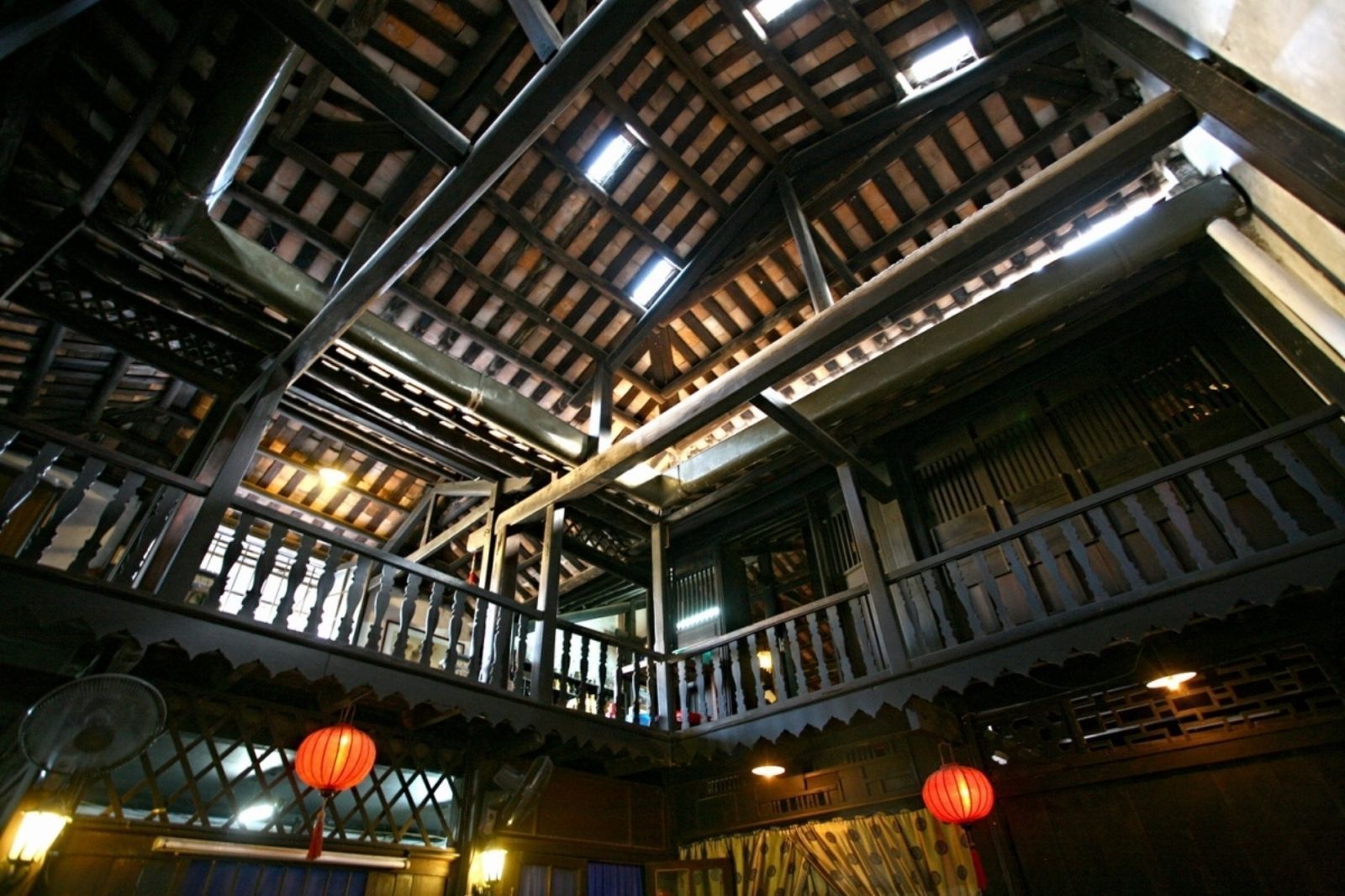
The main building material is ironwood (lim wood) and other rare timber species, ensuring durability across centuries. The entire house supported by 80 sturdy ironwood columns set on stone bases to prevent settling and termite damage. The roof over the central bay features a Japanese-style "four seas" (tu hai) design, accompanied by Chinese-style balconies and windows, while the rafters and crossbeams carry distinct Vietnamese character. On the roof, finely carved carp motifs represent luck, prosperity, and power in East Asian culture. Spacious corridors and a well-designed staircase system create a light, airy ambiance perfectly suited to the tropical climate.

4. Unique architectural details inside Phung Hung Ancient House

Inside Phung Hung Ancient House lie many unique details that leave visitors in awe of the craftsmanship and ingenuity of the past:

  • Main door and door eyes: The main entrance features two solemn "door eyes" (mon than), serving both decorative and spiritual purposes to ward off evil spirits and protect the family from misfortune and failure.
  • Carved pillars and walls: 80 ironwood columns rest on stone pedestals, while the walls are intricately carved by artisans from Kim Bong carpentry village with delicate floral patterns and sacred mythical creatures.
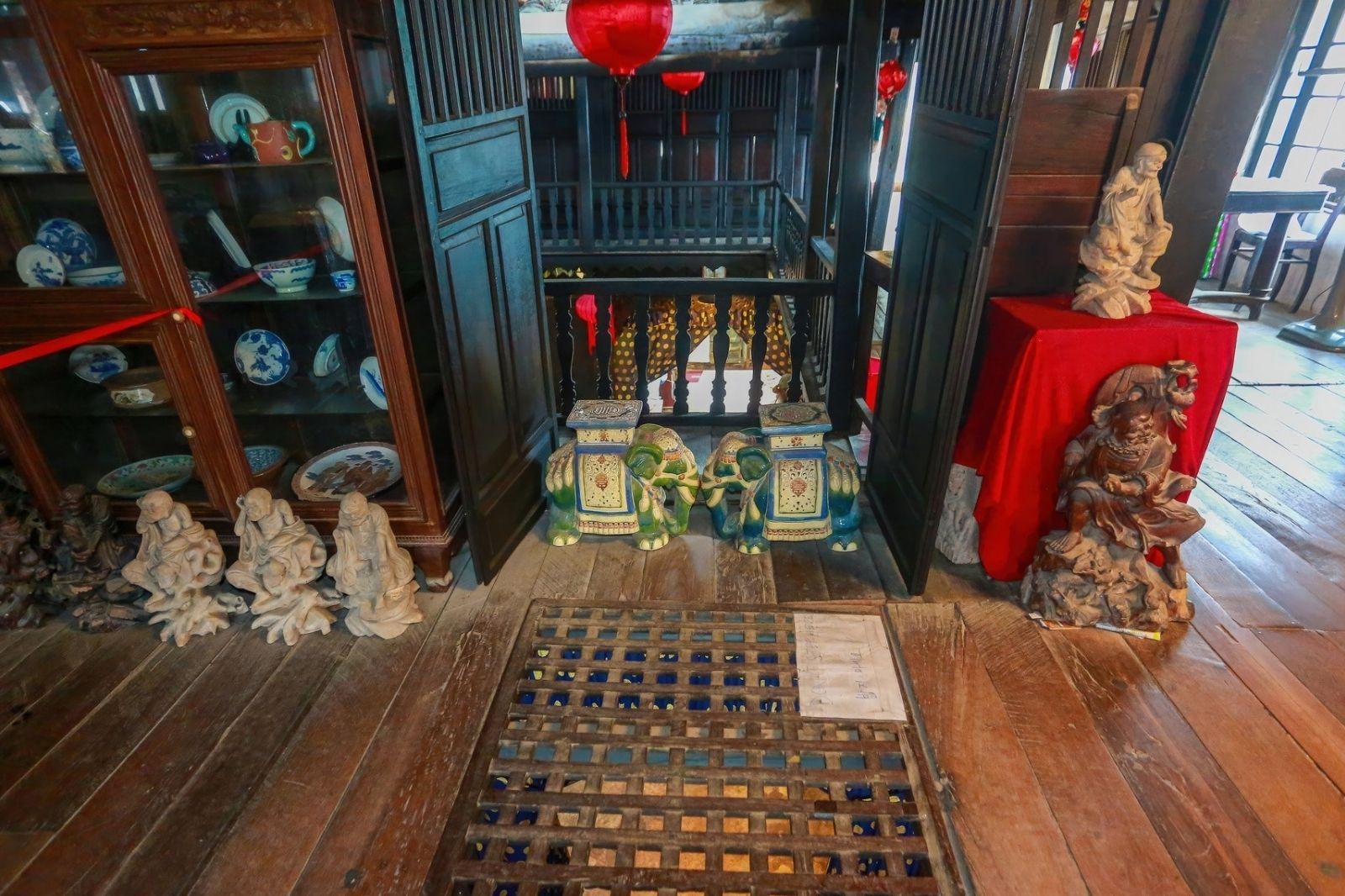
  • Floor trapdoor: A square opening on the second-floor wooden floor used to hoist goods to safety during floods, demonstrating clever adaptation to Hoi An's riverine environment.
  • Altar and marble dice: The second floor houses ancestral altars and an altar to Mazu (Goddess of the Sea), along with seven marble dice used to cast lots before setting out on trading journeys.
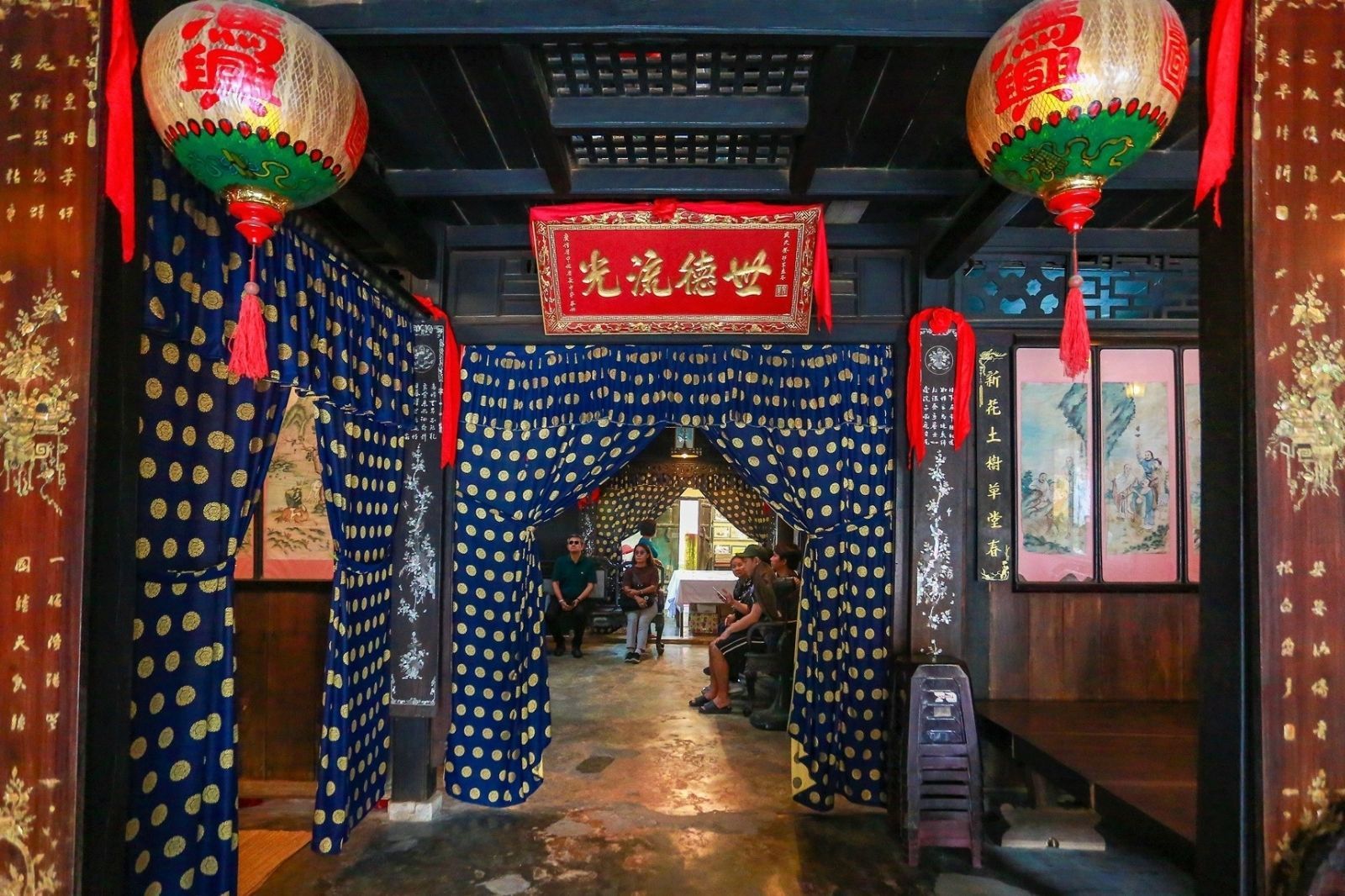
  • Horizontal lacquered board and couplets: The lacquered board inscribed with "The Duc Luu Quang" (Ancestral virtues shine brightly across generations) hangs in the inner room, alongside ancient Chinese couplets reflecting traditional family values.
  • "Thuong song ha ban" doors: A classic door style featuring slatted wooden blinds on top and solid panels below, allowing air circulation while maintaining security and privacy.

These details are not only visually striking but also serve practical functions, enabling the house to withstand natural disasters and the passage of time.

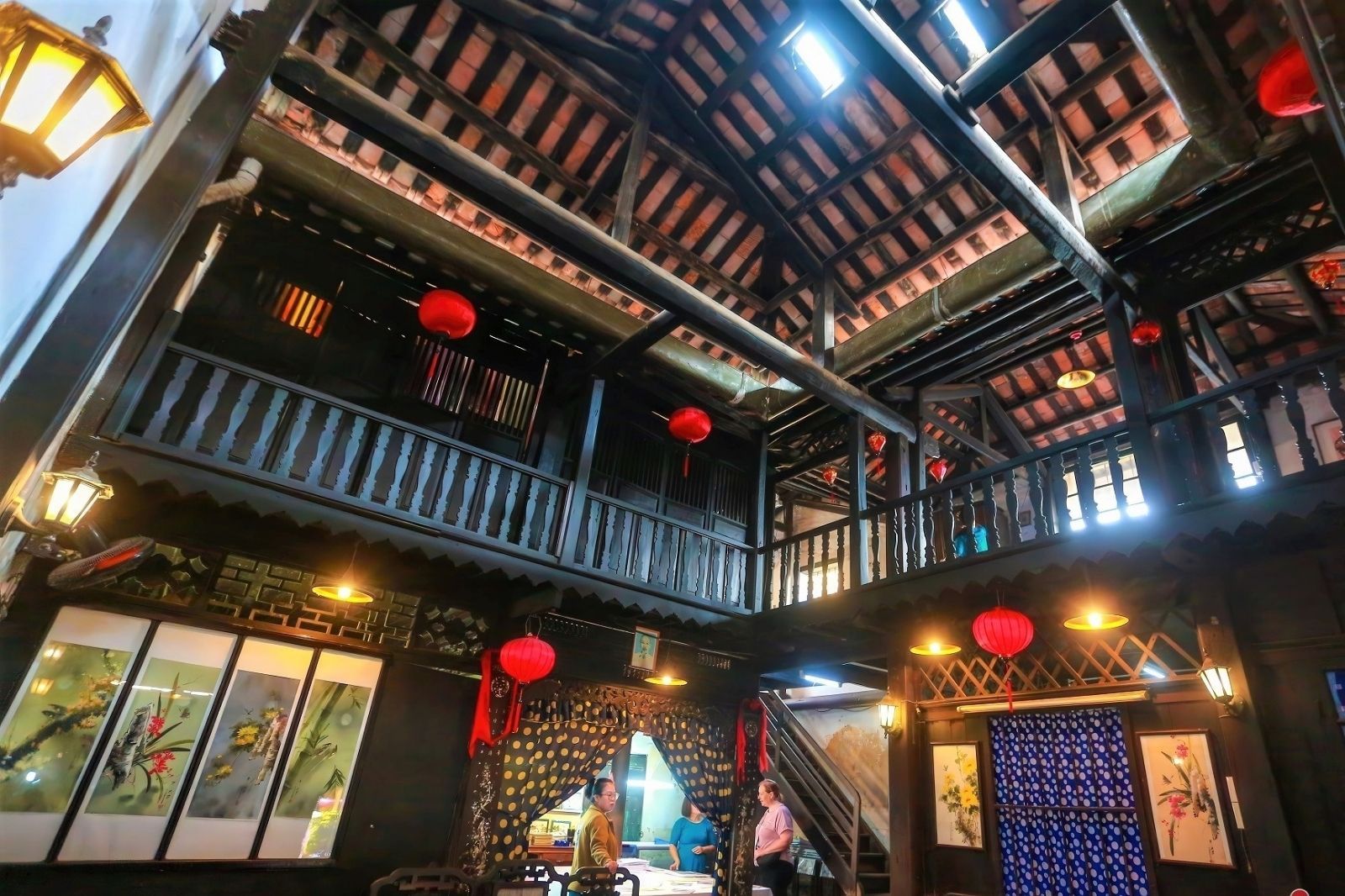
Inside Phung Hung Ancient House
Photo: Inside Phung Hung Ancient House 

5. Daily life of the Phung Hung family through generations

Through 8 generations, Phung Hung Ancient House stands as a witness to the daily lives of ancient Hoi An merchants. The original owner utilized the ground floor for commerce and receiving foreign traders, dealing in cinnamon, silk, and porcelain. The second floor was reserved for family living quarters, ancestor worship, and honoring Mazu—the patron deity of merchants. Daily life revolved around business, accompanied by customs such as rolling marble dice to decide travel itineraries.

Today, descendants of the 8th generation still reside here, maintaining a hand-embroidery workshop to produce souvenirs for visitors. They also act as guides, sharing stories about the history and architecture of the house, giving travelers a deeper connection to this heritage. Furthermore, the house continues to serve as a community refuge during major floods, showcasing the spirit of solidarity among Hoi An residents.

Phung Hung Ancient House has been home to many generations
Photo: Phung Hung Ancient House has been home to many generations 

6. Tips for tourists visiting Phung Hung Ancient House

To ensure a smooth and meaningful visit to Phung Hung Ancient House, keep the following practical tips in mind:

  • Tickets and opening hours: Hoi An Ancient Town entrance tickets range from 80,000 to 120,000 VND per person (depending on nationality). The house is open daily from 8:00 AM to 6:00 PM.
  • Getting around and attire: Walk or ride a bicycle within the ancient town for easy exploration. Wear comfortable, breathable clothing as Hoi An weather can be quite hot; avoid overly short outfits out of respect for historic sites.
  • Visitor etiquette: As this is a private residence, please maintain quiet, avoid touching artifacts, and refrain from loud behavior. Photography is permitted, but avoid using flash to help preserve the items. Bring drinking water and a camera to capture memorable moments.
  • Special experiences: Rest at the precious wooden table set on the ground floor while listening to the host (an 8th-generation descendant) tell stories. Participate in activities such as trying on traditional Ao Dai, making lanterns, or buying handmade souvenirs directly from the family embroidery workshop.
  • Nearby attractions: Combine your visit with Japanese Covered Bridge, Cantonese Assembly Hall, or Hoi An Market to enrich your trip. If traveling in a group, hiring a professional guide will give you much deeper insights into the history.
Admiring artifacts inside the ancient house
Photo: Admiring artifacts inside the ancient house 

By exploring Phung Hung Ancient House, visitors not only admire a 200+ year-old structure preserved almost intact, but also feel the rhythm of life, architectural wisdom, and commercial legacy of old Hoi An. This ancient house is more than just a sightseeing stop—it is a "time portal" helping you gain a profound understanding of the historical and cultural values that shaped the unique identity of Hoi An Ancient Town, a UNESCO World Cultural Heritage site. To experience Hoi An fully and conveniently, you can choose a Hoi An day tour or a walking tour of the Ancient Town, combining visits to Tan Ky Ancient House, the Japanese Covered Bridge, Chinese assembly halls, Hoi An Market, and the night lantern street. Accompanied by a culturally knowledgeable local guide, every destination will become vastly more vivid and meaningful.
Loading......

Featured destinations