Discover Ru Cha – A Mysterious and Fascinating Mangrove Forest in Hue

Central

Thua Thien Hue

Tam Giang Lagoon

Sovaba.travel

Updated at: 24/09/2026

1. Introduction to Ru Cha Forest

Ru Cha is not simply a mangrove forest, but also conceals special historical and cultural values of Hue. The name "Ru Cha" originates from the cha trees (a type of mangrove tree) growing densely, accounting for over 90% of the forest area. Existing for hundreds of years, from an initial area of only about 4 hectares, the forest plays an important role in preventing saltwater intrusion, retaining freshwater, and protecting aquatic resources for the mainland.

According to local legend, Ru Cha has existed for a long time. Later, the government and local people planted additional mangrove species such as apple mangroves, black mangroves, loop-root mangroves, and nipa palms, creating a rich and diverse ecosystem. Today, this place not only contributes to nature conservation but also serves as a livelihood source for the local community thanks to abundant aquatic life such as goby fish, grouper, eel, and rabbitfish.
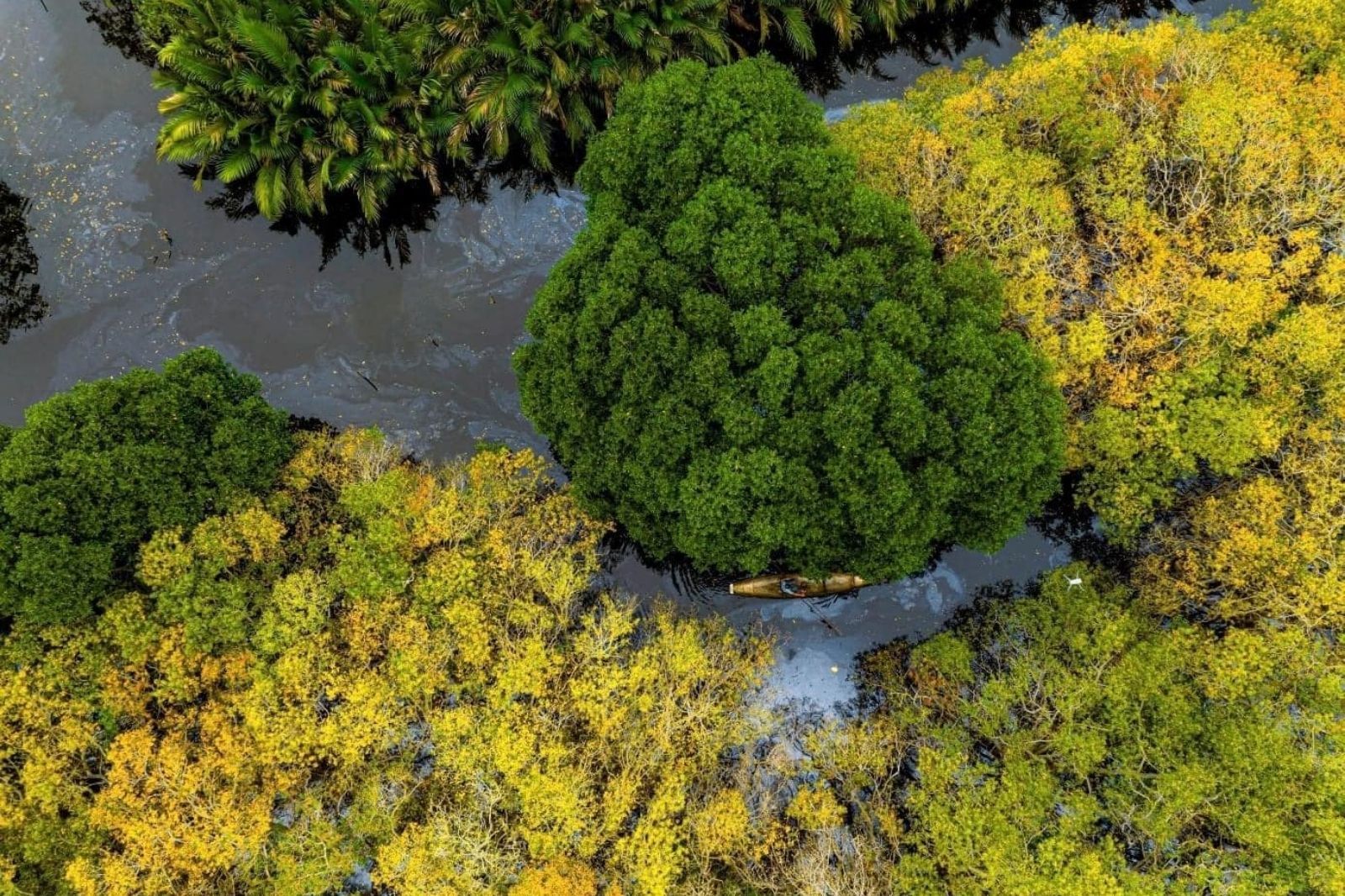
Ru Cha is a mangrove forest with a diverse ecosystem
Photo: Ru Cha is a mangrove forest with a diverse ecosystem 

The unique cultural highlight of Ru Cha is the shrine dedicated to the Holy Mother (Ba Duc Thanh Mau) located right in the middle of the forest. This ancient, sacred shrine is associated with a mystical story: after a major flood, locals discovered a sacred object washed ashore and erected a shrine to worship it. Annually on the 3rd day of the 3rd lunar month, a major festival takes place here, attracting crowds of locals and tourists to pray for peace and good fortune. It is these mystical stories and colorful folklore that create the special attraction of Ru Cha, a destination that is not only beautiful in landscape but also deep in Hue's spirituality and culture.
2. Location and how to get to Ru Cha, Hue

Ru Cha is located in Thuan Hoa village, Huong Phong commune, Huong Tra town, Thua Thien - Hue province. This is the only remaining primary mangrove forest in the Tam Giang – Cau Hai lagoon system, the largest lagoon system in Southeast Asia. Covering an area of about 5 hectares (which has been expanded to 22 hectares through additional planting), Ru Cha is situated downstream of the Perfume River, about 14-15 km east of central Hue.

To get here, you can depart from central Hue along National Highway 49B towards Thuan An Beach. Continue straight until you see signs for Tam Giang Bridge and Tam Giang Lagoon, then turn left across the bridge. After crossing Thao Long Dam for about 4km, you will reach Ru Cha. The road has been paved with concrete and widened, making it easy to travel by motorbike, car, or bicycle. If renting a motorbike in Hue, the price ranges from 120,000 to 150,000 VND/day, available from hotels, homestays, or local rental services.

If traveling in a group, you can choose a 4 to 7-seater car for more comfort. Travel time is only about 30-45 minutes, very convenient for a day trip. 

Note that if traveling during the rainy season (October–December), the road can be slippery, so check the weather in advance.

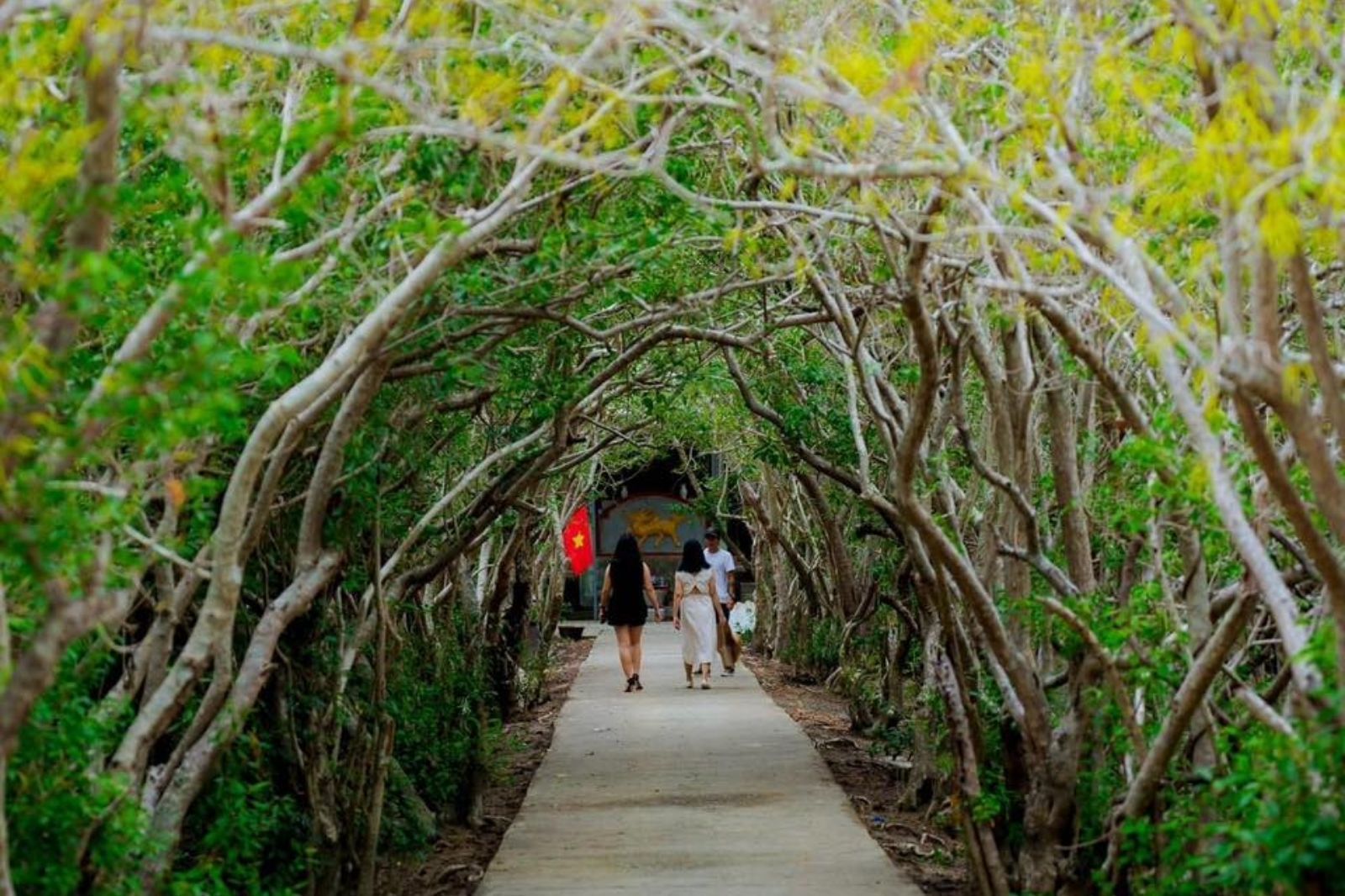
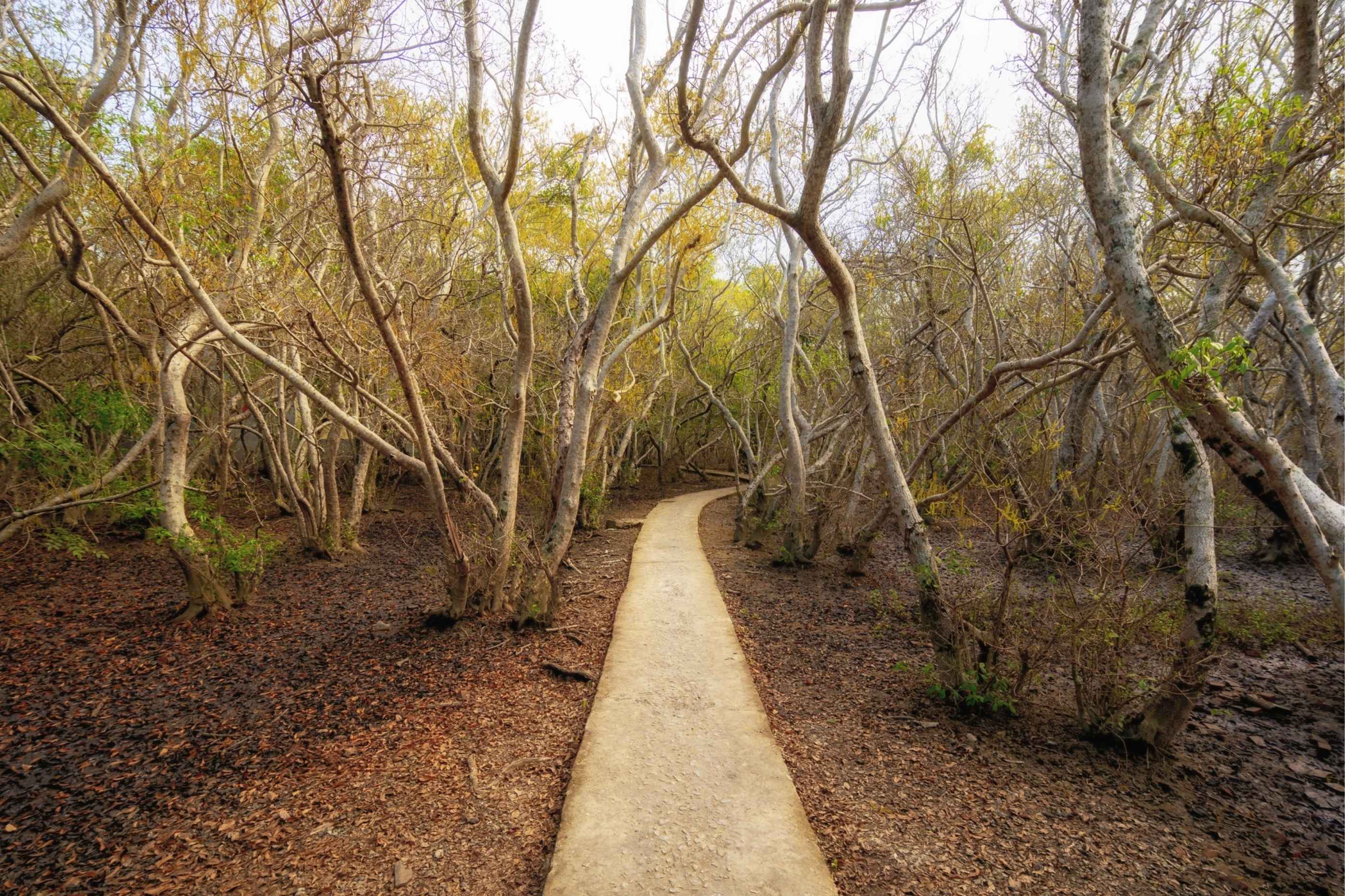
Road into Ru Cha forest
Photo: Road into Ru Cha forest 

3. Ecological features and flora and fauna at Ru Cha

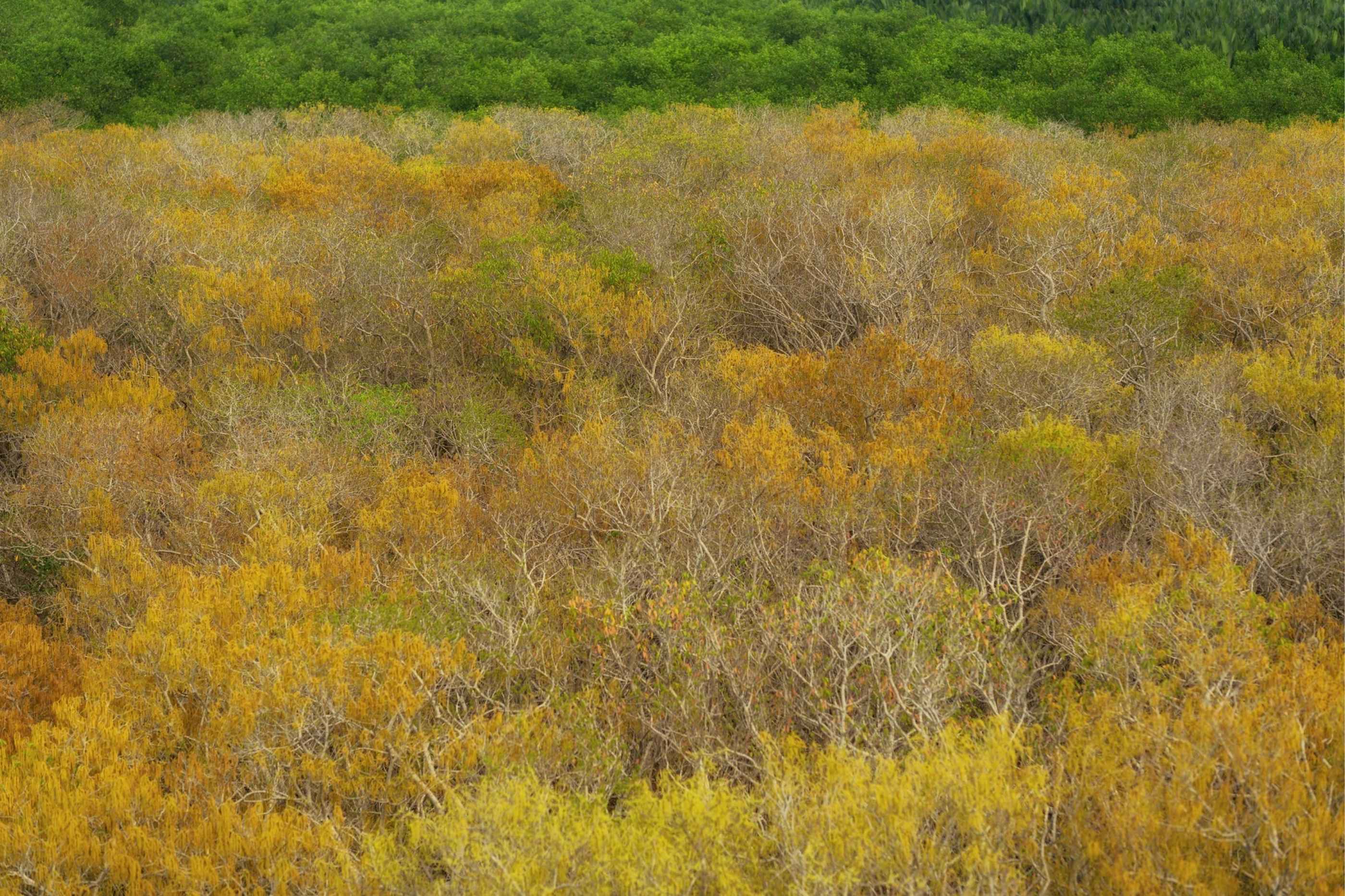
As the only primary mangrove forest in the Tam Giang lagoon system, Ru Cha possesses a rich and unique ecosystem. Cha trees grow 2–4m tall, with intertwined root systems, creating a dense canopy that shades the concrete path through the forest. Cha tree fruits look like peppercorns, and the forest changes leaves seasonally, looking especially beautiful in autumn when the leaves turn vivid shades of yellow, orange, and red, creating a magical natural landscape like something out of a fairy tale.

The fauna here is also diverse: visitors can encounter bright red mangrove crabs hiding in burrows, or mudskippers – rare fish capable of walking on mud. The forest is also home to many aquatic species, contributing to environmental protection by preventing soil erosion and saltwater intrusion. Serving as the "green lung" of the Ancient Capital of Hue, Ru Cha helps improve air quality and supports sustainable ecotourism.

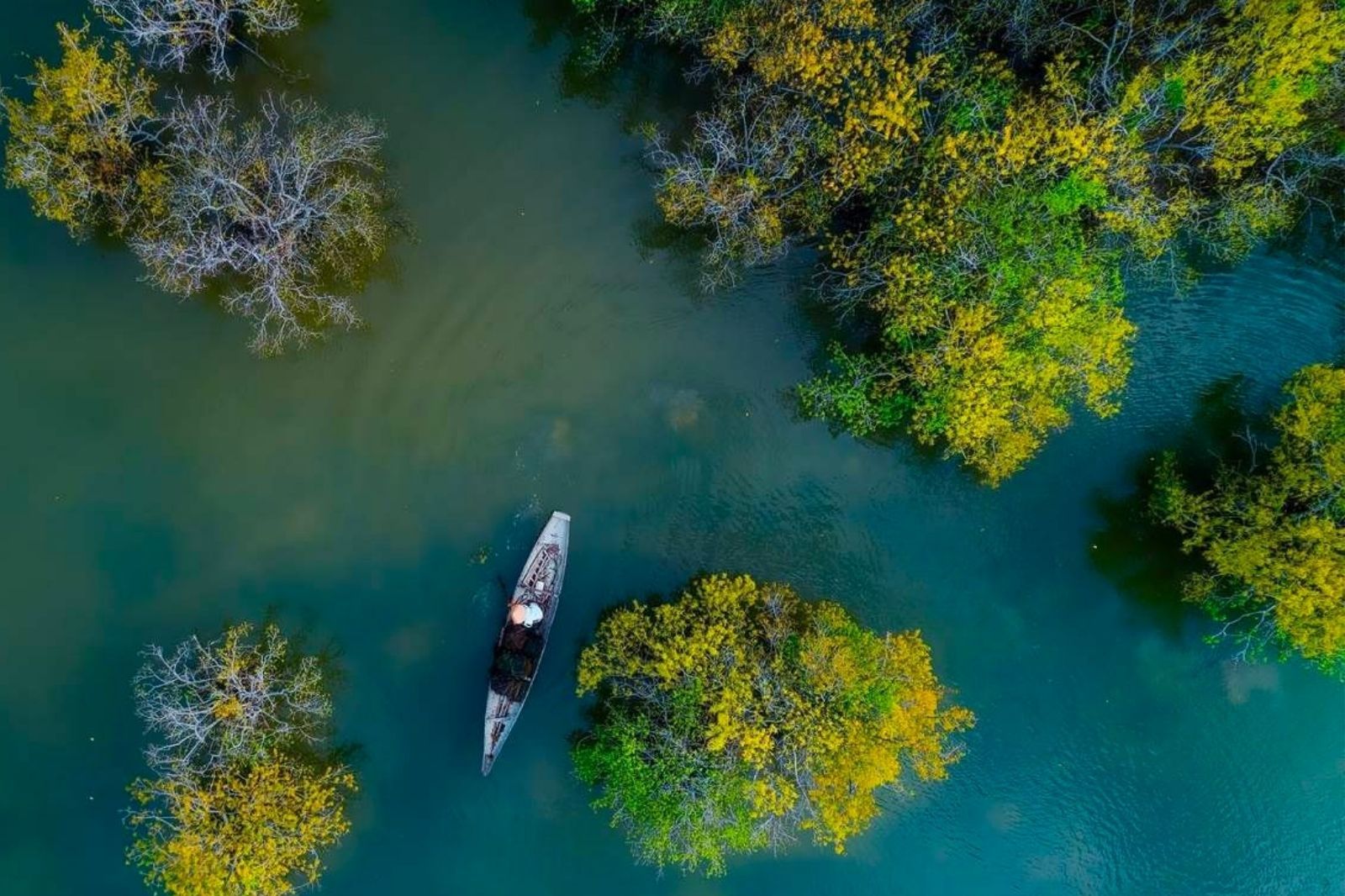
Ru Cha forest from above
Photo: Ru Cha forest from above 

4. Exciting activities to experience at Ru Cha

Coming to Ru Cha Hue, you will have countless activities to explore and relax:

  • Walking through the forest: The winding concrete path under the canopy of cha trees offers a peaceful feeling, like wandering into a mystical forest. This is an ideal activity for light trekking and check-in photos.
  • Boat rowing exploration: Rent a boat (priced around 200,000 - 300,000 VND/trip) to weave through narrow canals and observe the ecosystem up close. This is the best way to experience the pristine beauty and capture artistic photos.
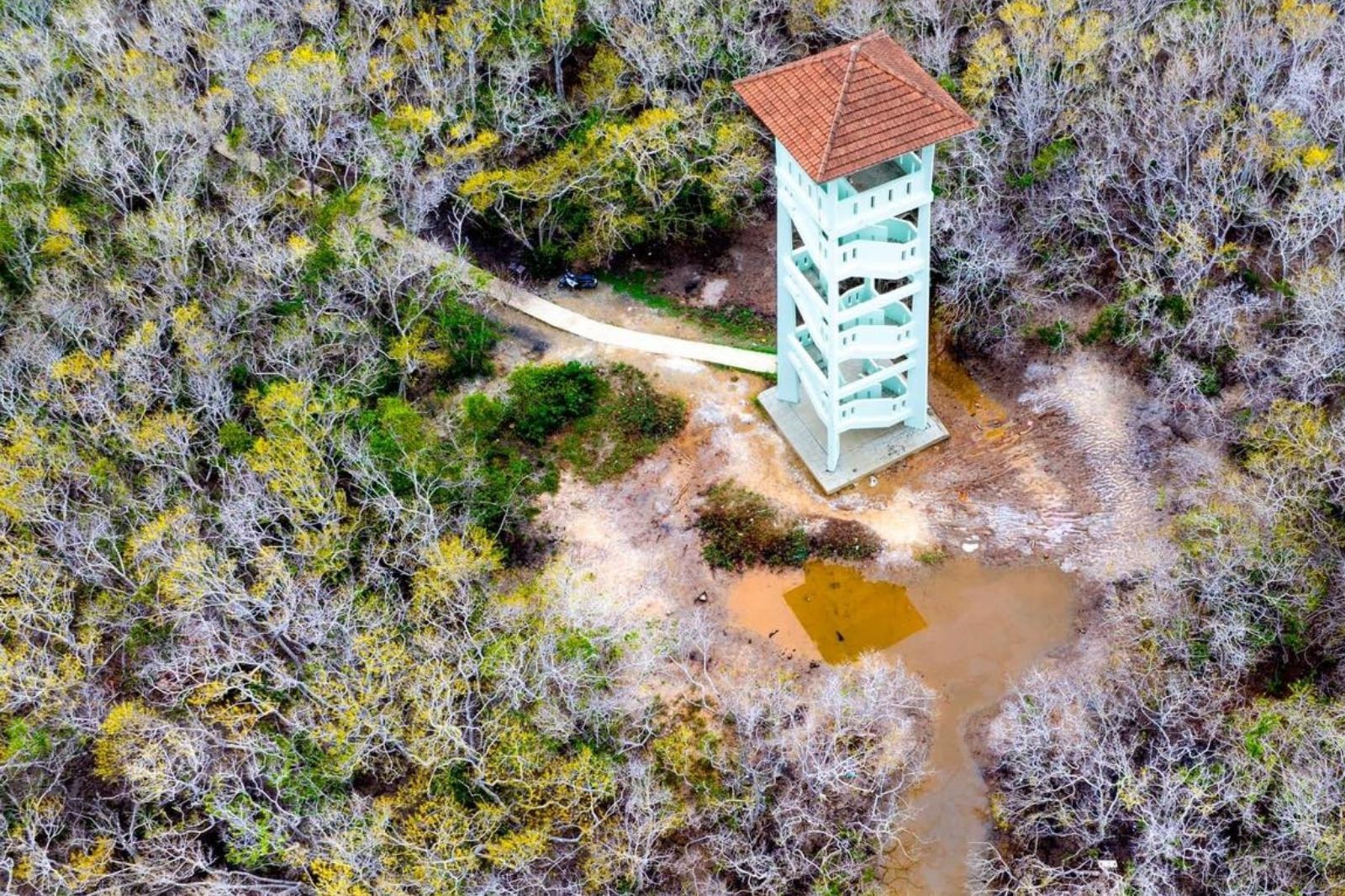
  • Climbing the observation tower: From the forest watchtower, you can admire panoramic views of Ru Cha forest and Tam Giang lagoon, especially beautiful at sunset. This is a favorite spot for photographers.
  • Visiting the shrine and praying: Stop by the Holy Mother Shrine to learn about local culture and pray for good luck. If your visit coincides with the festival, you will also have the chance to participate in folk activities.
  • Camping and picnics: Organize outdoor meals and enjoy fresh seafood from the lagoon. Some tourists also try traditional fishing or fish trapping to experience local fishermen's life.
Observation tower with panoramic view of Ru Cha forest
Photo: Observation tower with panoramic view of Ru Cha forest 

5. Best time to visit Ru Cha

The best time to explore Ru Cha is from February to September, when the weather in Hue is dry and pleasant for outdoor activities. Notably, September (autumn) is when the forest changes leaves, displaying vibrant colors of yellow, orange, and red, creating a mystical and romantic beauty. Early morning or late afternoon are the best times to avoid the sun and watch the sunset over the lagoon.

Avoid going during the rainy season (October–December) as the path can be slippery and potentially flooded. If traveling in summer, arrive early in the morning to enjoy the cool air.

Leaf-changing season in Ru Cha forest
Photo: Leaf-changing season in Ru Cha forest 

6. Useful travel tips when visiting Ru Cha

To make your trip to Ru Cha Hue smooth and safe, keep the following tips in mind:

  • Prepare clothing and supplies: Wear long-sleeved clothes, apply sunscreen, and use mosquito repellent as the forest is dense. Bring drinking water, hats, and a power bank for your phone.
  • Protect the environment: Do not pick leaves, break branches, or litter to preserve the pristine beauty of the forest.
  • Dining and accommodation: Near Ru Cha, there are local eateries serving fresh seafood such as shrimp and crabs from the lagoon. If staying overnight, choose a homestay in Huong Phong or a hotel in central Hue for convenient travel.
  • Safety: If rowing a boat, comply with local instructions. Children and the elderly should be accompanied.
  • Estimated cost: A day trip costs around 500,000 - 1,000,000 VND/person, including vehicle rental, boat, and meals.

Combine your trip with nearby attractions like Thuan An Beach or Tam Giang Lagoon for a richer itinerary.

Combine neighboring tourist attractions around Ru Cha forest
Photo: Combine neighboring tourist attractions around Ru Cha forest 

Exploring Ru Cha Hue is not only a sightseeing trip, but also a journey back to peace amidst nature, listening to cultural and spiritual stories passed down through generations. This unique mangrove forest offers visitors a different perspective of Hue: not just tombs, pagodas, or the poetic Perfume River, but also a pristine "green treasure," rich in ecological and cultural value. If you have the chance to visit Hue, do not forget to stop by Ru Cha to witness its mystical beauty firsthand, breathe in the fresh air, and bring home unforgettable memories beside Tam Giang Lagoon.

Loading......

Featured destinations