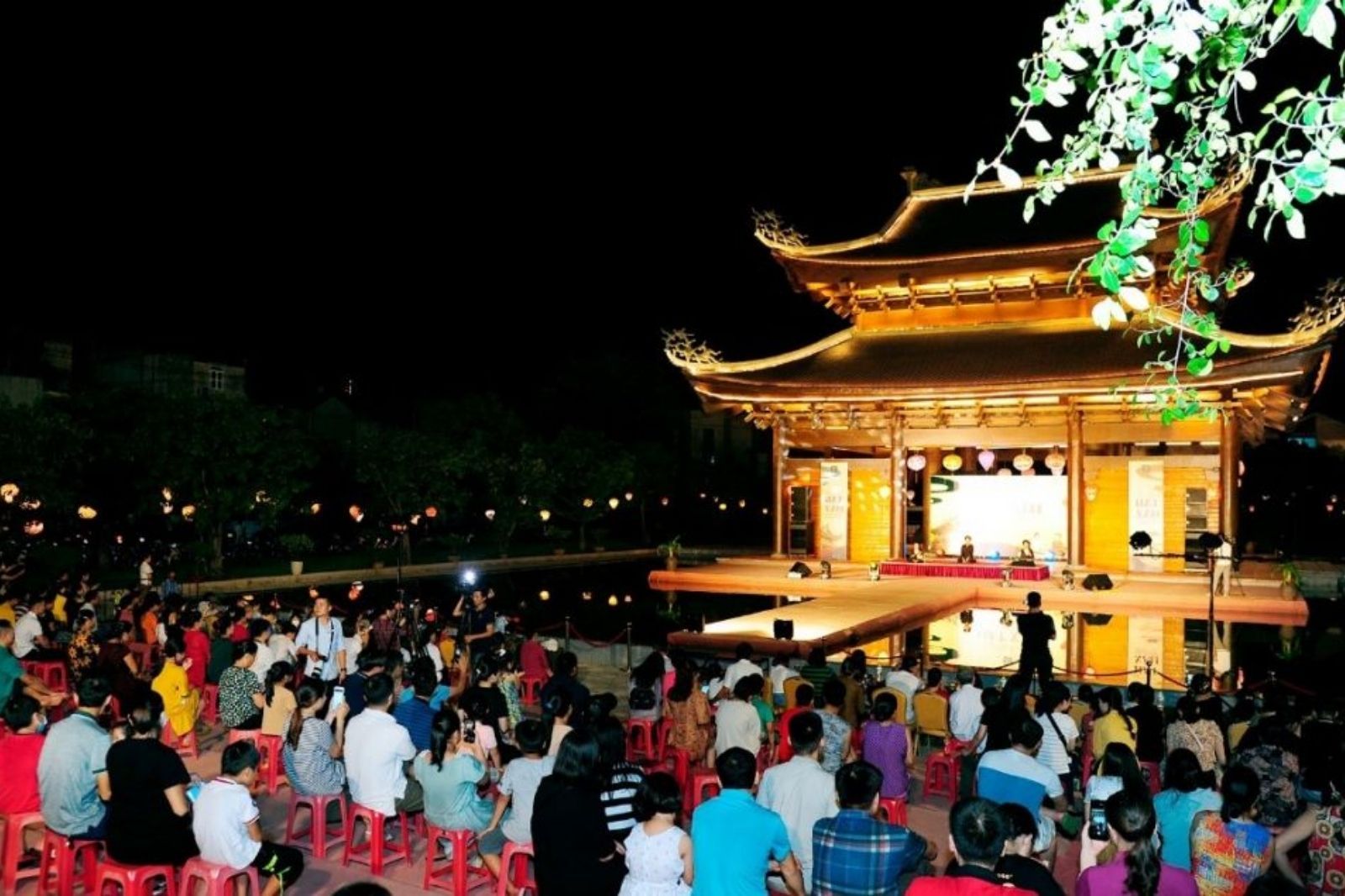
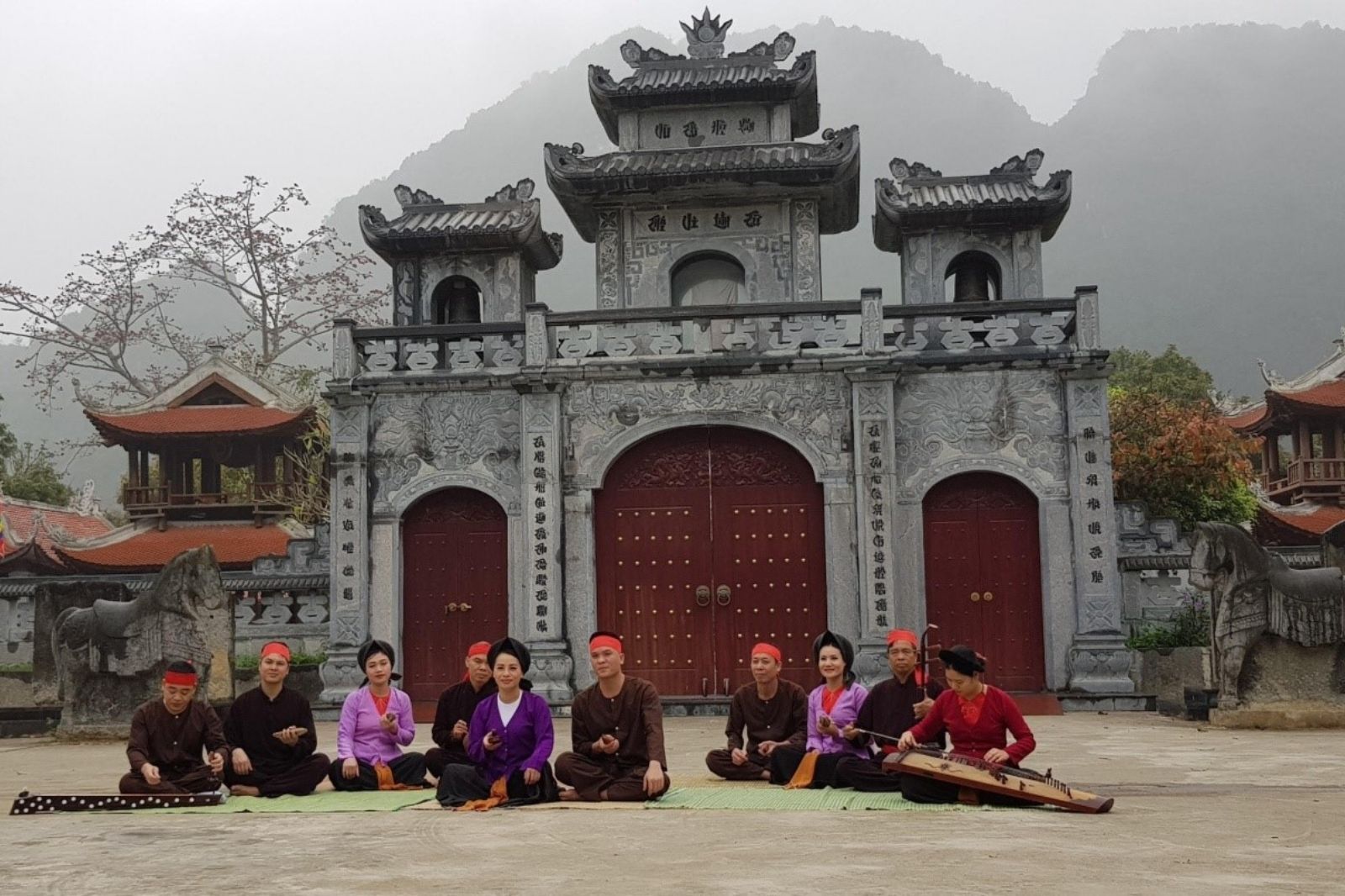
Xam singing, also known as busking or street singing, has existed since ancient times in the Northern Delta. Among these places, Ninh Binh – especially Yen Mo District – is considered one of the crucial cradles that helped shape and preserve this art form. Many local cultural records suggest that Xam has ties to music traditions dating back to the Dinh Dynasty (10th century), when Hoa Lu was still the capital of Dai Co Viet.
Historical documents record the story of Mrs. Pham Thi Tran – a talented artist summoned to the royal palace by King Dinh Tien Hoang to teach singing and dancing to court ladies and soldiers, later granted the title U Ba. From that initial foundation of royal court art, musical forms gradually spread into folk life, contributing to the formation of characteristic genres such as Cheo, Chau Van, and Xam singing. Within the space of the Truong Yen Festival (ancient capital Hoa Lu), Xam once appeared on the path leading to the Dinh and Le temples, blending with various other traditional performing arts.
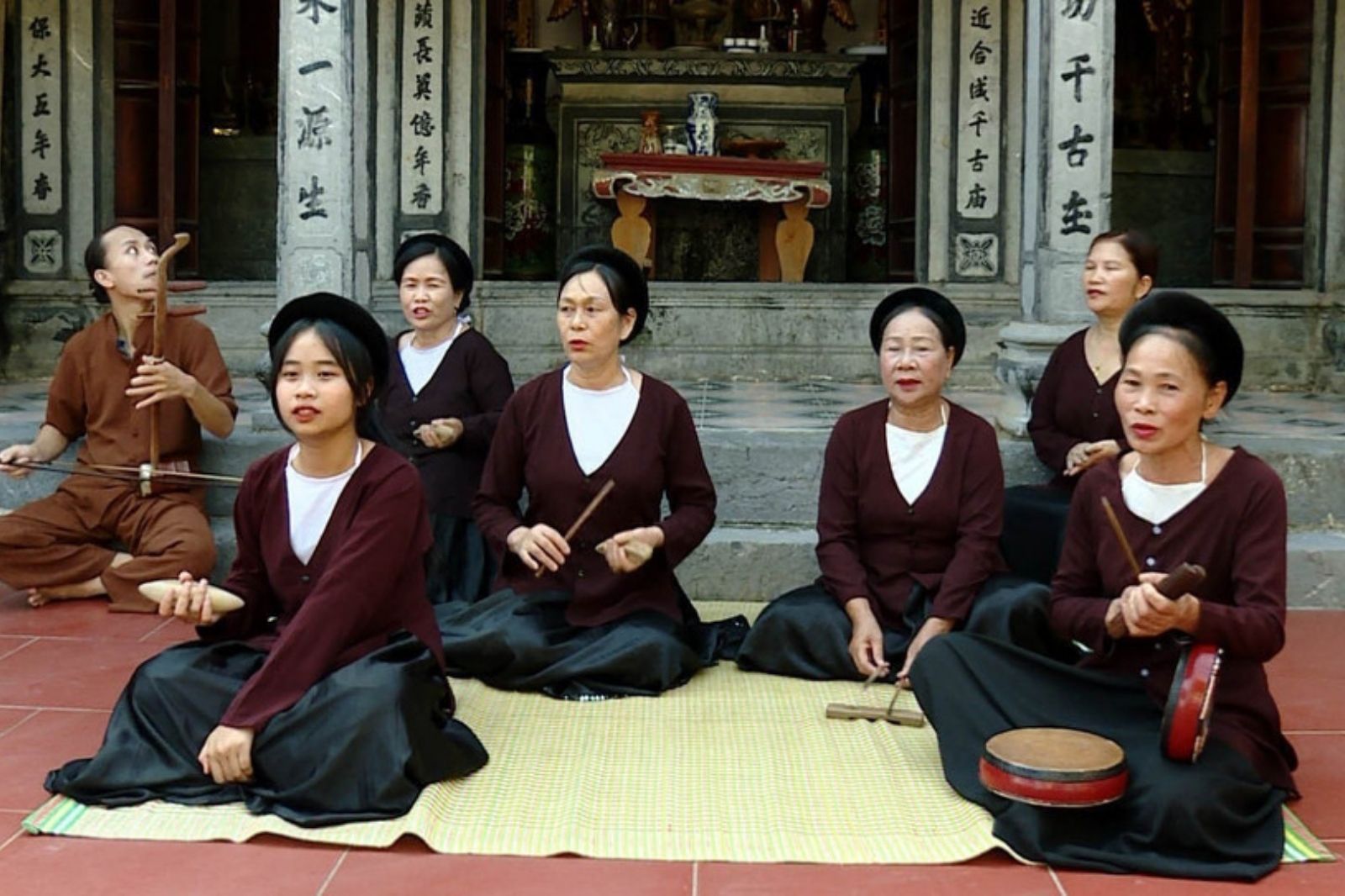
Entering the 19th and 20th centuries, Xam singing became a livelihood for many visually impaired artists or individuals facing hardships. Xam troupes, often family-based, wandered through rural markets, river docks, train stations, or local fairs. Ninh Binh is prominent for its "Xam cho" (market Xam) tradition – rich in narrative, intimate, and flexible in melodies. After 1945, amidst societal changes, this art form went through a quiet period, especially after artisan Ha Thi Cau – considered the last icon of 20th-century Xam – passed away in 2013. However, since 2014, Ninh Binh province has implemented numerous conservation and restoration programs, bringing Xam singing back into community life and gradually turning it into a highlight of local cultural and tourism development.