Discover Trang Tien Bridge: Location, Construction History, and a Century-Plus Journey

Central

Thua Thien Hue

Trang Tien Bridge

Sovaba.travel

Updated at: 24/09/2026

1. Where is Trang Tien Bridge located?

Trang Tien Bridge is located right in the center of Hue City, Thua Thien Hue Province, Vietnam. Specifically, the bridge spans the Perfume River, connecting Phu Hoi Ward (south bank) and Phu Hoa Ward (north bank). This position lies on Tran Hung Dao Street, about 1km south of the Hue Imperial City and close to the bustling Dong Ba Market. This makes Trang Tien Bridge a vital connection between the ancient area and the modern part of the city.

  • North End: Located in Phu Hoa Ward, near the bustling Dong Ba Market area, preserving Hue's long-standing commercial culture.
  • South End: Located in Phu Hoi Ward, a developing area with many cultural and tourism activities.

With a length of 402.6 meters, Trang Tien Bridge consists of 6 comb-shaped steel girder spans, each 67 meters long, designed in the characteristic French Gothic style, bringing a beauty that is both ancient and elegant. The bridge's strategic location not only facilitates traffic connections but also serves as a tourism highlight, attracting millions of visitors every year.

To easily reach the bridge, you can use transportation such as bicycles (20,000–30,000 VND/hour), motorbikes (120,000–150,000 VND/day), cyclo rickshaws (100,000–150,000 VND/hour), or even experience a dragon boat cruise on the Perfume River to admire the bridge from a unique angle.
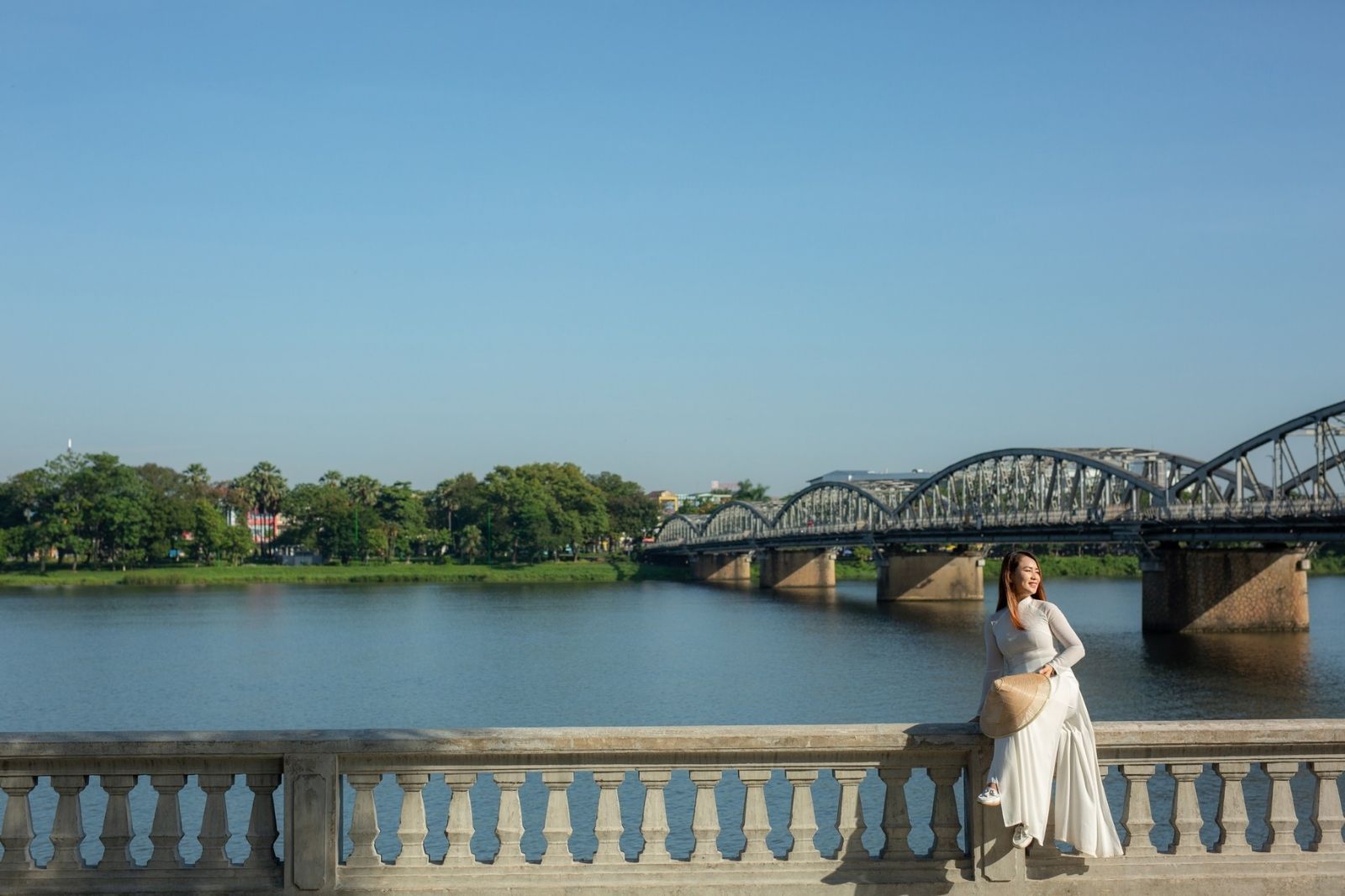
Trang Tien Bridge located right in the center of Hue city
Photo: Trang Tien Bridge located right in the center of Hue city 

2. History of Trang Tien Bridge through different periods

The formation history of Trang Tien Bridge can be divided into several stages, starting from primitive bridges to the modern steel version.

  • Precursor Stage (15th - 19th Century): According to legends and historical records, since the reign of King Le Thanh Tong (15th century), there was a bridge made of rattan called May Bridge or Mong Bridge spanning the Perfume River. Later, under the Nguyen Dynasty, a bridge was built using ironwood to serve transportation needs.
  • Modern Construction Stage (Late 19th Century): In the late 19th century, under the reign of King Thanh Thai, the demand for a sturdier bridge led to the construction of the first steel bridge in Indochina. This was a turning point, marking the combination of Western engineering and local needs.
  • Wartime and Post-War Stage (20th Century): The bridge suffered severe damage from natural disasters (1904 flood) and war (1946, 1968), but was always restored to endure.
  • Modern Era (1990 Onward): Following a major restoration in 1991–1995, the bridge became a tourism icon with a modern illumination system installed in 2002.

Through these stages, Trang Tien Bridge is not only an engineering feat but also reflects the turbulent history of Hue and Vietnam.

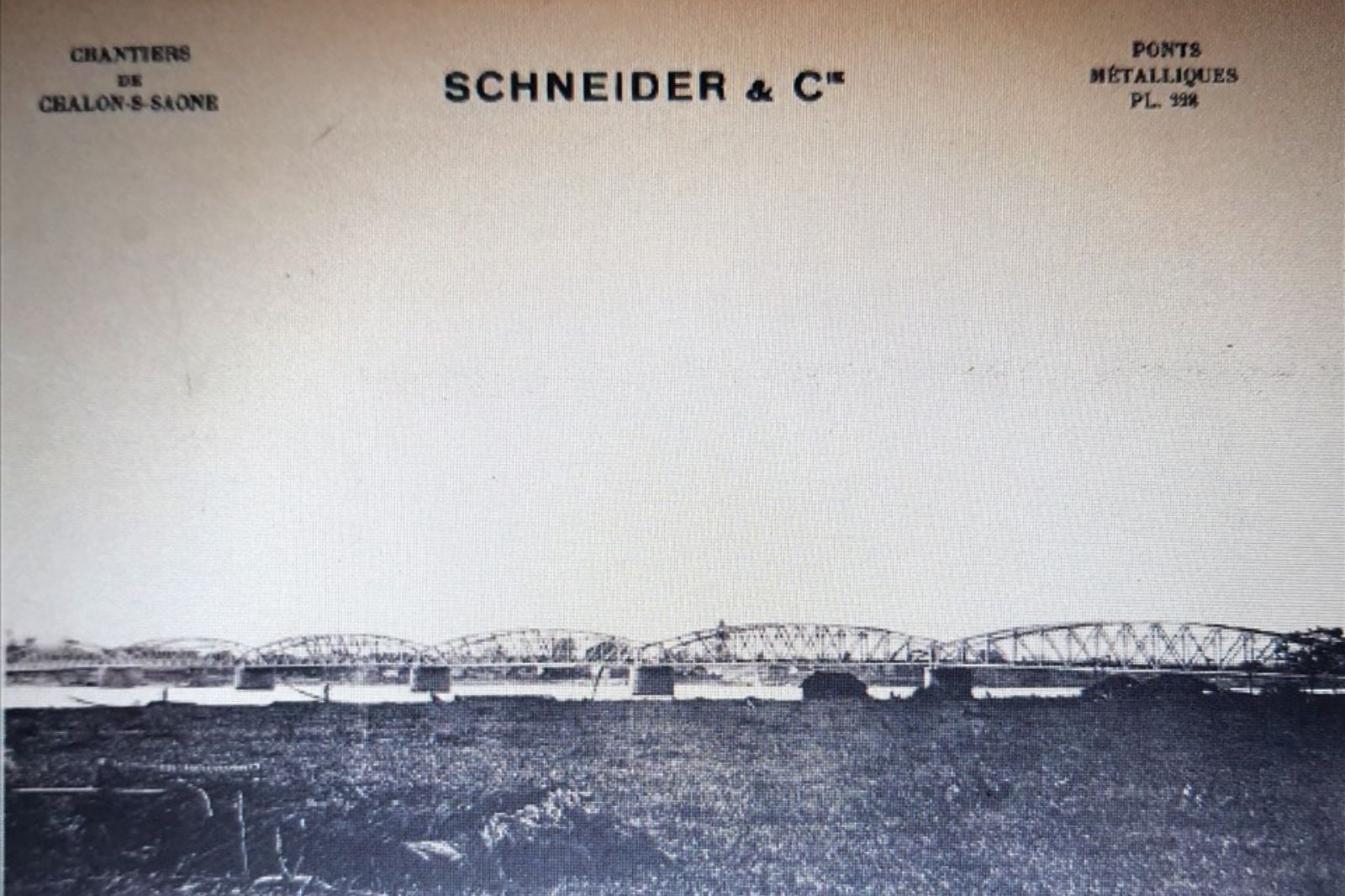
Historical document of Trang Tien Bridge constructed in the late 19th century
Photo: Historical document of Trang Tien Bridge constructed in the late 19th century 

3. Who designed and constructed Trang Tien Bridge?

Trang Tien Bridge is not only a familiar symbol of Hue City but also a structure bearing the historical mark and engineering techniques of over a century ago. So, who designed and directly constructed this famous bridge across the Perfume River?

  • Initial Design: The firm Schneider et Cie et Letellier (France) was responsible for designing and starting construction.
  • Repairs and Expansion: After the 1904 flood, Daydé et Pillé repaired it from 1905 to 1907. From 1937 to 1939, Eiffel (Anciens Etablissements Eiffel) carried out a major restoration and expansion under the direction of engineer Martin André.

Gustave Eiffel, the father of the Eiffel Tower, is often mentioned indirectly through his company, but the main design was the product of a French engineering team. Initial construction utilized local labor under French supervision, reflecting the colonial context of that era.

Trang Tien Bridge has undergone multiple damages and name changes
Photo: Trang Tien Bridge has undergone multiple damages and name changes  

4. A journey of over a century tied to the history of the ancient capital

In its more than 120 years of existence, Trang Tien Bridge has witnessed many historical vicissitudes, undergoing numerous name changes, damages, and restorations. Below is the turbulent journey of this iconic bridge:

Name Changes

Trang Tien Bridge has borne many different names, reflecting the historical transformations of the country:

  • 1899–1919: Thanh Thai Bridge, named after the king who ordered its construction.
  • 1919–1945: Clémenceau Bridge, named after a French Prime Minister during the colonial period.
  • 1945: Nguyen Hoang Bridge, renamed by the Tran Trong Kim administration to honor the lord who reclaimed and developed the Thuan Hoa region.
  • After 1975: The bridge was officially named Truong Tien, originating from the minting workshop of the Nguyen Dynasty located on the left bank of the Perfume River. However, during a restoration in 1995, the construction company arbitrarily put up a sign reading “Trang Tien”, leading to both names, Truong Tien and Trang Tien, being used side by side to this day.

Damages and Restorations

Trang Tien Bridge was destroyed and restored three times, demonstrating resilience against the flow of history:

  • 1904: Just 5 years after being put into service, a major typhoon in the Year of the Dragon collapsed 4 bridge spans into the Perfume River. By 1906, the bridge was restored, replacing the wooden deck with reinforced concrete.
  • 1946: During the resistance war against French colonialism, the bridge was blown up under the “scorched earth” policy to block the French advance. A temporary pontoon bridge was erected to connect the two banks.
  • 1968: During the Tet Offensive, the bridge was severely damaged when the 4th span and 3rd pier were destroyed by a ton of explosives. Afterwards, the bridge underwent temporary repairs and continued using the pontoon bridge.

Major Restoration 1991–1995: This was a large-scale renovation carried out by Thang Long Bridge Company 1. The bridge was reinforced, but some changes, such as removing the viewing balconies and painting it grey-silver (instead of the original bright silver color), sparked controversy. In 2017, the balconies were restored according to the design from King Bao Dai's era, bringing back its inherent ancient beauty.

Trang Tien Bridge has undergone multiple damages and name changes
Photo: Trang Tien Bridge has undergone multiple damages and name changes  

5. Trang Tien Bridge in culture and tourism

Trang Tien Bridge is not only a bridge connecting the two banks of the Perfume River, but also a part of Hue's soul—a place preserving the memories, love, and feelings of generations. The image of “Truong Tien Bridge with six arches and twelve spans, I couldn't cross in time, so sorry my dear” has entered folk songs, becoming a poetic symbol that evokes the bond between Hue people and the quiet rhythm of life along the Perfume River.

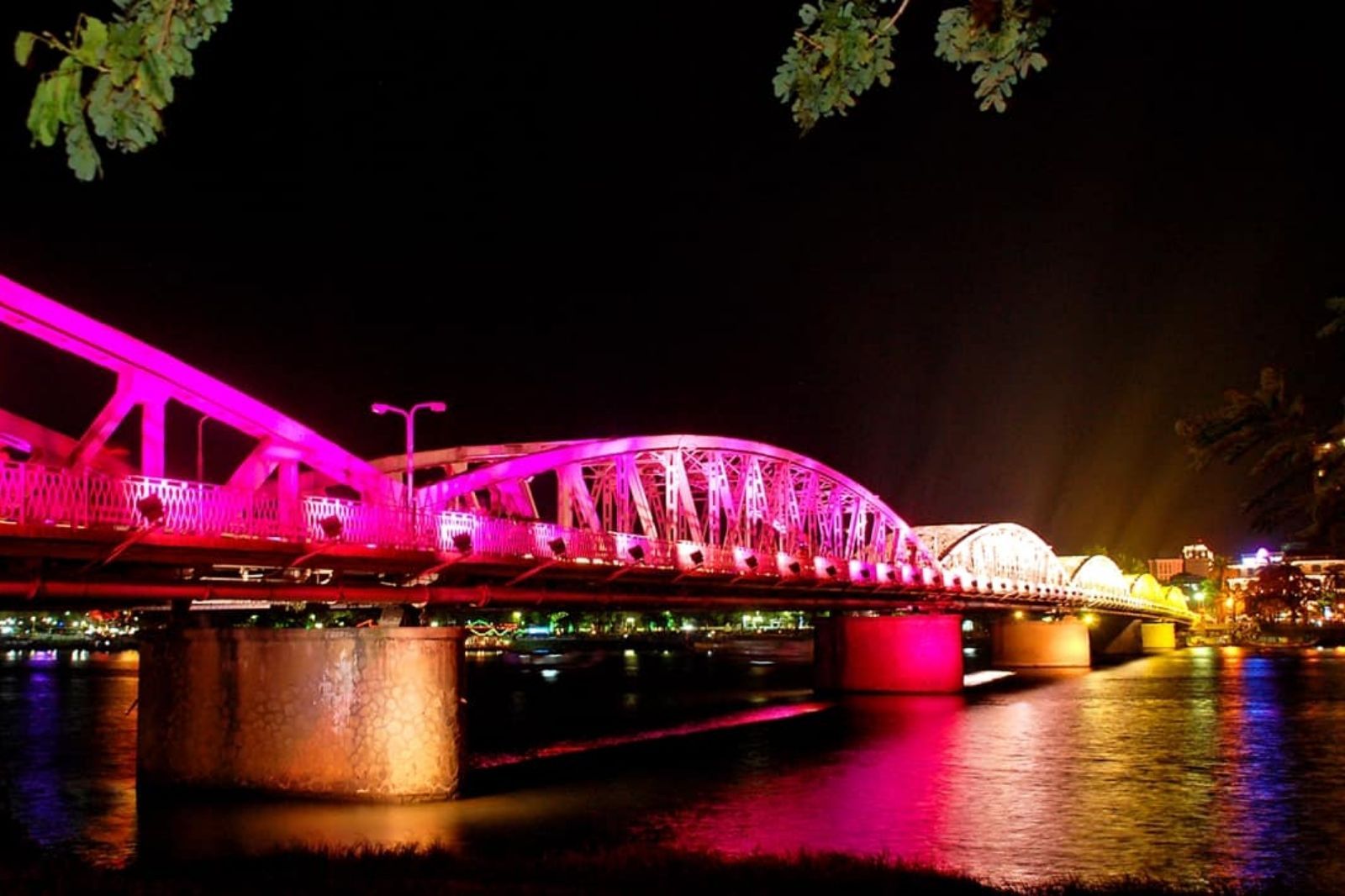
Spanning over a century of existence, the bridge has been continuously restored and adorned with new appearances. Since 2002, a modern color-changing lighting system has transformed Trang Tien into a shimmering ribbon of light at night, changing from dreamy purple to warm yellow, and at times vibrant red and green. In summer, the red hue of royal poinciana trees along both bridge ends seems to blend with the river, painting a vivid ink-wash landscape that is both ancient and romantic.

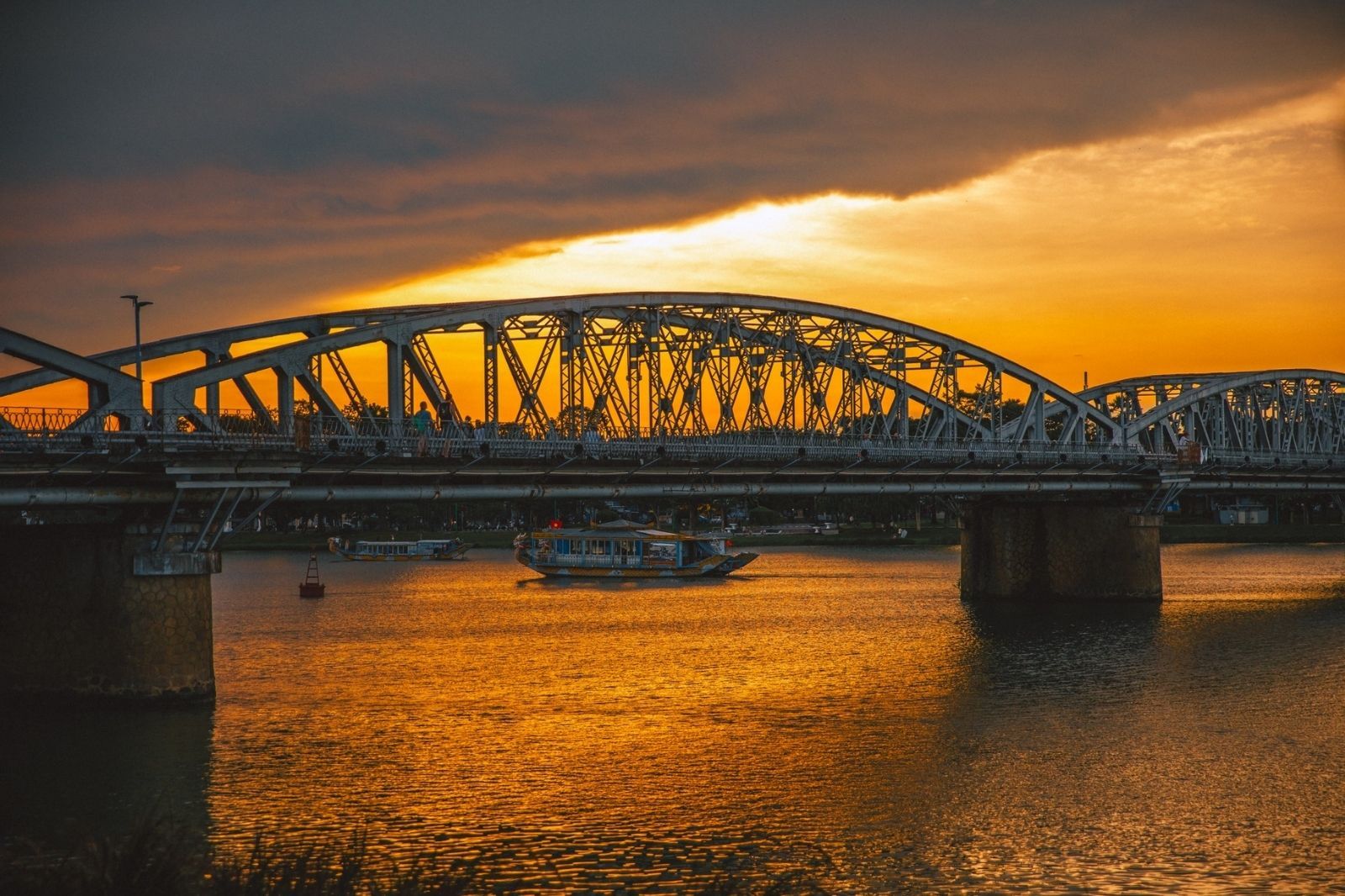
Beyond its cultural value, Trang Tien Bridge is also an ideal stop for tourists. From the moment sunset falls—with golden orange light reflecting on the water—to nights filled with colorful shimmering lights, this place serves as a stunning backdrop for photos. At the foot of the bridge, the bustling Nguyen Dinh Chieu Walking Street features souvenir stalls, conical hats, agarwood, and Hue specialties, offering visitors not just a sightseeing tour but also a rich ancient capital cultural & culinary experience.

Sunset by Trang Tien Bridge
Photo: Sunset by Trang Tien Bridge 

Trang Tien Bridge is not only an architectural and historical symbol of Hue, but also a highlight closely connected to the life, culture, and soul of the local people. Each curved span reflecting on the Perfume River tells a part of the ancient capital's story spanning over a hundred years. Visiting Hue, you can not only admire the beauty of this famous bridge but also combine visits to many other attractive destinations such as the Imperial City, Thien Mu Pagoda, Tu Duc Tomb, or enjoy a boat ride on the Perfume River listening to Hue folk songs. To make your journey more complete and convenient, travelers can opt for a Trang Tien Bridge tour combined with visiting Hue attractions—an itinerary rich in experiences taking you deep into the city's ancient, poetic, and heritage-filled atmosphere.

Loading......

Featured destinations