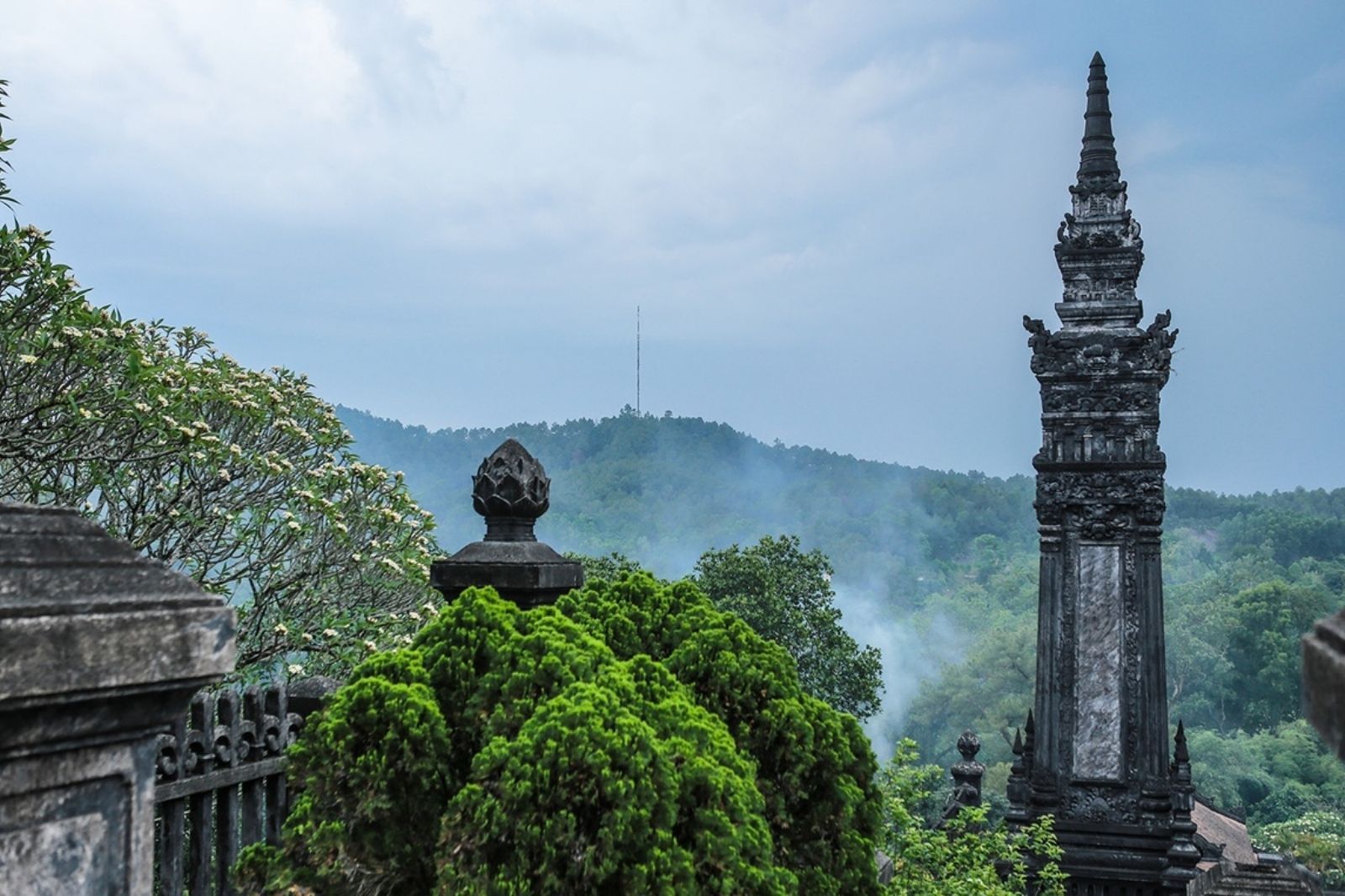
|

Back Home

Discovering the Art of Porcelain Mosaic in Khai Dinh Tomb

Central

Thua Thien Hue

Khai Dinh Tomb

Sovaba.travel

Updated at: 28/08/2026

1. What is unique about the ceramic and glass inlay art in Khai Dinh Tomb?

The special feature of the porcelain mosaic art in Khai Dinh Tomb lies in the harmonious combination of architecture, color, and lighting effects. While the exterior of the structure impresses with massive concrete blocks and European-style gray-white tones, stepping into Thien Dinh Palace makes visitors feel as though they have entered a vibrant art space. Almost every surface, from walls, pillars, ceilings, and altars to the royal canopy, is completely covered with exquisite glass and porcelain mosaics.

Tens of thousands of ceramic, porcelain, and glass pieces in various shades of white, yellow, blue, green, and purple are meticulously assembled into patterns of dragons, phoenixes, the four sacred animals, the four seasons, the eight treasures, and numerous royal legends. When natural light shines in, the mosaic pieces sparkle reflectively, creating a vivid and magical visual effect that makes the interior space luxurious yet full of life.
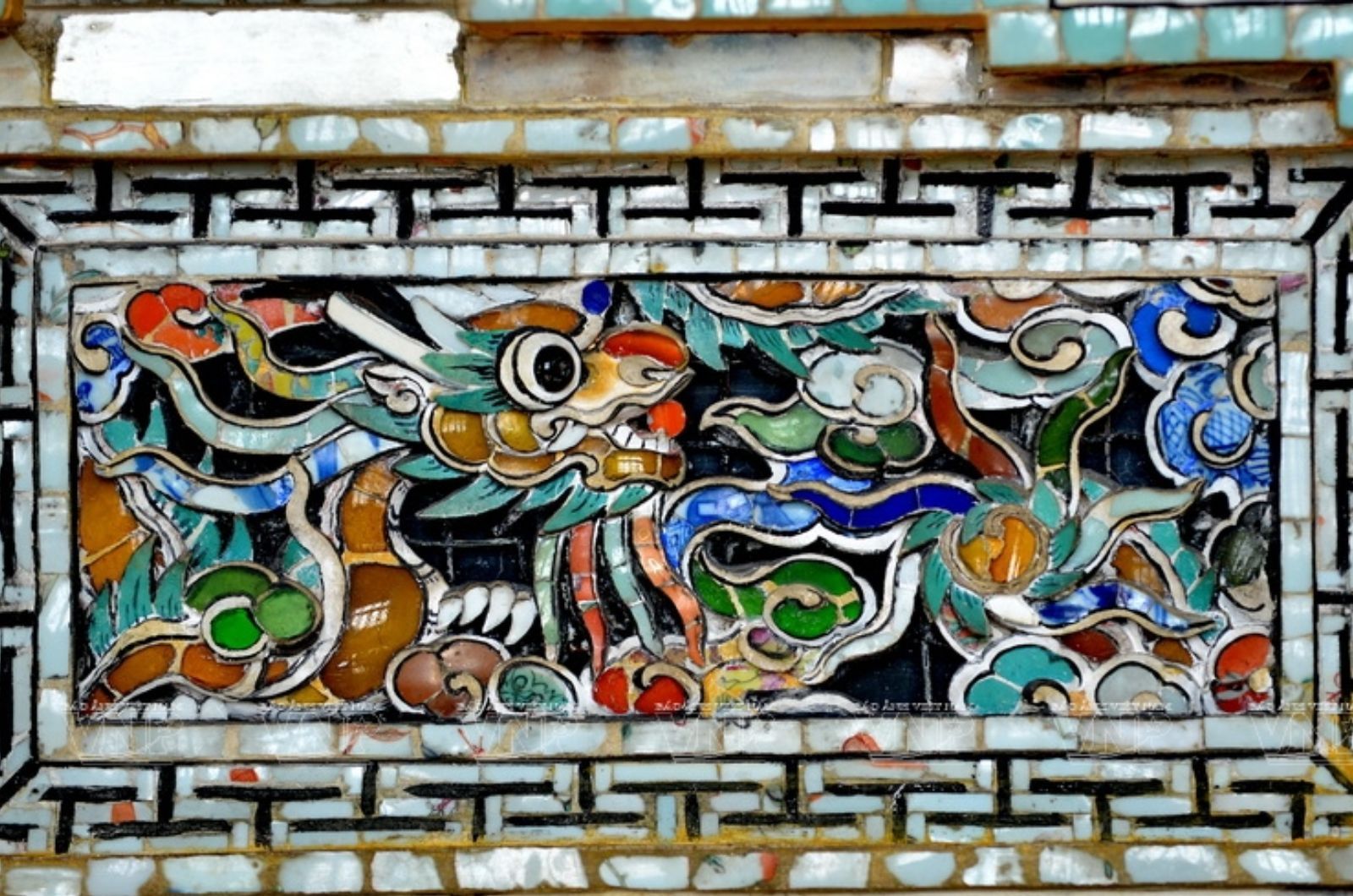
Details with vibrant colors

Photo: Details with vibrant colors

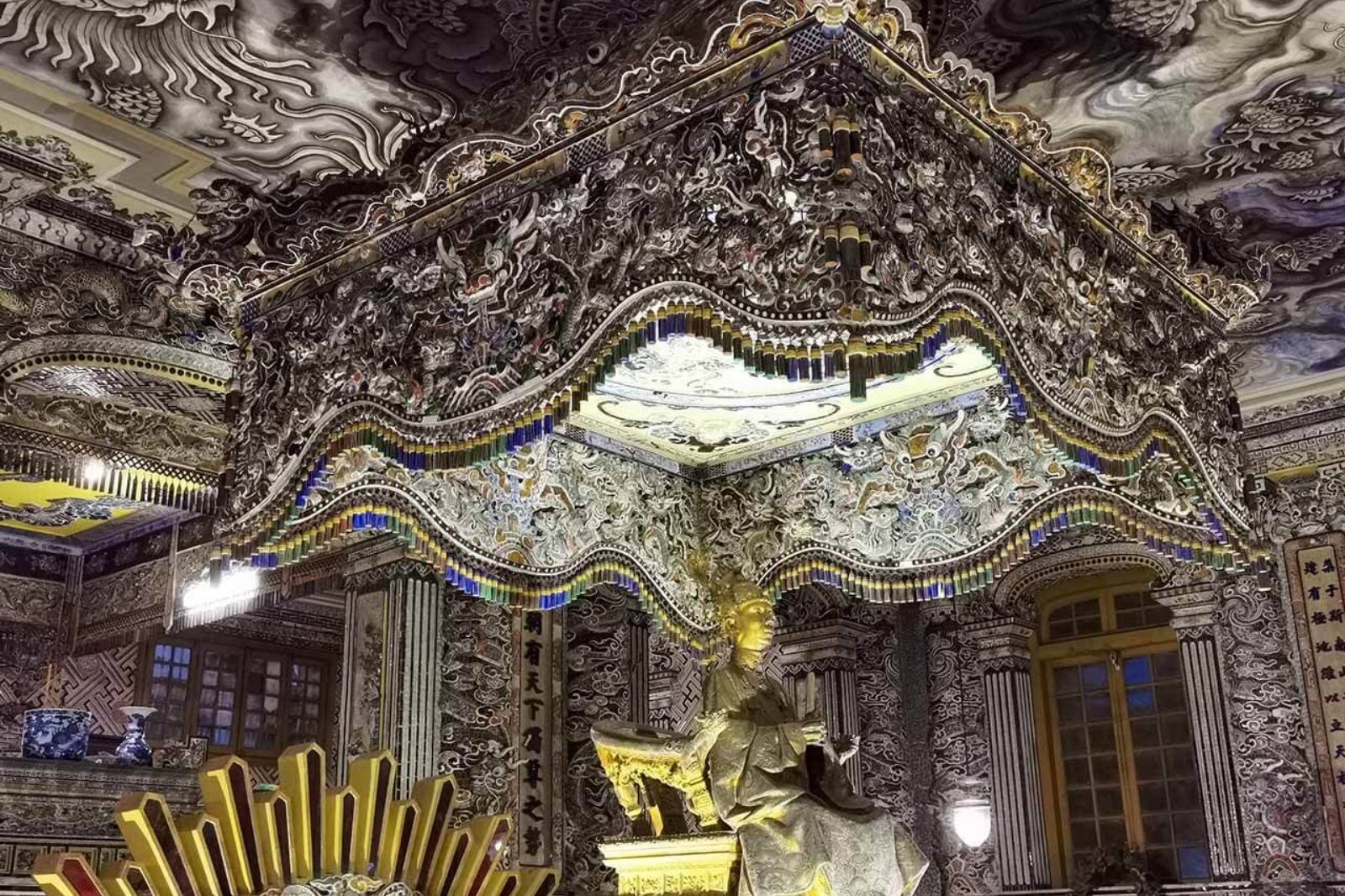
Not only highlighting color, the artisans also skillfully combined porcelain mosaic techniques with high-relief art, giving each detail depth and a sense of movement. The clearest proof is the royal canopy weighing nearly a ton, which still retains a graceful appearance thanks to its soft curving lines and elaborately crafted mosaic layers.

The fusion of traditional Vietnamese mosaic techniques with colored glass materials imported from the West created a unique decorative style. This is precisely what elevated Khai Dinh Tomb to the pinnacle of porcelain mosaic art in Nguyen Dynasty royal architecture and made it one of Vietnam's most artistically valuable monuments.

2. Ceramic and glass inlay techniques at Khai Dinh Tomb

The art of porcelain mosaic originated from Hue folk traditions around the 17th century, initially used to decorate houses and village gates with fragments of porcelain, ancient ceramics, shells, and snail shells. By the Nguyen Dynasty, especially during the late 19th and early 20th centuries, this art was elevated to decorate royal structures such as tombs, temples, and palaces. Khai Dinh Tomb stands as a prime illustration of the brilliant development of porcelain mosaic techniques, where artisans achieved a master level of skill, creating timeless works of art.

Unlike previous tombs, the porcelain mosaic at Khai Dinh Tomb utilizes fragments of ancient ceramics, colored glass, and imported materials from China, Japan, and France. Hue artisans meticulously cut, shaped, and polished each piece of porcelain to create rich wall murals with diverse motifs ranging from the four sacred animals (Dragon, Qilin, Turtle, Phoenix), eight treasures, and five blessings, to Confucian, Buddhist, Taoist allegories, and folk themes.

To bond the mosaic pieces together, artisans used a special adhesive made from coral rock, clam shells, sugarcane molasses, and certain plant leaves, enabling the motifs to endure harsh weather conditions. The dominant colors in the mosaics are warm tones such as orange, yellow, crimson, and lotus pink, combined with secondary colors like sky blue, green, and blue-violet, creating a brilliant yet harmonious appearance rich in Hue royal flair.

Porcelain mosaic art at Khai Dinh Tomb
Photo: Porcelain mosaic art at Khai Dinh Tomb 

3. How was the ceramic and glass inlay process in Khai Dinh Tomb executed?

To create the exquisite porcelain mosaic masterpieces in Khai Dinh Tomb, artisans went through an extremely elaborate construction process requiring master craftsmanship. First, they selected pieces of ceramic, porcelain, and colored glass from domestic pottery or imported materials, then meticulously cut them into various shapes to fit each decorative motif. The base was made of lime mortar (vôi hầu) – a traditional mix of lime, sand, mulberry paper (giấy dó), and natural adhesives that ensured high durability and strong resistance to Hue's harsh climate. The porcelain pieces were then attached to the surface according to a pre-determined design, flexibly combining flat mosaic areas with raised reliefs to add depth to the work.

The most difficult phase was color matching and light arrangement. Artisans had to carefully calculate the position of every porcelain and glass piece so that when light hit them, it created a shimmering effect, highlighting motifs of dragons, phoenixes, flora, and mythical creatures. Thanks to meticulous attention to detail, the porcelain mosaic art at Khai Dinh Tomb has not only endured over time but has also become an architectural masterpiece that leaves visitors in awe.

Royal canopy above the bronze statue of Emperor Khai Dinh

Photo: Royal canopy above the bronze statue of Emperor Khai Dinh 

4. Outstanding works featuring ceramic and glass inlay art in Khai Dinh Tomb

The essence of porcelain mosaic art in Khai Dinh Tomb is most clearly demonstrated in Thien Dinh Palace – the central structure and the space with the highest artistic value in the entire tomb complex. Stepping inside, visitors will be overwhelmed by the system of reliefs, dragon pillars, archways, moldings, and decorative panels completely covered in tens of thousands of porcelain and colored glass pieces, creating a magnificent and highly aesthetic space.

The motifs are remarkably diverse, from dragons, phoenixes, the four sacred animals, and the four seasons to plants, birds, and various auspicious symbols in Eastern culture. Even the altar is elaborately inlaid with porcelain, showcasing the talent and creativity of Nguyen Dynasty artisans.

The most impressive highlight is the royal canopy positioned above the bronze statue of Emperor Khai Dinh. Although cast from reinforced concrete weighing nearly 1 ton, the structure still possesses a delicate appearance thanks to its flowing curves and intricate porcelain mosaic layers. Above it is the famous "Nine Dragons Hiding in Clouds" mural by artisan Phan Van Tanh, contributing to a harmonious architectural whole that blends painting, sculpture, and mosaic art. This exquisite combination has turned Thien Dinh Palace into a "living museum" of Vietnamese porcelain mosaic art, as well as the most impressive highlight attracting visitors when exploring Khai Dinh Tomb.

Khai Dinh Tomb becomes a popular sightseeing destination attracting numerous visitors

Photo: Khai Dinh Tomb becomes a popular sightseeing destination attracting numerous visitors  

Khai Dinh Tomb is not merely the resting place of an emperor, but a unique work of art marking the delicate intersection of traditional architecture and Western influence. Every mosaic detail and line reflects the artistry of the craftsmen and the distinct vision of the emperor, leaving posterity a heritage that is both magnificent and rich in cultural and historical value.

To make your journey to Hue even more complete, Sovaba Travel offers a tour to visit Khai Dinh Tomb combined with other prominent destinations in the Ancient Capital. Accompanying Sovaba, travelers will have the opportunity to experience the heritage space deeply, guided through fascinating historical and artistic stories, turning the tour into a truly meaningful cultural journey.

Loading......

Featured destinations