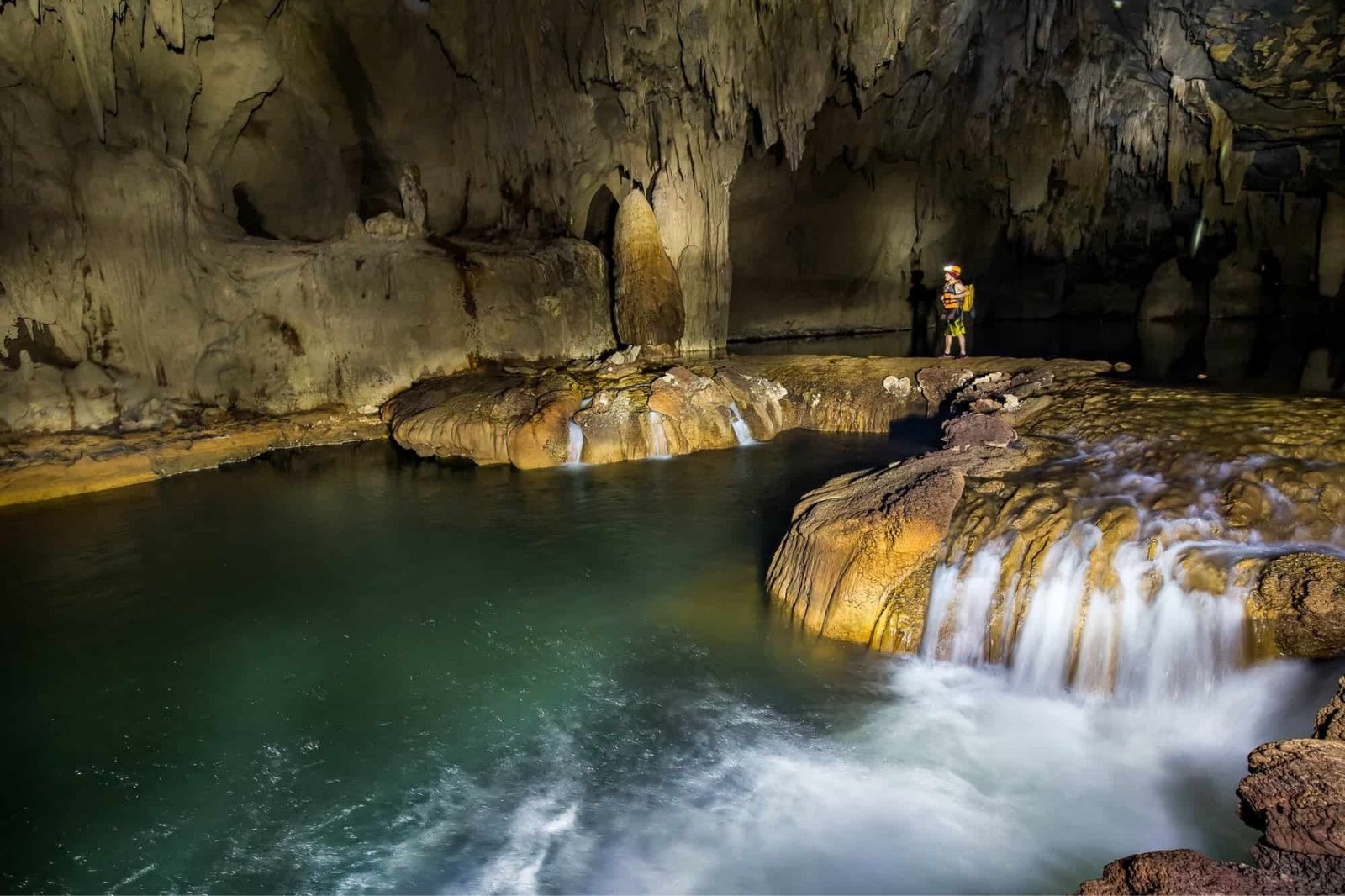
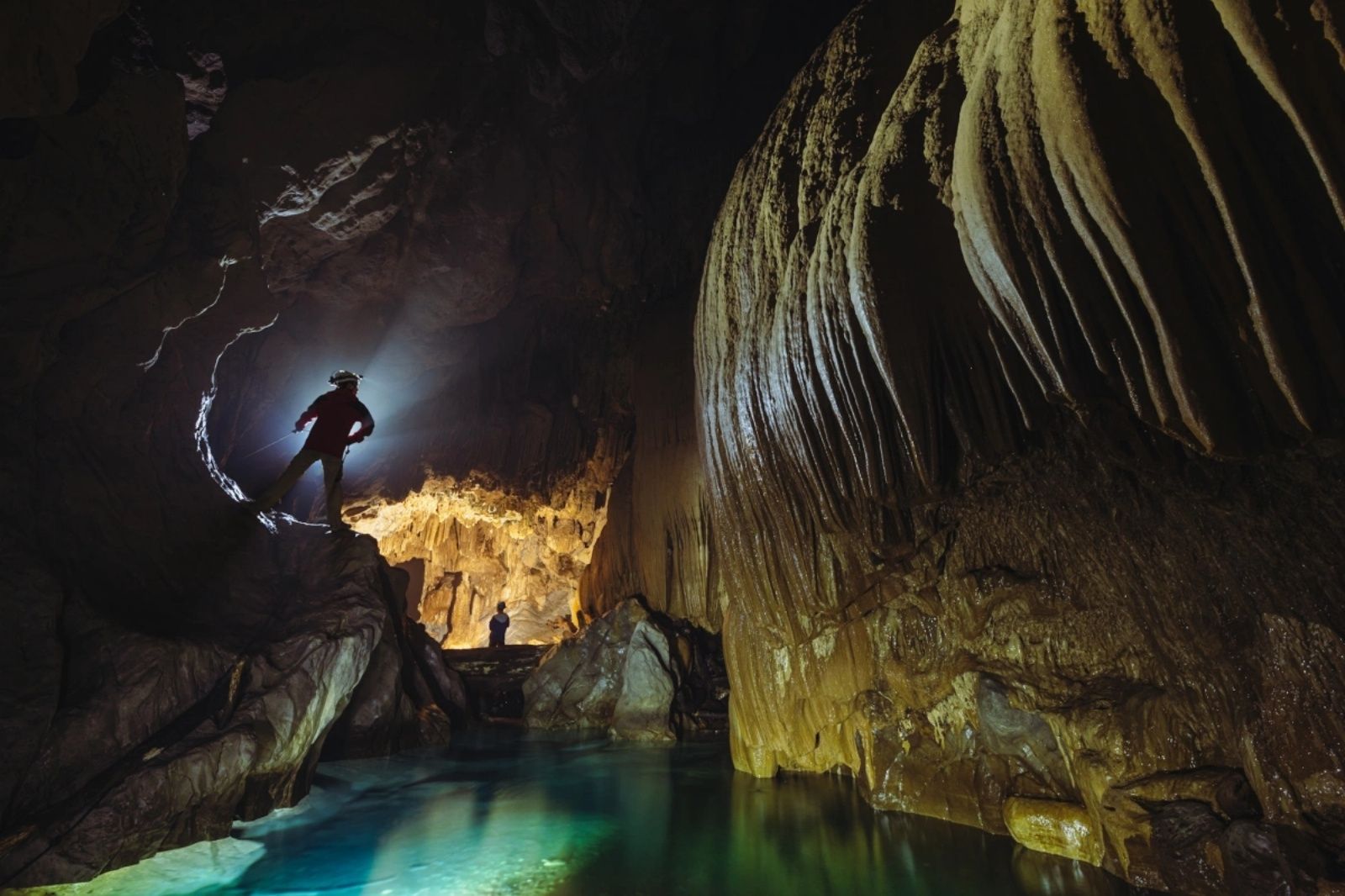
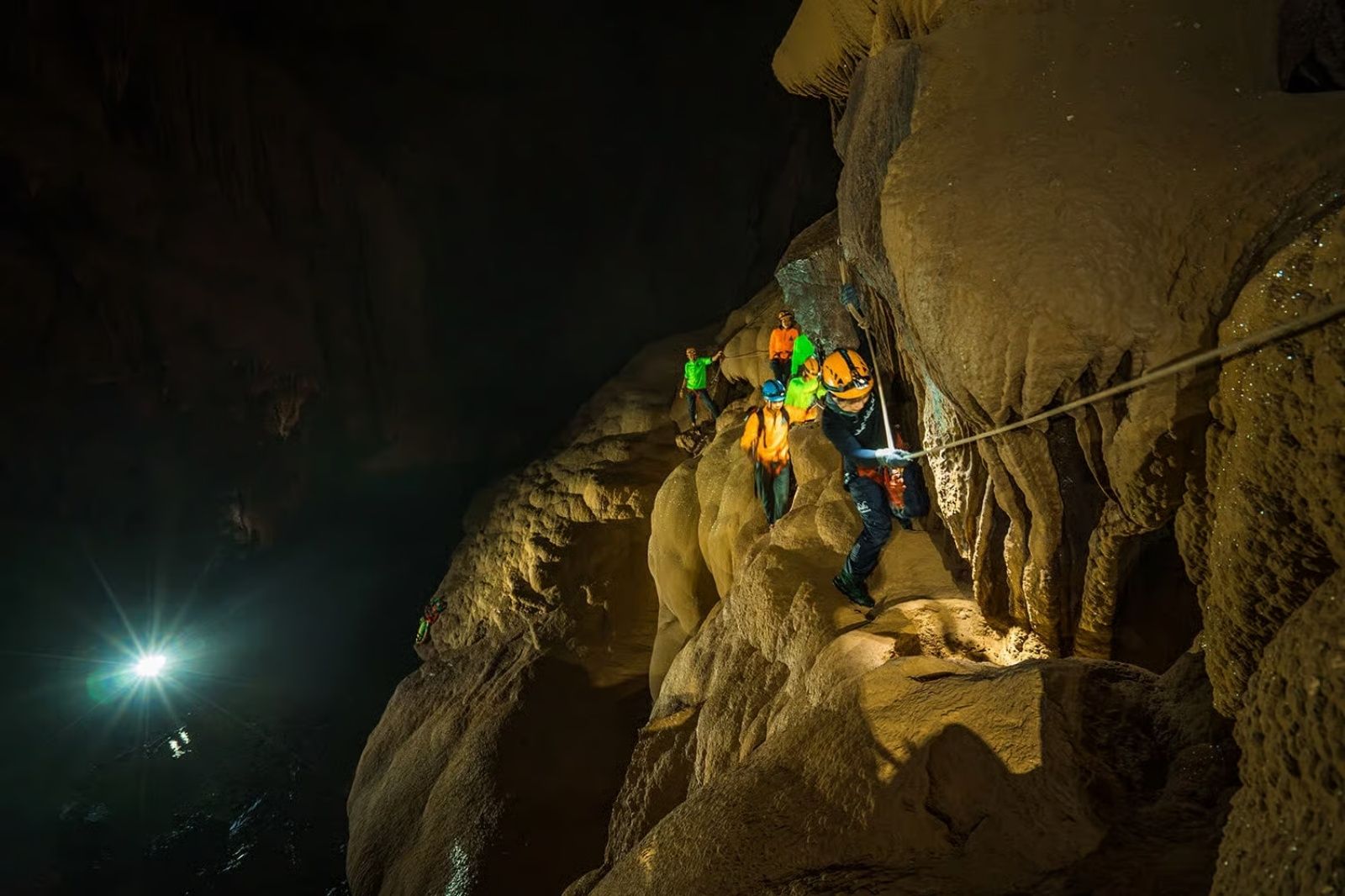
The name "Hang Va" was named after the Va Forest, a long-standing landmark surrounding the cave, although the exact origin of the forest's name remains unclear to this day. This cave was first discovered by Mr. Ho Khanh in 1992 during one of his forest trips. Many years later, in 2010, while assisting an expedition team in searching for the rear exit of Son Doong Cave, Mr. Ho Khanh mentioned a cave with a small river flowing through it in the Va Forest area. However, due to time constraints, the expedition team could not conduct an immediate inspection at that time.
Located in the core zone of Phong Nha – Ke Bang National Park, in Tan Trach commune, Bo Trach district, Quang Binh province, the cave is about 4 km from km 28 of the West Branch of the Ho Chi Minh Highway and only about 50 m from the rear entrance of Son Doong Cave, making it one of the caves with a truly special location in the Phong Nha cave system.
Formed within a limestone massif dating back 400–450 million years, Hang Va belongs to the oldest karst system in Asia and shares the same geological fault line as Son Doong Cave. Approximately 1.7 km long, it is an underground river cave connected to Nuoc Nut Cave via a dry passage. Inside the cave, an underground stream flowing year-round creates ideal conditions for the formation of unique speleothems, especially a rare calcite cone tower system found nowhere else in the world.
Tucked away in the primary forest and surrounded by majestic limestone mountains, Hang Va retains its pristine and mysterious beauty. Its isolated location and intact ecosystem make it an ideal destination for travelers who love trekking, exploring nature, and conquering off-the-beaten-path wonders.