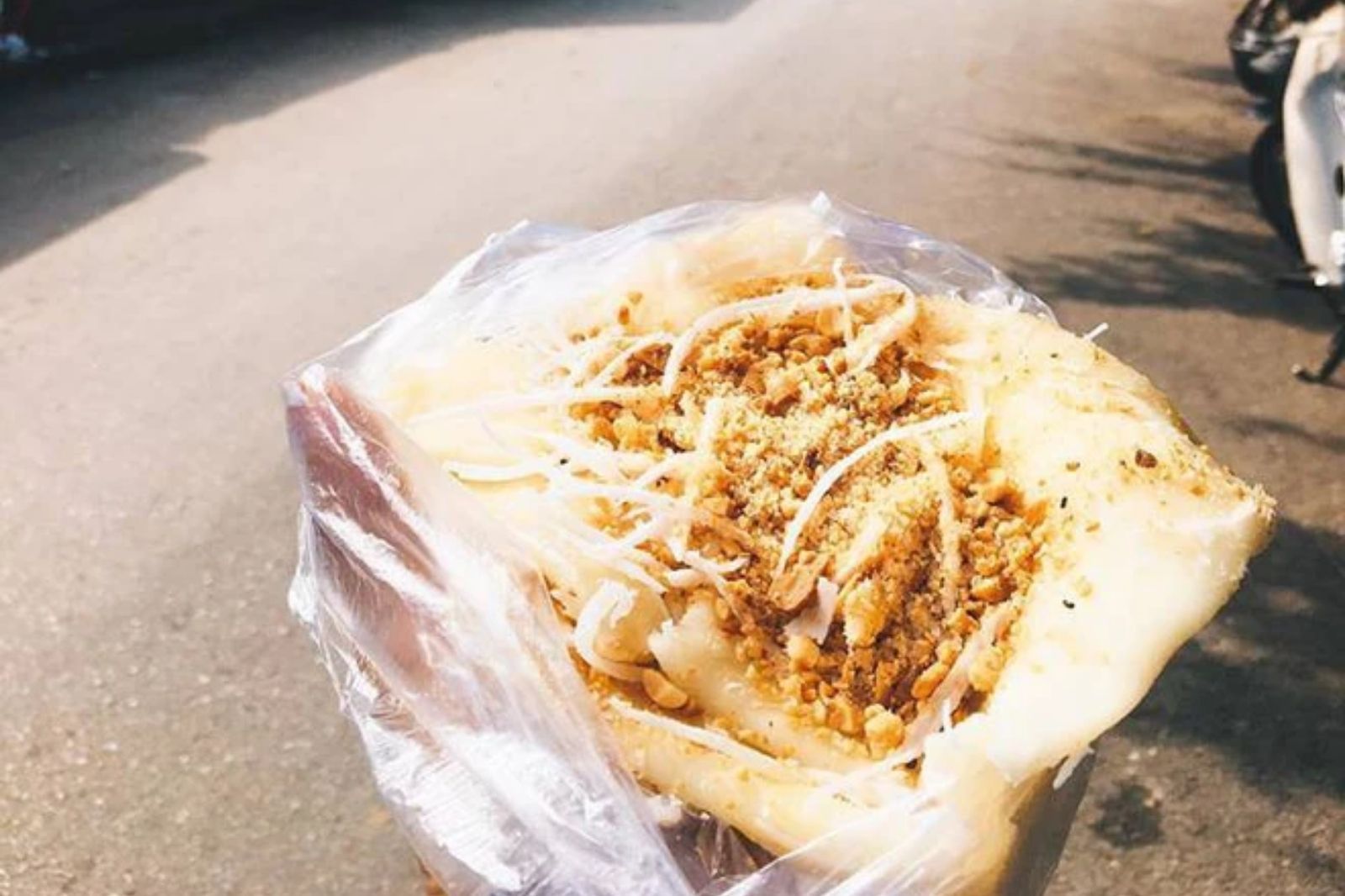
Hoi An Pounded Cassava Cake: A Nostalgic Rustic Gift in the Heart of the Ancient Town

Central

Da Nang

Hoi An

Sovaba.travel

Updated at: 24/09/2026

1. Origin and history of Hoi An cassava cake

Hoi An cassava cake was not born in fancy restaurants, but originated from the difficult years of Quang Nam residents. In old times, when life was full of poverty, crop failures, and frequent droughts, cassava (also known as manioc) became a crucial food source to ward off hunger. Local people often stored dried cassava in bins for gradual use through tough days, waiting for the next harvest.

Over time, this dish evolved and followed female street vendors carrying bamboo poles from rural areas into Hoi An. Pounded cassava cake officially became a specialty of Hoi An Ancient Town decades ago, commonly sold at busy street corners like the five-way intersection of Tran Phu – Hoi An Market. It was not only a dish to keep the stomach full for the day, but also a symbol of resilience and creativity in folk cuisine. Today, amid countless famous dishes like cao lau or Quang noodles, Hoi An cassava cake still holds its place as a humble yet captivating "rustic gift," evoking memories of the countryside.
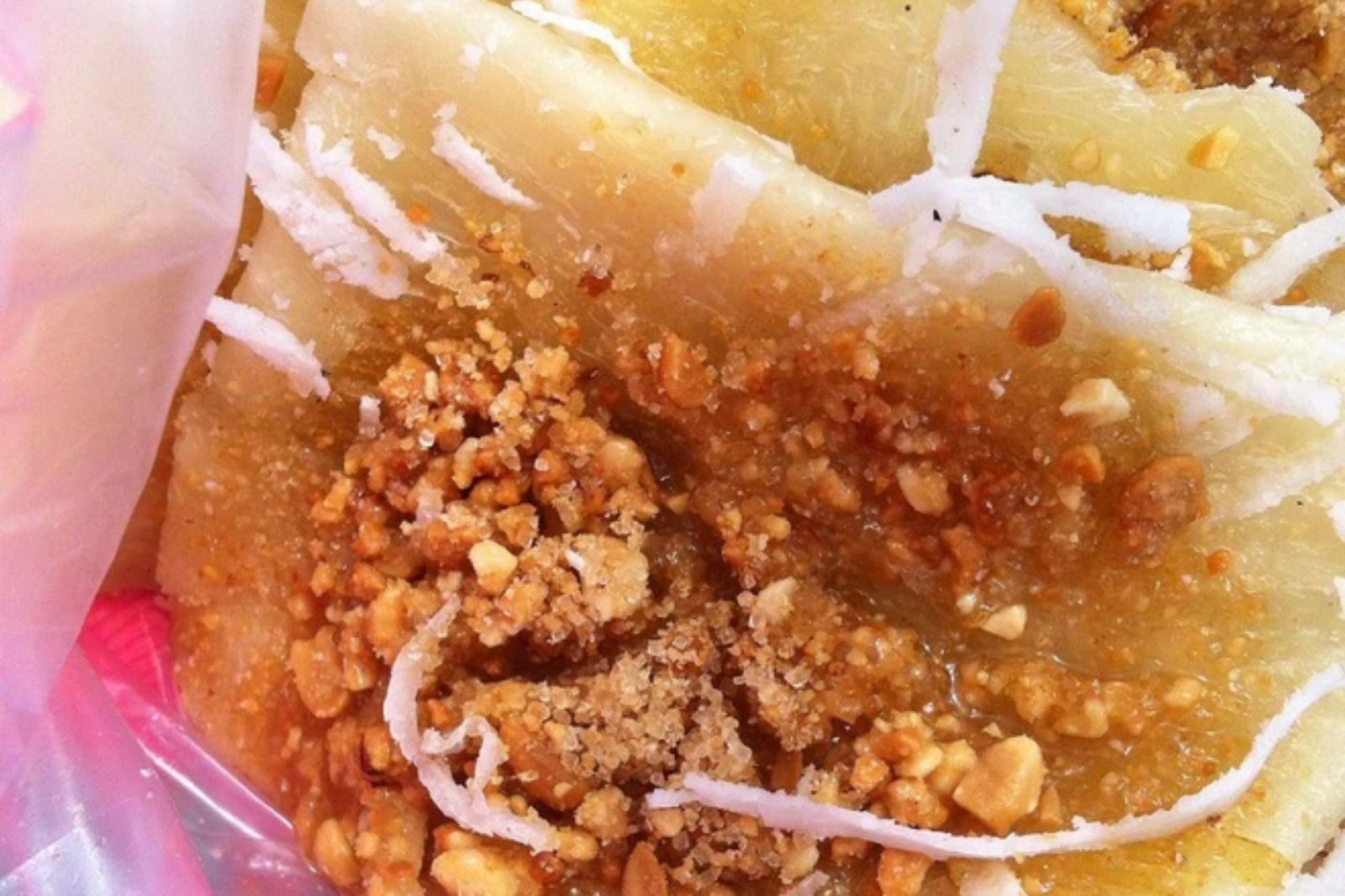
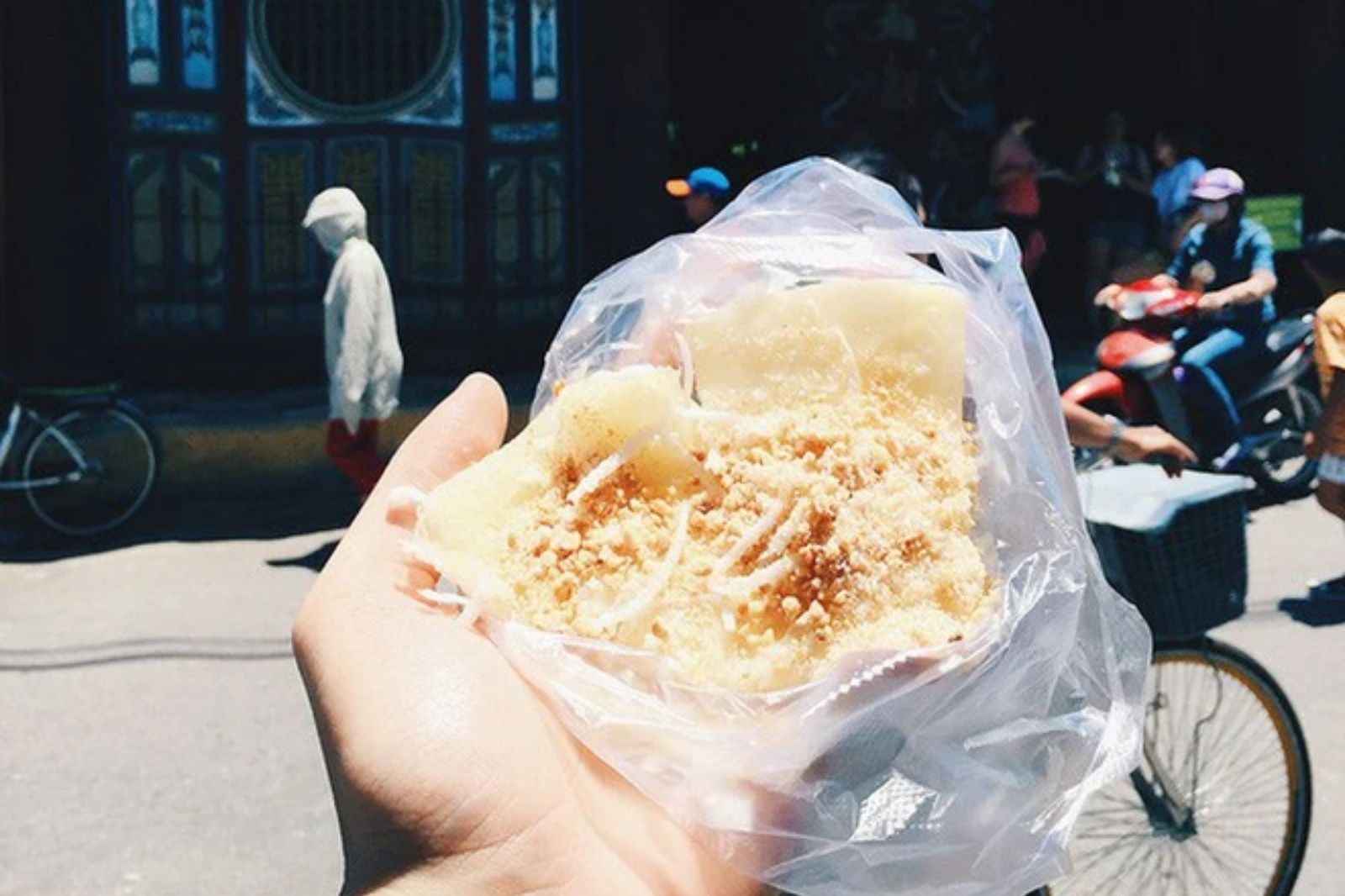
Cassava cake as a humble rustic gift
Photo: Cassava cake as a humble rustic gift 

2. Ingredients and recipe for Hoi An smashed cassava cake

To create an authentic piece of Hoi An cassava cake, the ingredients must be fresh and carefully selected. This is a rustic dish made entirely from homegrown produce, preserving the original flavor of the countryside.

Main Ingredients:

  • Fresh cassava (chewy variety, low fiber): 1kg (choose freshly dug roots from the field, white and plump).
  • Shredded fresh coconut: 100g.
  • Roasted peanuts: 50g (crushed and mixed with salt and sugar).
  • Granulated sugar: 50g (to taste).
  • Salt: A pinch.
  • Optional: Fried scallion oil to enhance the aroma.

How to make Hoi An pounded cassava cake at home:

  • Prepare the cassava: Peel the cassava, wash thoroughly, and cut into sections about 10-15cm long. Soak in diluted saltwater for 30 minutes to remove toxins and maintain whiteness.
  • Pound the cassava: Use a wooden pestle to gently flatten each section of cassava (do not crush completely). This is an important step that gives the dish its name "pounded cassava cake" (bánh sắn đập), similar to how Quang Nam dishes are named after culinary techniques (e.g., bánh lăn, bánh chập).
  • Steam the cake: Arrange the flattened cassava layers in a steamer and sprinkle shredded coconut on top. Steam over water for about 20-30 minutes until the cassava is soft and tender, turns light yellow, and releases a subtle fragrance.
  • Finish: After steaming, brush a layer of fried scallion oil (if using), and sprinkle crushed roasted peanuts mixed with salt and sugar on top. Serve hot to maintain its chewiness and aroma.

Useful tip: For a better cake, choose freshly dug cassava and avoid old fibrous roots. If making it at home, you can try a variation by adding mashed steamed mung beans as a filling, similar to the baked cassava cake version in some neighboring areas. Preparation time takes only about 1 hour, perfect for those who want to recreate the flavor of Hoi An right in their own kitchen.

3. The unique flavor that makes Hoi An cassava cake unforgettable

What makes Hoi An cassava cake so alluring is the harmony among layers of flavor: the nutty taste of chewy cassava, the gentle sweetness and richness of fresh coconut, the crunch of roasted peanuts, and a touch of saltiness. Upon taking the first bite, you will feel the "distinct aroma of the countryside"—a rustic yet unforgettable taste of home.

This dish "evokes nostalgia" because it calls back memories of childhood: days running around in the fields, holding a hot piece of cassava cake handed over by grandmother. Amid modern Hoi An Ancient Town, cassava cake serves as a gentle reminder of simplicity, helping visitors temporarily forget the hustle and bustle to find peace. Not only delicious, cassava cake is also rich in nutrients from cassava (providing starch and fiber) and coconut (containing healthy fats), making it a healthy snack for the whole family.

Cassava cake with a combination of sweet and savory flavors
Photo: Cassava cake combining sweet and savory flavors 

4. Where to enjoy authentic Hoi An cassava cake

If you visit Hoi An, you cannot miss out on finding and trying pounded cassava cake at traditional spots. This snack is usually sold by street vendors at just 2,000 - 5,000 VND per piece, incredibly cheap compared to the cultural value it carries.

  • Tran Phu five-way intersection – Hoi An Market: This is the "mecca" of cassava cake, where female street vendors gather from early morning till late afternoon. You can buy 4 pieces for just 10,000 VND, enjoyed with iced tea.
  • Snack eateries along the Hoai River: Some small eateries like Man Moi or street vendors along the ancient streets also sell it, often paired with smashed rice paper and stir-fried baby clams.
  • Hoi An Food Festival: During festival occasions, cassava cake is widely featured, sometimes accompanied by hands-on cake-making experience tours.

Tip: Eat it hot right on the spot to appreciate its chewy texture. If buying as a gift, choose sealed packaging to keep it fresh.

Cassava cake is often sold by street vendors in the ancient town
Photo: Cassava cake is often sold by street vendors in the ancient town 

Hoi An cassava cake is not just a dish, but also a part of Quang Nam's cultural heritage. It represents the spirit of homegrown resourcefulness, where locals use native ingredients to create delicious dishes. In the era of tourism development, pounded cassava cake has become a "nostalgic rustic gift"—a way for travelers to take home a piece of countryside soul from the heart of the ancient town. Today, this dish has been given modern twists, such as being featured in food tours or sold online, but the rustic original remains king. If you love Vietnamese cuisine, Hoi An cassava cake will be a vivid testament to the diversity and depth of Central Vietnam's culinary arts.

Loading......

Featured destinations