Hoi An Market: A Place Preserving Rustic Beauty in the Heart of the Ancient Town
Central
Da Nang
Hoi An
Sovaba.travel
Updated at: 24/09/2026
1. Where is Hoi An Market?
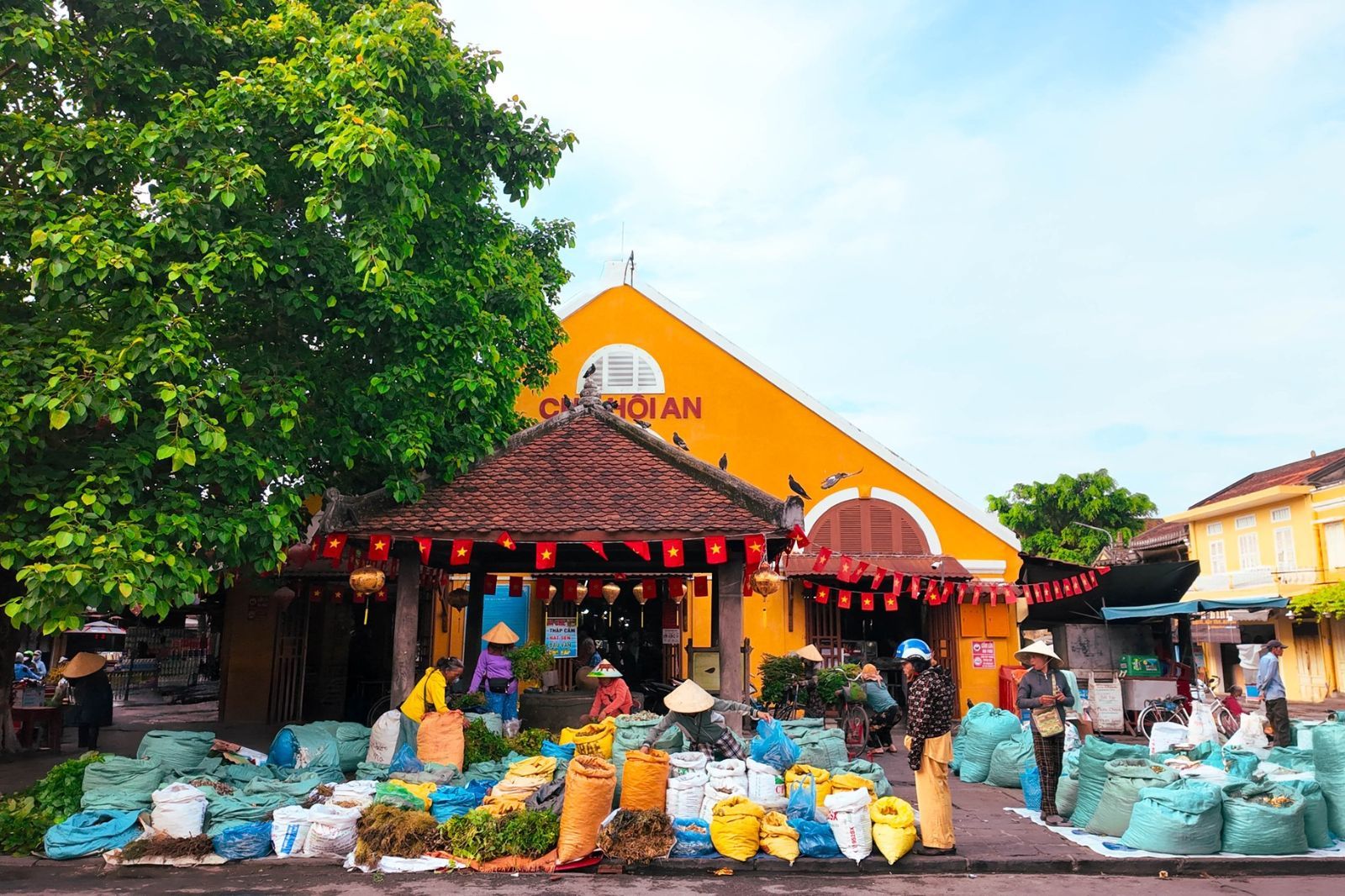
Hoi An Market is located right in the center of Hoi An Ancient Town, in Hoi An City, former Quang Nam Province (now Da Nang City). The specific location is the intersection of famous streets: Tran Phu, Bach Dang, and Nguyen Thai Hoc. The market sits adjacent to the Thu Bon River (also known as the Hoai River), opposite the Covered Bridge – the symbol of Hoi An.
From the center of Da Nang, it only takes about 30-40 minutes by motorbike or car. This location is extremely convenient, easy to combine with visiting the ancient town, checking in at Covered Bridge, or strolling along the riverbank in the afternoon or evening.
Photo: Hoi An Market located right in the center of Hoi An Ancient Town
2. The history and role of Hoi An Market in the life of the Ancient Town
Hoi An Market was formed and developed alongside the Hoi An trading port – once one of the most vibrant port cities in Southeast Asia in the 15th–18th centuries. When Hoi An Town was still known as Faifo, the market served as the center for goods exchange, where merchant ships from Japan, China, and many Western countries such as the Netherlands and Portugal docked to trade. Many records of Western traders and missionaries of that era described this place as a bustling trading urban center, with the presence of Chinese communities from Guangdong, Fujian, Chaozhou, and Hainan.
Entering the 19th century under the Nguyen Dynasty, the market still maintained an important position in the goods exchange network, connecting produce from the mountainous and midland regions along the Thu Bon River to the lower reach. Although its role as an international trading port gradually declined over time, Hoi An Market today still maintains lively activities. It is both a place providing food for local residents and a familiar stopover for tourists wishing to explore the culture and cuisine of the ancient town. Through many historical periods, the market has existed as an inseparable part of Hoi An life.
3. What is special about the architecture and space of Hoi An Market?
Hoi An Market impresses visitors with its traditional hall-style architecture, time-stained yin-yang tiled roofs, and iconic yellow walls characteristic of the ancient town. The interior space is designed to be open and airy, with stalls clearly divided into areas such as fresh seafood, vegetables, souvenir stalls, and the food court.
The charm of the market lies in the blending of ancient elements with the pace of modern life. Familiar street cries, the gentle aroma of food drifting in the air, and light filtering through the roof tiles create an emotionally rich setting. In the morning, the market operates at a gentle pace; toward the evening, the space becomes livelier with bright lights and passing crowds.
4. What does Hoi An Market sell?
Hoi An Market gathers a wide variety of goods, meeting both daily shopping needs and finding gifts to bring home.
Fresh seafood and produce: Fish, shrimp, squid, clams, along with local vegetables and fruits are displayed daily, with fresh sources and reasonable prices.
Handicrafts: Hoi An lanterns, silk, bamboo mats, hand-embroidered paintings, ceramics… are items of great interest to many tourists.
Clothing and fabrics: Ao dai and custom-tailored clothes at affordable prices, ranging from traditional styles to modern designs.
Souvenirs: Handmade handbags, keychains, wood carvings, and many small, easy-to-carry items.
Most products are produced or supplied by local residents, reflecting the distinctive lifestyle and traditional crafts of Hoi An.
Photo: The market sells a wide variety of goods
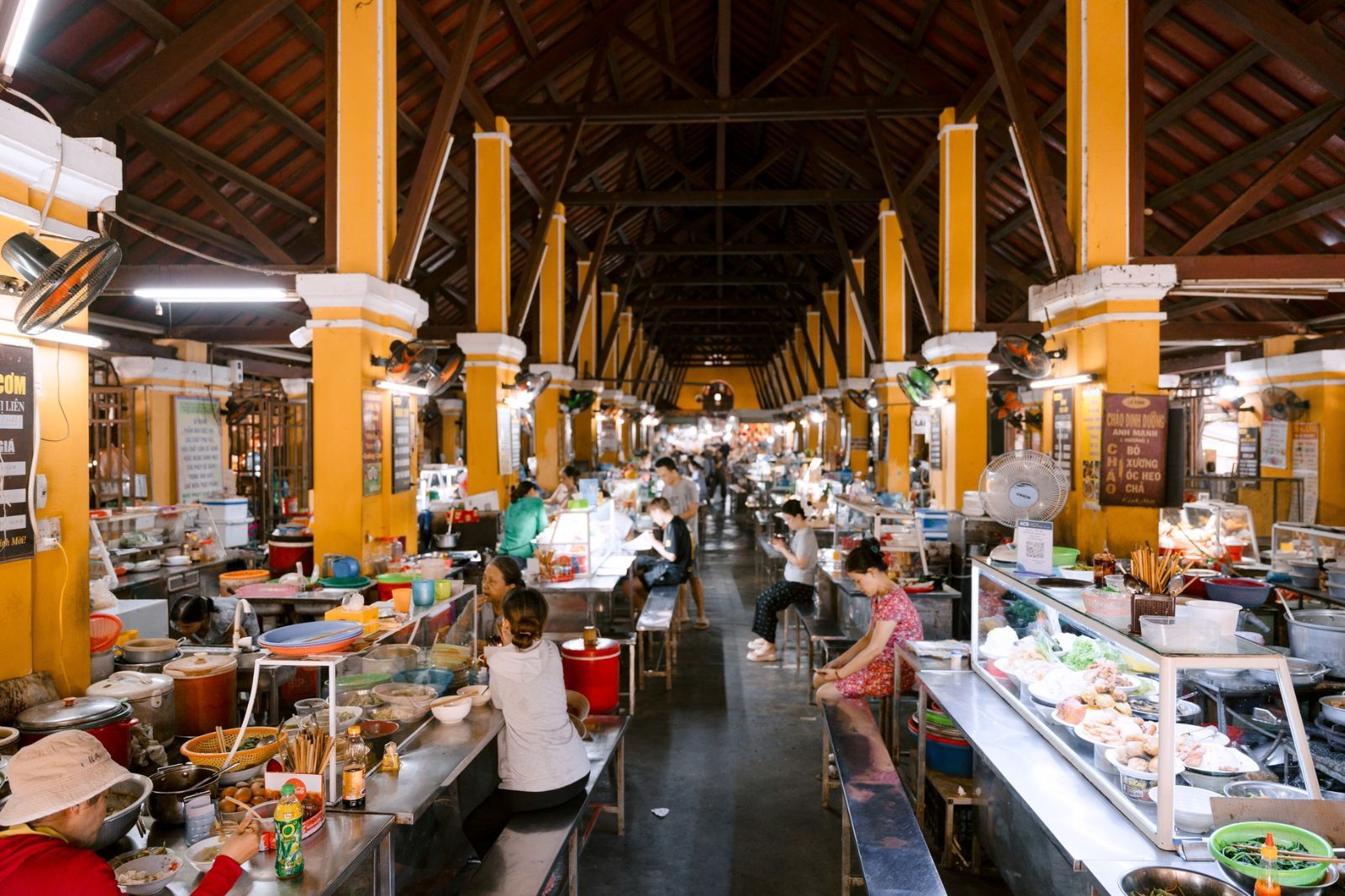
5. Hoi An Market food court
Hoi An Market is likened to a “culinary paradise” with a clean dining area and clear prices. Must-try specialties:
Cao Lau: Hoi An specialty dish featuring chewy noodles made from rice soaked in Ba Le well water, topped with char siu pork, pork cracklings, fresh herbs, and rich broth. Price around 20,000 – 35,000 VND/bowl.
Banh Mi Phuong: Baguette filled with pate, grilled pork, herbs, and secret sauce, praised by CNN as one of the best banh mi in the world.
Mi Quang: Yellow noodles, pork/chicken/shrimp broth, served with crispy rice crackers and fresh herbs.
Banh da xuc hen (Crispy rice crackers with stir-fried clams): Crispy baked rice crackers dipped with clams stir-fried with fried shallots and peanuts.
Banh xeo, banh uot wrapped with grilled pork, corn sweet soup, banh dap: All carry rustic flavors, priced from 15,000 – 50,000 VND.
Some famous stalls inside the market: Co Thanh rice, Co Thanh Thanh smoothies, Co Tam noodle soup with fermented fish sauce. With a friendly atmosphere, you can order dishes from different stalls and sit together in one place.
Photo: The food court inside Hoi An Market
6. Souvenirs you should buy when visiting Hoi An Market
Visiting Hoi An Market, it is hard to leave without picking a few items as gifts. Among colorful and local stalls, there are many products that carry the mark of the ancient town while being lightweight, easy to carry, suitable for gifting loved ones or preserving memories of the trip.
Hoi An lanterns: Priced from 50,000 VND and up.
Hoi An silk: Soft and breathable silk scarves, ao dai, and handbags.
Hand-embroidered paintings: Unique and sophisticated Hoi An scenery and Covered Bridge themes.
Other handicrafts: Bamboo mats, ceramics, handmade canvas bags.
Shopping tip: You should bargain gently (usually a 10-20% discount) and choose handmade goods to support local artisans.
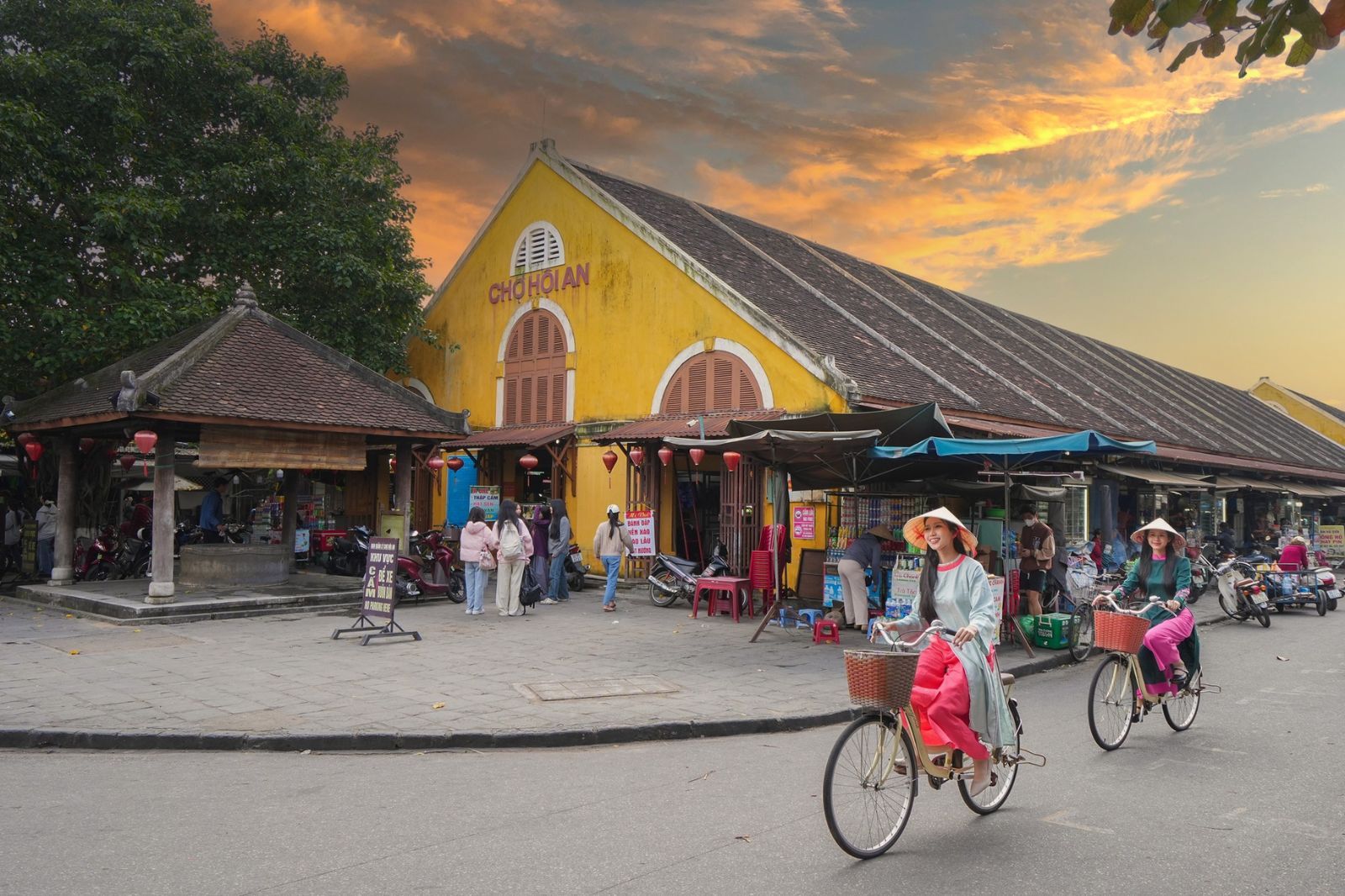
Photo: The best time to visit the market is in the morning
Hoi An Market is not only a place for buying and selling, but also a space preserving the most authentic rhythm of life in the ancient town through every early morning, every street stall, and everyday story. Amidst the bustling crowd of tourists, the market still maintains the rustic, slow-paced, and intimate character of the Hoi An people of the past. Take time to visit the market, stroll around, enjoy a familiar dish, buy a small gift, and you will feel more clearly that the ancient town is not just for admiring, but also for living and remembering.