Hue Royal Embroidery: Discovering the Exquisite Embroidery Art of the Nguyen Dynasty

Central

Thua Thien Hue

Sovaba.travel

Updated at: 29/10/2026

1. The Origins of Hue Royal Embroidery Under the Nguyen Dynasty

In 1802, after unifying the country and selecting Hue as the imperial capital, Emperor Gia Long laid the foundation for a new dynasty, driving the establishment and growth of numerous crafts serving the royal court. Among them, embroidery played a crucial role in crafting imperial vestments, decorative items, and ceremonial objects for court rituals. Highly skilled artisans were handpicked to produce items requiring meticulous precision, from the finest needlework to the subtle blending of colors and arrangement of motifs.

Under the Nguyen Dynasty, garments for the royal family and court officials were strictly regulated according to rank, ritual protocol, and symbolic significance. Motifs such as dragons, phoenixes, swirling clouds, and flora not only embellished the robes but also conveyed the wearer's social status and hierarchy. In particular, under Emperor Minh Mang, court regulations and ceremonial dress codes were further standardized, contributing to the dignified and orderly identity of imperial court culture.

Sự tinh tế được thể hiện qua từng đường kim, mũi chỉ

Photo: Refinement expressed through every needle and stitch

Hue royal embroidery developed upon the foundation of traditional Vietnamese needlework, combined with precious materials such as silk, brocade, and metallic gold or silver threads. To craft a complete piece, the artisan had to select techniques tailored to each detail: flat stitches to impart softness to flower petals, raised embroidery to accentuate relief and volume, and metallic threads to make outlines shimmer under the light. Every step required immense patience and an eagle eye, as even the slightest flaw could compromise the entire composition.

2. Distinctive Hue Royal Embroidery Pieces of the Past and Present

During the Nguyen Dynasty, embroidery adorned numerous items across the imperial court, from garments tailored for emperors and empresses to ceremonial furnishings and palace decor. Each piece was crafted with utmost devotion, reflecting the sophistication of court aesthetics and the kingdom's formal rules regarding ceremony and rank.

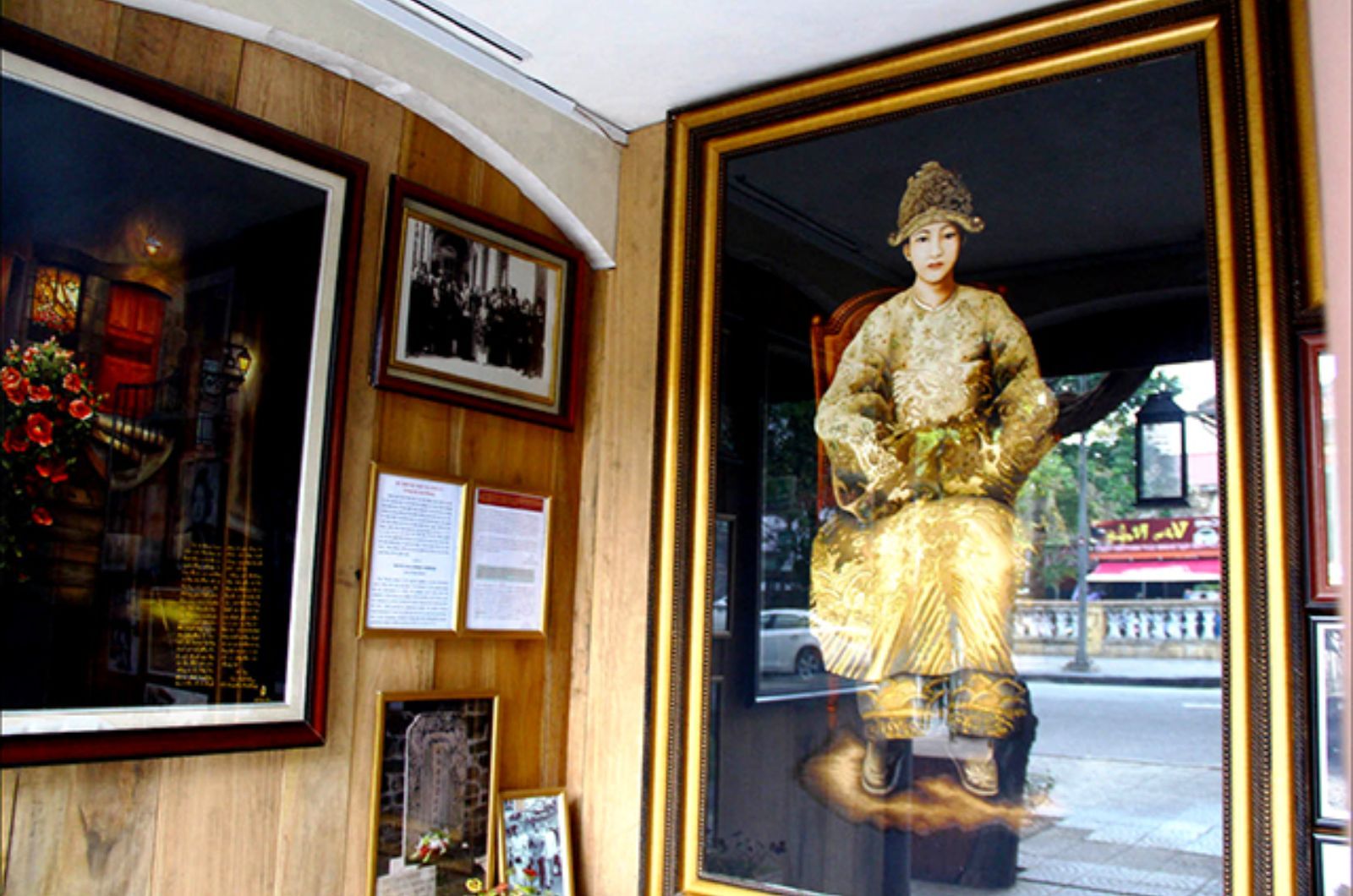
Most prominent were the dragon robes, imperial vestments, and ceremonial attire of the emperor, intricately embroidered with patterns of dragons, clouds, and ocean waves on luxurious fabrics. Depending on the type of garment and its intended ritual use, the patterns, colors, and layout varied to signify the wearer's supreme status. Attire for empresses, queen mothers, and royal family members was embellished with auspicious symbols, including phoenixes, blossoms, and celestial clouds. Beyond apparel, embroidery appeared on hats, ceremonial slippers, backrests, decorative throws, canopies, and furnishings throughout the palace halls.

Another major category was embroidered wall art and decorative items depicting the four seasons, the eight treasures, or landscapes. These familiar cultural motifs of the East were rendered through fine, delicate stitches, demanding that the artisan master advanced techniques, possess a nuanced eye for color harmony, and have a profound sense of composition.

hành trình phục dựng di sản Cung Đình

Photo: The journey of restoring imperial court heritage

3. How Is Hue Royal Embroidery Preserved and Developed?

Following the fall of the Nguyen Dynasty, embroidery serving the court lost its former institutional prominence. Several techniques and antique motifs faced the danger of extinction as practical demand dwindled, while the transmission of skills relied heavily on individual master craftsmen. Nevertheless, through the relentless dedication of devoted artisans, traditional embroidery in Hue has endured, gradually adapting to contemporary life and continuing to grace cultural events.

Artisans Dedicated to Preserving Traditional Embroidery

Among those who have contributed significantly to Hue's embroidery craft, artisan Le Van Kinh is widely renowned for his decades of dedication to silk embroidery paintings and teaching the craft. Continuing his family lineage, he played an instrumental role in introducing Hue embroidery to domestic and international connoisseurs. Artisans like him not only safeguarded hand-embroidery techniques but also passed down valuable experience in thread selection, color blending, stitch control, and composition design to the next generation.

In the field of reconstructing Nguyen Dynasty historical costumes, artisan Vu Van Gioi, hailing from Dong Cuu embroidery village in Hanoi, spent years researching historical records and antique embroidery techniques. Reconstructing these garments demanded rigorous study of motifs, hues, fabrics, and the structural composition of each historical attire. His efforts have helped the public gain a clearer appreciation of the fine needlecraft on Vietnamese historic garments, particularly those linked to the Nguyen imperial court.

Ways Royal Embroidery Is Preserved Today

The preservation of Hue royal embroidery today can be observed across multiple dimensions:

  • Heritage research and reconstruction: Cultural preservation institutions collaborate with scholars, master artisans, and restoration specialists to examine artifacts and historical records, serving exhibitions and showcasing Nguyen Dynasty heritage.

  • Integrating traditional techniques with contemporary design: Motifs inspired by royal court art are applied to modern ao dai, embroidered pictures, scarves, and artisanal lifestyle products, making embroidery accessible to a wider audience.

  • Showcasing at cultural events: The Hue Festival, craft demonstrations, and heritage promotions provide prime opportunities for the public to observe fine embroidery techniques and understand the cultural stories behind each piece.

  • Passing the craft to younger generations: Training at embroidery ateliers and handicraft workshops helps learners master traditional techniques, hone patience, and appreciate the value of manual craftsmanship.

Nghệ thuật thêu Cung đình Huế - Một phần hồn văn hóa Việt

Photo: Hue Royal Embroidery Art - A Soulful Aspect of Vietnamese Culture

4. Places to Learn About and Experience Traditional Embroidery in Hue

If you wish to explore Hue royal embroidery in greater depth, you can visit dedicated craft galleries, learn about hand-embroidery techniques, or watch master artisans bring intricate patterns to life. This is also an opportunity to appreciate the patience, skill, and labor embedded within each handcrafted piece.

  • XQ Embroidery Art Museum: The XQ Embroidery Art Museum is an ideal destination for lovers of fine embroidered art and traditional craftsmanship. Here, visitors can admire exquisite embroidery artworks, learn about the history of the craft, and observe delicate needlework performed by the skilled hands of seasoned artisans.

  • Embroidery Boutiques and Workshops in Hue: In addition to museums, visitors can explore local shops offering embroidered paintings, hand-embroidered ao dai, and traditional handicrafts situated throughout the city center.

During your visit, feel free to inquire with makers about the fabrics, the time required for completion, and the specific techniques employed on each piece. If you wish to purchase souvenirs, choose items that offer clear information regarding their provenance and authentic handcrafted process. Keep in mind that not all embroidered items featuring royal motifs are original antiques or faithful historical reproductions from the Nguyen Dynasty.

Trưng bày ở bảo tàng nghệ thuật thuê XQ

Photo: Exhibition at the XQ Embroidery Art Museum

With every stitch, the royal embroidery artisans not only create exquisite beauty in each work but also weave the tale of a golden imperial era, of enduring perseverance, and boundless dedication. Thanks to the devotion of artisans like Vu Van Gioi and the next generation of successors, Hue royal embroidery has been revitalized, affirming its place as a priceless cultural heritage. From its illustrious past to the present, this art form continues to move the human heart, serving not only as the pride of the ancient capital but also as living testimony to timeless traditional values and the enduring quintessence of Vietnamese culture.

Featured destinations