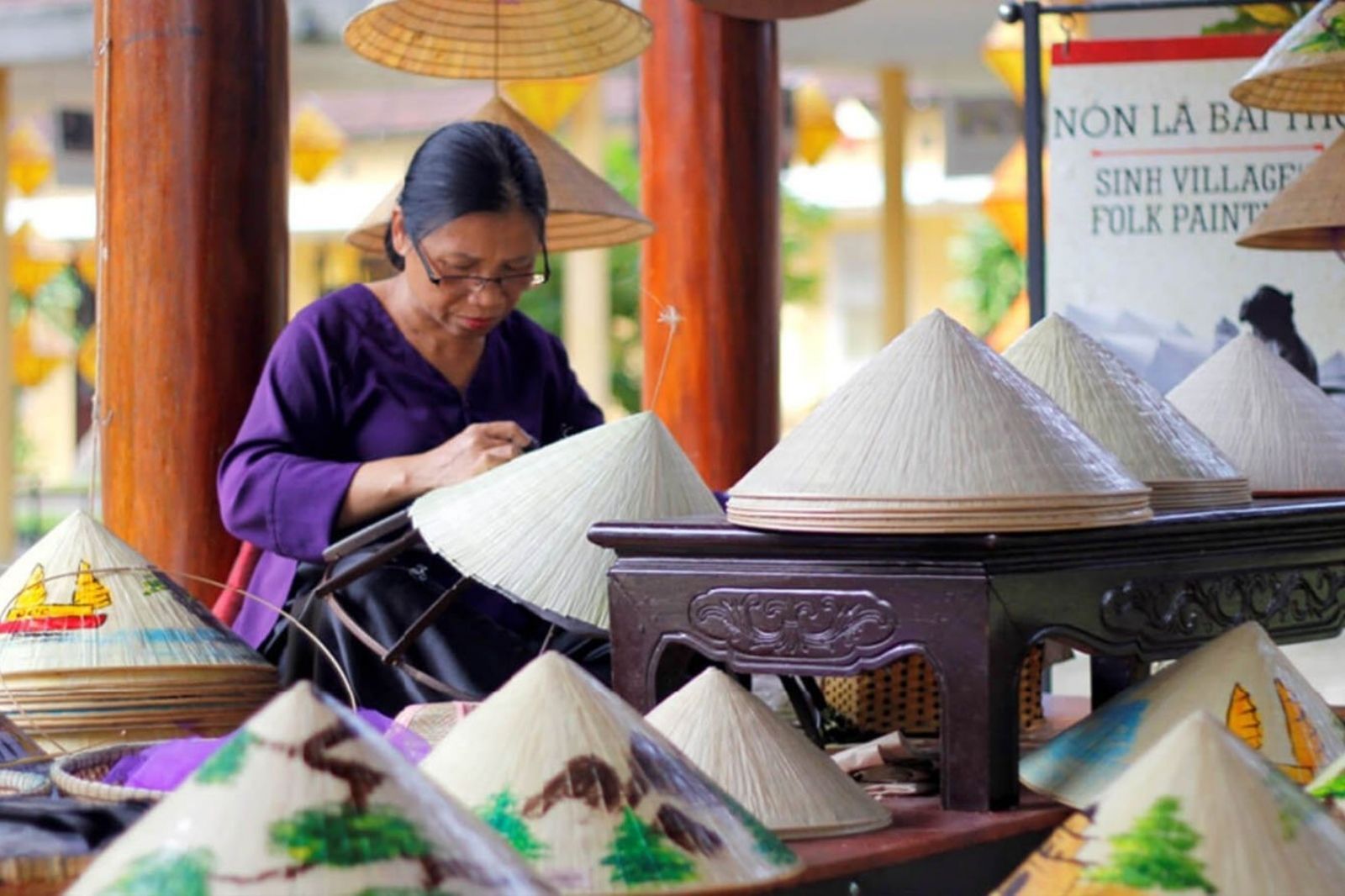
Hue Poem Conical Hat: A Traditional Craft Preserving the Grace of the Ancient Capital

Central

Thua Thien Hue

Sovaba.travel

Updated at: 24/09/2026

1. Hue poem conical hat

The Hue poem conical hat has long been attached to the lives of the people of the ancient capital, serving not only as a handicraft product but also as a symbol of the gentleness and bashfulness of Hue women. When mentioning Hue, the image of a young woman in a purple ao dai, holding a tilted poem conical hat, has become a familiar icon, evoking the dreaminess and poetic nature of the Imperial Land.
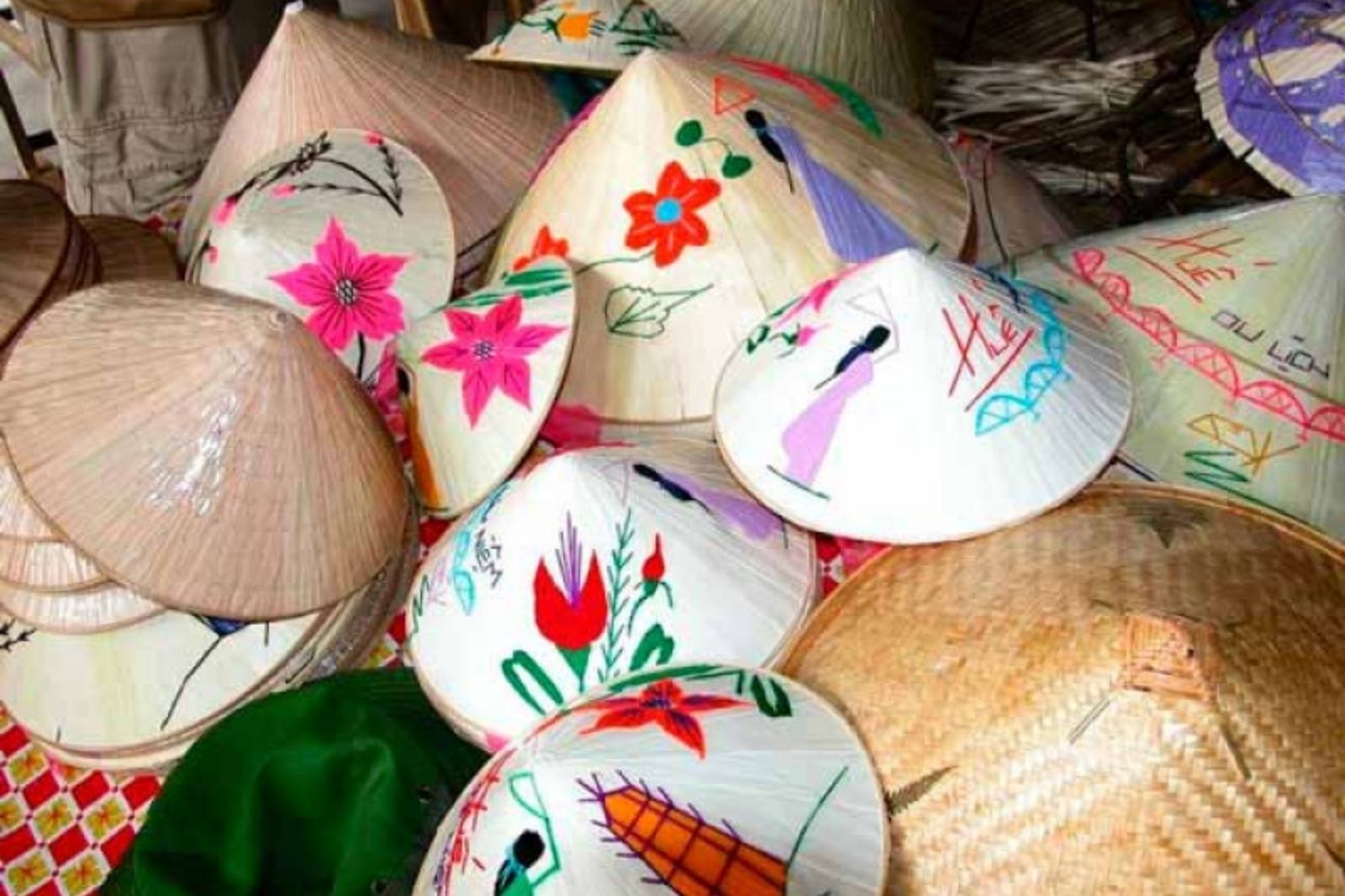
The poem conical hat has long been a symbol associated with Hue
Photo: The poem conical hat has long been a symbol associated with Hue 

The special feature of the poem conical hat lies in its unique design: when held up to the light, verses of poetry or images of the Perfume River, Ngu Binh Mountain, and Truong Tien Bridge delicately appear between two layers of leaves. This creativity not only enhances aesthetic value but also conveys the discreet, profound, and poetic soul of Hue.
2. Origin and history of Hue poem conical hats

The Hue poem conical hat originated from Tay Ho village, Phu Ho commune, Phu Vang district, Thua Thien Hue province, about 12 km from the city center. The craft of making conical hats here has existed for hundreds of years, but the poem conical hat as we know it today appeared around the late 1950s and early 1960s.

In 1960, artisan Bui Quang Bac, a poetry lover, came up with the idea of inserting poem verses between two layers of hat leaves to enhance its beauty and spiritual value. The first two lines of poetry he pressed into the hat were:

“Whoever goes to dreamy Hue, Buy a poem conical hat back as a gift.”

From then on, the poem conical hat became a unique product, not only serving the need to protect against sun and rain, but also acting as a work of art steeped in the soul of Hue. Other craft villages such as Phu Cam, Doc So, Da Le, or My Lam also contributed to the development of hat making, but Tay Ho is still considered the cradle of the poem conical hat.

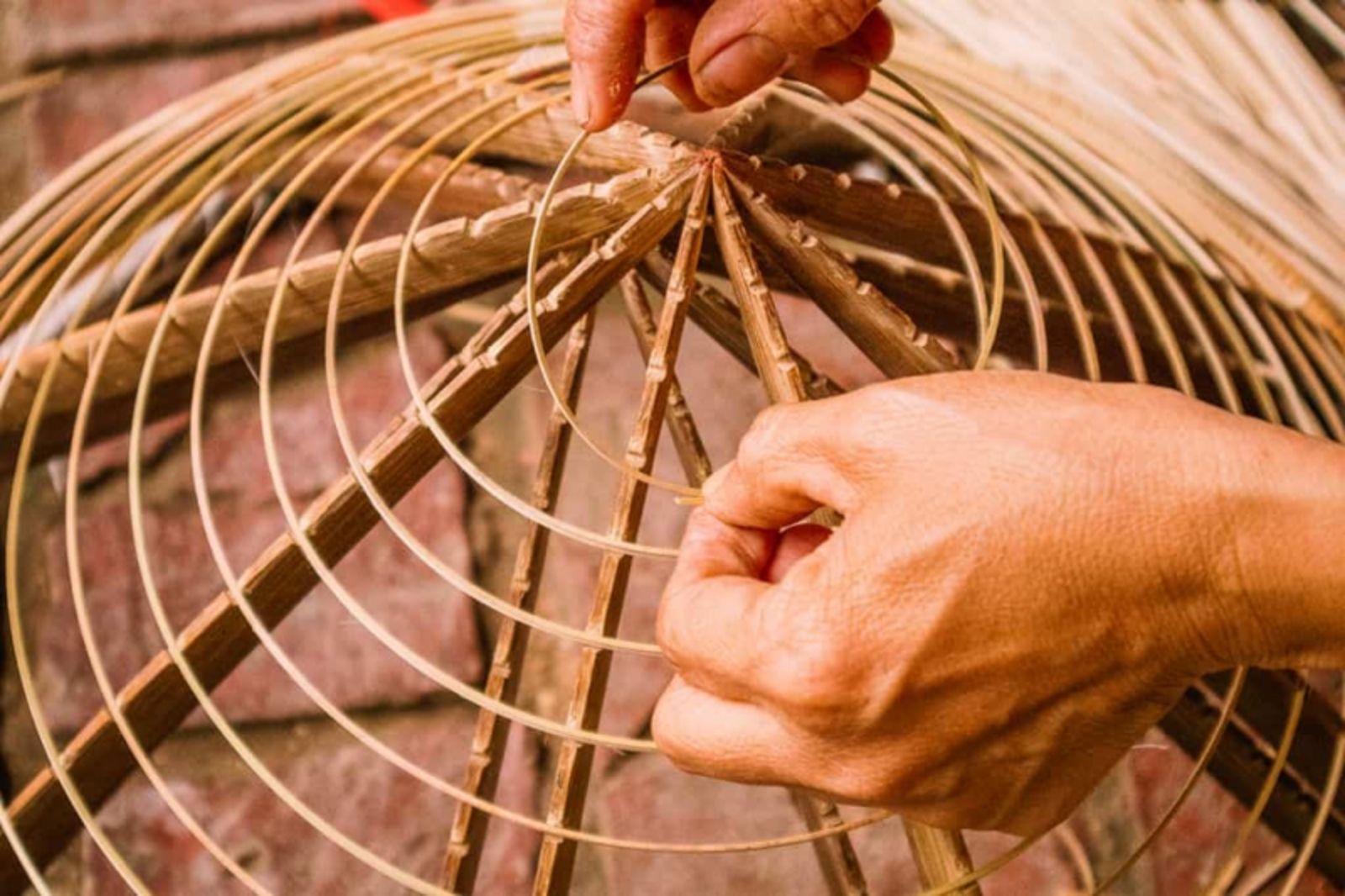
The craft of making conical hats has existed for hundreds of years
Photo: The craft of making conical hats has existed for hundreds of years 

3. The process of making poem conical hats

To create a poem conical hat, artisans must go through about 15 meticulous steps, requiring skill and patience. Below are the main steps in the hat-making process:

Preparation of raw materials

  • Hat leaves: Young leaves of the Bo Quy Diep tree, coconut leaves, or palm leaves harvested from the forest, then dew-dried, turned yellowish, and flattened to maintain their characteristic light green color. Leaves must be carefully selected to ensure flexibility, intactness, and even maturity.
  • Frame and rims: The hat frame is made of 12-16 thin bamboo strips, gathered at the top and spreading evenly toward the bottom. The rims are made of giant bamboo, rounded, smooth, and balanced to ensure durability and aesthetic appeal.

Leaf processing and shaping

  • After flattening, the leaves are cut into round or oval pieces, depending on the hat size.
  • Artisans skillfully arrange the leaf layers onto the frame, ensuring there is not too much overlap to maintain thinness and elegance.

Inserting poetry and patterns

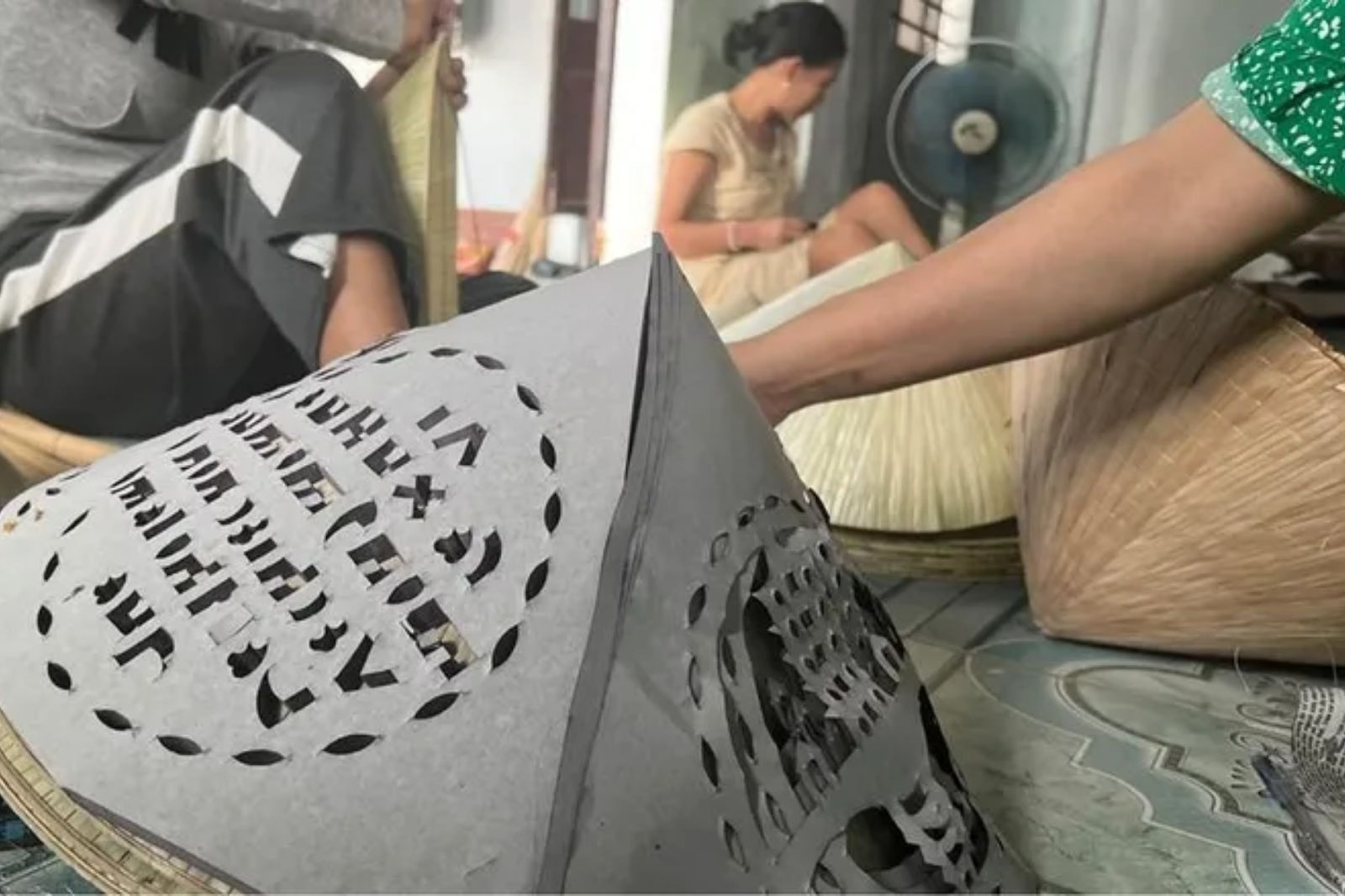
  • The highlight of the poem conical hat is the poem verses or images cut from colored paper (usually purple or red) and inserted between two leaf layers. Iconic symbols such as Truong Tien Bridge, Ngo Mon Gate, Phu Van Lau Pavilion, or Ngu Binh Mountain are balanced to create a miniature picture of Hue.
  • This technique requires high precision to ensure that the poetry and patterns do not fade over time.
Laying the poem paper onto the first leaf layer for stitching
Photo: Laying the poem paper onto the first leaf layer for stitching

Stitching the hat

  • The hat is stitched from top to rim using transparent nylon thread, with about 3 stitches per centimeter to secure the leaves and rims. The final rim uses white thread, with stitches spaced 2 cm apart, creating a refined finish.
  • After stitching, the hat is coated with oil multiple times and sun-dried to increase durability and shine.

In addition to traditional poem conical hats, Hue artisans have also created lotus leaf hats and Indian almond leaf hats. The Indian almond leaf hat uses the skeleton of wild Indian almond leaves, undergoing meticulous soaking and brushing processes to create transparency and durability. These innovations help Hue conical hats become increasingly diverse and attractive to tourists.

4. Cultural significance of the poem conical hat

The poem conical hat is not only a handicraft product but also a symbol of Hue's soul. The verses inserted in the hat are not merely decorative, but also express the discreet and profound philosophy of life of Hue people. Only when holding the hat up to the light can visitors read the poetic lines, a metaphor that discovering the soul of a Hue woman requires patience and delicacy.

The image of a Hue woman in an ao dai, wearing a poem conical hat, has entered poetry, music, and painting, becoming an endless source of inspiration for artists. The hat is not only a daily item but is also used in cultural performances, as photo props, interior decorations, and a meaningful souvenir for tourists. 

The poem conical hat has become a cultural symbol of Hue people
Photo: The poem conical hat has become a cultural symbol of Hue people

Not only an exquisite handicraft product, the hat also carries stories, memories, and the soul of the craftsman. For tourists, it is a beautiful and meaningful souvenir; for Hue people, it is a pride to be cherished and preserved. And perhaps, as long as people wearing poem conical hats are still seen on the streets along the Perfume River, Hue will fully retain its rustic grace that nowhere else can replace.

Follow Sovaba Travel to discover more interesting stories about Hue, from heritage and cuisine to traditional craft villages.

Loading......

Featured destinations