Huyen Khong Son Thuong and the Story of Building a Pagoda Amidst the Pine Forests of Hue

Central

Thua Thien Hue

Huyen Khong Son Thuong

Sovaba.travel

Updated at: 02/10/2026

1. History of Huyen Khong Son Thuong Pagoda

Huyen Khong Son Thuong, also known as Huyen Khong 2, is the successor and development of the original Huyen Khong Pagoda. The predecessor of the pagoda was founded around 1973 by Most Venerable Vien Minh and other monks at the foot of Hai Van Pass, in the Lang Co area (now part of Hue City). In the beginning, the pagoda was just a simple thatched hermitage amidst the mountains and forests, built to serve the study and meditation practice of monks following Theravada Buddhism.

In 1978, the pagoda was relocated to Nham Bieu Village, Huong Ho, under the abbotship of Venerable Gioi Duc (Sīlaguna). Here, the pagoda was gradually planned according to the philosophy of living in harmony with nature, featuring rustic structures, green gardens, and a tranquil meditation space.

In 1989, Venerable Gioi Duc relocated the pagoda to the Hon Vuon mountain area, Dong Cham Village, officially founding Huyen Khong Son Thuong. Spanning over 50 hectares, what was once a barren hill area was reforested into a "Meditation Forest" – where nature, architecture, and spiritual life blend into a serene space, becoming a famous spiritual destination in Hue today.

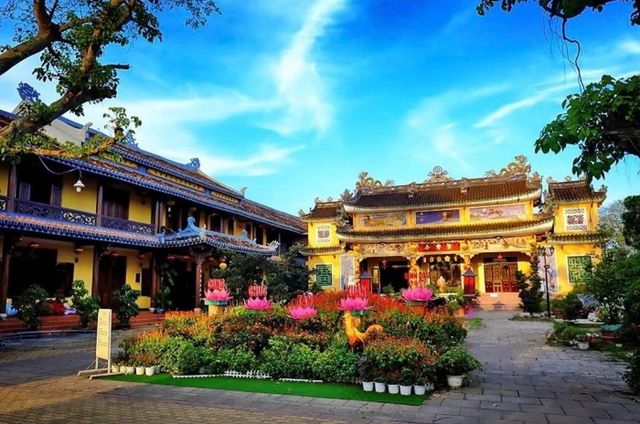
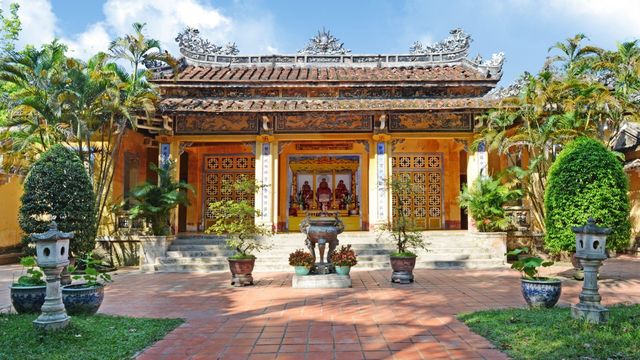
The pagoda was built on a hill

Photo: The pagoda was built on a hill 

2. Founder and key milestones

When mentioning Huyen Khong Son Thuong, one cannot fail to mention Most Venerable Gioi Duc (secular name Nguyen Duy Kha, born in 1944 in Da Le Thuong, Huong Thuy, Thua Thien Hue) – who dedicated most of his life to constructing and developing the pagoda amidst the Hon Vuon mountains. Not only a high monk of Theravada Buddhism in Vietnam, he is also known by his pen name Minh Duc Trieu Tam Anh as a poet, calligrapher, and Buddhist scholar. Notably, Most Venerable himself directly planned the landscape, planted the forest, and created the tranquil meditation space seen today.

The formation process of Huyen Khong Son Thuong is associated with many important milestones. In 1973, the original Huyen Khong Pagoda was established in the Hai Van – Lang Co area. By 1976, Most Venerable Vien Minh entrusted Venerable Gioi Duc with the role of abbot. Two years later, the pagoda was moved to Nham Bieu Village (Huong Ho) and began to take shape according to the philosophy of living in harmony with nature. The 1988–1989 period marked a turning point when Venerable Gioi Duc was granted over 50 hectares of land at Hon Vuon Mountain for afforestation and officially founded Huyen Khong Son Thuong. From the early 1990s, he focused his heart and soul on building the Meditation Forest, step by step completing structures such as the Main Hall, Purple Cloud Hermitage, Nghinh Luong Pavilion, alongside a lush green landscape system.

Over the past three decades, Huyen Khong Son Thuong has been not just a pagoda, but also the fruit of a philosophy of harmonious living between humans and nature. The green forests, lakes, and peaceful meditation spaces here stand as an enduring mark left by Most Venerable Gioi Duc for the ancient capital of Hue.

3. The construction process of Huyen Khong Son Thuong Pagoda

The construction process of Huyen Khong Son Thuong Pagoda was a persistent and creative labor journey, relying primarily on the efforts of the monks with almost no major external support. From a small bamboo hermitage on arid wasteland, the monks planted trees, cleared fields, and erected simple yet sturdy structures.

From 1989, clear development took place as many young monks, including Venerable Chon Tin, joined in the afforestation efforts. After more than 20 years, the once-barren hill became a lush green "primeval forest." Building materials were mainly mixed timber, terracotta tiles, and traditional roof tiles, all sourced locally to be both economical and environmentally friendly. Most structures, such as small hermitages, wooden pavilions, lotus ponds, and wooden bridges, were handcrafted, showcasing rustic beauty tied closely to the natural landscape.

In 1993, the Main Hall was completed with a dark mahogany tiled roof and a breezy architectural design, creating a sense of intimacy and tranquility. The process of building the pagoda was not only a physical construction but also a spiritual journey: the monks maintained alms-round routines and daily chanting at 4:30 AM and 6:00 PM, while also hosting short meditation retreats, turning the pagoda into a spiritual sanctuary for Buddhists and visitors alike.

The pagoda serves not only as a place of practice but also as a symbol of environmental protection and Hue culture. From a barren hill, it transformed into a verdant "fairyland," attracting visitors seeking peace. Its spiritual value lies in retreat courses, poetry discussions, and activities like drawing fortune sticks that help people reconnect with their inner selves. For tourism, the pagoda offers a deep cultural experience, encouraging the preservation of nature and Buddhist heritage.

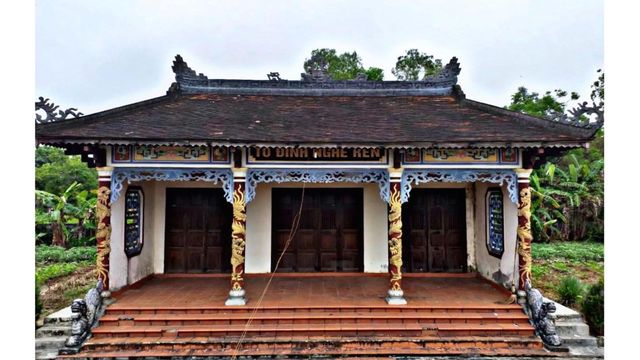
The pagoda brings many profound values and peace
Photo: The pagoda brings many profound values and peace  

4. Pine forest and natural landscape around Huyen Khong Son Thuong

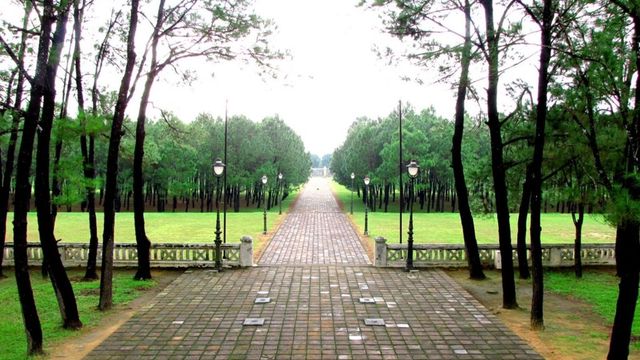
The pine forest space surrounding Huyen Khong Son Thuong is the highlight, featuring around 50 hectares of afforested land grown from barren earth. The pagoda grounds span 10,000 m² on a high hill, surrounded by pines, acacias, bamboos, and precious ornamental plants. The winding access road feels like a fairy tale, flanked by rice fields with the sounds of chirping birds and rustling insects. The landscape resembles an ink-wash painting: lotus ponds, wooden bridges, stone and grass gardens, and a cool, pure atmosphere. This is an ideal place to relax, take photos, and immerse oneself in Hue's nature.

Surrounding the pagoda are pine and bamboo forests
Photo: Surrounding the pagoda are pine and bamboo forests 

The story and construction process of Huyen Khong Son Thuong Pagoda are not only a testament to the power of faith and labor, but also reflect a philosophy of living in harmony between humanity and nature. From a humble thatched hermitage on a barren hill, this place has become a spiritual symbol, offering spiritual value for generations. If you want to witness the peaceful scenery firsthand and hear the historical stories from the remaining traces, join the Huyen Khong Son Thuong tour with Sovaba Travel. The trip will take you into the quiet pine forest space, strolling beside lotus ponds, feeling the meditative atmosphere, and finding moments of peace in the heart of dreamy Hue.

Featured destinations