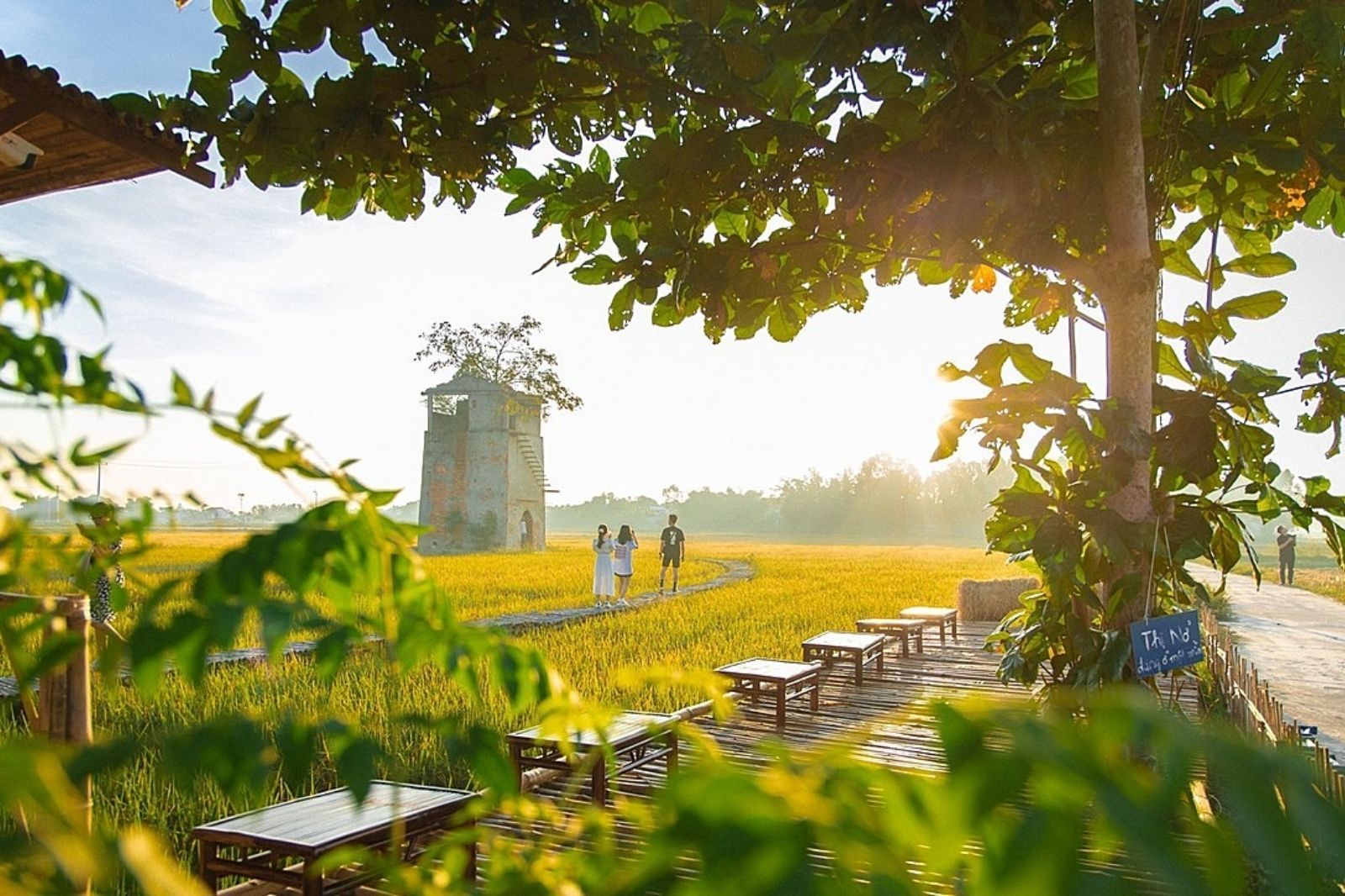
Old Duy Vinh Brick Kiln Hoi An: A "Thousand-Like" Photo Spot Amidst Lush Green Rice Fields

Central

Da Nang

Hoi An

Sovaba.travel

Updated at: 24/09/2026

1. Where is the Hoi An old brick kiln located?

The old Hoi An brick kiln is located in Vinh Nam village, Duy Vinh commune, Duy Xuyen district, former Quang Nam province (now Da Nang city). This is an old structure located about 5-8 km southwest of the center of Hoi An Ancient Town. Originally, it was a manual brick kiln built in the 1980s-1990s, but was abandoned for nearly 20 years due to replacement by modern brick manufacturing technology. Later, this location was renovated and transformed into an eco-farm tourism area combined with a coffee shop, preserving its old architecture to create a unique appeal.

The old Hoi An brick kiln is situated amidst vast rice fields, creating a peaceful countryside picture that contrasts completely with the hustle and bustle of Hoi An Ancient Town. If you are in Quang Nam or Da Nang, this is an ideal stopover to experience the rural atmosphere of Vietnam.
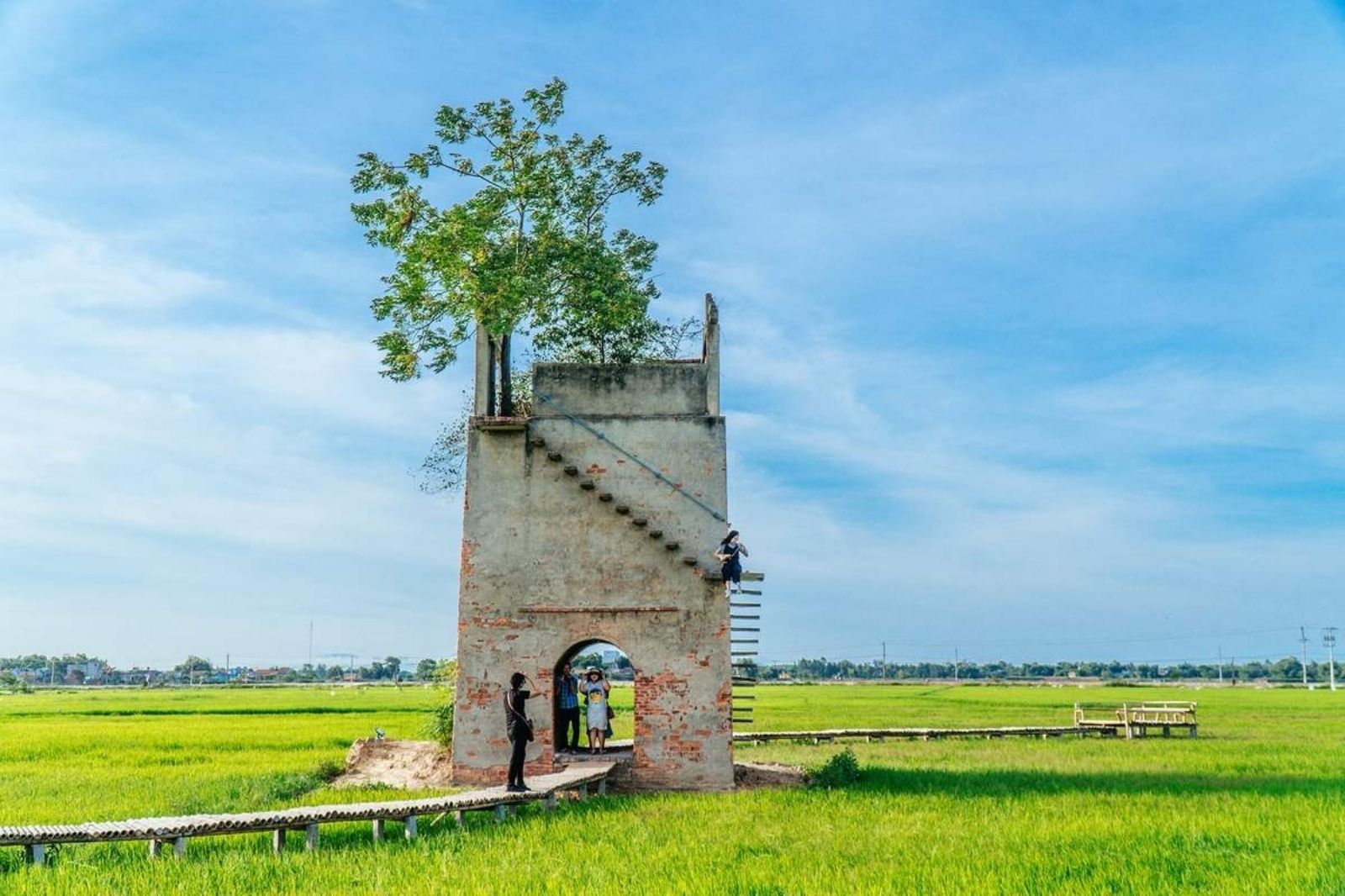

An abandoned old brick kiln becomes a super hot check-in spot

Photo: An abandoned old brick kiln becomes a super hot check-in spot 

2. Why has the Hoi An old brick kiln become a famous check-in spot?

The appeal of the Old Hoi An Brick Kiln comes from the blending of nostalgic charm and a serene countryside landscape. The structure with its red brick walls covered in moss and weathered by time stands out amidst the lush green rice field, creating a rustic yet highly captivating view. Since 2018, images of the brick kiln began spreading rapidly on social media and quickly became a favorite check-in spot for many tourists. Following renovation efforts in 2020, the area was further enhanced with bamboo bridges, stairs, a coffee shop, and sightseeing spaces, gradually developing into an eco-farm tourism model combined with rural village experiences.

  • Unique landscape: The brick kiln sits isolated in the middle of a lush green or golden yellow rice field (depending on the season), featuring an old tree growing on top and a winding bamboo bridge leading in.

  • Ancient architecture: Spiral staircase without handrails, weathered red brick walls, and nostalgic arches.

  • Combined farm tourism: After renovation, this area features a cafe with a rice field view, resting areas, and experiential activities such as vegetable picking and rowing, allowing visitors not only to take photos but also to relax.

  • Social media viral reach: Thousands of posts on Instagram, TikTok, and Facebook have turned this place into a "thousand-like photo spot," especially among youth in Da Nang and Quang Nam.

From an old industrial facility, the old Hoi An brick kiln has gradually been recognized as a creative space conversion model, combining historical architecture with the characteristic agricultural landscape of Hoi An's suburbs.

3. The best time to take photos at the Hoi An old brick kiln

To capture the best photos at the old Hoi An brick kiln, you should choose a time that fits the light and landscape. Based on experiences from travelers and guide sources, here are some suggestions:

  • Sunrise (5:00-7:00 AM) or sunset (4:00-6:00 PM): Gentle sunlight creates a golden glow effect, making photos sparkling without harsh glare. This is also when it is less crowded, making it easy to take relaxed solo photos.
  • Green rice season (March-April and August-September): Fresh green young rice fields provide a cool background, ideal for photogenic shots.
  • Ripe rice season (May and October): Brilliant golden rice fields offer a poetic beauty, especially when combined with the old brick kiln, creating a landscape that resembles an ink painting.
  • Avoid the rainy season (October-December): Bad weather can make roads muddy, affecting travel and photography.

Visitors can visit year-round, but the dry season (February-August) is the most ideal to avoid rain and enjoy the open atmosphere.

Rainbow over the field near the old brick kiln
Photo: Rainbow over the field near the old brick kiln 

4. Detailed guide on how to get to the Hoi An old brick kiln

From the center of Hoi An, it takes only about 15–20 minutes to reach the Duy Vinh old brick kiln. Below is a detailed guide to help you find your way easily:

  • From Hoi An Ancient Town: Follow Hung Vuong Street towards Da Nang, turn right onto Duy Vinh Street (QL14H). Continue for about 4km, cross the Duy Vinh bridge, then turn left onto Vinh Nam village road. Drive another 1km and you will see the brick kiln on your right, amidst the fields.
  • Means of transportation:
    • Motorbike or bicycle: Most popular option, rentable in Hoi An for 100,000-150.000 VND/day. Easy road to travel with signposts.
    • Taxi or Grab: Costs around 100,000-200,000 VND/one way from Hoi An. Convenient for groups.
    • Bus: No direct route available, but you can take a bus from Da Nang to Hoi An and then transfer to another vehicle.
  • From Da Nang: About 30km away, follow QL1A southwards, turn into QL14H at the Hue T-junction. Travel time is about 45 minutes by motorbike.

Note: The road entering the brick kiln area has small and narrow sections; drive slowly and pay attention to local directional signs to ensure safety.

5. Tips for taking amazing photos at the Hoi An old brick kiln

To get an impressive photo set at the old Hoi An brick kiln, you can consult some practical tips from photographers and travelers who have checked in here:

  • Hot shooting angles:
    • Shoot from the winding bamboo bridge overlooking the full panorama of the brick kiln and rice fields.
    • Climb the spiral staircase to shoot from above, creating a "stairway to heaven" effect.
    • Use a drone to capture vast panoramic views.
  • Outfits and accessories: Choose vintage clothes, modernized Ao Dai, or bright-colored outfits that stand out against the green rice background. Bring hats and sunglasses to enhance your style.
  • Lighting and timing: Shoot at sunrise/sunset for beautiful lighting. Avoid midday due to harsh sunlight.
  • Combine activities: Enjoy a coffee at the cafe with a field view, or participate in farm tours for more natural photos.

With proper angles and timing, your photo collection at the old brick kiln will have its own unique color, standing out from familiar tourist spots in the region.

Taking photos from the entrance road to the old brick kiln
Photo: Taking photos from the entrance road to the old brick kiln 

6. Important notes when visiting the Hoi An old brick kiln

Although it is a popular check-in spot, the old Hoi An brick kiln still presents a few factors to keep in mind to ensure a safe and respectful trip:

  • Safety when climbing stairs: The steps have no handrails and can be slippery if it rains. Do not climb if you are afraid of heights or traveling with small children.
  • Respect the locals: Do not trample on the rice fields or litter. Ask for permission if taking photos near residents' homes.
  • Weather and health: Bring sunscreen, drinking water, and comfortable footwear. Avoid traveling in heavy rain due to muddy roads.
  • Sightseeing fee: Entrance is free, but if you use the coffee shop services or farm tours, the cost is around 50,000-100,000 VND/person.
  • Weekend crowds: Go early to avoid crowds, especially during peak travel season.
  • Information updates: Check Google Maps or local fanpages as the area may occasionally close temporarily for maintenance.

Following these tips will not only help you enjoy a complete experience but also contribute to preserving the local landscape and spatial values.

Tourists visiting to check in at the old brick kiln
Photo: Tourists visiting to check in at the old brick kiln 

The Duy Vinh old brick kiln in Hoi An is not merely a prominent check-in spot, but also a meeting point between old industrial architecture and the distinctive rural scenery surrounding the ancient town. Amidst rice fields changing colors with the seasons, the time-worn red brick structure provides a unique backdrop for creative photo sets and a different experience compared to conventional tourist attractions. If you are looking for a space that is both rustic and aesthetically pleasing to refresh your Hoi An exploration journey, the Duy Vinh old brick kiln is a worthy choice. Plan accordingly, respect the local landscape, and save memorable moments for yourself amidst the tranquil nature of Central Vietnam.

Loading......

Featured destinations