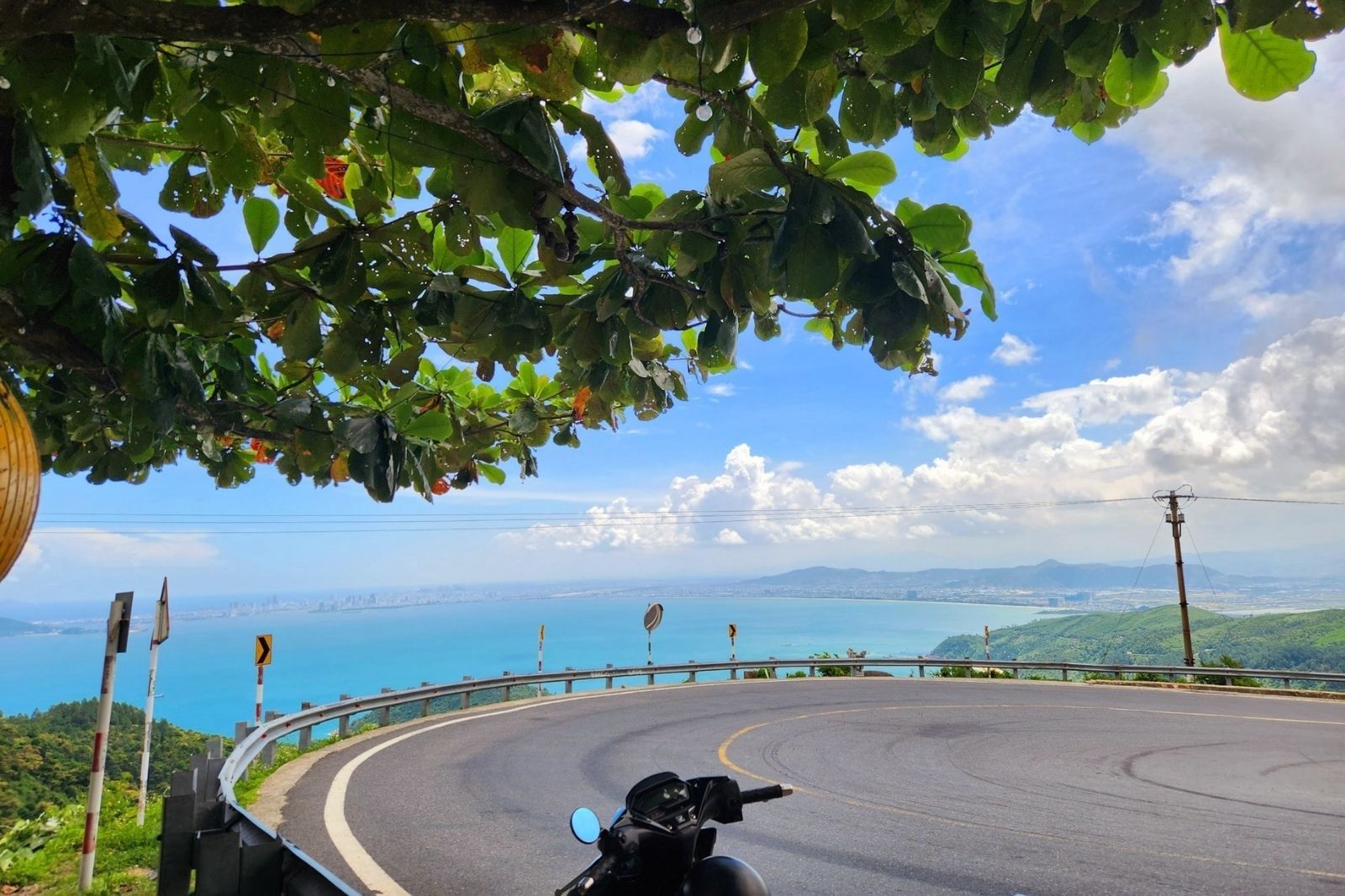
Hai Van Pass, also known as "Ai Van" or "Ngai Lanh", is a natural boundary between Da Nang City and Thua Thien Hue Province. Spanning about 21 km at an average altitude of 500 m above sea level, it is dubbed the "world's most magnificent pass" thanks to the perfect harmony between natural beauty and historical value.
The name "Hai Van" (Ocean Cloud) originates from the image of white clouds floating year-round over the mountain slopes, creating a poetic yet majestic painting of water, clouds, and rolling hills. The pass is famous for its 21 km of winding roads and 113 hairpin turns, posing a challenge while being a badge of honor for adventurous riders. At the peak, Hai Van Quan – a prominent historical relic – was built in 1826 under Emperor Minh Mang to control borders and national defense. The stone gate is inscribed with four golden characters "Hai Van Quan – Thien ha de nhat hung quan" composed by the famous scholar Nguyen Cong Tru, showcasing its strategic importance and grandeur.

Today, Hai Van Pass is not only a famous tourist destination but also a dream route for many backpackers and riders. From the summit, visitors can take in panoramic views of the turquoise Lang Co Bay, the stretching Nam O Beach, or Da Nang City curving along the coastline. This seamless blend of nature and history has earned Hai Van Pass multiple spots on lists of the world's most spectacular coastal drives, praised by CNN and BBC's Top Gear as a true symbol of Vietnam's beauty.