1. An overview of the creation of the Khai Dinh Tomb masterpiece
Against the backdrop of the Nguyen Dynasty facing numerous challenges, Khai Dinh Tomb emerged as a mark of power and art, representing the aspiration for the dynasty's eternity. The project spanned 11 years, from 1920 to 1931, requiring massive investment in resources and human power, with the participation of thousands of talented artisans. As a result, Khai Dinh Tomb became a flawless masterpiece, showcasing timeless sophistication and creativity.
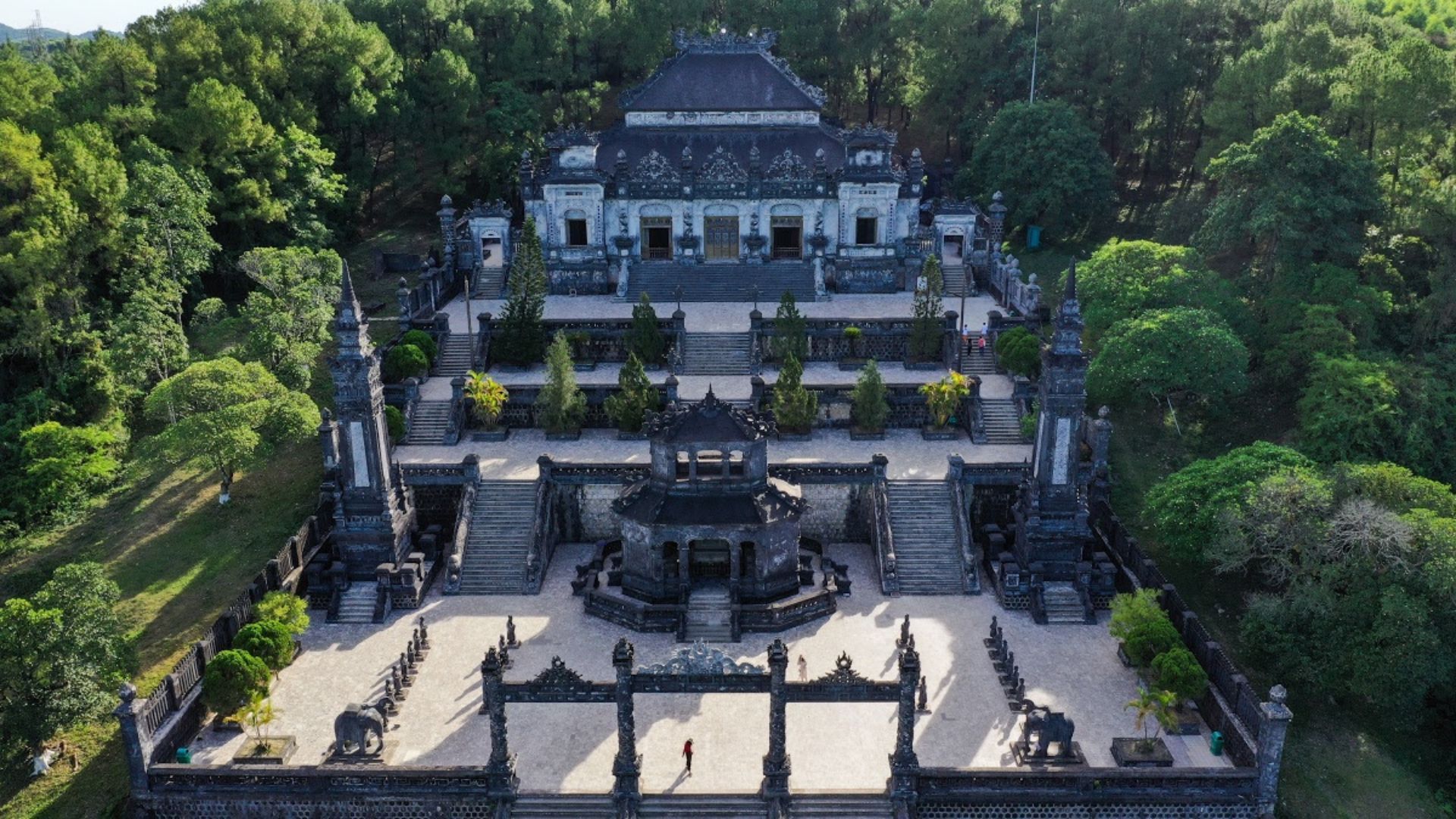
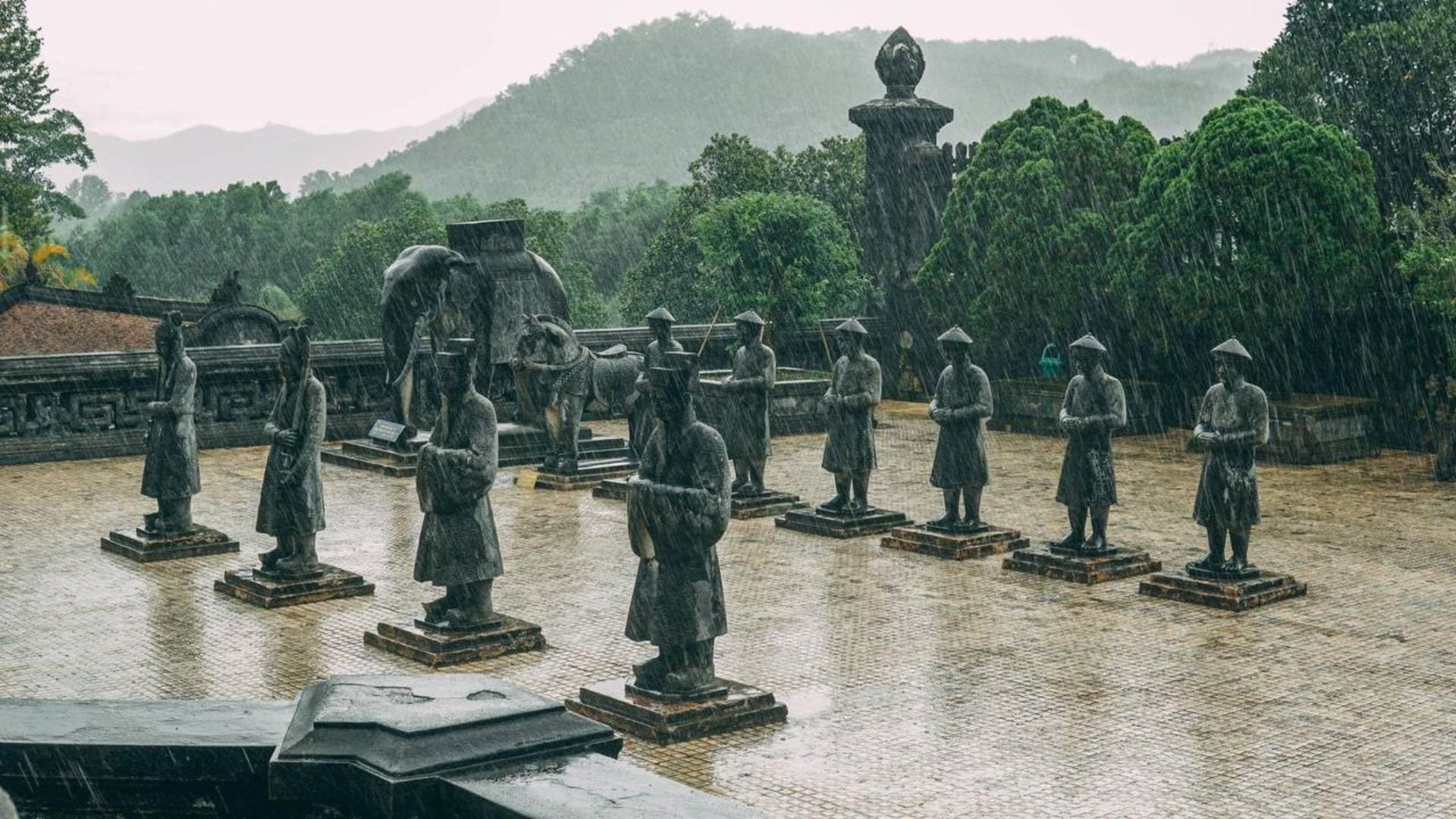
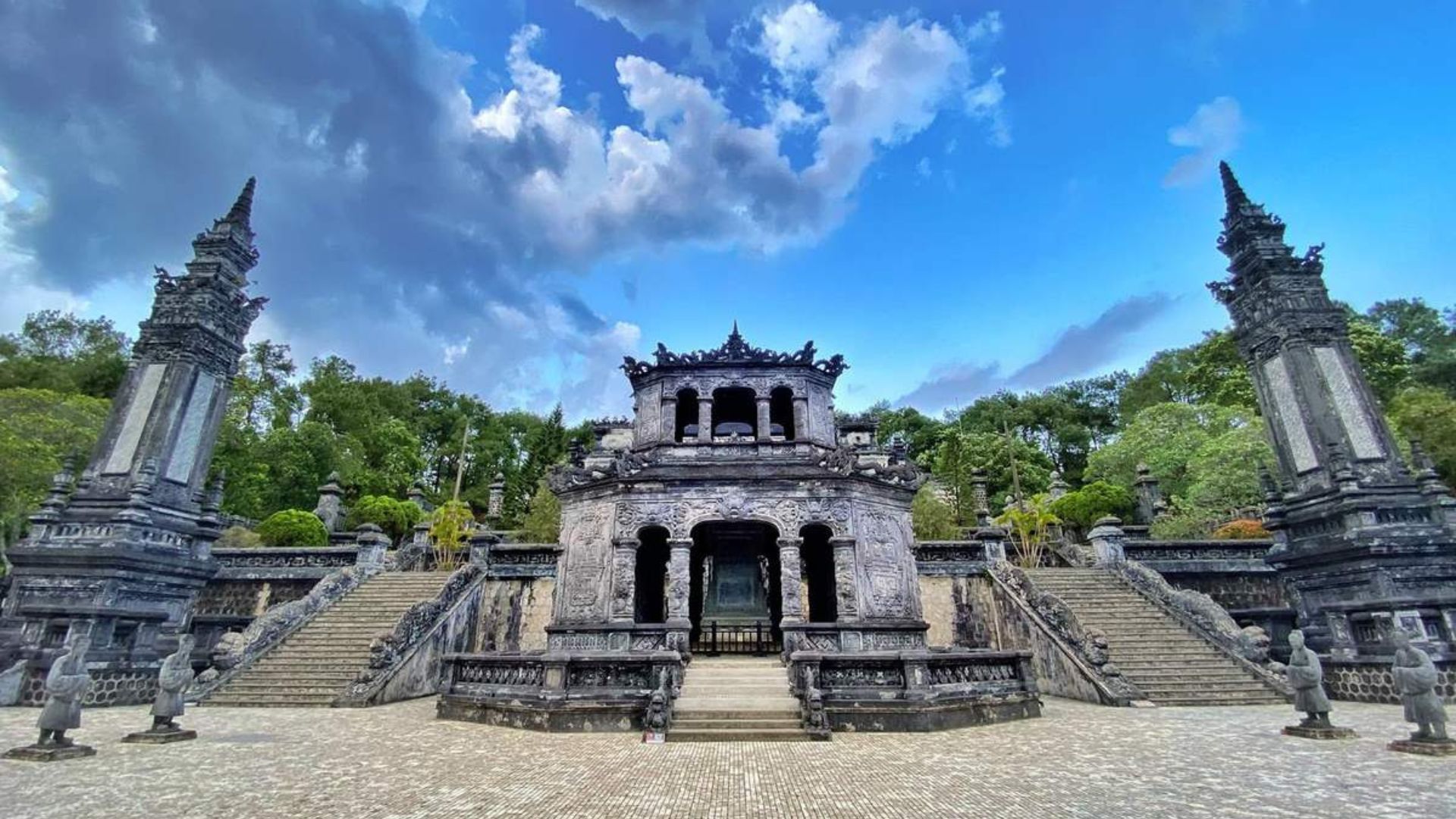
Panoramic view of Khai Dinh Tomb located on Chau Chu Mountain surrounded by natural scenery.
2. The fusion of East and West in the architecture of Khai Dinh Tomb
The architecture of Khai Dinh Tomb is a delicate fusion of Eastern and Western cultures, creating a unique and distinctive style.
Western Touches in Royal Architecture
Stepping into the grounds of Khai Dinh Tomb, visitors feel as if they are entering a space where delicate Western architectural marks intertwine with Vietnamese identity. The first easily noticeable feature is the soaring arches, symbolizing pride and grandeur, heavily featuring the Gothic style—one of Europe's iconic architectural movements. These arches serve not only as load-bearing structures but also hold high aesthetic value, with intricate carved details demonstrating the solemnity of the monument. In addition, the vibrant stained glass window system brings a splendid, captivating beauty to the tomb's space, creating a mystical light effect as sunlight passes through, accentuating the elegance of the interior details.
The hallway column system is one of the clearest elements demonstrating the influence of classical European architecture in Khai Dinh Tomb. The columns are designed with harmonious, symmetrical proportions, deeply imbued with Roman architectural style, combined with delicately carved decorative motifs on the surface.
King Khai Dinh demonstrated a modern vision and openness to innovation by using reinforced concrete, an advanced material at the time, to construct his tomb. This was a breakthrough compared to previous royal tombs, which typically used bricks, stone, and wood as main materials. The use of reinforced concrete provided not only strength and durability for the structure, but also allowed the king to realize complex architectural ideas with elaborate decorative details requiring high technical skills.
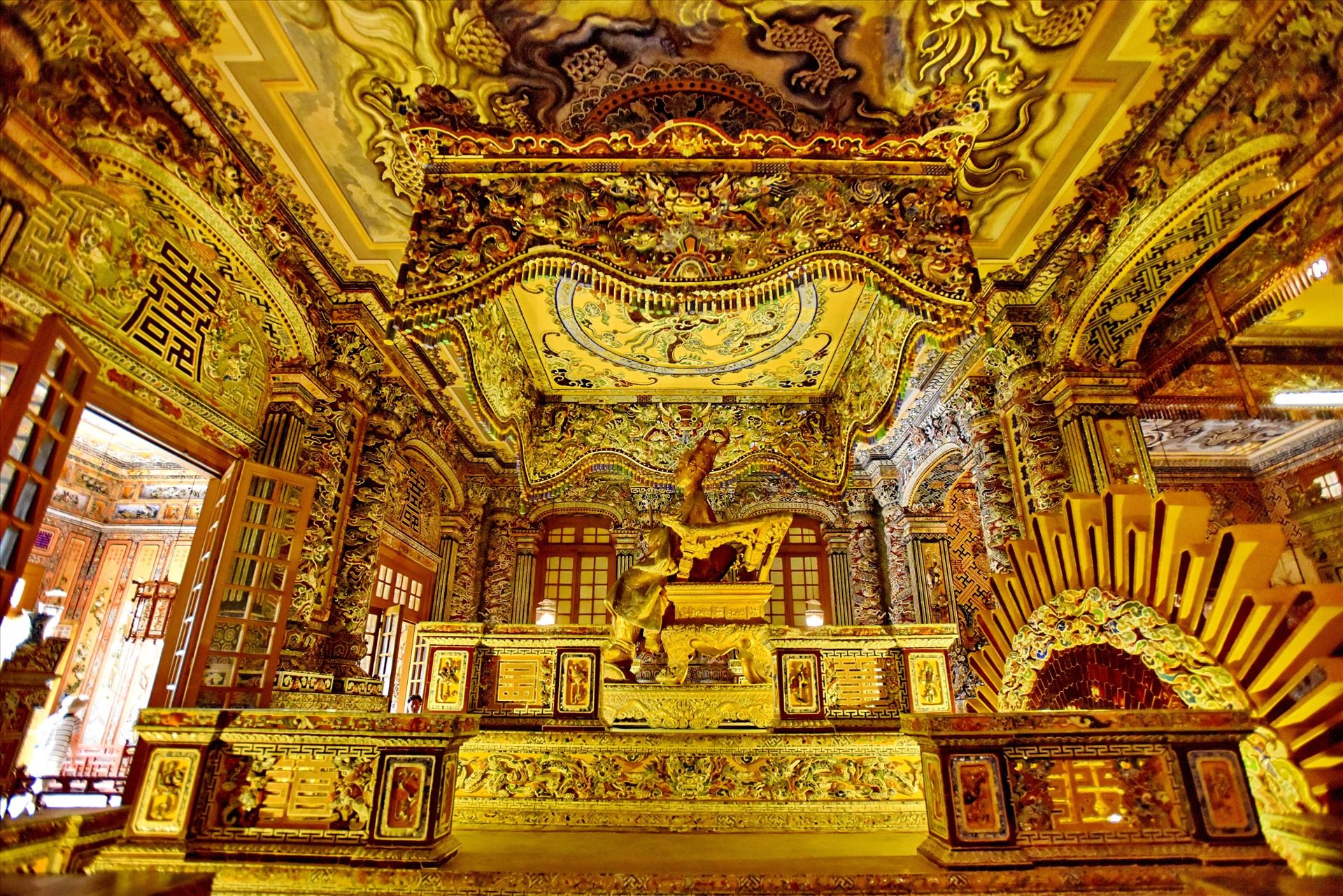
Going beyond that, King Khai Dinh also applied Baroque and Rococo decorative styles—two famous European architectural and decorative styles known for their complexity and ornate details. The wall sections in the tomb are adorned with porcelain-mosaic bas-reliefs, creating vivid imagery, combined with hand-painted murals depicting nature and Western mythology, creating a multi-dimensional space that is both deeply royal and rich in artistic value.
The Western elements at Khai Dinh Tomb, from structure to decoration, do not detract from Vietnamese cultural identity; on the contrary, they highlight the unique blend between Eastern and Western cultures. This monument is clear evidence of continuous innovative creativity, showing King Khai Dinh's openness to new cultural values while maintaining the core of national culture, creating a unique and captivating architectural masterpiece.
Image of luxurious architectural elements in Khai Dinh Tomb.
Rich in Vietnamese Culture
Despite being heavily influenced by the West, Khai Dinh Tomb retains Vietnamese cultural values through every decorative detail. Bas-reliefs and porcelain mosaics featuring images of dragons, phoenixes, and flora serve as a tribute to traditional culture. These values are present not only in patterns but are also reflected in the overall layout of the tomb, creating a subtle balance between the new and the old, the unfamiliar and the familiar.
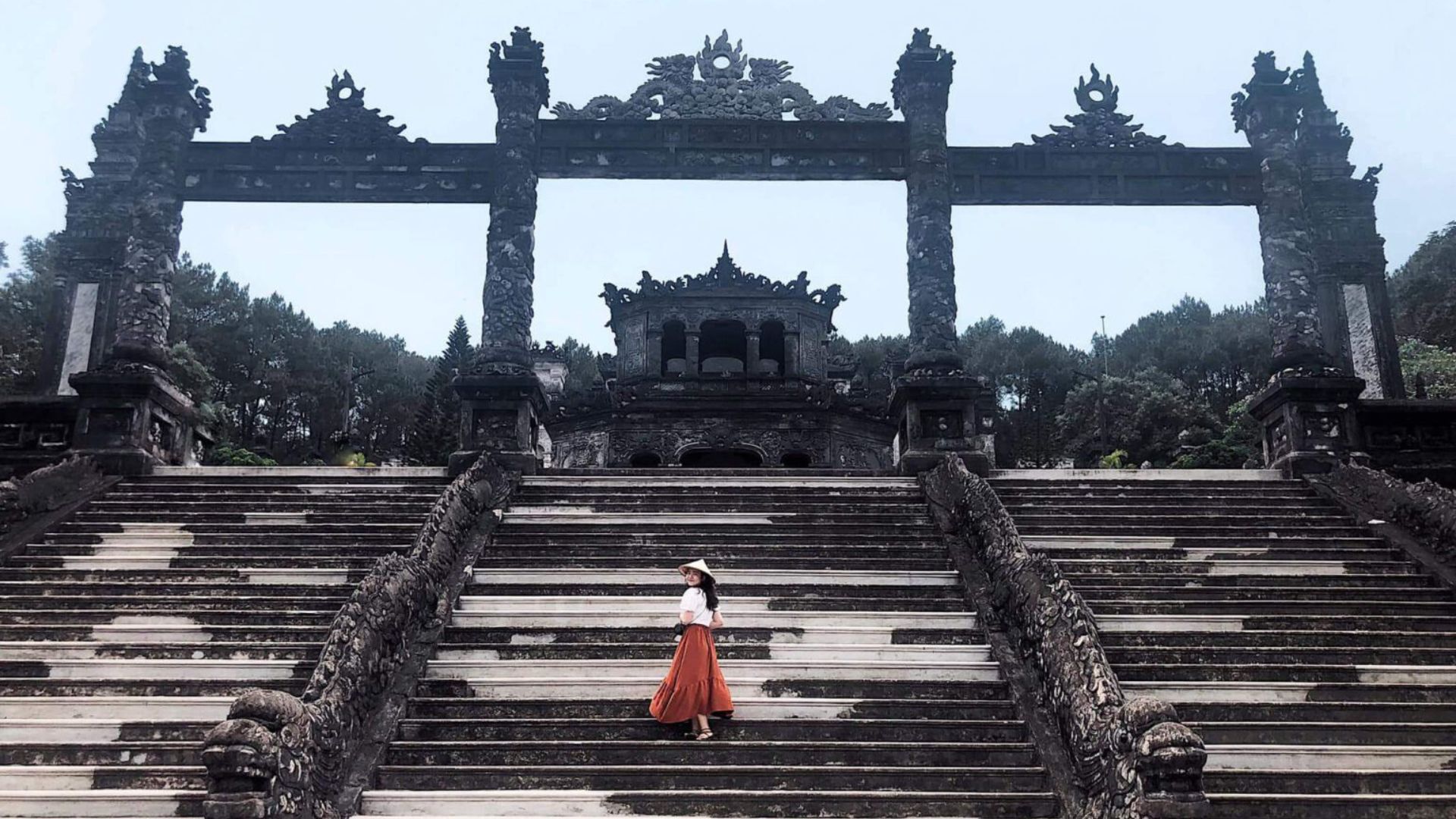
Khai Dinh Tomb - Vietnamese cultural identity.
3. The pinnacle of artistic masterpiece at Khai Dinh Tomb
Every small detail inside Khai Dinh Tomb is meticulously crafted, showcasing the creativity and talent of skilled craftsmen.
Intricate Stupa and Porcelain Mosaic Artworks
At the center of Khai Dinh Tomb, the intricate stupa is one of the most important architectural highlights. Decorated with unique porcelain mosaic works, this stupa reflects the brilliance of the artisans of that era. Small pieces of porcelain and glass were pieced together into vivid murals, not only beautifying the tomb but also displaying boundless creativity.
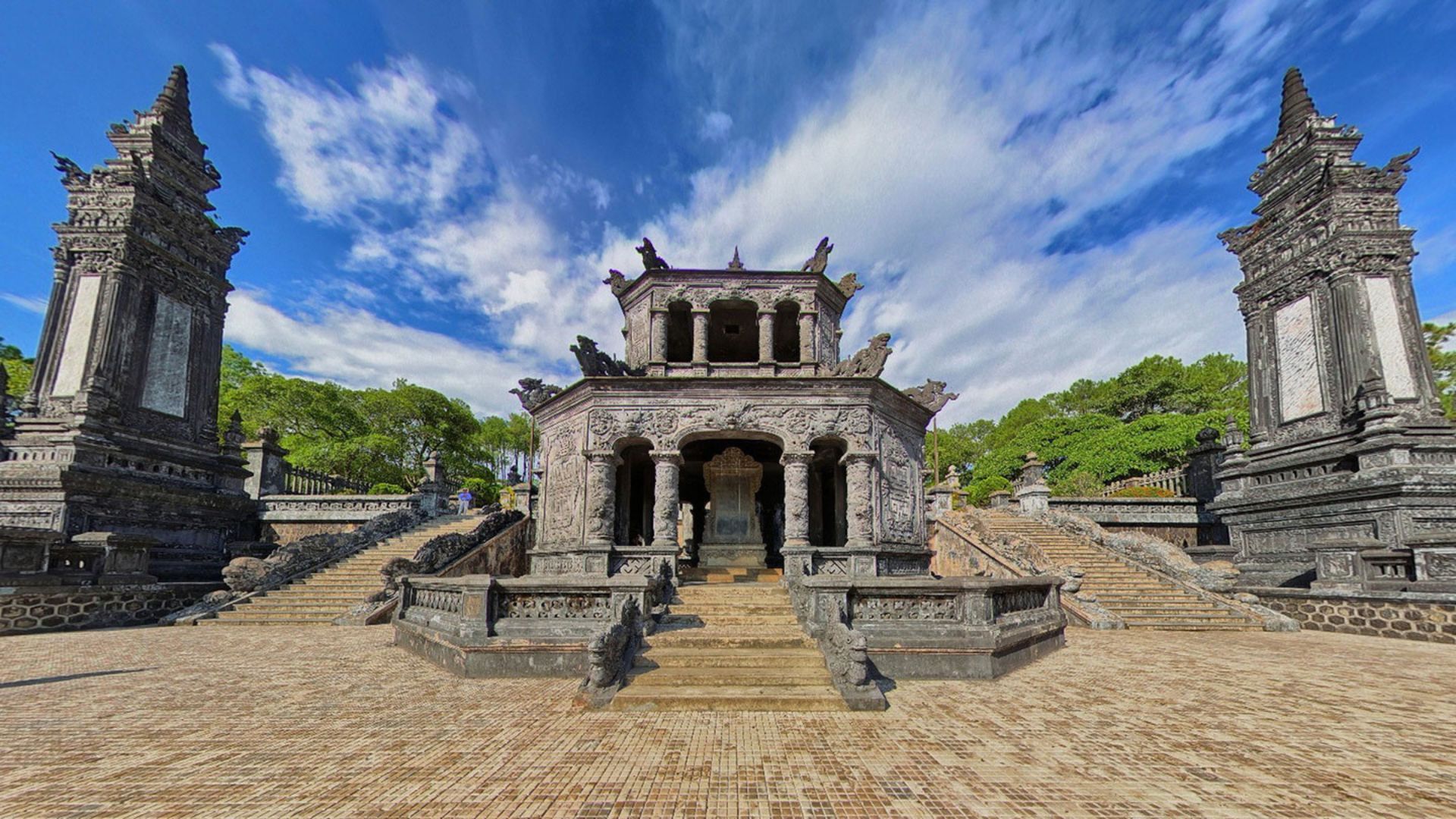
Image of the stupa and intricate porcelain mosaic artworks at the center of Khai Dinh Tomb.
Majestic Statue of King Khai Dinh
Another unmissable highlight is the bronze statue of King Khai Dinh, cast in France. The statue of King Khai Dinh in royal attire, majestic and powerful, seated on the throne, serves as a symbol of supreme power. This work is not only a symbol of the king's stature but also a harmonious combination of European art and characteristic Vietnamese features, offering deep insight into a bygone era.
Majestic statues of King Khai Dinh in royal attire, seated on the throne.
4. Khai Dinh Tomb and its spiritual space
In addition to architectural values, Khai Dinh Tomb is also a repository of spiritual and feng shui elements, enhancing the sacredness and solemnity of the monument.
Emphasis on Feng Shui and Beliefs
Khai Dinh Tomb is situated on a high mountain, a position considered ideal in feng shui to ensure prosperity and protect the resting place. With its backing to the mountain and facing the river posture, the tomb nestles in the heart of the Chau Chu Mountain range, symbolizing endurance and stability. This feng shui element demonstrates not only wisdom in location selection but also respect for the spirituality and beliefs of the Vietnamese people.
Image of Khai Dinh Tomb leaning against the mountain and facing the river, symbolizing eternity and good feng shui.
Solemn Arrangement of Spiritual and Religious Space
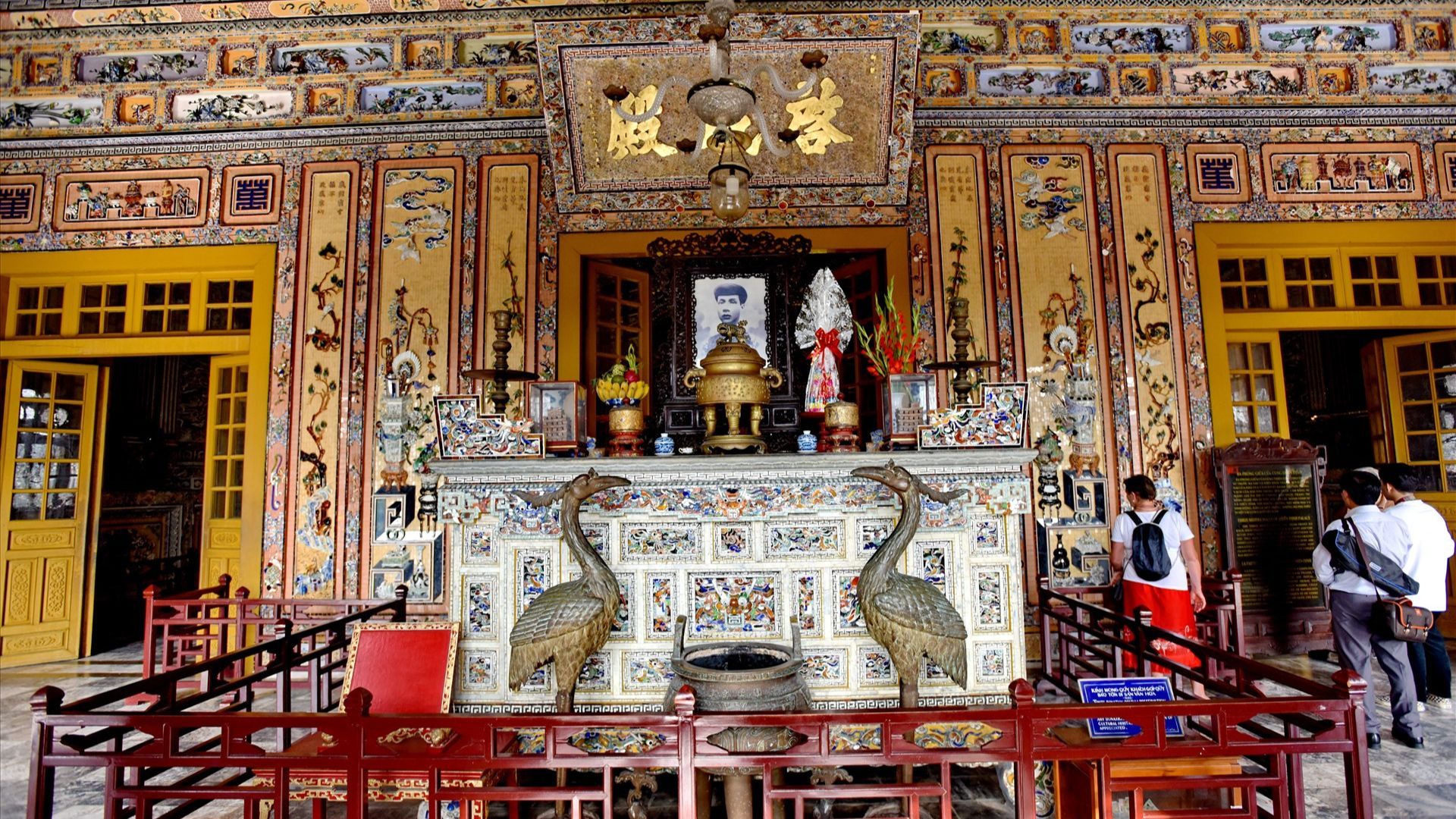
Inside Khai Dinh Tomb, the worship space is arranged solemnly and respectfully. This is not only King Khai Dinh's resting place but also a sacred space where religious and spiritual rituals took place. The decorative and architectural details in the tomb carry deep meaning, creating a sacred space connecting the physical world with the spiritual world.
Image of the solemn worship space inside Khai Dinh Tomb.
If you are looking for a destination to explore royal beauty and unique art, let Sovaba Travel accompany you on your journey to Hue, where Khai Dinh Tomb still shines through the ups and downs of time. Below is the entrance fee information for Khai Dinh Tomb for your reference: