Top 5 Bridges Across the Perfume River: A Detailed Guide
Central
Thua Thien Hue
Truong Tien Bridge
Perfume River
Sovaba.travel
Updated at: 24/09/2026
1. Truong Tien Bridge
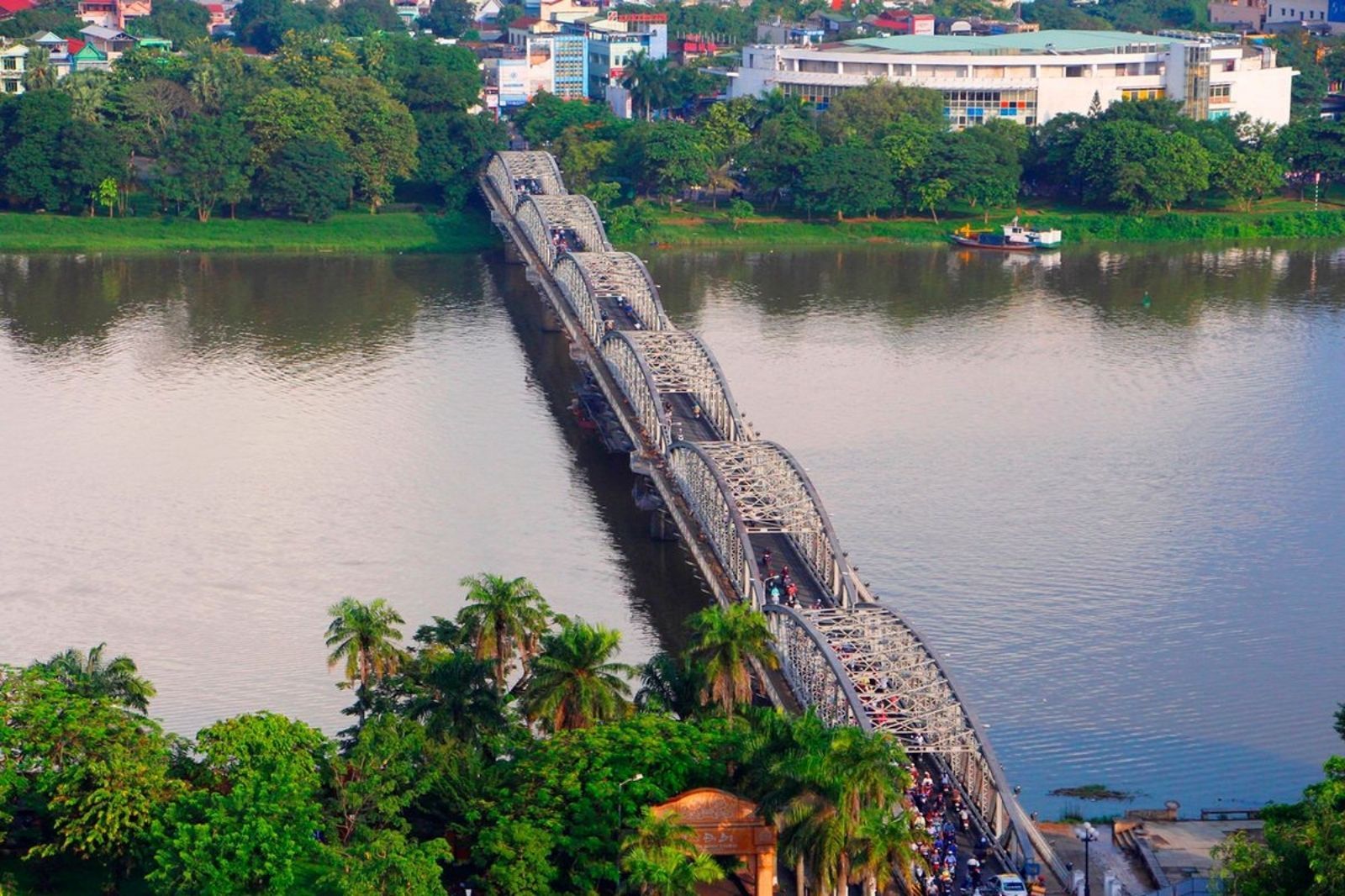
Constructed in 1897 under the reign of King Thanh Thai, Truong Tien Bridge is the first bridge built across the Perfume River, located right next to the Hue Imperial Citadel. With a length of over 400m and unique Gothic architecture, the bridge has 6 comb-shaped steel girder spans and has witnessed many historical ups and downs.
The bridge's original name was Thanh Thai, later Clémenceau, then Nguyen Hoang, but ultimately, locals still familiarly call it Truong Tien because of a nearby mint workshop of the Nguyen Dynasty. Having suffered damage several times due to natural disasters and war, the bridge has been restored many times while retaining its historical and architectural value. Today, Truong Tien Bridge is not only an important traffic route but also a famous check-in spot, where visitors can admire the Perfume River, Ngu Binh Mountain, and marvel at the shimmering artistic lighting system at night – an indispensable symbol of the Ancient Capital of Hue.
Photo: Legendary Truong Tien Bridge, spanning the Perfume River
2. Da Vien Bridge
Da Vien Bridge is one of the most modern and beautiful bridges spanning the Perfume River, contributing to completing the transport network of Hue City. Inaugurated in 2012, the bridge is about 542.5 m long, 24.5 m wide with 4 traffic lanes, pedestrian walkways, and 6 sightseeing pavilions, connecting Kim Long Street with Bui Thi Xuan Street across Da Vien Islet. Not only helping relieve traffic pressure on Truong Tien Bridge and Phu Xuan Bridge, Da Vien Bridge has also become an ideal scenic spot where visitors can admire the poetic beauty of the Perfume River and the panoramic view of Hue City, especially at sunrise or sunset.
Photo: Da Vien Bridge
3. Bach Ho Bridge
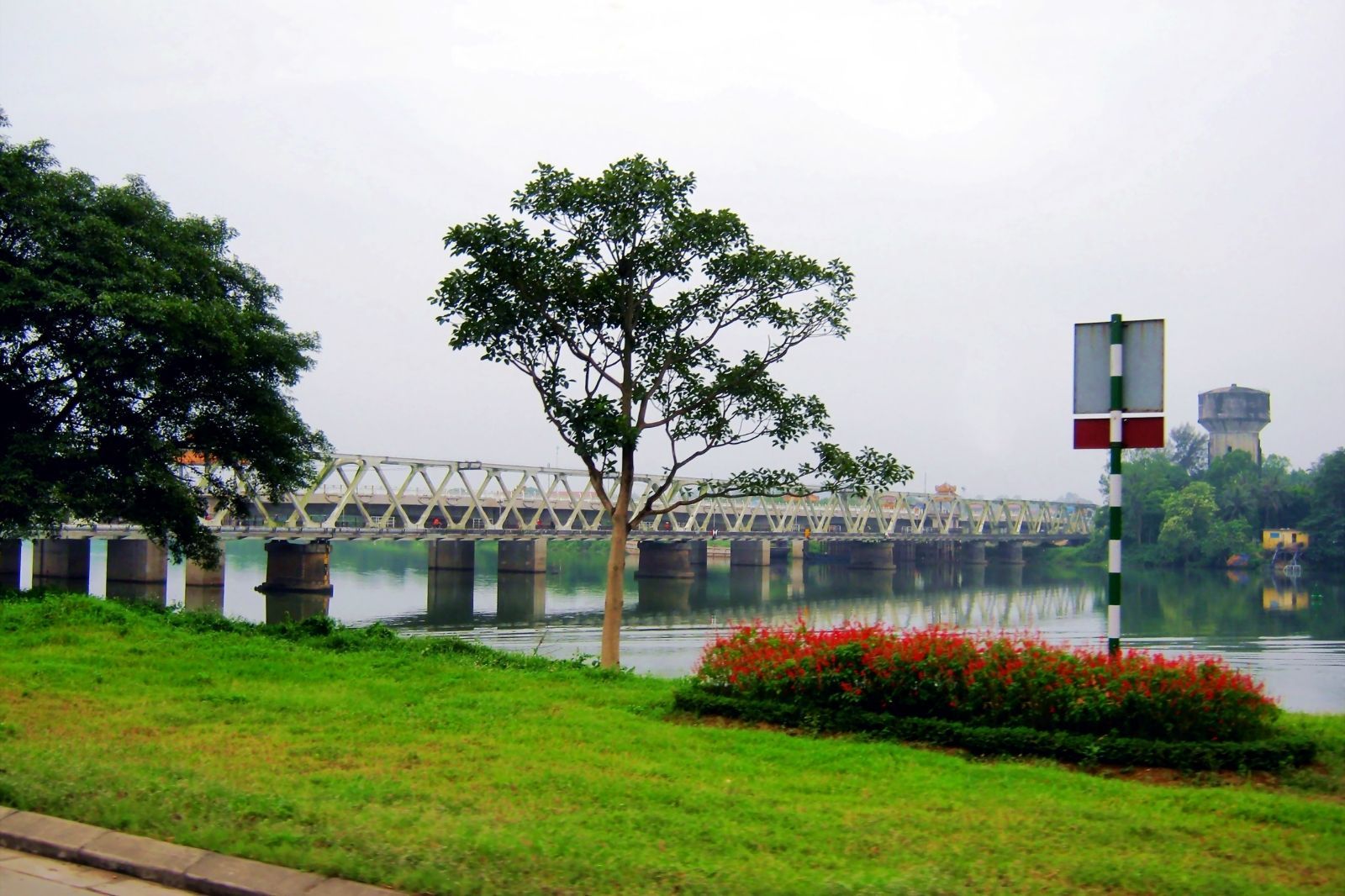
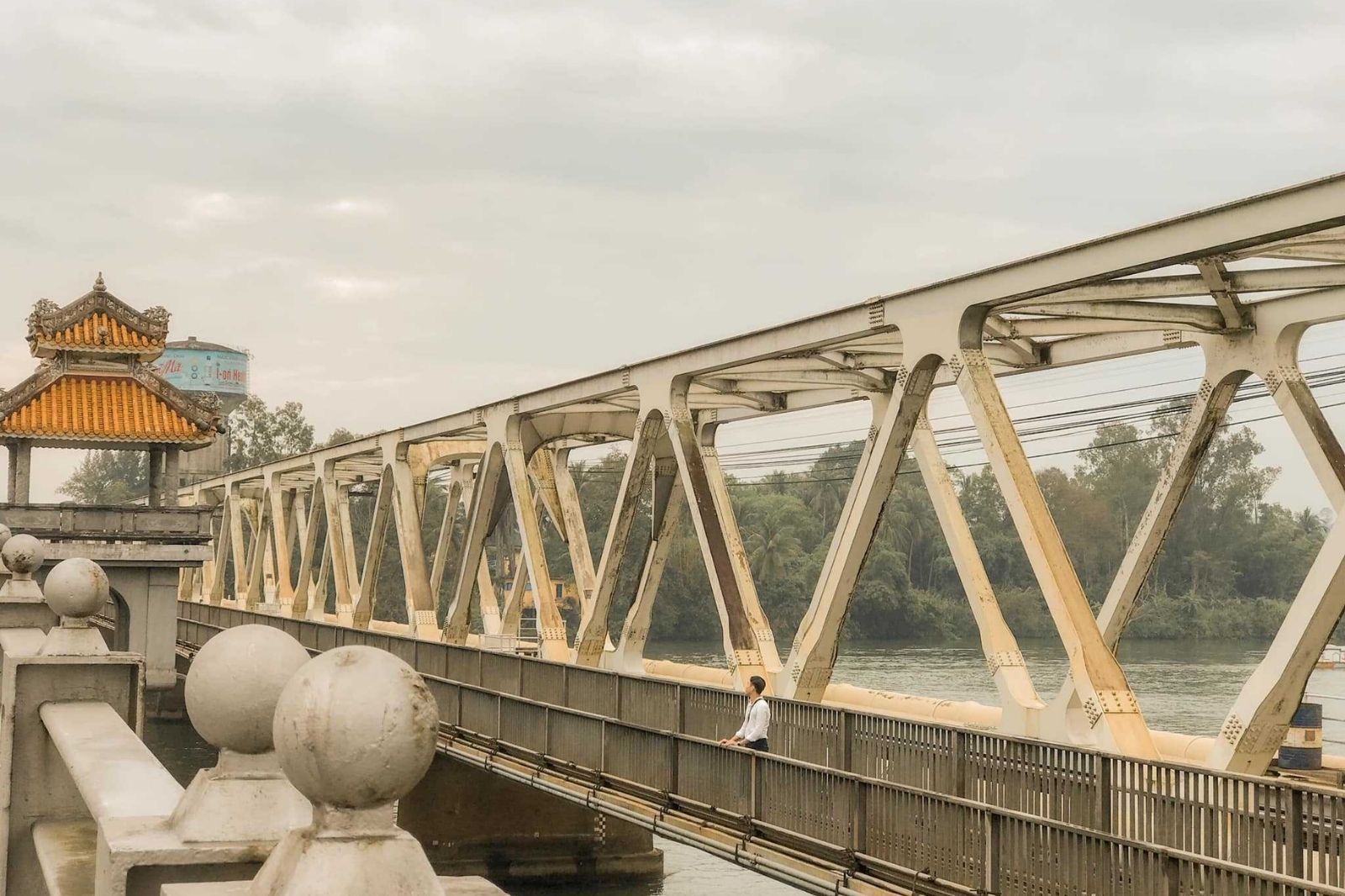
Built in 1908 to serve the Hue - Quang Tri railway line, Bach Ho Bridge is one of the oldest bridges in Hue. Having suffered severe damage twice during wartime, the bridge was repaired and renovated. The bridge has a steel structure, with a railway track in the middle and lanes for two-wheeled vehicles on both sides. Today, Bach Ho Bridge still plays an important role as a unique railway route, connecting the two banks of the Perfume River and witnessing over a century of city development.
These bridges are not only architectural works, but also the soul of the city, serving as proof of Hue's growth and transformations throughout different eras. Together, they create a complete picture of the Perfume River and the ancient capital's culture.
Photo: Historical architectural beauty of Bach Ho Bridge
4. Dap Da Bridge
Built in 1917 during the French colonial period, Dap Da Bridge is one of the oldest remaining bridges, harmoniously combining transportation and irrigation functions. Strategically located between Le Loi Street (Phu Hoi Ward) and Nguyen Sinh Cung Street (Vy Da Ward), the bridge connects the suburban area of Vy Da to the center of Hue. With a length of about 200m (combined with the dam), the bridge is designed simply yet sturdily, serving to prevent saltwater intrusion and reduce flooding.
In 2015, the bridge was widened and equipped with underground culverts to improve the water environment of the Nhu Y River, following the completion of the Thao Long Dam. The historical significance of Dap Da Bridge lies in its role as a "gatekeeper" for Hue, witnessing countless events from resistance wars to peace. Today, it attracts history-loving tourists with folk tales about "damming stone to block floods".
5. Phu Xuan Bridge
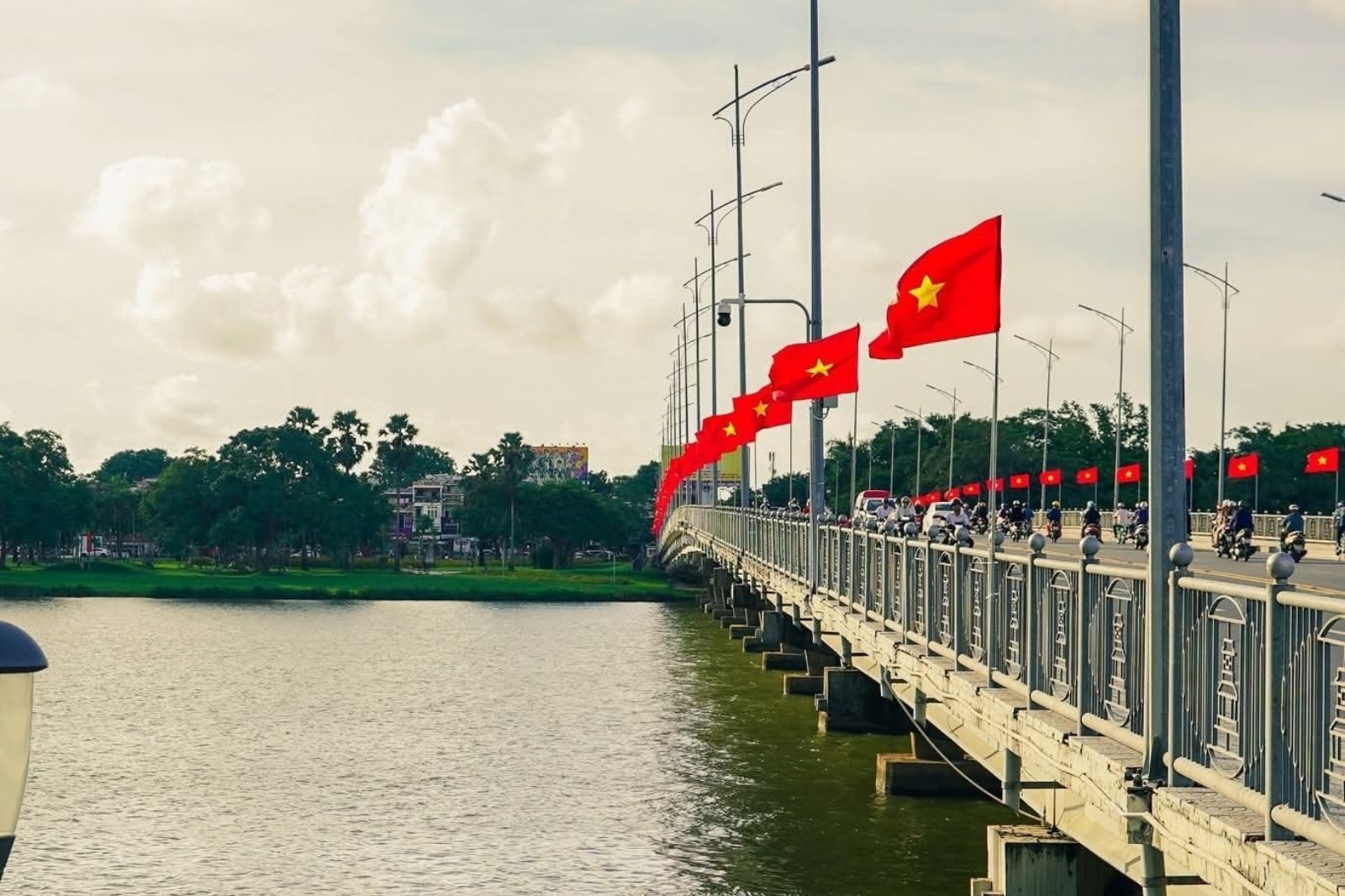
Completed in 1971 (construction started in 1970), Phu Xuan Bridge, commonly known as Cau Moi (New Bridge), was designed and constructed by the French company Eiffel, marking Hue's transformation during the anti-American war. With a length of 374.65m and a width of 17m (12m roadway with pedestrian sidewalks), the bridge is located near the Imperial City, connecting the city center with national highways. Originally named Huong River Bridge, it was renamed Phu Xuan after 1975 to honor the ancient dynasty. The bridge was restored in 1998, 2009, and 2019 to accommodate growing traffic volumes.
The modern architecture of Phu Xuan Bridge harmonizes with Hue's landscape: safety handrails, a straight design that does not diminish the poetic charm of the Perfume River. Its tourism significance lies in its ideal location for watching sunrise or sunset, making it a popular wedding photo spot for many couples. The bridge is also a vital arterial route, relieving traffic on Truong Tien Bridge and contributing to post-war economic development in Hue.
Photo: Phu Xuan Bridge
Each bridge crossing the Perfume River is not only a transportation structure connecting the two sides of the city, but also a silent witness to time, deeply tied to the history, culture, and daily life of Hue's people. From the ancient beauty of Truong Tien Bridge, the modern touch of Phu Xuan Bridge, to the poetic charm of Da Vien Bridge, everything blends to create a poetic river scene that reflects the soul of the ancient capital. Exploring the bridges over the Perfume River is a journey for visitors to deeply feel the tranquil and refined beauty of Hue, where the past and present harmonize in every bridge span and gentle wave. To fully admire the beauty of these iconic structures and discover the cultural depth of the Ancient Capital, you can explore the Hue tours by Sovaba Travel. It will certainly be a memorable journey, bringing unique experiences and unforgettable emotions.