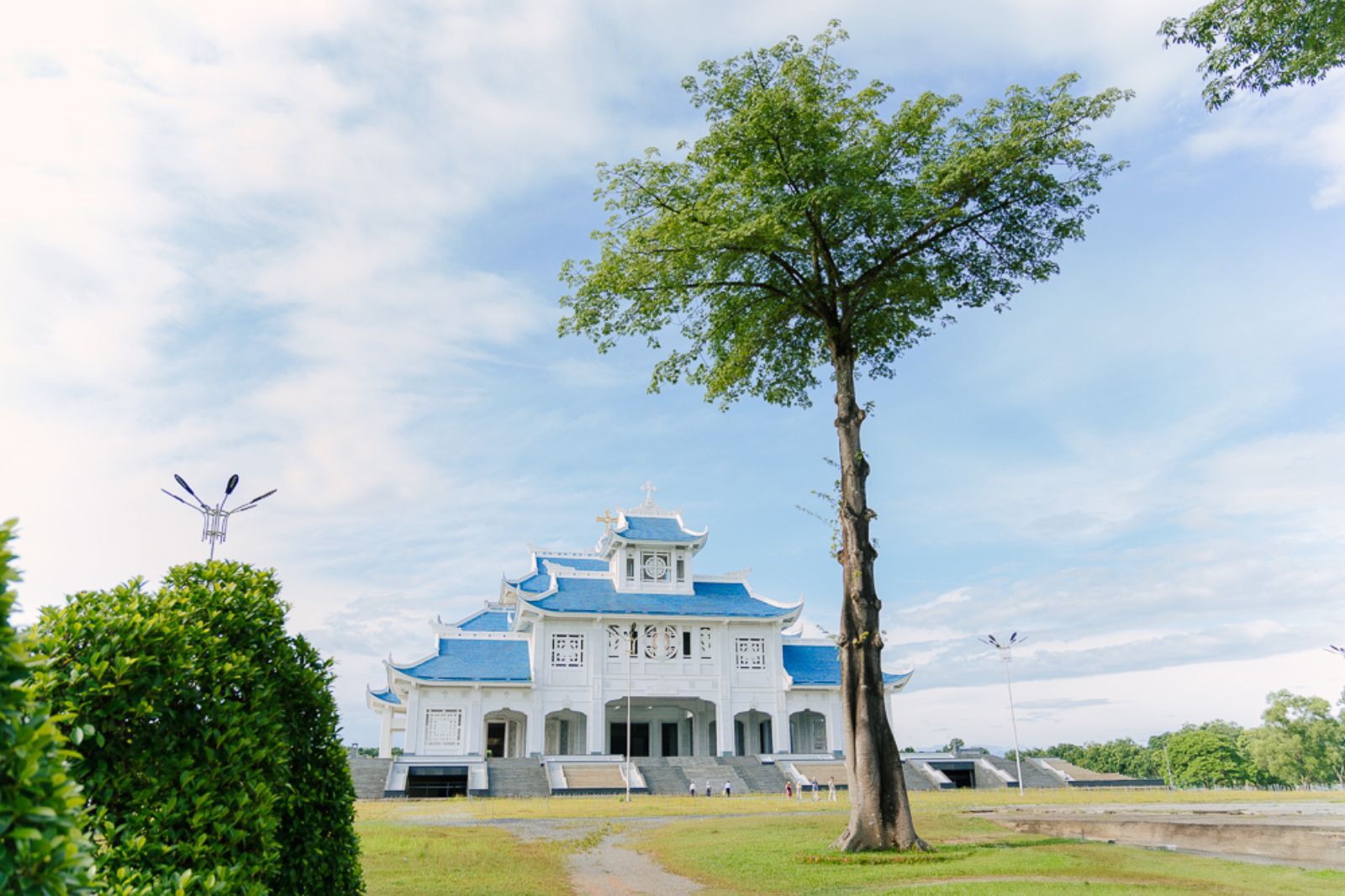
Unique Architecture of the Basilica of Our Lady of La Vang - Quang Tri
Central
Quang Tri
La Vang Holy Land
Sovaba.travel
Updated at: 24/09/2026
1. History of the Basilica of Our Lady of La Vang
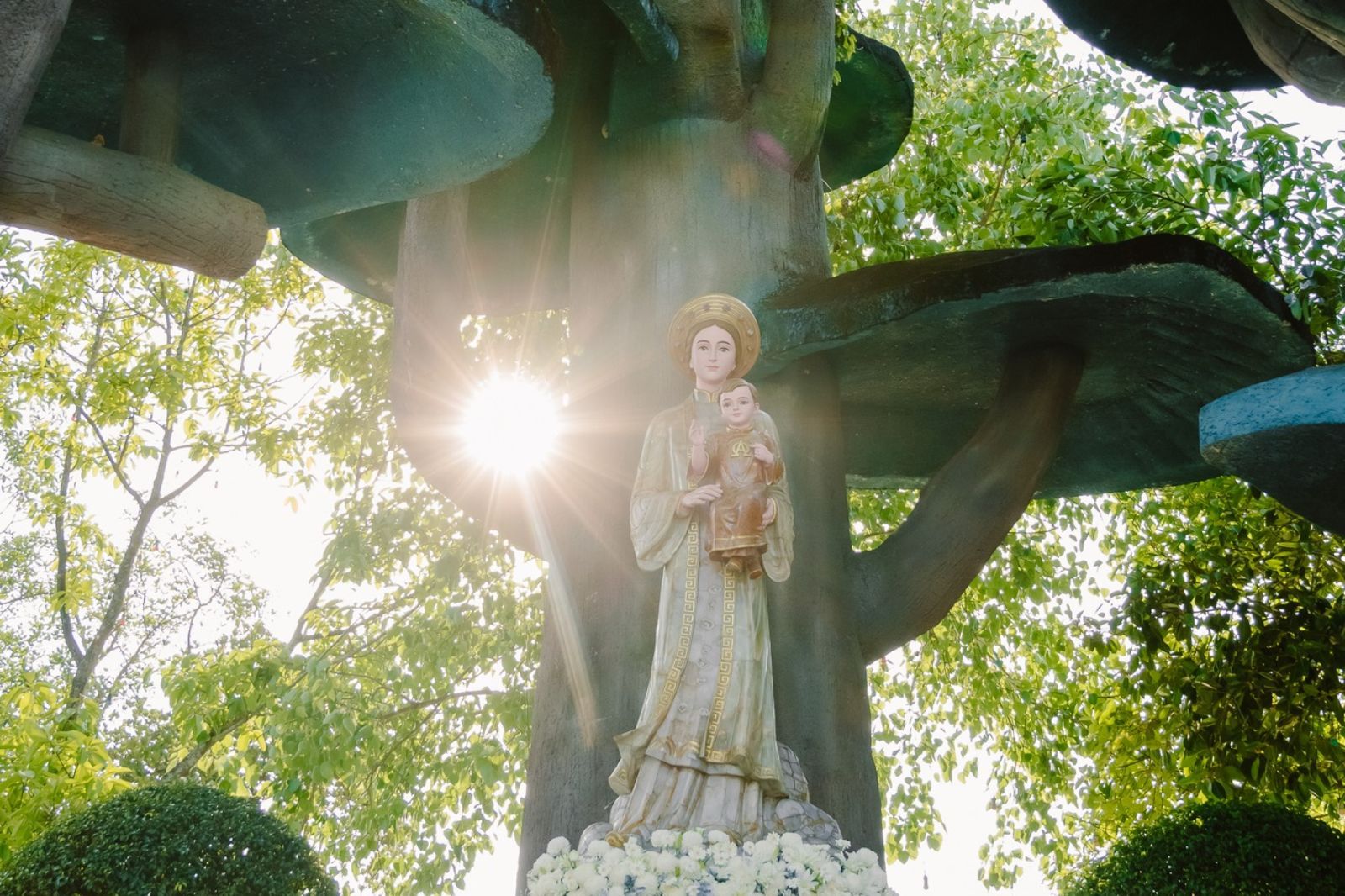
Before diving into the architecture, let's explore the historical background of La Vang to better understand the value of this work. According to records from the Archdiocese of Hue, in 1798, during the persecution of Catholics under King Canh Thinh (Tay Son dynasty), many faithful fled to the deserted jungle of La Vang to take refuge. Here, under an ancient banyan tree, the Virgin Mary is said to have appeared, comforting and instructing the people to gather 'la vang' leaves to cure illnesses. This event transformed La Vang into a sacred holy land, attracting millions of believers.
In 1961, Pope John XXIII elevated La Vang Church to a Minor Basilica through the Decree Magnonos, affirming the historical and spiritual importance of this site. The current structure, which began reconstruction in 2012, is one of the largest projects of the Catholic Church in Vietnam, covering an area of 13,464 m² with a capacity of up to 5,000 people.
Photo: Statue of Our Lady of La Vang
2. Overall Architectural Features
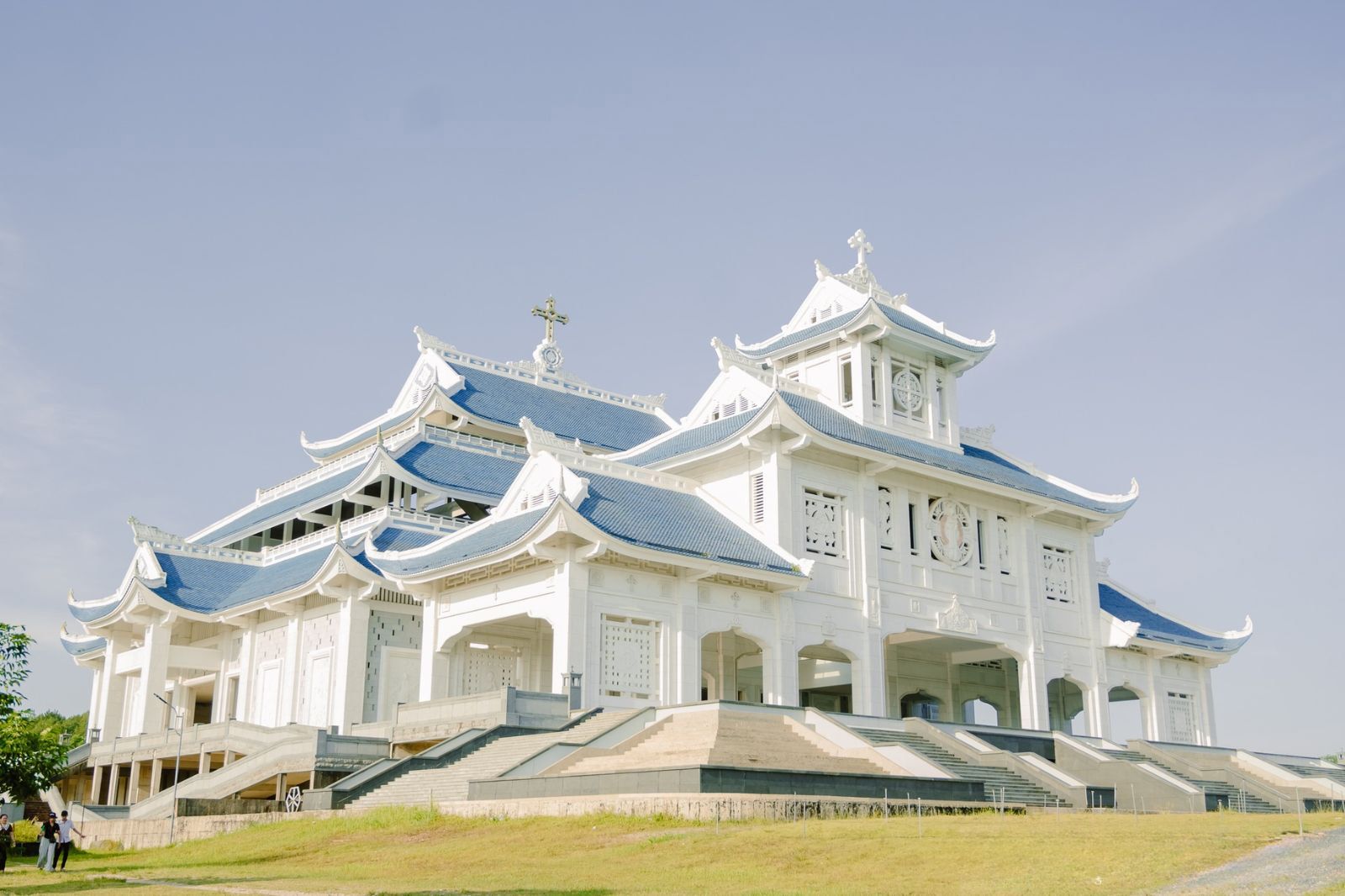
The architecture of the Basilica of Our Lady of La Vang stands out with its purely Vietnamese style, distinct from many Western Gothic or Romanesque churches. The design is inspired by traditional Vietnamese folk houses and communal houses, bringing a sense of intimacy, grace, and harmony with nature.
Highlights:
Blue glazed tile roof: Soft, multi-tiered curved roofs evoking traditional communal house roofs. The blue-green hue harmonizes with the hot climate of Quang Tri, creating a cool and sacred atmosphere.
Three main block structure: Concentric design, emphasizing community and compassion.
Unique decorative motifs: 'La vang' leaves and flowers (symbols of the apparition site), rice, grapes, roses, phoenixes, flames… – all derived from Vietnamese culture and agriculture, depicting God's grace through the bounty of the homeland.
Integration with nature: Green space, streams, baptismal well, lawns, and pathways for the elderly and disabled. The structure utilizes natural materials from various regions, harvests rainwater and solar energy, demonstrating sustainability and eco-friendliness.
A seating capacity of up to 5,000 (3,500 on the ground floor + 1,500 on the mezzanine), suitable for major pilgrimage ceremonies.
Photo: Spiritual architectural work Photo: Shrine of Our Lady
3. Interior and Exquisite Artistic Details
Inside the Basilica of Our Lady of La Vang, the modernized Vietnamese spirit continues to be displayed. The main color palette of blue, grayish-white, and green brings freshness and tranquility. The interior harmoniously blends Eastern and Western elements within a spacious and airy setting.
Highlights:
The main altar and Catholic symbols are set within a traditional architectural context.
Aisles, landscape features, and intricately carved details.
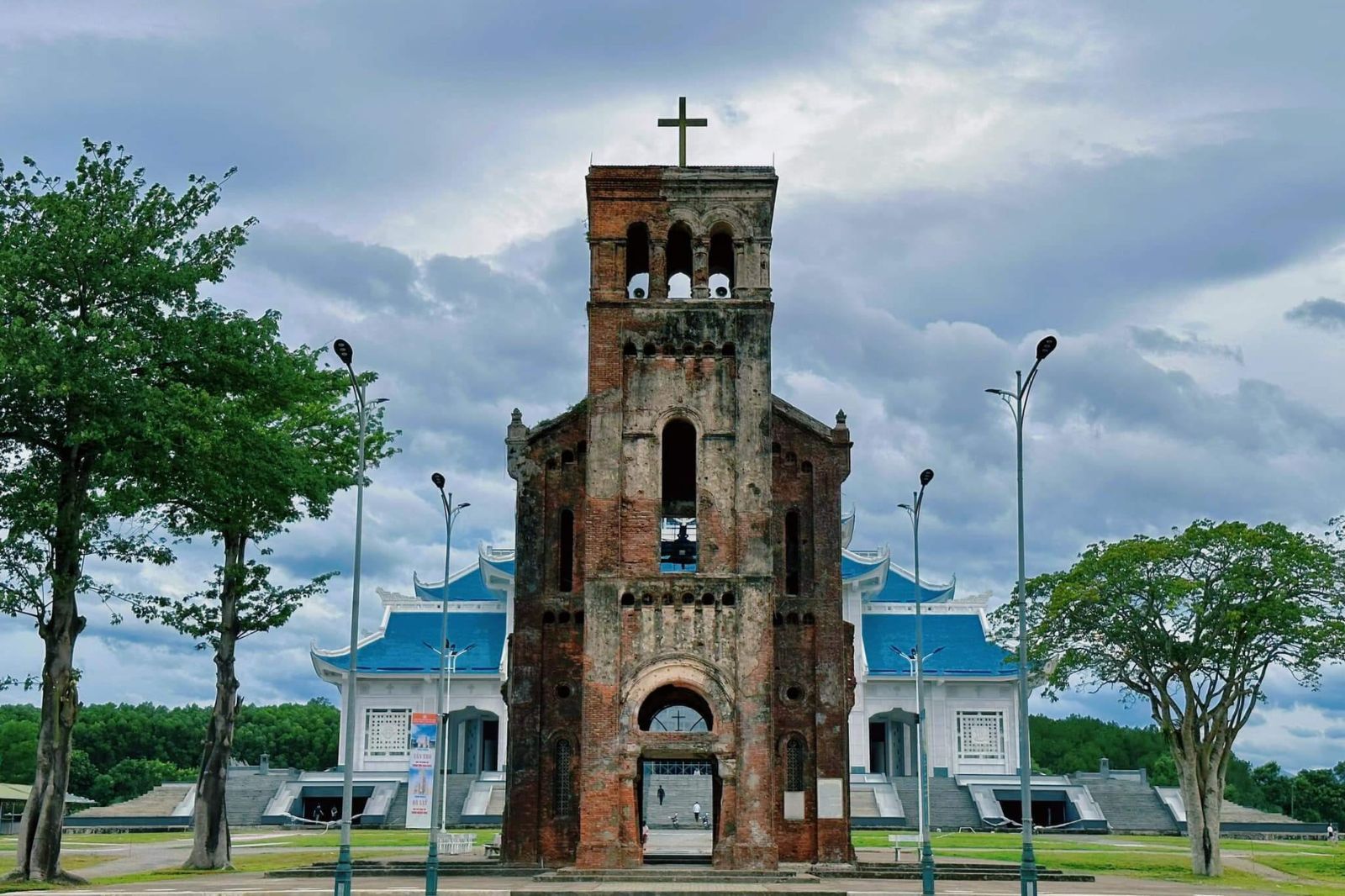
Connection with the ancient bell tower ruin (the remnant of the old church) – a historical symbol and a testament to the enduring strength of faith.
The Divine Mercy Square in front has a capacity of tens of thousands of people, along with a large grandstand, creating a harmonious architectural complex.
Photo: Ancient bell tower
4. The Square and Auxiliary Structures
In addition to the Basilica, the La Vang area includes various auxiliary structures, forming a harmonious architectural complex:
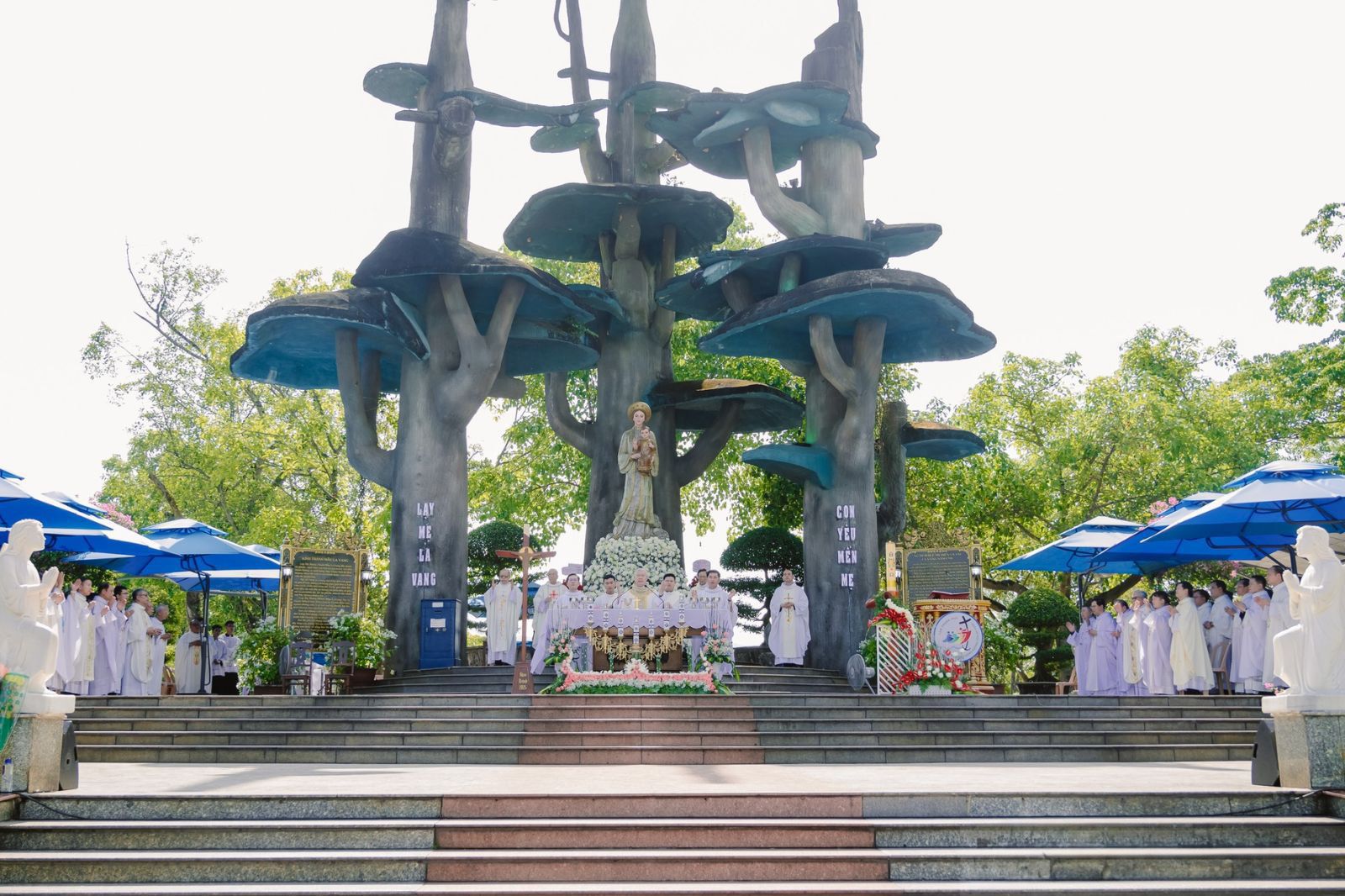
Divine Mercy Square: Located in front of the basilica, the 48m-wide square is the venue for major events, such as the La Vang Congress (August 13–15 annually).
Rosary Avenue: Featuring 20 sculptures depicting the 20 Mysteries of the Rosary, this avenue is an artistic highlight connecting the pilgrimage area to the basilica.
Our Lady's Well: A place where believers drink water to show respect, with faith in the healing properties of the well water.
Reconciliation House and Marian Center: These facilities serve prayer, study, and exhibitions of evidence of miracles.
The auxiliary structures surrounding the square not only help complete the space but also create a harmonious overall whole, enhancing aesthetic value and community utility, making it an ideal destination for everyone.
Photo: La Vang Holy Land today
Every year, especially on the Feast of the Assumption of Mary (August 15), millions of people from all over flock to La Vang to pray and admire the beauty of the basilica. This is not only a destination for Catholics but also attracts visitors from all directions, regardless of religion, due to its peaceful atmosphere and unique architectural beauty.
The Basilica of Our Lady of La Vang is an architectural masterpiece, a convergence of Vietnamese culture and Catholic faith. With its curved tile roofs, ancient bell tower, and sacred space, this work is not only a pilgrimage center but also a symbol of national pride. If you are looking for a spiritual journey that offers spiritual depth as well as architectural and historical value, the La Vang tour will be an option worth considering. The journey with Sovaba Travel includes knowledgeable guides, convenient transportation, and a thoughtfully designed, gentle itinerary suitable for both the elderly and families with young children. A trip not just to arrive, but to pause and gain a deeper understanding of a part of the soul of the Central region.