Unraveling the Mysteries Inside Chua Cau: The Ancient Subjugation Site of the Cu Monster

Central

Da Nang

Hoi An

Sovaba.travel

Updated at: 24/09/2026

1. The History of Chùa Cầu

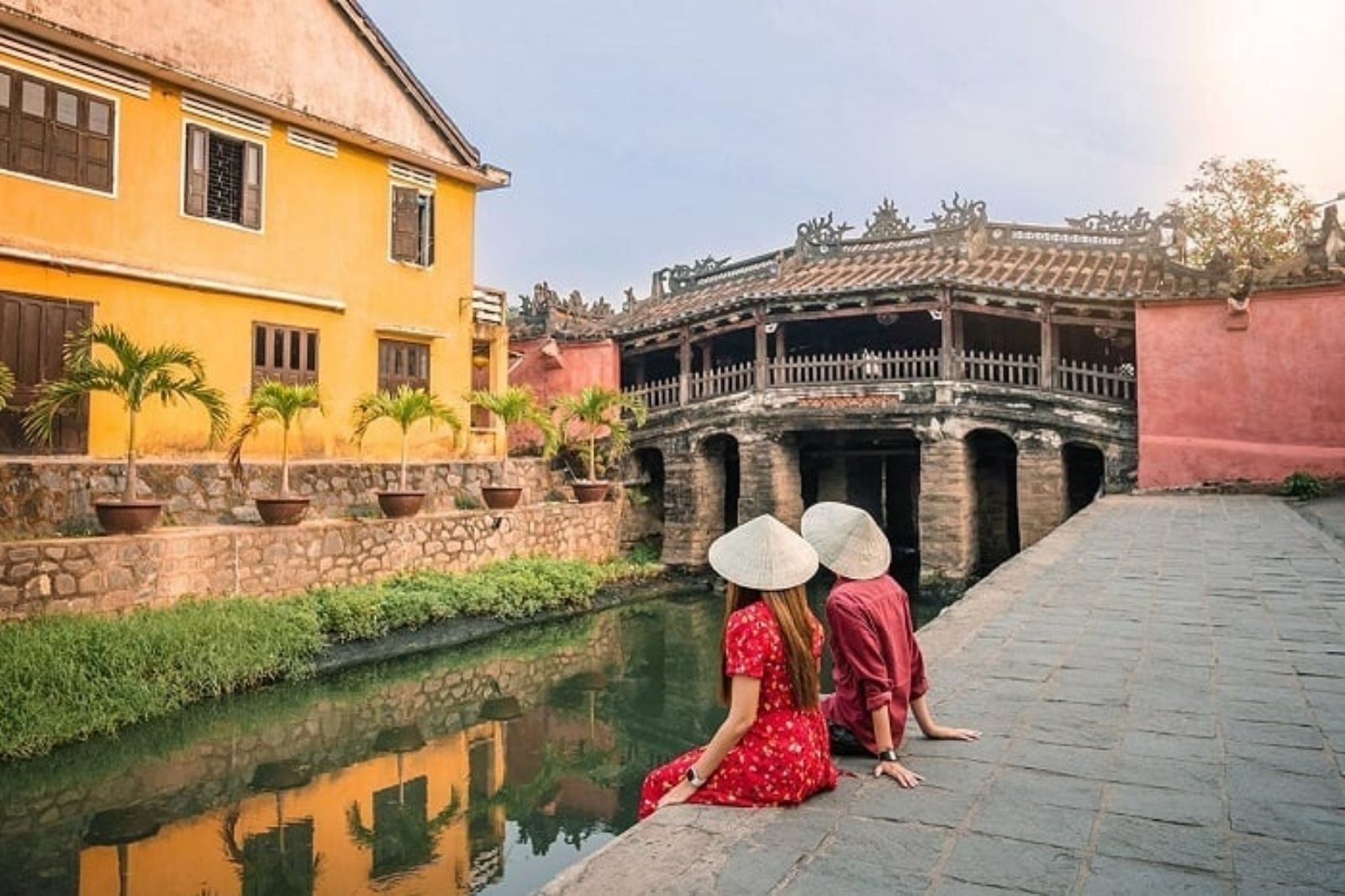
Chua Cau (ancient name: Lai Vien Kieu, also known as the Japanese Covered Bridge) is located at the intersection connecting Tran Phu and Nguyen Thi Minh Khai streets, spanning a small branch of the Hoai River in the heart of Hoi An. This is a special architectural work associated with the history of the formation and development of the ancient Faifo international trading port. According to reliable historical documents, the bridge was built by the Japanese community in the late 16th – early 17th century (before 1617, possibly around 1593) to connect the Japanese resident quarter with the Chinese community area, serving trade activities.

In 1633, when Japan implemented the "Sakoku" (Closed Country) policy, the Japanese gradually returned home; the Minh Huong community (permanently settled Chinese immigrants) took over and restored the structure. In 1653, Trung Luong Hau Khong Thien Nhu proposed adding a temple section dedicated to Bac De Tran Vu on top of the bridge, creating the "thuong gia ha kieu" architectural model – a place of worship above, a bridge for passage below.
Chua Cau built by the Japanese in the ancient Hoi An trading port
Photo: Chua Cau built by the Japanese in the ancient Hoi An trading port 

In 1719, Lord Nguyen Phuc Chu bestowed a horizontal lacquered board engraved with three characters "Lai Vien Kieu", taking inspiration from a line in the Analects: "Is it not delightful to have friends coming from distant quarters?", demonstrating the open spirit and international exchanges of Hoi An trading port at that time. The harmonious combination of Japanese construction techniques, Minh Huong spiritual elements, and Vietnamese architectural style created a work of both practical value and deep spirituality. Spanning over 400 years and undergoing multiple restorations after floods, Chua Cau still stands strong as an enduring symbol of Hoi An Ancient Town.
2. Decoding the Legend of Subduing the 'Cu' Monster

This is the part that makes Chua Cau most mysterious and intriguing. The legend is shared among Vietnamese, Japanese, and Chinese communities. In ancient times, Hoi An was a large island rising out of the East Sea. Underground lived the Cu monster (known as Namazu/Mamazu by the Japanese – a giant catfish; and Cau Long by the Chinese). This monster had:

  • Its head located in India (or Japan according to some versions),
  • Its body stretching across Hoi An,
  • Its tail in Japan (or vice versa).

Whenever the Cu monster "woke up" (wriggled or thrashed its tail), Hoi An suffered severe riverbank erosion and catastrophic floods, while Japan experienced earthquakes and volcanic eruptions. The Japanese discovered the spine of the Cu monster beneath the Hoai River and summoned feng shui masters to assess the land. The solution: cast a giant golden sword to pierce straight into the spine acupoint of the Cu monster at the present location, then construct a covered bridge above to "press down" and invoke deities to guard it.

The Minh Huong people later added a shrine for Bac De Tran Vu (Xuantian Shangdi) – the Chinese deity specializing in subduing sea monsters, storms, and protecting residents. Since then, Chua Cau became a dual "sacred sword": both physical (bridge pressing down) and spiritual (god guarding).

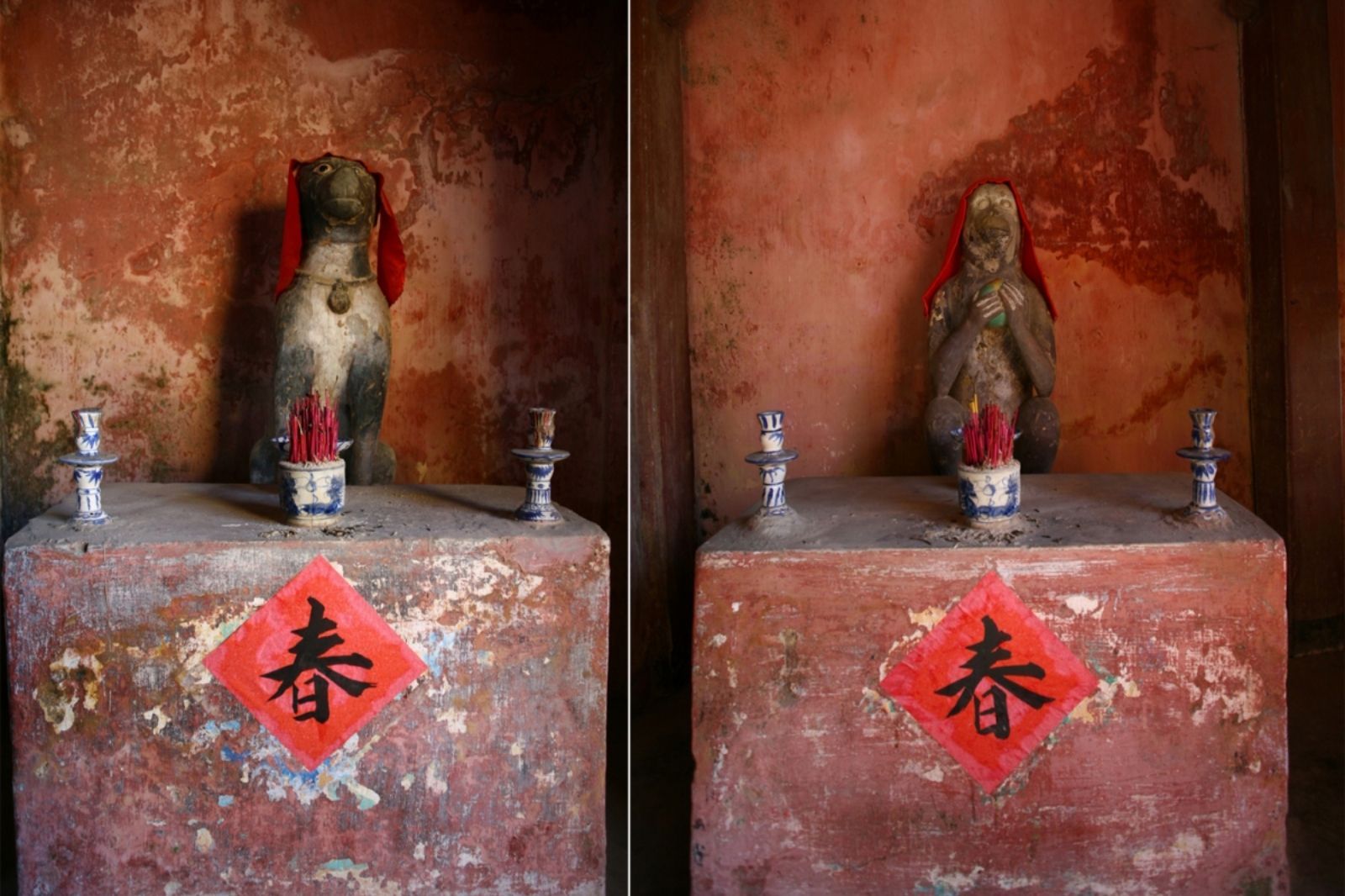
To enhance the subduing power, the ancients placed two special sacred animals:

  • West side (towards Nguyen Thi Minh Khai): statue of a monkey (Sacred Monkey, Divine Monkey) – symbol of intelligence and warding off evil.
  • East side (towards Tran Phu): statue of a dog (Heavenly Dog, Sacred Dog) – symbol of protection and expelling evil spirits.

Legend has it that construction began in the Year of the Monkey and was completed in the Year of the Dog, which is why these two sacred animals were chosen. The couplet carved on the statues: "Thien cau song tinh an can tho / Tu vi luong tinh dinh khon than" further confirms their role in safeguarding heaven and earth. Although science today explains earthquakes through geology, this legend still reflects the ancient trading port residents' desire for peace against natural disasters.

Two sacred animal statues inside Chua Cau
Photo: Two sacred animal statues inside Chua Cau  

3. What's Inside Chùa Cầu?

Many visitors entering Chua Cau are often surprised to find that it does not worship the Buddha as its common name suggests, but is instead a place of worship steeped in folk beliefs and Taoist influences.

  • Central Main Hall: Jackfruit wood statue of Bac De Tran Vu (about 0.5m high, unpainted), standing majestically on a turtle entwined by a snake, holding a sword pointing down at the sea. The statue exudes a stern aura, subduing sea monsters.
  • Auxiliary Deities: Guan Yu, Guan Yin (according to some documents).
  • Golden horizontal plaque "Lai Vien Kieu": A precious relic bestowed by Lord Nguyen in 1719, still hanging intact.
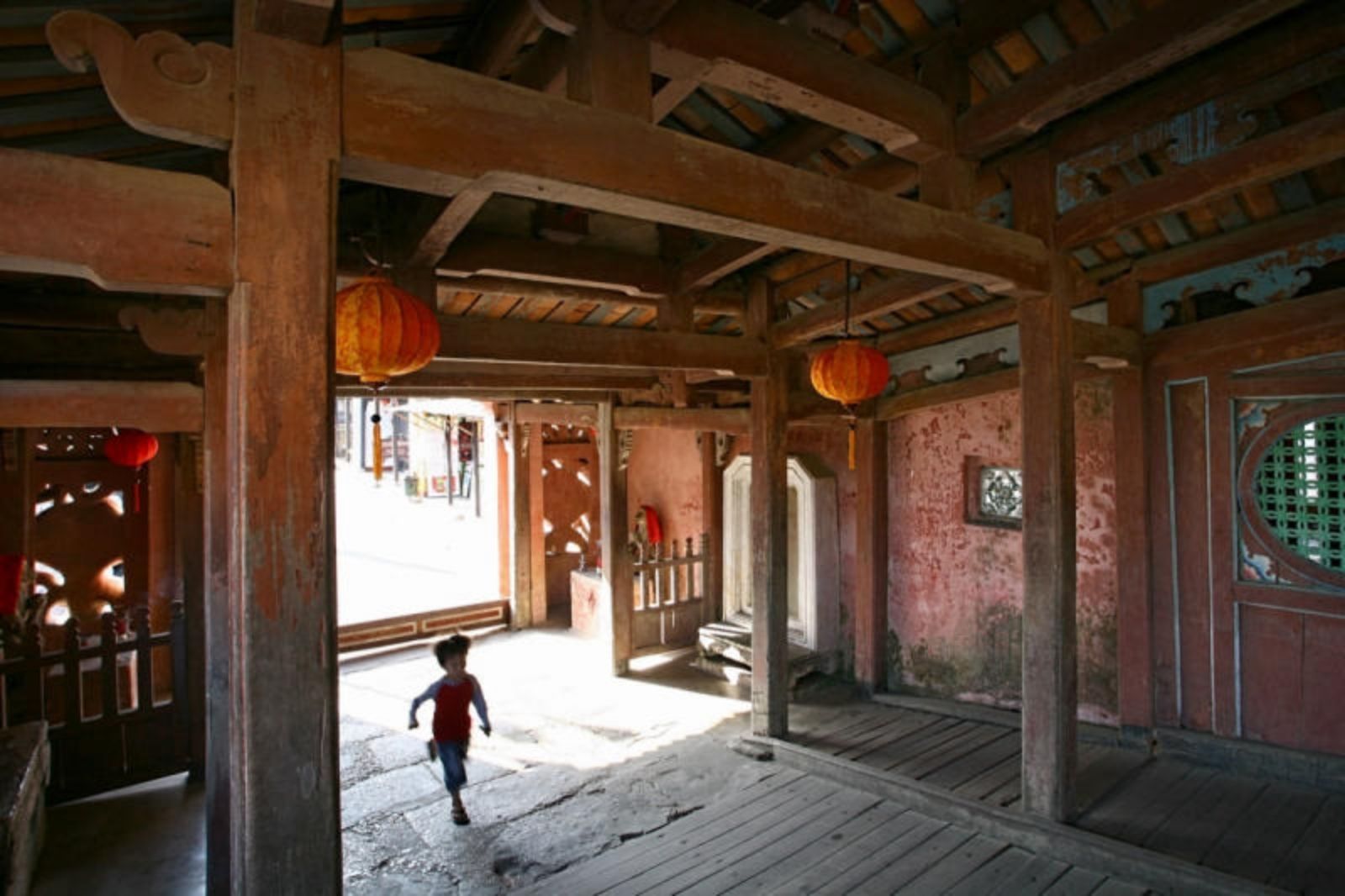
  • Compact yet solemn space: Soft light from tile roofs, the scent of agarwood incense, and the sound of water flowing beneath the bridge create an atmosphere both ancient and mystical.

Today, visitors here often burn incense to pray for peace, health, and smooth business, especially merchants or those whose livelihoods are closely connected to the riverways.

4. Cultural Significance & Feng Shui Lessons

Chua Cau is not only a 400-plus-year-old architectural monument, but also carries many cultural messages and profound lessons for contemporary life.

  • Symbol of cultural fusion: The structure is a vivid testimony to the spirit of harmony among Japanese, Chinese, and Vietnamese communities in ancient Hoi An port. This combination created a space rich in diverse identity yet unified in community spirit.
  • Feng shui lesson and life perspective: The story of subduing the sea monster reflects ancient residents' belief in living in harmony with nature. Instead of confrontation, they imparted wisdom, faith, and sincerity to resolve risks. This serves as a reminder of respect for the environment and balance in modern life.
  • Tourism value and heritage education: As one of the prominent symbols of Hoi An, Chua Cau not only attracts tourists to visit and take photos, but also plays an important role in educating younger generations about history, culture, and heritage preservation awareness.

With every flood season that passes, Hoi An locals still retell the folk story of the "angry Cu monster" as a deeply humanistic explanation. Though merely a legend, that belief reflects a profound connection between humans and nature, a spiritual value worthy of appreciation across centuries.

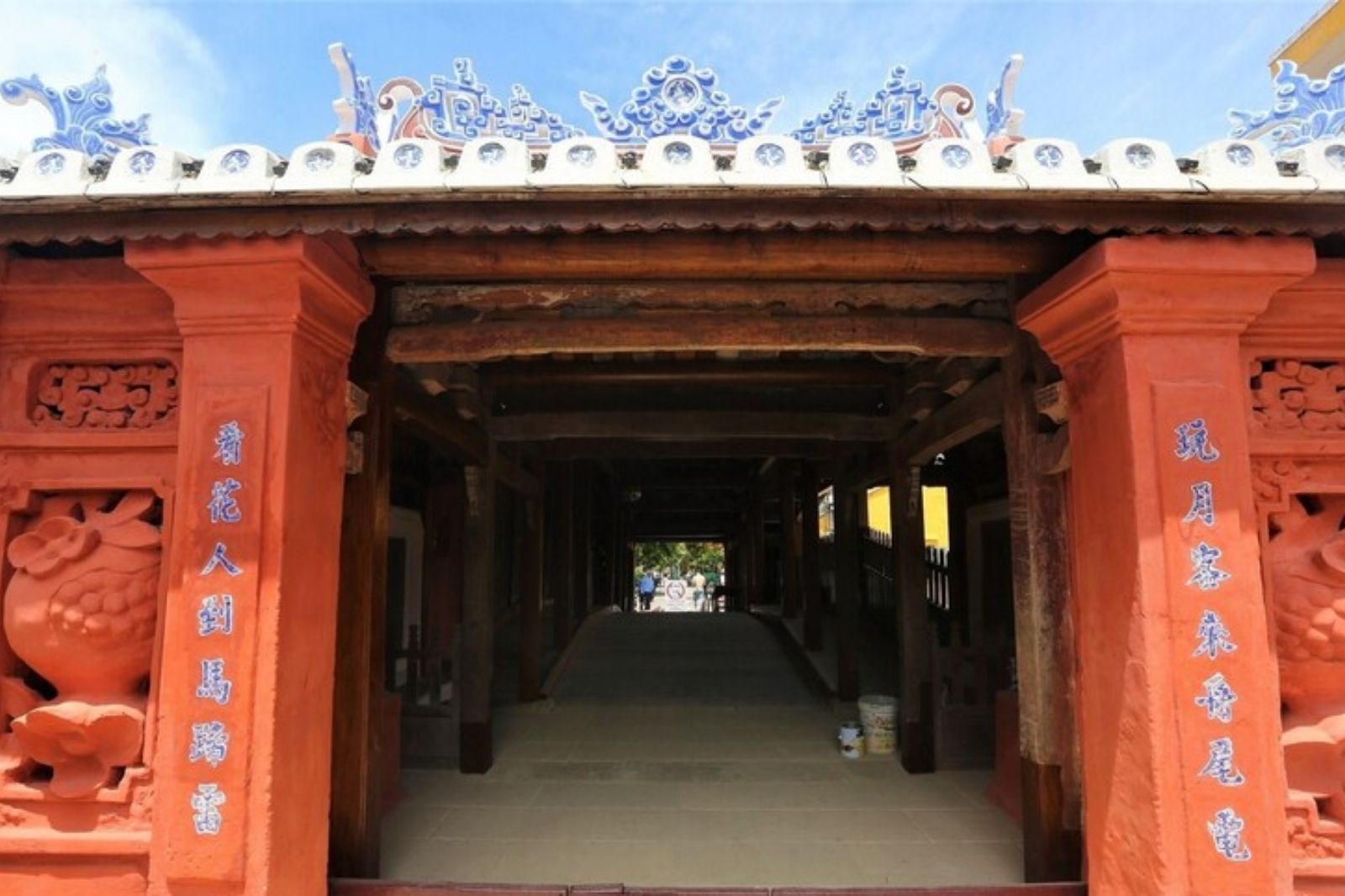
Chua Cau was built of wood with unique architecture
Photo: Chua Cau was built of wood with unique architecture 

5. Tips for Visiting Chùa Cầu Hoi An

To make your visit to Chua Cau complete and smooth, keep in mind these useful tips below.

  • Ideal time: You should visit early in the morning or late in the afternoon to avoid crowds and take advantage of soft natural light, suitable for sightseeing and photography.
  • Sightseeing ticket: Chua Cau is part of the Hoi An Ancient Town ticketed sightseeing site. 
  • Visiting etiquette: Do not touch the monkey and dog statues (to preserve their spiritual energy). Dress politely when entering the shrine. Combine your visit with ancient houses, lanterns, and the Hoai River in the evening.

Careful preparation regarding timing and sightseeing tips will help you fully explore Chua Cau while contributing to preserving the ancient town's precious heritage value.

Tourists checking in with the icon of Chua Cau
Photo: Tourists checking in with the icon of Chua Cau  

Spanning over 400 years, Chua Cau remains an iconic symbol of Hoi An, deeply connected with the port's history and the spiritual life of local residents. Stories about subduing the Cu monster, though legendary in nature, contribute to explaining how ancients viewed and interacted with nature. Exploring the worship space and architectural values inside Chua Cau helps us better understand the cultural fusion among Japanese, Chinese, and Vietnamese as well as the spiritual significance of the structure. More importantly, it is a reminder of our responsibility to preserve heritage, so this symbol continues to be safeguarded and passed down to future generations.

Loading......

Featured destinations