Vinh Moc Tunnels: An Underground Miracle of Quang Tri People

Central

Quang Tri

Vinh Moc Tunnels

Sovaba.travel

Updated at: 02/10/2026

1. The History of Vinh Moc Tunnels

Vinh Moc Tunnels is a famous special national historical relic located in Vinh Moc village, Kim Thach commune, Vinh Linh district, Quang Tri province, Vietnam. Situated north of the Ben Hai River and Hien Luong Bridge, which served as the temporary boundary between North and South Vietnam during the Vietnam War, Vinh Moc was one of the areas subjected to the most fierce bombings.

Construction of Vinh Moc Tunnels began in 1965 and was basically completed in 1967, after which it continued to be reinforced and expanded. The construction was carried out entirely by human effort with primitive tools, demonstrating the people's resilient determination of "Not leaving an inch, not moving a millimeter".

Between 1965 and 1972, the US military launched a war of destruction by air and naval forces against the North, with the primary target being the Vinh Linh area. Hundreds of thousands of tons of bombs and shells rained down on this small piece of land, turning it into a "bomb crater". To preserve forces, maintain life and production, and at the same time serve the cause of providing supplies to the Southern battlefield, the army and people of Vinh Linh decided to dig a system of tunnels for shelter and combat. Vinh Moc Tunnels is the most typical project in the Vinh Linh tunnel village system.

Địa đạo Vịnh Mốc là di tích lịch sử quốc gia đặc biệt
Photo: Vinh Moc Tunnels is a special national historical relic  

2. The Miraculous Life Underground

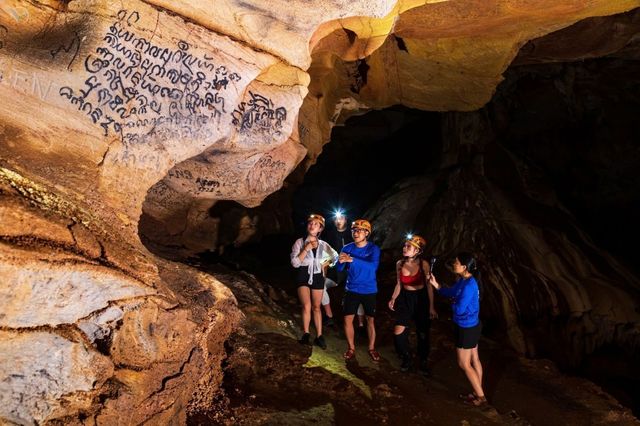
During the peak of the war, Vinh Moc Tunnels served as a living place and shelter for about 1,200 people, equivalent to 60 – 80 households. Underground, each small "apartment" measuring about 0.8m x 1.8m accommodated 2 – 4 people. Not only a place to avoid bombs and bullets, the tunnel system also recreated a true "underground village" with full spaces serving daily life such as living areas, study, meetings, and arts performances. Notably, 17 babies were born inside the tunnels – proof of the enduring vitality and resilient spirit of the Vinh Linh people during wartime.

Remarkably, throughout its operation, Vinh Moc Tunnels recorded no casualties caused by bombs or tunnel collapses, creating an extraordinary miracle amid the fierce war context, especially when many other tunnels in Vinh Linh were collapsed causing heavy casualties. Besides its role as a safe shelter, the tunnels were also considered a vital logistical "bloodline", contributing to the transportation and supply of thousands of tons of food and weapons for the Southern battlefield during the fierce war years.

Lang-ham-anh-hung-noi-sinh-song-cua-hang-chuc-nguoi-thoi-ky-chien-tranh-khoc-liet.jpg
Photo: "Heroic Tunnel Village" - Living place of dozens of people during the fierce war period

3. Historical-Cultural Values and Modern-Day Significance

In 1976, Vinh Moc Tunnels was recognized as a National Historical and Cultural Relic. By 2014, it was further ranked as a Special National Relic along with the Vinh Linh tunnel village system, confirming the historical value and special significance of the construction in the flow of national history. Not only a unique military project, Vinh Moc Tunnels is also an exemplary symbol of patriotism, creative willpower, and the enduring vitality of the Vietnamese people during the fierce war. The tunnels deep underground today still preserve intact the marks of a heroic historical period, where people overcame circumstances to protect life and faith in a peaceful day.

Today, Vinh Moc Tunnels is not only an important historical destination of Quang Tri but also carries profound educational value, helping the younger generation better understand the sacrifices, resilient spirit, and desire for peace of the Vietnamese nation.

Nhung-luu-y-quan-trong-khi-tham-quan-dia-dao-vinh-moc.jpg
Photo: Important notes when visiting Vinh Moc Tunnels

4. Guide to Visiting Vinh Moc Tunnels

Location: About 38-40km north of Dong Ha, near Cua Tung beach (about 7km). Easily combined with Hien Luong Bridge, Quang Tri Ancient Citadel, Con Co Island.

Ideal time: Dry season (April-August) or winter (December-March) for comfort. The tunnels are open from 7:00 to 17:00 daily. Entrance fee is about 40,000 VND/person.

Tips:

  • Have a tour guide leading the group (very useful for deep historical understanding).
  • Bring drinking water, wear comfortable clothes, wear sports shoes (tunnels are narrow and humid).
  • Combine with visiting a small museum displaying artifacts, documentary photos, and walking along the coast.
  • Visiting time: 1-2 hours.

The tunnels are naturally cool thanks to the ventilation design, but some sections are narrow and low, so the elderly and children should take note.

Ket-cau-dia-dao-voi-nhieu-gian-phong-khac-nhau.jpg
Photo: Structure of the tunnels with many different rooms

Vinh Moc Tunnels is not only a unique architectural structure but also a vivid history book about a tragic yet heroic period of the nation. Every step inside the tunnels deepens pride in the resilient will and indomitable spirit of ancestors. This will surely be an unforgettable historical travel experience for anyone. 

To make your journey to fully explore the “underground miracle” and extend to neighboring historical relics in Quang Tri more convenient and meaningful, let Sovaba Travel accompany you on Vinh Moc Tunnels tours. We design optimal itineraries, connecting Vinh Moc Tunnels with key destinations such as Quang Tri Ancient Citadel, Truong Son Cemetery, Ben Hai River – Hien Luong Bridge... Sovaba Travel is committed to providing a safe – comfortable – profound experience, helping you gain a deeper understanding of the heroic history of this land. 

Featured destinations