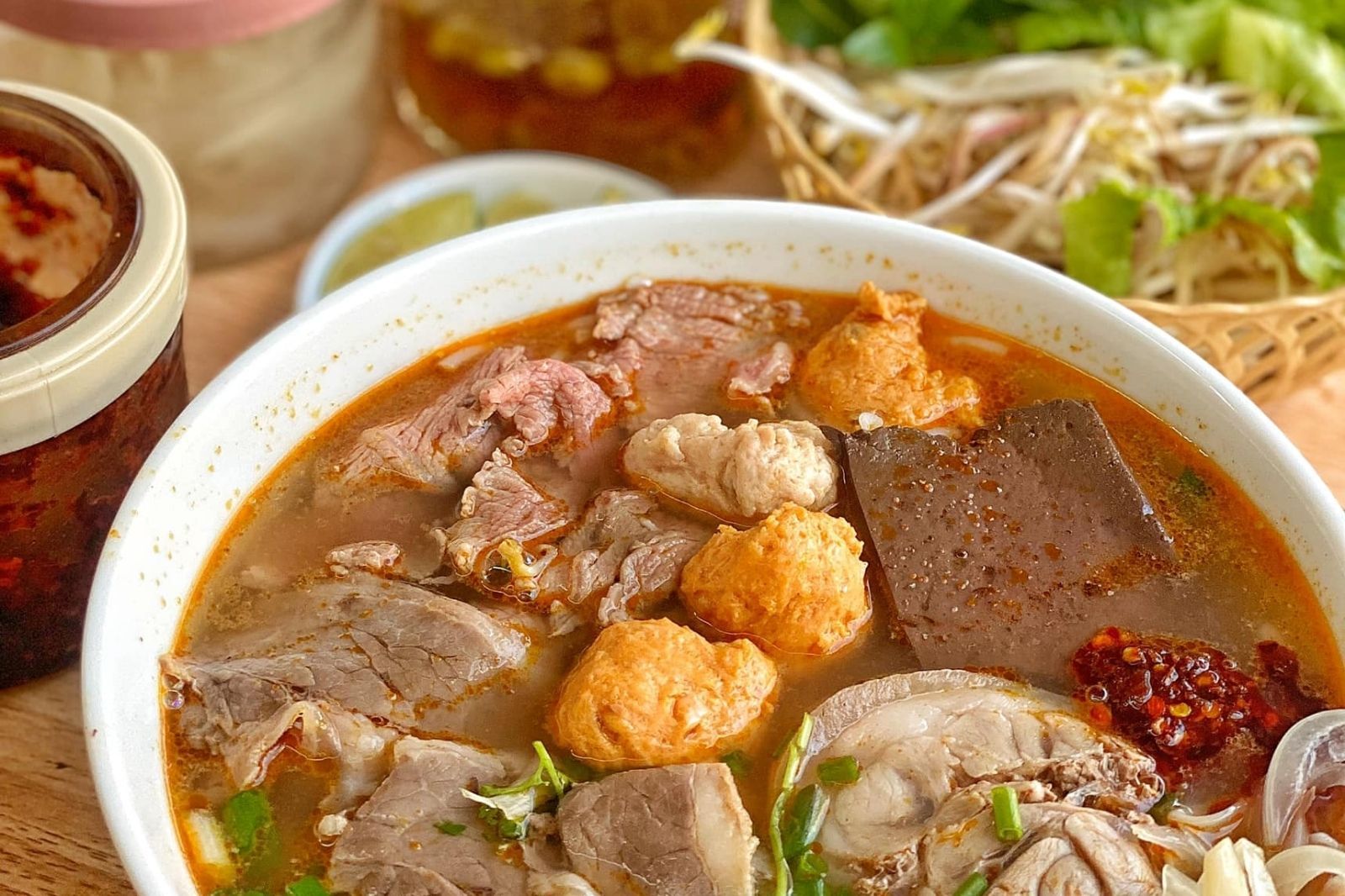
Hue beef noodle soup is not only famous for its rich flavor but also carries a long story about the life and culture of the ancient citadel. The dish is believed to have appeared in the late 16th – early 17th centuries, associated with the Thuan Hoa region under the reign of Lord Nguyen Hoang. According to Hue culinary artisan Mai Thi Tra, beef noodle soup may have originated from beef soup served in village rituals, which was later combined with rice noodles instead of sticky rice. Over time, the dish was gradually perfected with pork hock, congealed blood, crab meat patties, and a broth made from beef, lemongrass, and fermented shrimp paste.
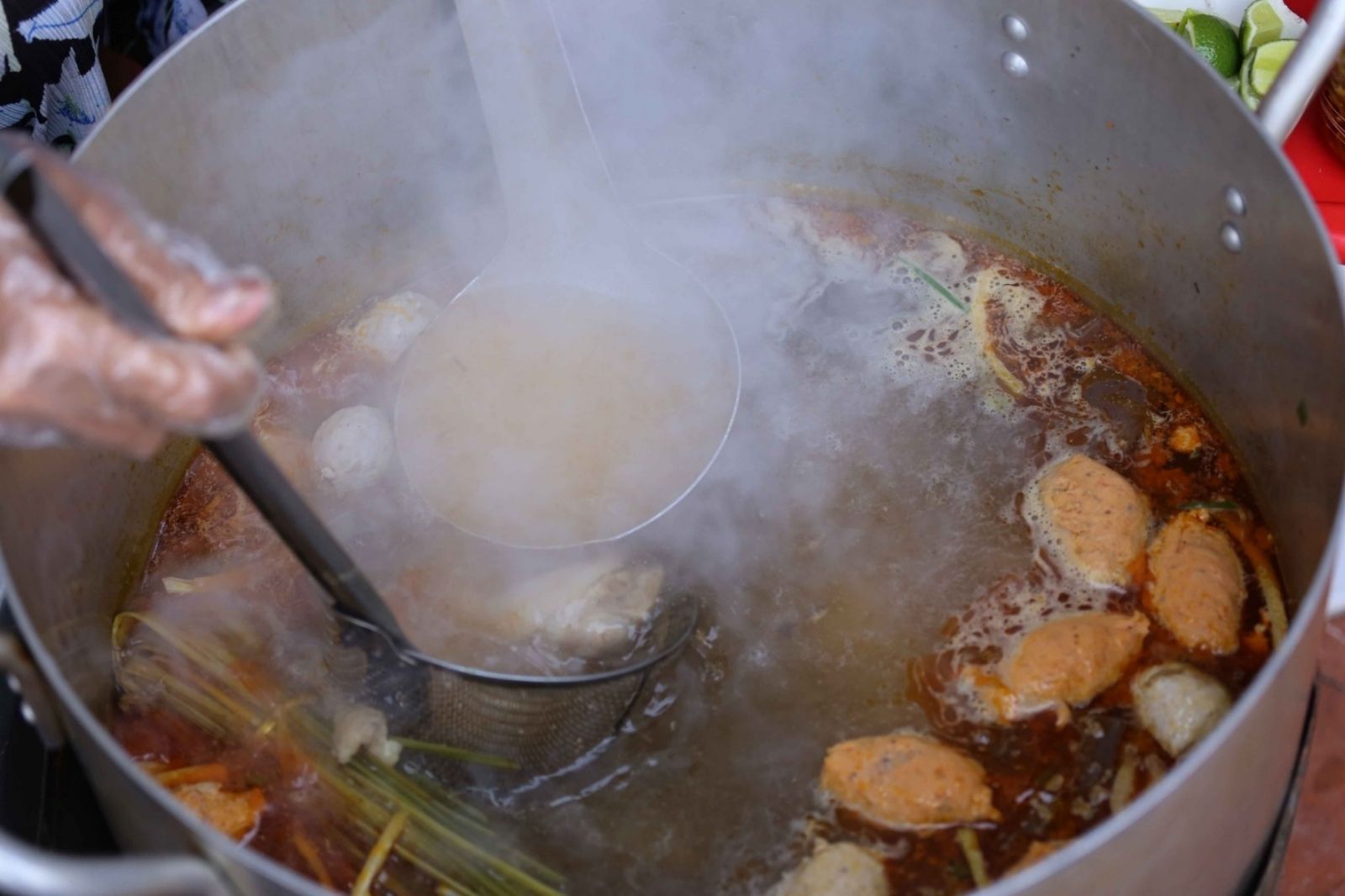
Another folklore tells the story of "Co Bun" (Miss Noodle), who is said to have brought the craft of noodle-making to Van Cu village. For over 400 years, this place has been renowned for its white, pliable rice noodles with just the right chewiness – an element that contributes to an authentic bowl of Hue beef noodle soup. From a dish primarily centered on beef, the soup gradually grew richer over time. The savory broth, vibrant aroma of lemongrass, a hint of chili heat, the distinct taste of fermented shrimp paste, and chewy noodles create a unique whole that is hard to mistake for any other noodle dish. Notably, traditional knowledge related to the craft of making Hue beef noodle soup has been recognized in the national Intangible Cultural Heritage system, showing that this dish is not merely a local specialty but also part of the cultural memory of the ancient capital region.
The journey of Hue beef noodle soup is also tied to the migration history of Vietnamese people. As Hue natives migrated to Saigon, Hanoi, or even abroad, they brought this recipe along, adapting it to suit local tastes. However, the original version in Hue still retains its fiery, rich flavor, distinct from the sweeter Southern variations or the milder Northern ones.