Vu Lam Royal Palace: Historical Relic Site Associated with the Tran Dynasty
Northern
Ninh Binh
Trang An Heritage
Sovaba.travel
Updated at: 28/08/2026
1. What is Vu Lam Imperial Palace?
Vu Lam Palace is located in Phuong Hung and An Lam communes, Nam Sach district, Hai Duong province, about 12km northeast of Hai Duong city center. This area belongs to the Thai Binh River delta, which in ancient times was a vast riverbank area with an intricate network of rivers and streams, highly favorable for naval training.
According to official historical records:
In 1252, King Tran Thai Tong established the palace here with the initial name “Vu Lam” (martial forest).
During the reigns of Tran Nhan Tong and Tran Anh Tong, the palace was expanded and became a major base for training naval forces and imperial guards.
Notably, before the second (1285) and third (1287-1288) resistance wars against the Mongol-Yuan invaders, Tran Hung Dao directly commanded the training of soldiers at Vu Lam.
Therefore, Vu Lam was not only a temporary palace for kings but also the most important military training camp of the Tran Dynasty.
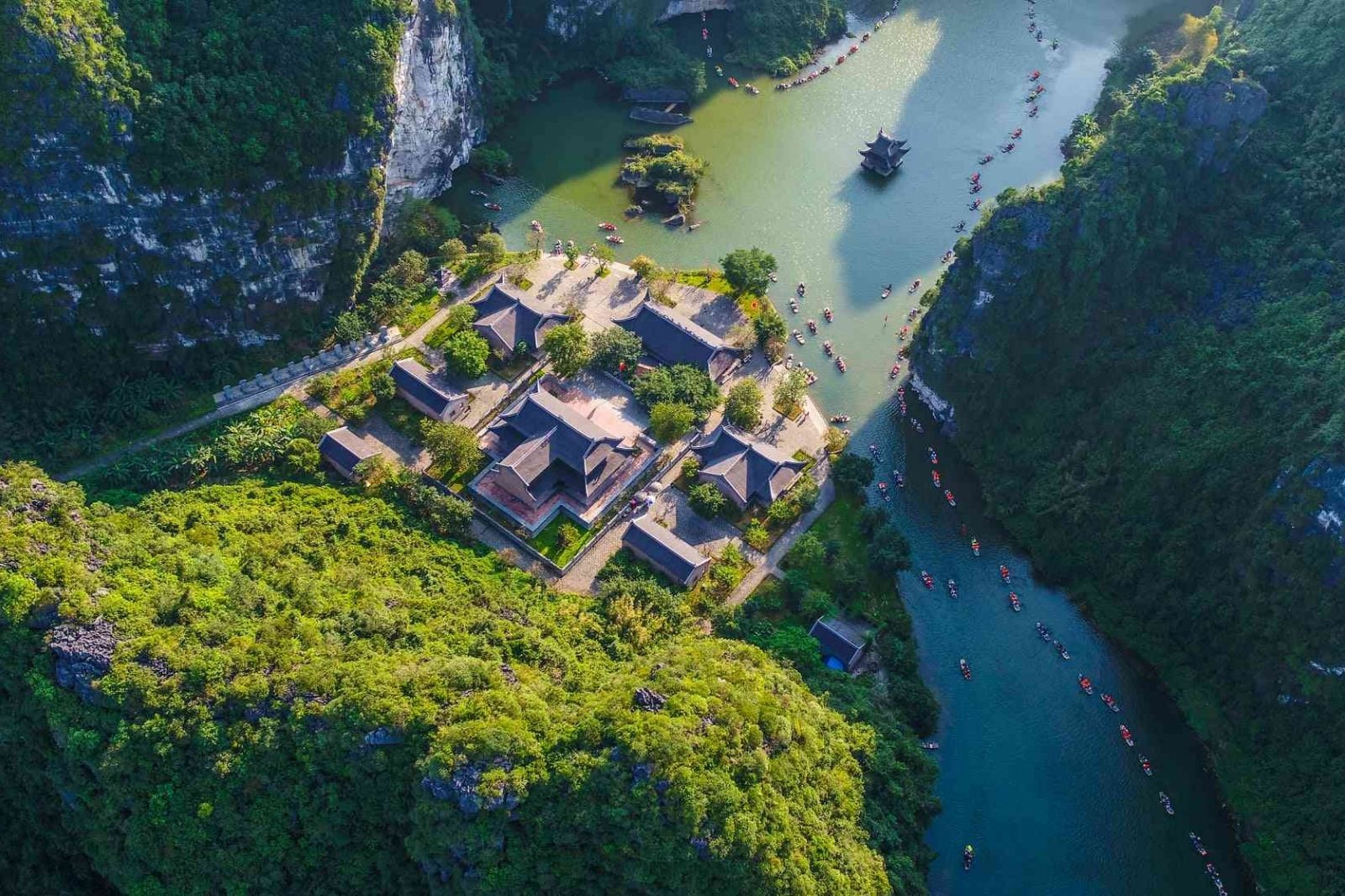
Photo: Vu Lam Palace was a place where naval forces were frequently trained
2. The role of Vu Lam Imperial Palace in the three resistance wars against the Mongol invaders
To fully understand the historical value of Vu Lam Palace, one cannot overlook its vital role during the three resistance wars against the Mongol-Yuan invaders. From a landscape hidden amidst limestone mountains, Vu Lam became a strategic base, a gathering place for the military elite of the Tran Dynasty, and a crucial link in Dai Viet's defensive-counteroffensive tactics. The events that took place here demonstrate the vision of the Tran kings, while revealing how this dynasty leveraged the terrain of Trang An to achieve three resounding victories in national history.
First Resistance War (1258): Although not heavily mentioned in history books, this was when construction of the palace began, serving as a troop stationing area when Yuan forces invaded Thang Long.
Second Resistance War (1285): After Toghon captured Thang Long, Tran Nhan Tong and Tran Quang Khai retreated to the Thanh Hoa – Ninh Binh region, while an important section of the court and navy was ordered to assemble at Vu Lam to protect the northeast flank.
Third Resistance War (1287-1288) – Decisive Role: This was the period when Vu Lam fulfilled its role to the maximum:
Serving as the staging and training ground for the Bach Dang naval forces before moving to Van Don to coordinate with Tran Khanh Du in destroying Zhang Wenhu's supply fleet.
Serving as an extremely vital logistical base, helping the Tran Dynasty execute the "scorched earth" strategy in Thang Long.
Many historians believe that it was at Vu Lam that Tran Hung Dao's Proclamation to the Officers and Soldiers (Hich Tuong Si) was conveyed to generals prior to deployment.
Looking back, the role of Vu Lam Palace in the three resistance wars was not only tied to military events, but also reflected the sharp strategic mindset and spirit of unity of the Tran Dynasty.
3. Current status of the Vu Lam Imperial Palace relic site today
The relic site currently covers an area of about 30 hectares, recognized as a National Historical Relic in 1992 and a Special National Relic in 2014.
Main remaining structures and areas:
Tran Hung Dao Temple (rebuilt in 2002)
Ancient martial arts training ground – now a wide field and several elevated mounds
Temple dedicated to Tran Dynasty kings and meritorious officials
Old palace foundation area, partially excavated, revealing traces of pillar foundations and Tran Dynasty paving tiles
Stone stele “Vu Lam Palace” composed by Doctor Vu Duy Doan in 1750
Regrettably, over centuries, most of the wooden architecture has been completely destroyed, leaving only foundation traces and place names.
Photo: Tourists taking photos with the relic
4. Tips for visiting Vu Lam Imperial Palace
To make your visit to Vu Lam Palace complete and comfortable, visitors should prepare in advance regarding timing, itinerary, and transportation. The following tips will help ensure a smooth journey, allowing you to discover the historical depth while enjoying the peaceful beauty of Trang An.
Ideal Time to Visit
1st – 3rd lunar months: The weather is cool and the landscape is fresh. This is also when the Vu Lam Temple Festival takes place (15th–17th of the 1st lunar month), bringing a distinctive cultural and spiritual atmosphere of the ancient capital region.
8th lunar month: The death anniversary of Saint Tran (20th day of the 8th lunar month) takes place, attracting large numbers of visitors offering incense and participating in traditional activities.
How to Travel from Hanoi to Vu Lam Palace
Distance: approximately 70 km.
Motorbike or car: From Hanoi, take the Hanoi – Hai Duong Highway, then turn onto Old National Route 5, continue to Nam Sach town, and ask for directions to An Lam or Phuong Hung commune. This is a relatively easy route to travel, convenient for both groups of friends and families.
Bus: You can catch the Hanoi – Chi Linh or Hanoi – Pha Lai route, get off at the Nam Sach three-way intersection, and then take a motorbike taxi or taxi to the relic site.
These notes will help you be more proactive during your exploration while giving you more time to experience the scenery and rich culture of this land associated with the Tran Dynasty.
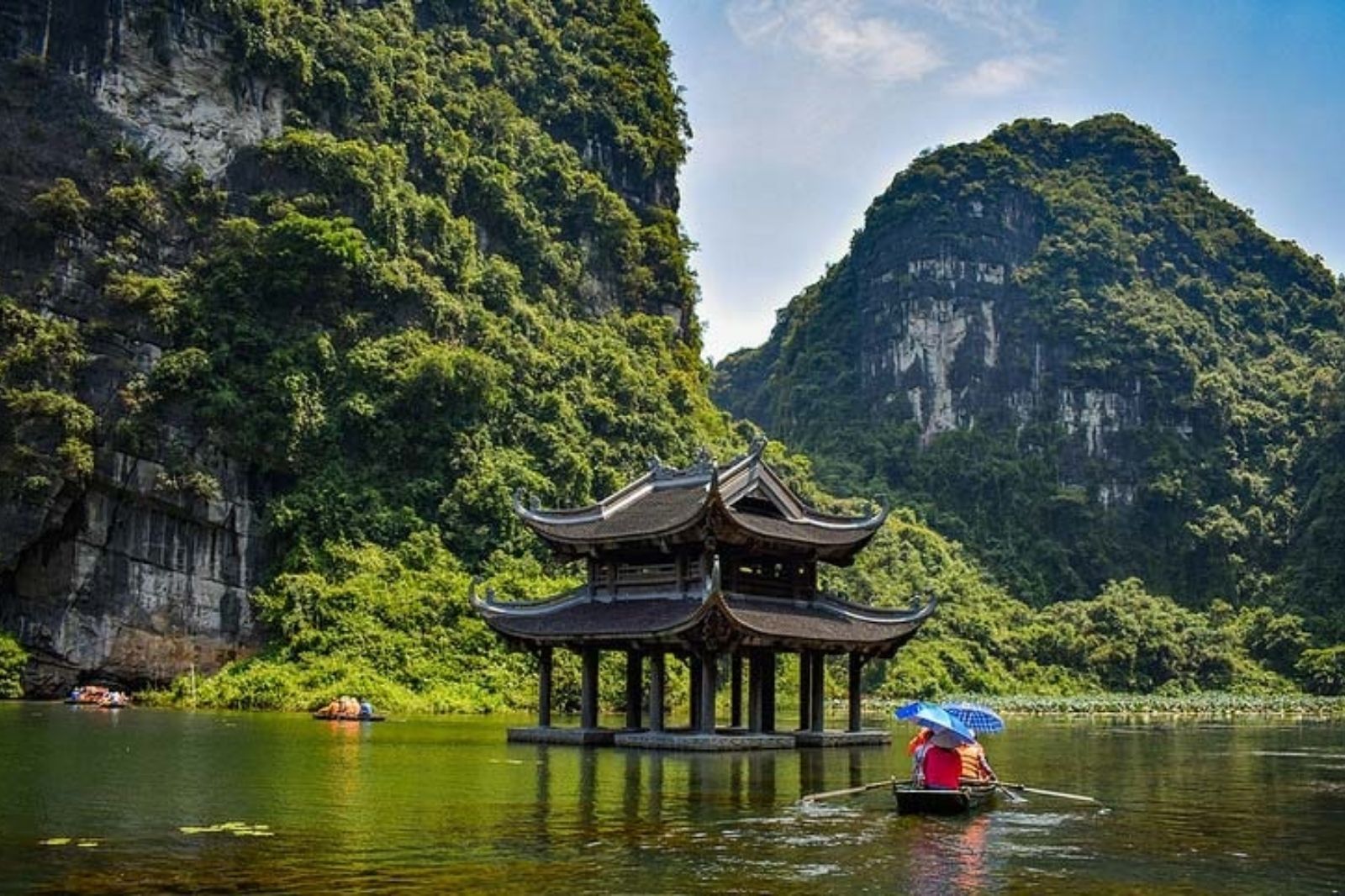
Photo: Touring Vu Lam Palace by boat
Vu Lam Palace is not only a site of historical value, but also vivid evidence of strategic military thinking, the secular-monastic spirit, and the fortitude of the Tran Dynasty during Dai Viet's most glorious period. Amidst the magnificent landscape of Trang An, where kings and generals once walked, today's visitors can clearly feel the rhythm of the past through every temple roof, pathway, and body of water surrounding the palace. A journey to discover Vu Lam is thus not just a sightseeing tour, but an opportunity to touch cultural depth and better understand the thinking, spirit, and life philosophy of a dynasty that wrote glorious chapters of history. Taking time to return to this place, you will see that Trang An is not only beautiful in scenery, but also beautiful in its historical stories preserved intact across centuries.