What does Phong Nha Botanical Garden have? Discover the diverse flora amidst the green forest

Central

Quang Binh

Phong Nha Botanical Garden

Sovaba.travel

Updated at: 24/09/2026

1. Where is Phong Nha Botanical Garden?

Phong Nha Botanical Garden (Phong Nha Botanic Garden) is located at Km 9, 20 Quyet Thang Road, formerly Son Trach Commune, Bo Trach District, Quang Binh Province, now belonging to Quang Tri Province. About 10–12 km from the Phong Nha tourism center, the garden covers 41.82 ha, relatively fully recreating the ecosystem of the Phong Nha – Ke Bang forest with primary forest patches, waterfalls, natural lakes, and rich flora.

A notable highlight of Phong Nha Botanical Garden lies in its combined conservation model:

  • In-situ conservation: maintaining plant communities directly in their natural habitats, contributing to the preservation of the characteristic forest ecosystem.

  • Ex-situ conservation: collecting, caring for, nursery propagation, and breeding valuable plant species, especially rare ones in need of preservation.

Since 2015, the garden has been developed for ecotourism, opening a trekking trail system over 4 km long through forest layers. Each route leads to a different landscape, from Thac Gio (Wind Waterfall) and Vang Anh Lake to ancient trees and observation points amidst the forest.
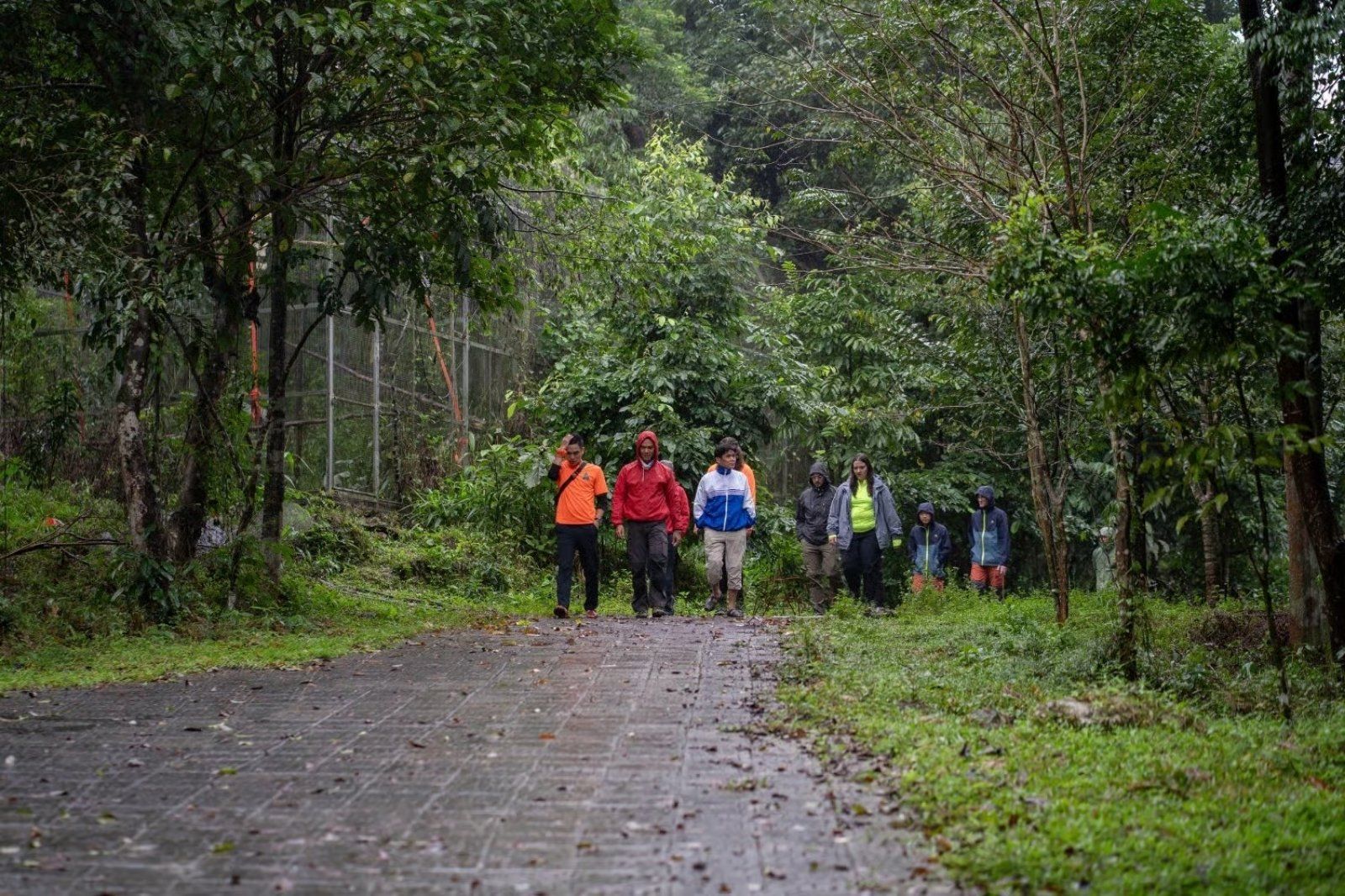
Botanical garden open to welcome visitors

Photo: Botanical garden open to welcome visitors

2. What is special about the flora at Phong Nha Botanical Garden?

According to data from the Center for Rescue, Conservation and Development of Organisms of Phong Nha – Ke Bang, Phong Nha Botanical Garden currently records 513 vascular plant species, belonging to 327 genera, 122 families, and 4 plant divisions. This figure demonstrates the high degree of vegetation diversity in the area, particularly the tropical rainforest ecosystem developed on characteristic limestone terrain.

Not only rich in quantity, the plant species here also possess great value in medicinal use, forestry, food, and landscaping:

  • 251 medicinal species, including many valuable medicinal plants such as Stephania glabra, Jasminum subtriplinerve

  • 163 precious timber species, typically ironwood (Erythrophleum fordii), rosewood (Dalbergia oliveri), limestone cedar (Calocedrus macrolepis)

  • 54 edible plant species: reflecting the diverse utilization value of indigenous plant resources.

  • 8–68 ornamental plant species (depending on detailed classification methods)

Interestingly, when trekking along the forest trails, these numbers are no longer just statistics on a chart. They are present right along the path: from ancient tree trunks and multi-layered forest canopies to climbing vines, ferns, and vegetation growing on limestone rocks.

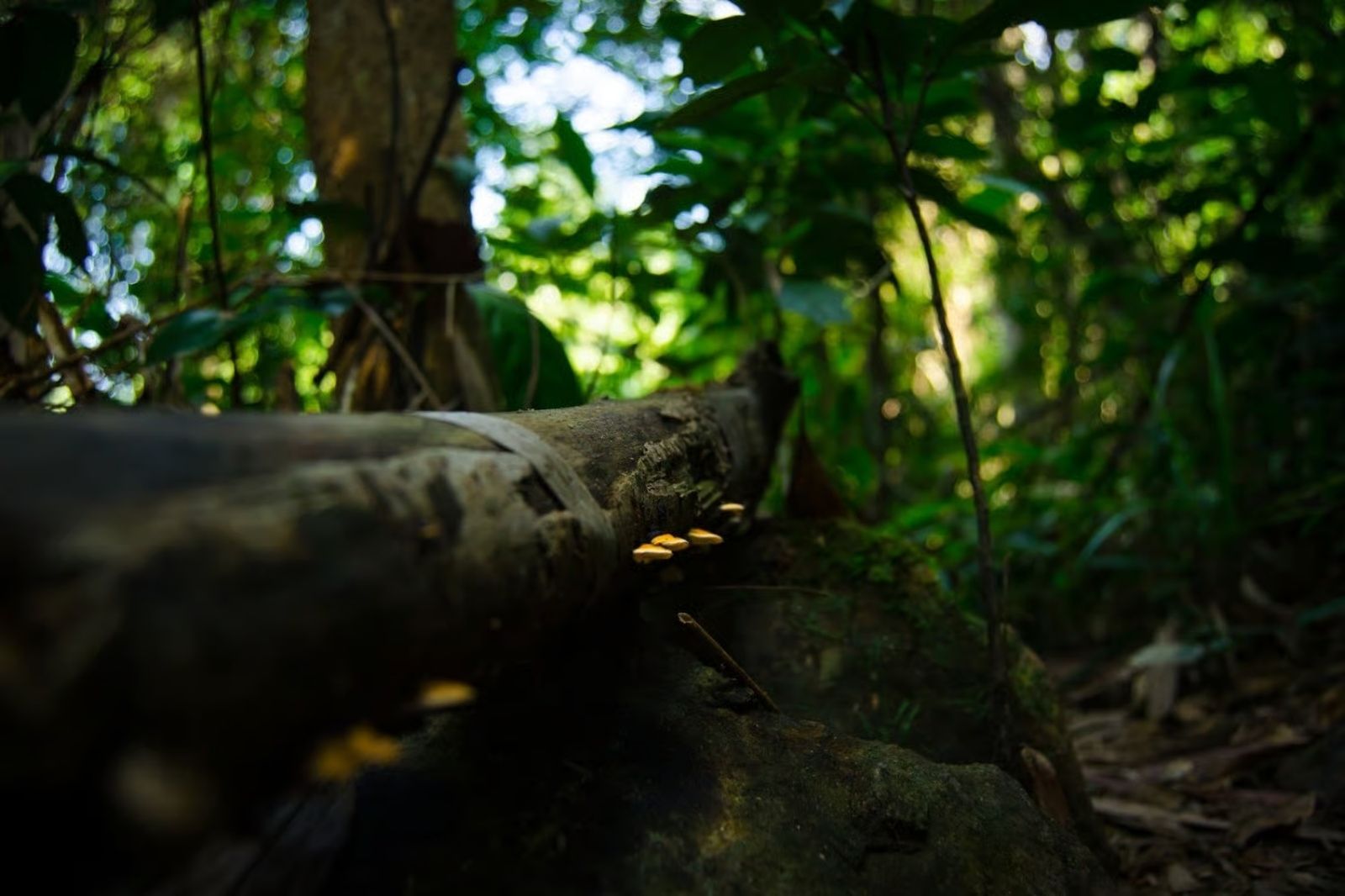
Mushrooms sprouting, blending with the green of the primary forest

Photo: Mushrooms sprouting, blending with the green of the primary forest

The value of the flora at Phong Nha Botanical Garden lies not only in its numerical richness but also clearly shows through its role in conserving valuable plant species. According to documented conservation lists, the garden currently holds:

  • 16 species listed in the Vietnam Red Data Book (2007)

  • 24 species under Group IIA according to Decree 84/2021/ND-CP

  • 82 species listed on the IUCN Red List (2020)

Set within the grand picture of Phong Nha – Ke Bang National Park, which records nearly 2,957 higher plant species, the Botanical Garden can be imagined as a miniature space, helping visitors access and learn about the typical values of the limestone ecosystem without embarking on an overly long trek deep into the jungle.

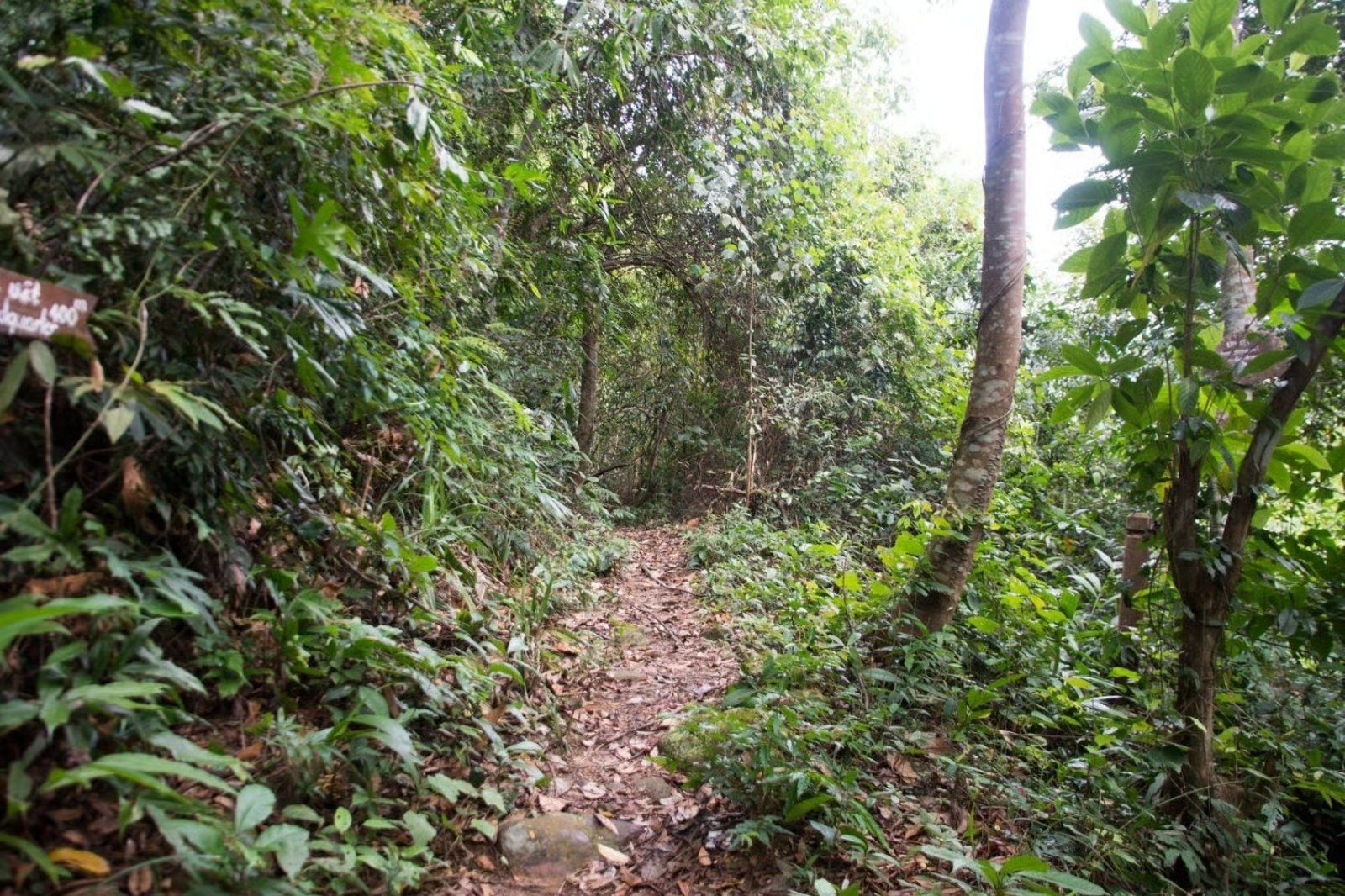
An amazing trekking journey amidst pristine nature

Photo: An amazing trekking journey amidst pristine nature

3. Rare plant species in Phong Nha Botanical Garden

One of the prominent values of Phong Nha Botanical Garden lies in its long-standing ancient trees, where traces of the primeval forest are visible in every trunk, canopy, and symbiotic plant system.

  • Vietnamese Hopea Tree (Hopea vietnamensis): A species newly described scientifically in recent years, endemic to Vietnam, with limited distribution in the limestone region of Phong Nha – Ke Bang and some surrounding areas. The garden features centuries-old specimens with trunks so large it takes 2–3 people to embrace them, standing over 20 m tall – living proof of the ancient forest and the conservation value of genetic resources.

  • Native precious timber species: You can encounter ironwood (Erythrophleum fordii), rosewood, dipterocarps, and many species belonging to the family Dipterocarpaceae. These large tree trunks help form the multi-layered structure characteristic of tropical rainforests.

  • Ancient Alangium chinense tree and strongly regenerating species such as Tarrietia, Sindora, Castanopsis…

  • Wild orchids, medicinal plants, and species adapted to arid limestone environments or moist stream banks.

In addition, the garden boasts a rich flora featuring wild orchids, indigenous medicinal plants, and strongly regenerating species like Tarrietia javanica and Sindora tonkinensis. What makes it special is that with just a light walking journey, visitors can encounter dozens of rare plant species, a rare experience compared to many other botanical gardens.

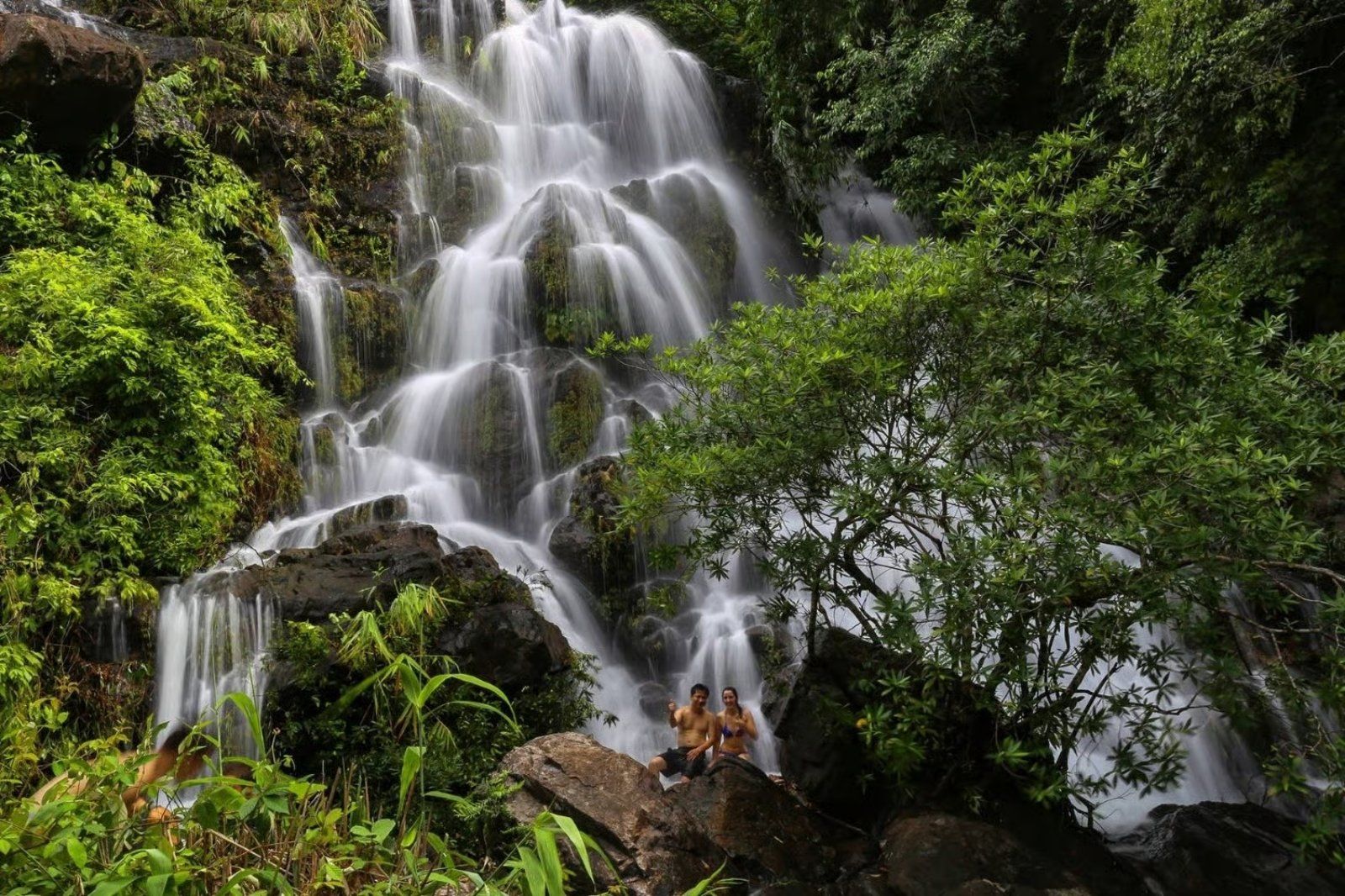
Majestic Thac Gio Waterfall is an ideal check-in spot

Photo: Majestic Thac Gio Waterfall is an ideal check-in spot

4. Guide to visiting Phong Nha Botanical Garden

Planned into functional areas and sightseeing routes, Phong Nha Botanical Garden features a diverse system of stops suitable for light trekking journeys of about 2.5–5 km. Each point carries its own nuance, from learning about the ecosystem and observing wildlife to resting by waterfalls and forest streams.

  • Specimen Exhibition House: Houses over 181 plant and animal specimens, featuring 4-radiated coral fossils and sea lilies dating back over 400 million years.

  • Plant Nursery: A place to conserve and propagate over 120 indigenous plant species; visitors can participate in planting souvenir trees (about 100,000 VND/tree).

  • Thac Gio (Wind Waterfall): A waterfall over 30 m high cascading down cliff faces, creating a majestic scenery and an impressive photo spot.

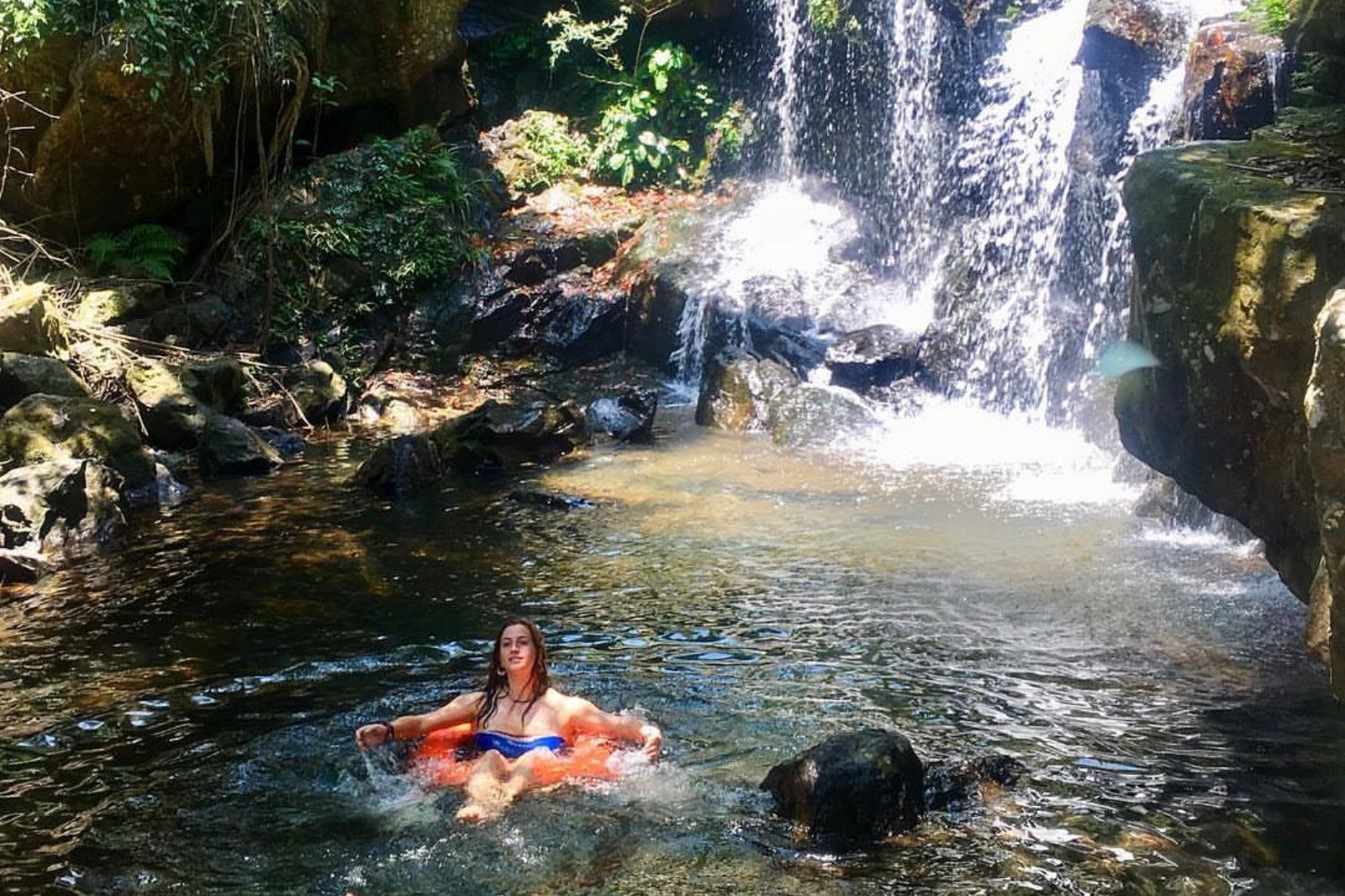
  • Vang Anh Lake & Vang Anh Stream: Cool, clear blue water, ideal for resting and taking a stream bath in the middle of the forest.

  • Interpretation Trail: A route combining sightseeing and learning, where visitors can listen to detailed introductions about each characteristic plant species.

  • Animal Rehabilitation Area: Observe wild animals such as langurs, monkeys, and peacocks, one of the birds with striking beauty.

With a moderate distance and a visiting duration of about 2–3 hours, Phong Nha Botanical Garden offers a well-paced exploration: starting with natural facts, venturing deeper into the forest, and ending by a waterfall or a cool stream. It is a suitable choice for visitors who want to walk, observe, and feel the Phong Nha forest at a very close distance.

Botanical garden welcomes visitors with exciting experiences

Photo: Botanical garden welcomes visitors with exciting experiences

5. Guide to visiting Phong Nha Botanical Garden

To ensure your exploration of Phong Nha Botanical Garden goes smoothly and completely, choosing the right time and preparing thoroughly are essential factors. With terrain containing dirt paths, stone steps, and stream areas, the small tips below will make your journey through Phong Nha Botanical Garden more convenient.

  • Best time to visit: Around December to August is generally favorable for sightseeing and trekking activities. The period from September to November often sees higher rainfall, making forest paths slippery, so check the weather forecast before heading out.

  • Attire and supplies: Choose trekking shoes with good grip, long pants, and breathable shirts. Bring about 1.5 liters of water per person, insect repellent, sunscreen, and waterproof bags to protect phones, cameras, and personal documents.

  • Start time: Departing around 7:00–8:00 AM allows plenty of sightseeing time while avoiding intense midday sun. This is also a good window to observe some wildlife activities in the area.

  • Combine destinations: With a suitable schedule, you can combine Phong Nha Botanical Garden with Phong Nha Cave or nearby attractions on the same day. However, allocate time based on your chosen trekking route so the trip doesn't feel rushed.

Good preparation not only ensures a safe trip but also helps you fully enjoy the natural beauty and special ecological values of Phong Nha Botanical Garden.

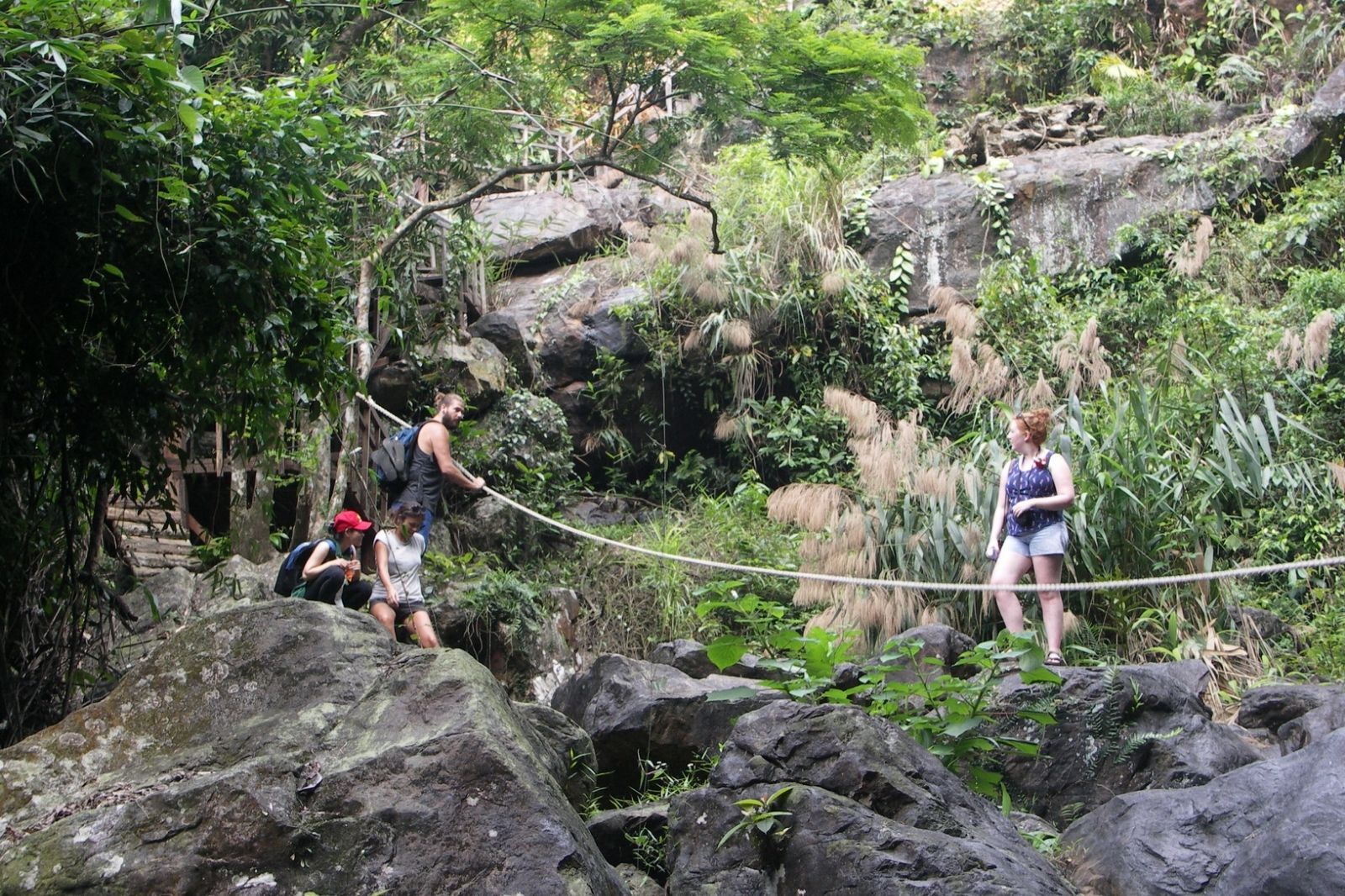
Visitors can take a detailed guided tour at the botanical garden

Photo: Visitors can take a detailed guided tour at the botanical garden 

Every time you step into Phong Nha Botanical Garden, listening to the rustling leaves underfoot and looking up at ancient tree canopies shading the sky, your mind naturally feels at ease, leaving behind all daily worries. Nature here is peaceful, simple, yet deep. If you want to witness the rich forest ecosystem and experience the refreshing coolness of the green forest, check out the Phong Nha Botanical Garden tours by Sovaba Travel or contact our hotline at 0934.733.223 for dedicated advice!  

Loading......

Featured destinations