|

Back Home

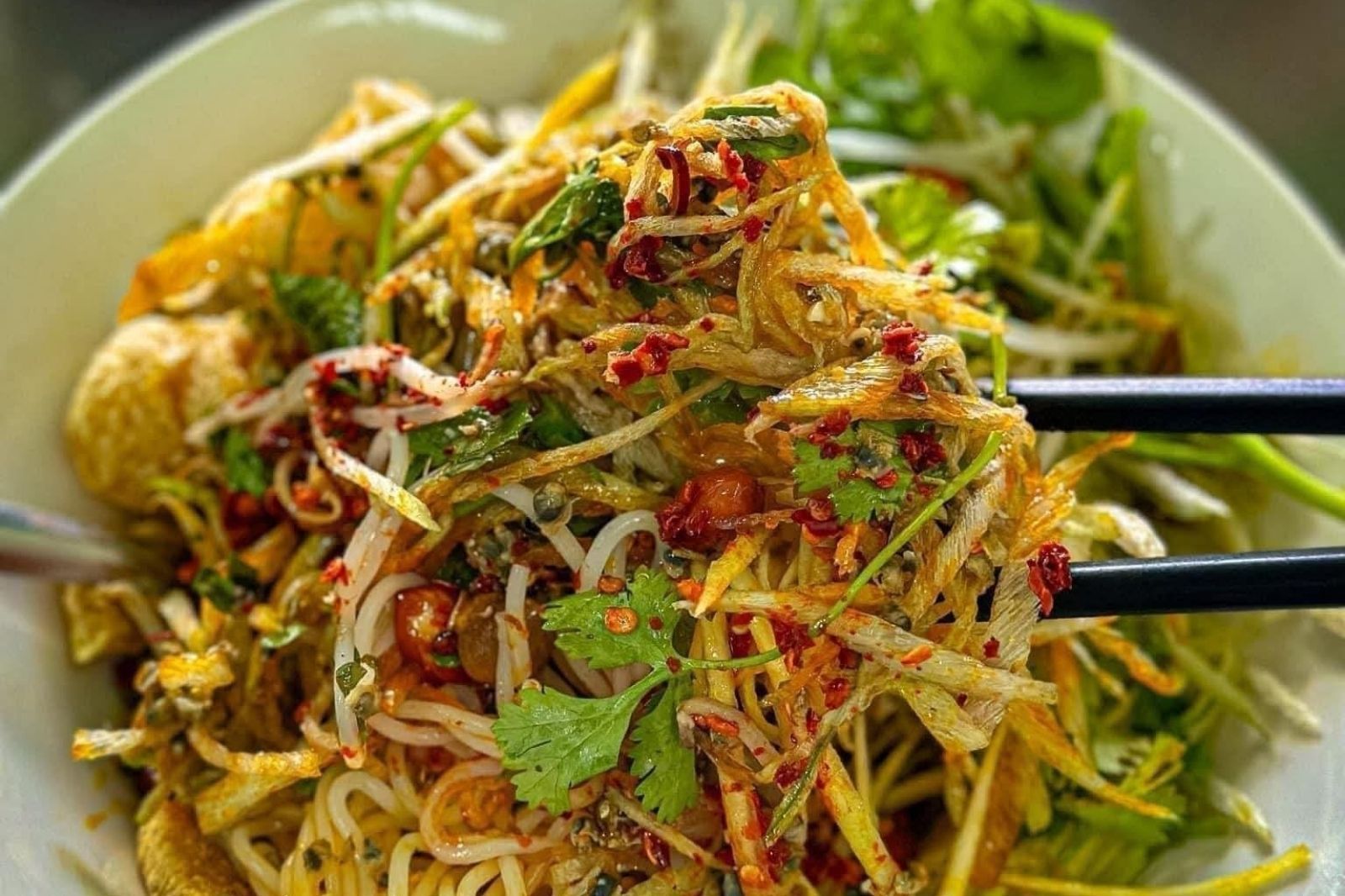
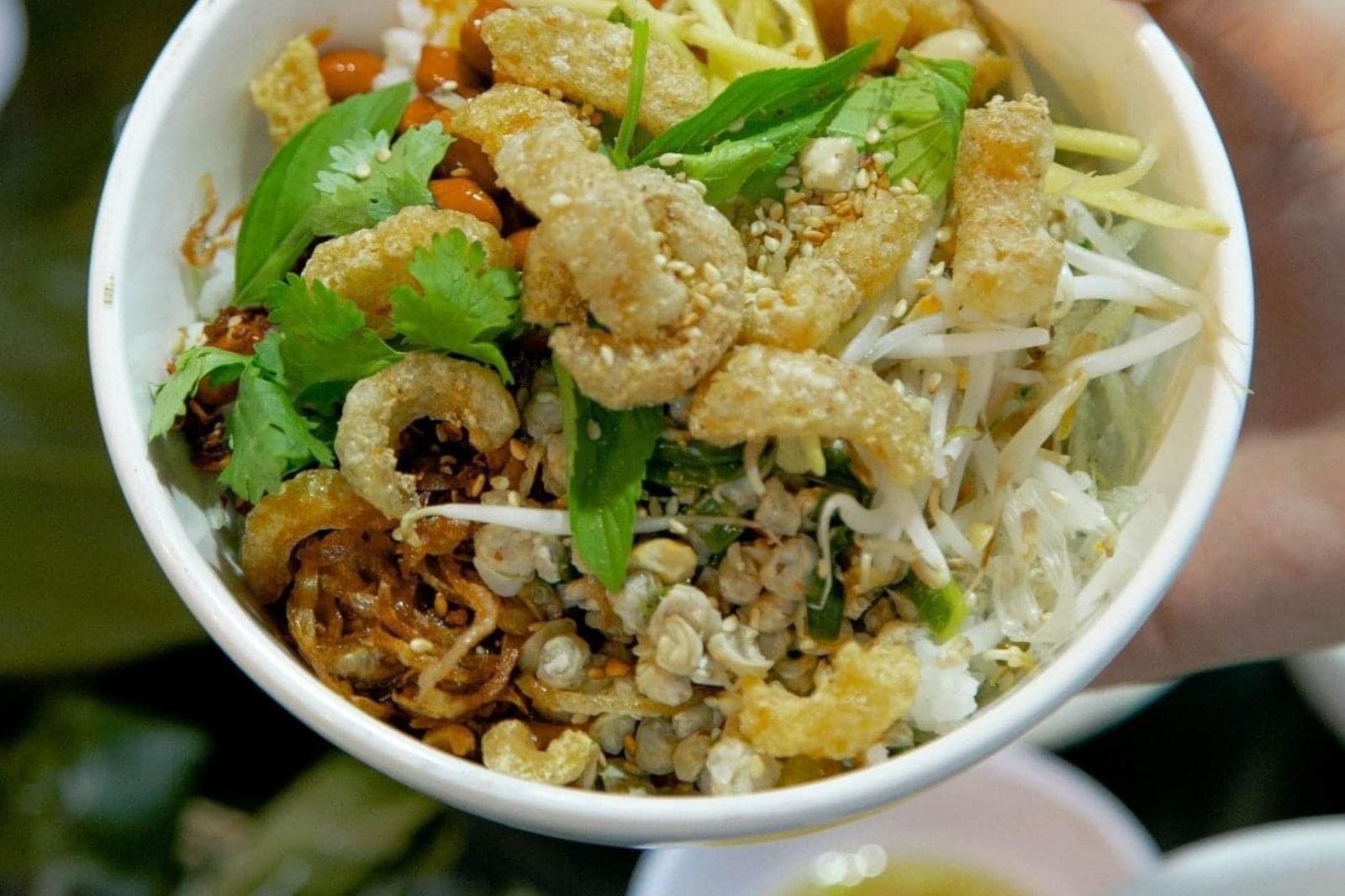
What makes Hue clam rice so special that anyone who tries it once remembers it forever?

Central

Thua Thien Hue

Sovaba.travel

Updated at: 28/08/2026

1. What is Cơm Hến (baby clam rice)?

Clam rice originated from the hard times of the residents of Hen Islet (Con Hen) – an alluvial land in the middle of the Perfume River. Legend has it that over 200 years ago, a poor family used cold leftover rice along with river clams to make a dish to satisfy their hunger when they failed to catch fish or shrimp. From such humble beginnings, clam rice gradually became popular and was later presented to King Thanh Thai by Mrs. Nguyen Thi Thep. The King was captivated by its unique flavor and created Phuong Hen (Clam Guild), turning clam rice from a humble meal into a royal delicacy served on grand occasions. The journey from a poor family's meal to an emperor's feast not only demonstrates sophistication within simplicity, but also highlights the thrifty spirit, creativity, and talent of Hue people in bringing soul to every dish.
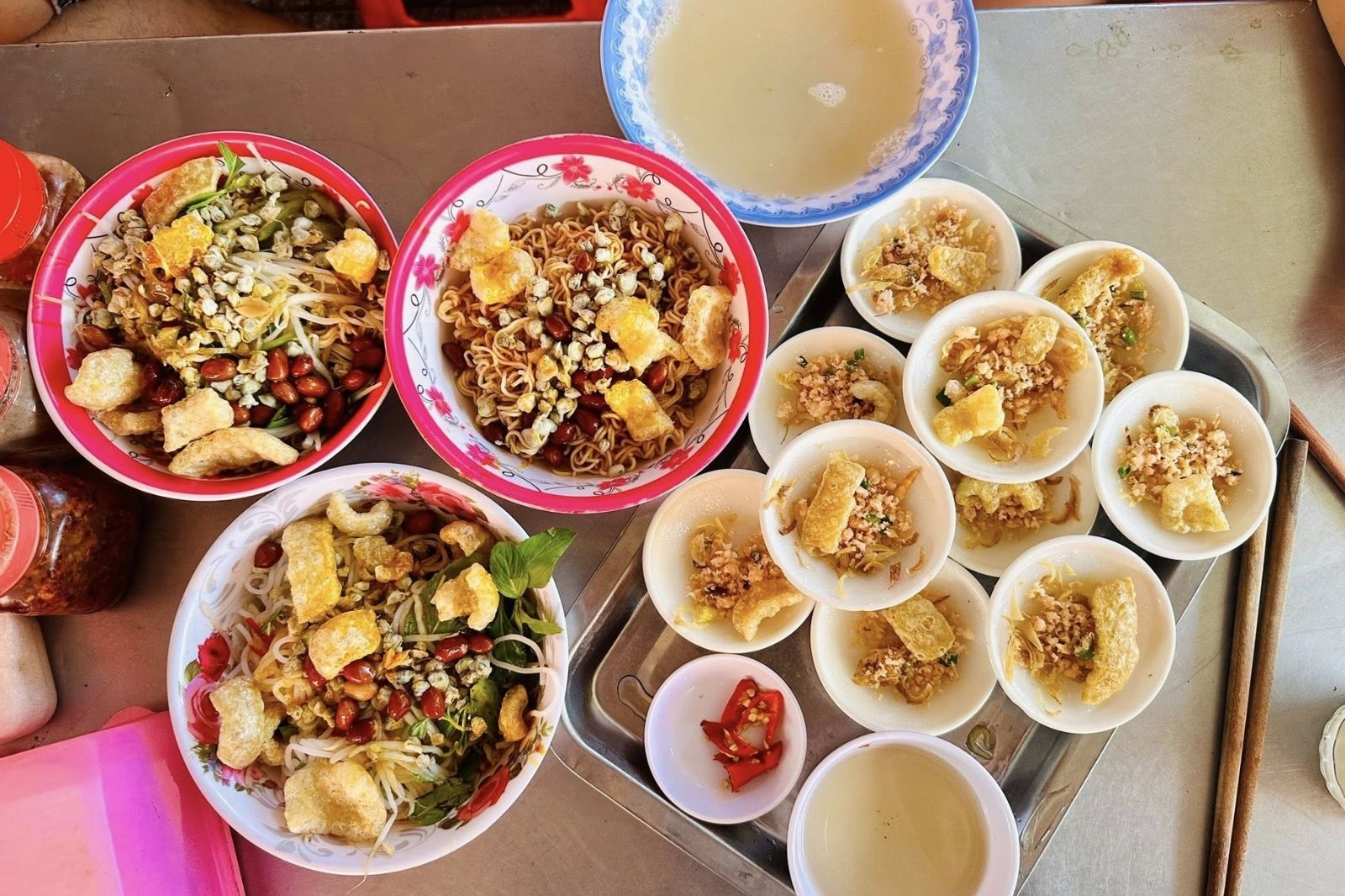
Variations of clam rice into clam rice noodles and clam instant noodles
Photo: Variations of clam rice into clam rice noodles and clam instant noodles 

2. The meticulous preparation of Cơm Hến

Although it looks simple, Hue clam rice requires meticulous preparation:

  • Fresh clams from Hen Islet: Clams are harvested from the Perfume River, soaked in rice-washing water for 3 days to remove mud, and then thoroughly boiled to yield a clear, naturally sweet broth. The clam meat is stir-fried with onions, garlic, salt, and pepper to create a rich flavor.
  • Characteristic cold rice: The rice must be cooled overnight, with loose grains that do not stick together, reflecting the "zero waste" philosophy of Hue people.
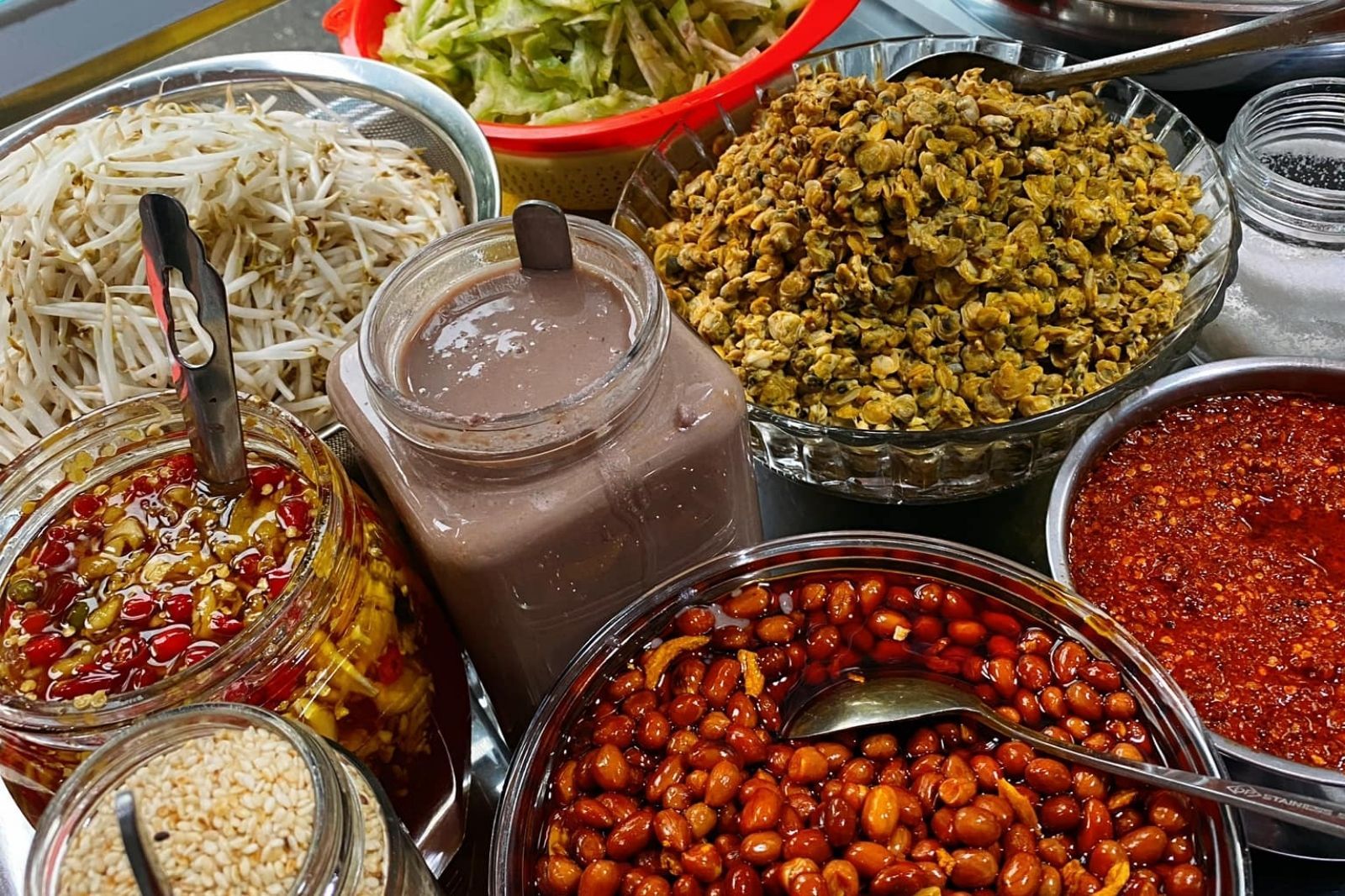
  • Diverse ingredients: A full bowl of clam rice contains up to 21 ingredients, ranging from crunchy pork cracklings, roasted peanuts, fermented shrimp paste, fried shallots, to fresh greens like Vietnamese coriander, bean sprouts, sour star fruit, banana blossom, and taro stems.

Each ingredient is carefully prepared, creating a harmony of sweet, salty, sour, spicy, savory, crunchy, and fresh flavors.

Ingredients and spices for Hue clam rice
Photo: Ingredients and spices for Hue clam rice  

3. The flavors of Cơm Hến

Compared to mixed rice dishes like Saigon broken rice or Hoi An chicken rice, Hue clam rice stands out for its refreshing taste combined with a signature fiery kick. The flavor comes from harmony: the sweetness of river clams, a mild sourness from star fruit and banana blossom, spiciness from chili and shrimp paste, crunchiness from peanuts and pork cracklings, and aromatic fresh herbs. Unlike broken rice, which is heavy on grilled meat and pork skin, clam rice is lighter, ideal for breakfast or a light meal, served with clam broth poured over to create a refreshing, non-greasy feel.

The meticulous preparation process—from soaking clams in rice water to remove mud, to quick stir-frying to maintain crispness—helps the dish avoid any fishy odor, setting it apart from ordinary mixed dishes. This is why clam rice is likened to a "rustic royal dish", carrying a noble flavor yet remaining deeply accessible.

4. How to enjoy Cơm Hến

To enjoy it properly, locals usually separate the dry clam rice from the broth. First, thoroughly mix the rice with toppings, adding shrimp paste and chili according to taste (be careful as Hue shrimp paste is very spicy). Then, ladle spoons of hot clam broth over it to maintain crispness and let the flavors absorb gradually. Serve with grilled rice crackers or fresh herbs for added freshness.

  • Mix thoroughly or pour little by little: Some mix all ingredients with shrimp paste and chili, while others ladle clam broth spoon by spoon to keep the sweet, light taste.
  • Eat hot to avoid fishiness: Clam rice is best enjoyed hot, especially the boiled clam broth. If buying take-away, re-heat it before eating.
  • Pair with a cooling drink: A glass of mung bean drink or sweet corn soup (che bap) will soothe the spiciness and enhance the culinary experience.
Mix thoroughly before eating
Photo: Mix thoroughly before eating  

5. Famous Cơm Hến restaurants in Hue

Hue has countless clam rice eateries, but the places favored by locals are usually located in the Vy Da area or near Hen Islet. Below are some recommendations:

  • Hoa Dong Clam Rice: 64 Lane 7 Ung Binh, Hue City
  • Ba Cam Clam Rice: 49 Tung Thien Vuong, Vy Da, Hue, Hue City
  • Dap Da Clam Rice: 01 Han Mac Tu, Vy Da, Hue, Hue City 
  • Clam Rice: 17 Han Mac Tu, Vy Da, Hue, Hue City
  • Huong Xua Clam Rice: 30/7 Ung Binh, Vy Da, Hue, Hue City
  • Ba Den Clam Rice: 31 Tran Quang Khai, Phu Hoi, Hue, Hue City
  • Be Liem Clam Rice: 64 Nguyen Cong Tru, Phu Hoi, Hue, Hue City
Many clam rice eateries in Hue have long-standing histories
Photo: Many clam rice eateries in Hue have long-standing histories 

Hue clam rice is not merely a meal, but also a piece of cultural tapestry reflecting the rustic, thrifty, and refined way of life of the ancient capital's people. A simple dish that evokes nostalgia and fondness, leaving anyone who tastes it with an unforgettable lingering flavor. If you have the chance to visit Hue, take time to savor clam rice right in the land where it was born, to fully feel the country soul in every humble spoon of rice.

And to make your trip even more complete, you can discover more Hue travel tips such as sightseeing spots, local specialties, or meaningful Hue travel tours with Sovaba Travel at sovaba.travel. This will be a reliable guide helping you have a truly meaningful and memorable journey exploring Hue.

Loading......

Featured destinations