What materials did the people of Vinh Linh use to build Vinh Moc Tunnels?
Central
Quang Tri
Vinh Moc Tunnels
Sovaba.travel
Updated at: 24/09/2026
1. Vinh Moc Tunnels
Before delving into the details of the construction materials, let us explore a brief overview of Vinh Moc Tunnels with Sovaba Travel. Built from 1965 to 1967 in Vinh Thach commune, Vinh Linh district, Quang Tri province, Vinh Moc Tunnels are an underground tunnel system over 1,700 meters long, with a 3-tiered domed structure located 8 to 23 meters underground. This structure was created to protect local residents and soldiers from fierce bombardment by American air forces and artillery, while serving as a place for daily living, fighting, and transferring food and weapons to Con Co Island.
In the context of war, with limited resources and scarce conditions, the people of Vinh Linh creatively built a unique military architecture, utilizing available materials and crude tools to accomplish this miraculous feat.
2. Main materials for constructing Vinh Moc Tunnels
The Vinh Moc tunnel system was constructed mainly from natural earth, rock, and simple, easily accessible local materials. Below are the primary materials used:
Red basalt soil
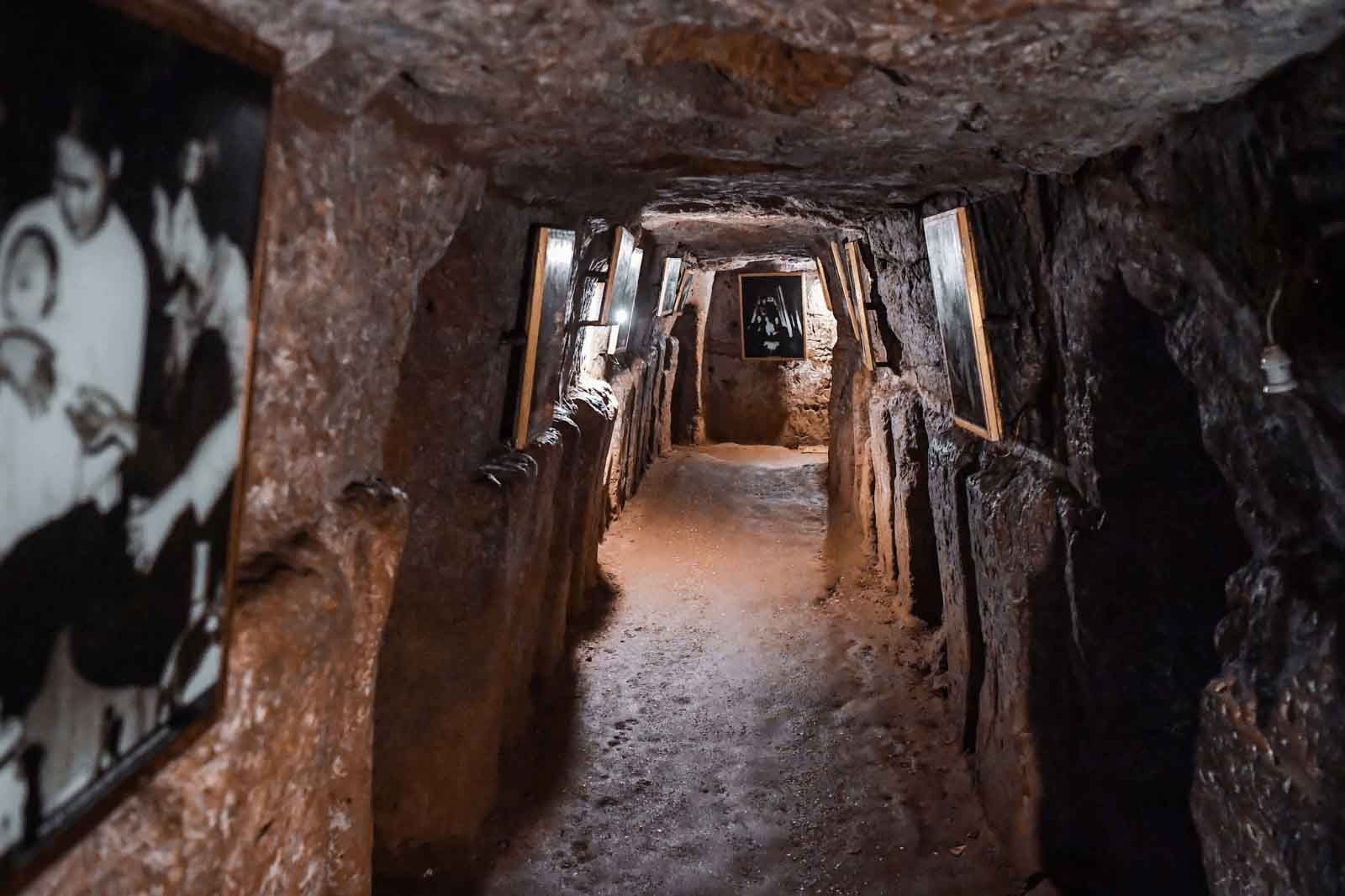
Vinh Moc Tunnels are situated on a red basalt soil hill near Cua Tung beach. This type of soil is hard, highly cohesive, and resistant to collapse, making it very suitable for digging tunnels and creating durable structures. The people of Vinh Linh capitalized on the geological characteristics of basalt soil to excavate vaulted tunnels, ensuring structural solidity even when impacted by bombs and artillery. Approximately 6,000 m³ of basalt soil and rock were excavated and transported outside, mostly dumped into the sea to prevent detection by enemy forces.
Photo: Terrain with suitable firmness for constructing tunnels
Wood and house pillars
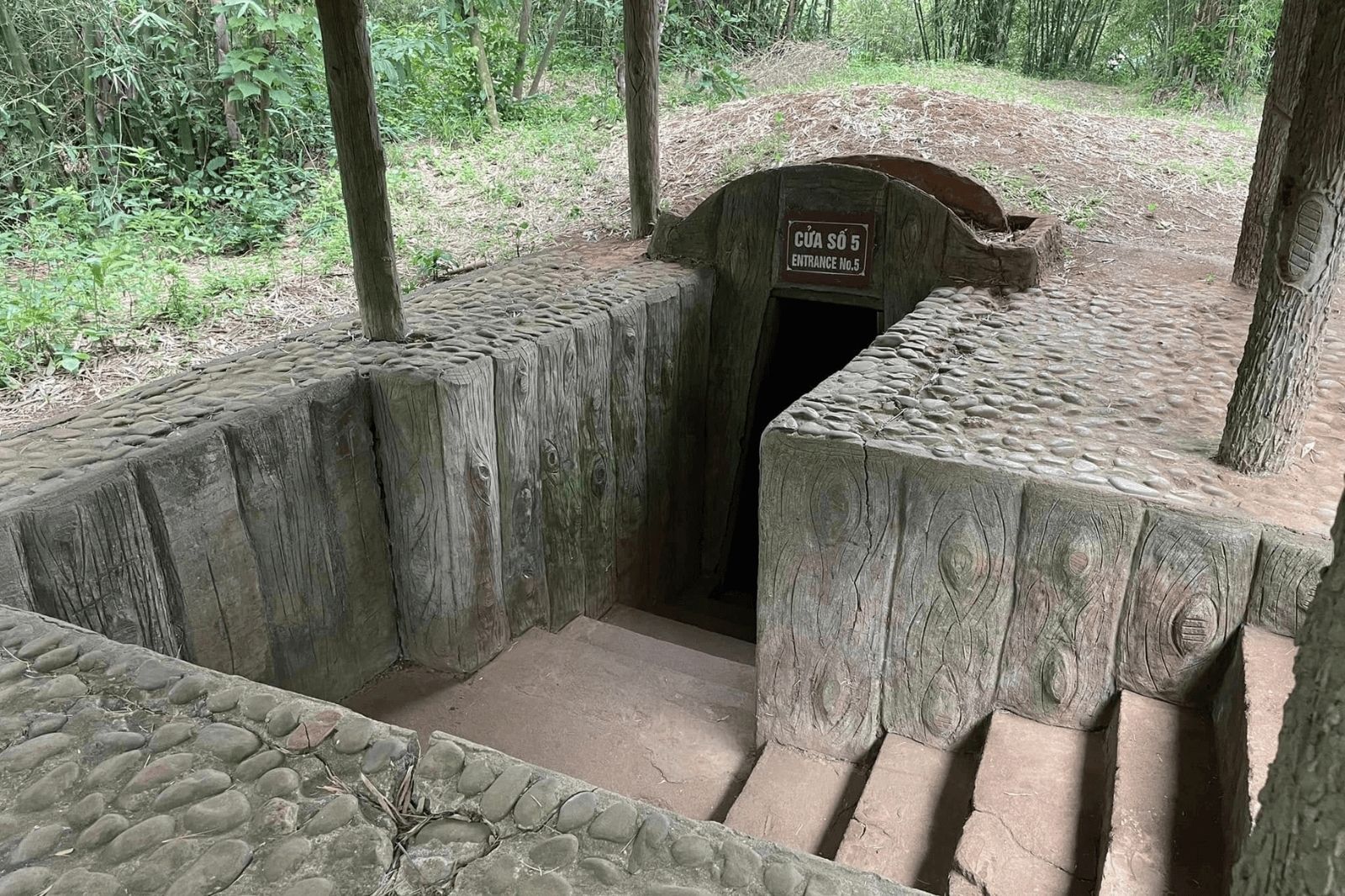
To prevent cave-ins and ensure safety inside the tunnels, local people used wooden pillars for reinforcement. Tunnel entrances were supported by house pillars or timber collected from nearby forests, carefully positioned according to wind directions to ensure ventilation. These wooden posts not only strengthened the structure but also facilitated camouflage, making it difficult for enemy forces to discover the entrances and exits.
Bamboo and reed
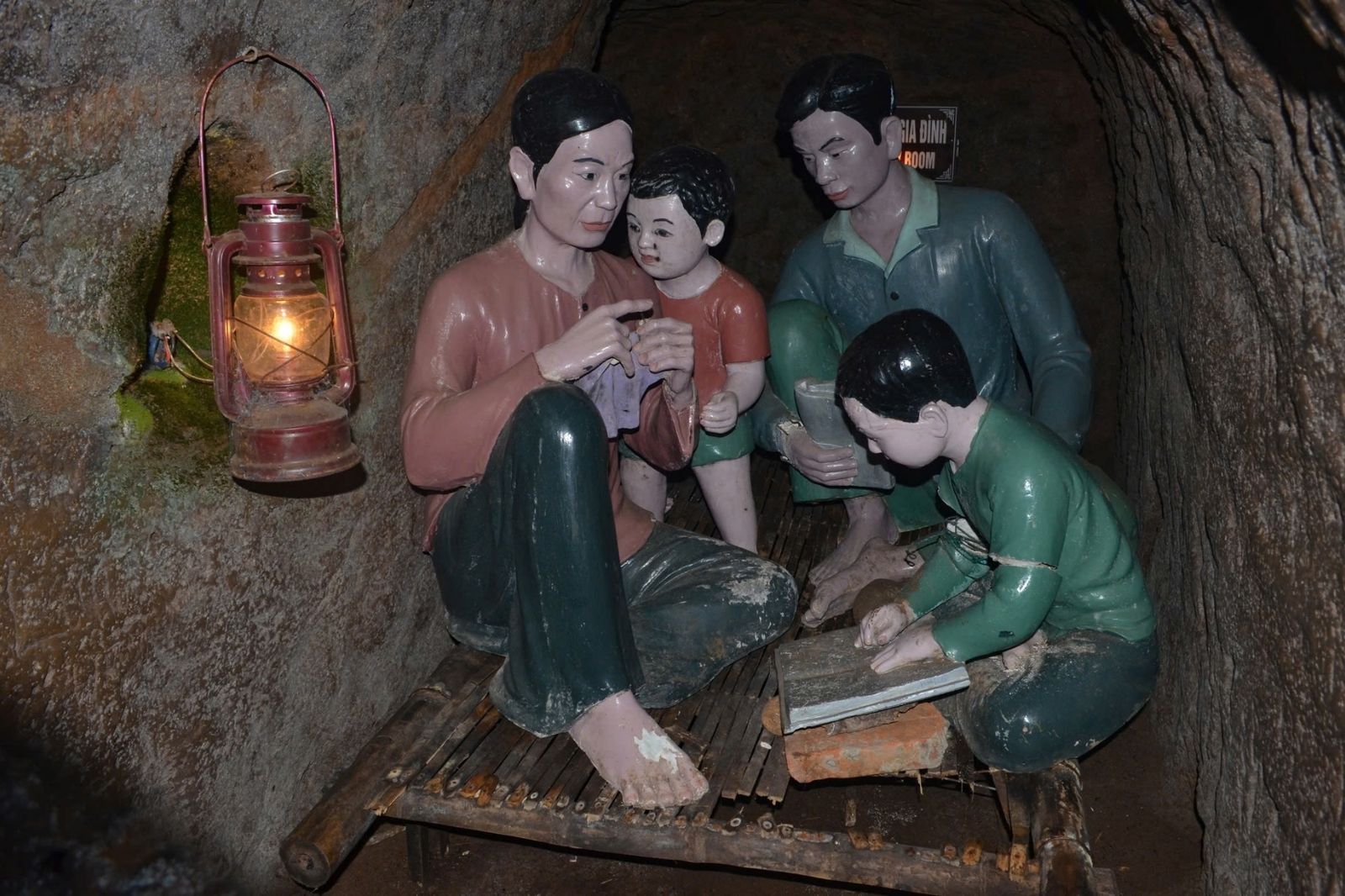
In the context of lacking light and modern equipment, bamboo and reed became vital materials. The residents of Vinh Moc split dry bamboo and reed to make torches for lighting during excavation, especially when lamp oil was scarce. Additionally, bamboo was used to make supporting tools such as shaping frames or daily utensils inside the tunnels. Bamboo roots also played an important role in holding soil, preventing erosion and landslides, thus protecting the tunnel structure.
Photo: Daily household items made of bamboo and reed
Bomb fragments and shell casings
A unique aspect of constructing Vinh Moc Tunnels was that the locals repurposed the enemy's own bomb fragments and shell casings as digging tools. Lacking picks and shovels, they used these metal shards to dig soil, demonstrating ingenuity and a spirit of "using the enemy's weapons against them." This not only saved resources but also served as a symbol of resilient determination, turning the enemy's weapons into tools serving the resistance.
Water and strings
Without modern machinery, the people of Vinh Linh used manual measurement techniques. They filled bottles with water to serve as spirit levels and tied stones to strings to serve as plumb lines for determining depth. These techniques, though simple, helped accurately shape the tunnels, ensuring a slope of 2-3° for easy drainage to prevent flooding inside the tunnels.
3. The construction process of Vinh Moc Tunnels
The construction process of Vinh Moc Tunnels lasted nearly 2 years (1965-1967), involving approximately 18,000 working days. The work was carried out entirely by human power under fierce wartime conditions, lacking light and equipment. Under the command of Mr. Le Xuan Vy—a man who had only completed primary school but possessed extraordinary willpower and creativity—the people of Vinh Linh collaborated with armed police forces to dig the tunnels.
Digging method: The tunnels were excavated in an arched shape, with branches interconnected via a main axis 780 meters long. Each digging team usually consisted of only 2-3 people due to the narrow space. Earth and rock were transported using wheelbarrows, dumped into the sea or camouflaged in bomb craters to avoid enemy suspicion.
Innovation amidst hardship: To boost morale, Mr. Le Xuan Vy organized tunnel-digging competitions, awarding the title of "master digger" to those who excavated 3 meters per day and "grandmaster digger" for 4 meters per day. This not only increased productivity but also motivated local people amidst dangerous circumstances.
Photo: Exits of the tunnel system
4. The significance of using rudimentary materials
The use of simple materials such as basalt soil, wood, bamboo, and even bomb fragments and shell casings not only demonstrated ingenuity but also reflected the resilient and creative spirit of Vinh Linh's residents. Under wartime conditions, when all resources were scarce, they turned seemingly useless things into valuable tools, creating a masterpiece described as an "ancient castle underground."
Vinh Moc Tunnels served not only as a shelter but also as a complete living space equipped with facilities such as water wells, a maternity ward, a meeting hall, and logistics stores. Notably, 17 babies were born inside the tunnels, testifying to the vibrant vitality of the people here.
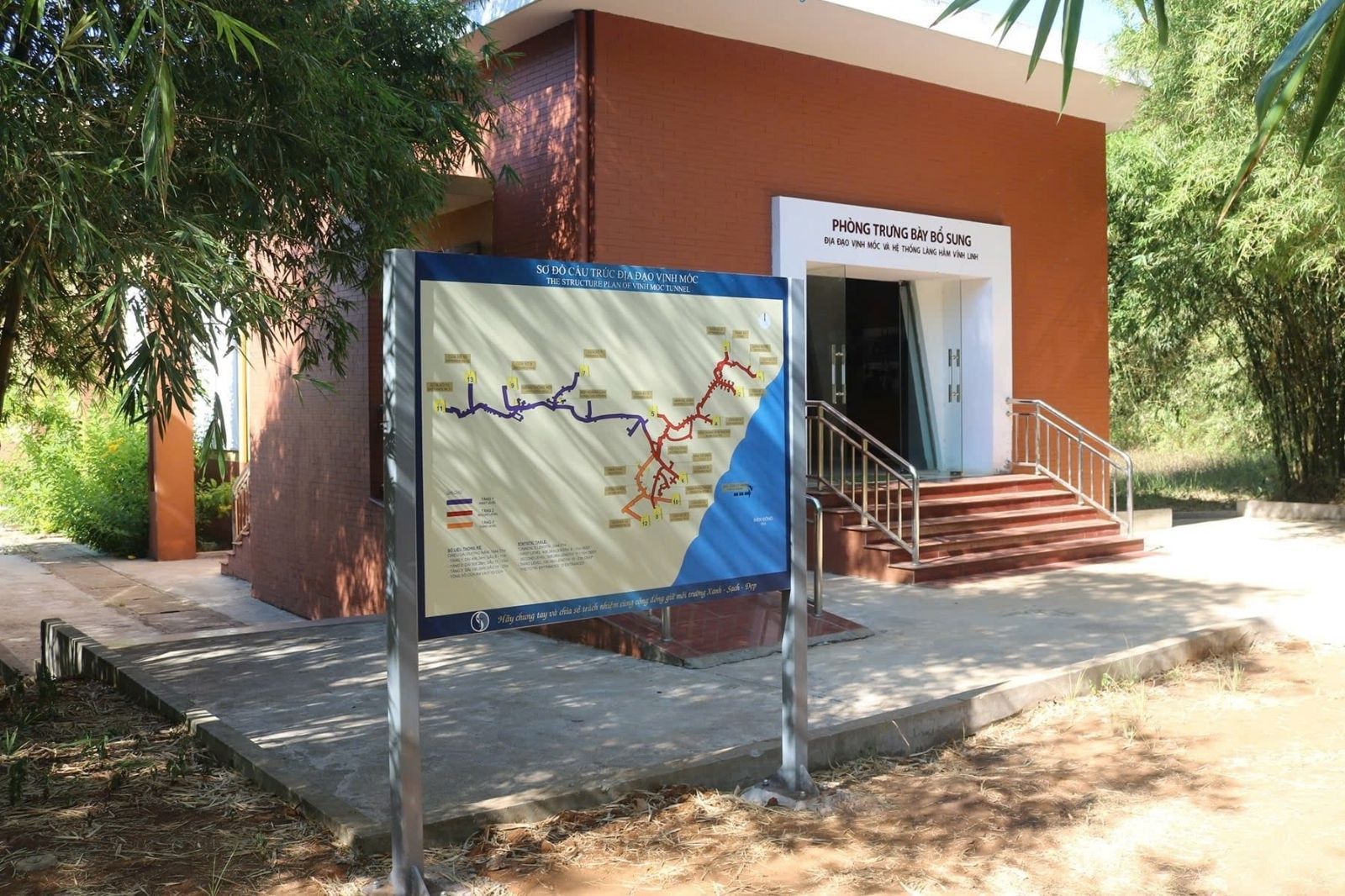
Today, Vinh Moc Tunnels have become a Special National Relic site, attracting thousands of domestic and international visitors each year. Visitors coming here can not only marvel at the construction feat but also feel the hardship and invincible determination of the soldiers and people of Vinh Linh. The site features a documentary screening room titled "Vinh Moc - A Legend", preserving valuable footage about the construction and daily life inside the tunnels. Furthermore, the exhibition area displaying bomb casings and war artifacts helps visitors better visualize the ferocity of that period.
Photo: Exhibition of documents and materials about the tunnels
Vinh Moc Tunnels are not only a miraculous defense structure but also a vivid symbol of the indomitable spirit and wisdom of the people of Vinh Linh during the fierce war years. To fully appreciate the extraordinary effort behind this structure and listen to emotional stories behind every meter of tunnel, visit this historic site. Sovaba Travel is currently organizing tours to visit Vinh Moc Tunnels featuring well-planned itineraries, historically knowledgeable guides, and dedicated service. Do not miss the opportunity to experience one of Vietnam's most special historical relics, marking a heroic era of the nation.