|

Back Home

Why does Hien Luong Bridge have 2 colors? Discover the truth behind it

Central

Quang Tri

Hien Luong Bridge - Ben Hai River

Sovaba.travel

Updated at: 28/08/2026

1. Where is Hien Luong Bridge?

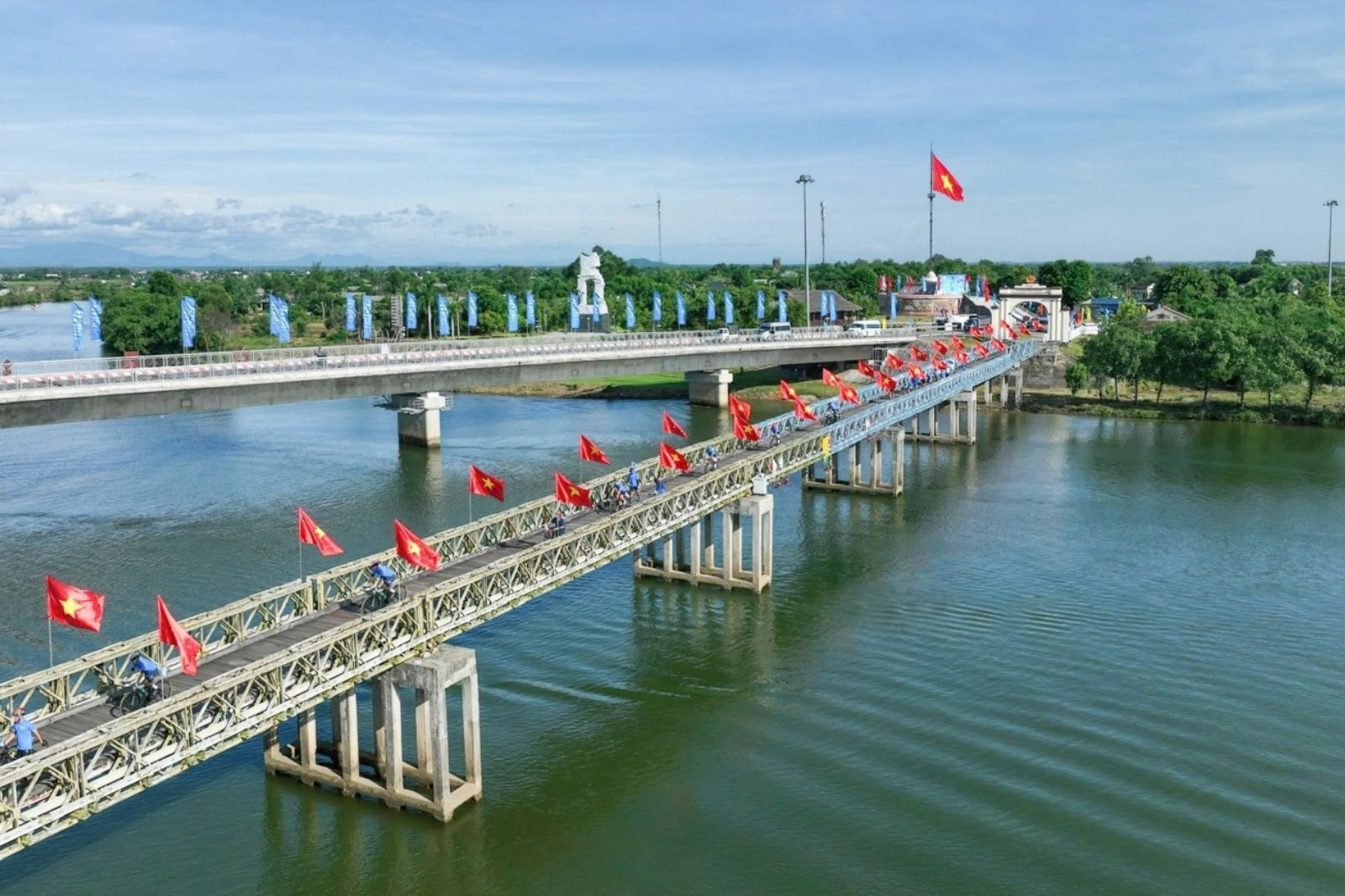
Hien Luong Bridge spans the Ben Hai River in Hien Luong Village, Hien Thanh Commune, Vinh Linh District, Quang Tri Province, Vietnam. Its exact coordinates are 17°00′14″N 107°03′5.2″E, right on the 17th parallel – the temporary demarcation line dividing North and South Vietnam under the 1954 Geneva Accords.

As a national historical relic, Hien Luong Bridge is not merely a transportation structure but also a symbol of national division and reunification. The first bridge was built in 1928 using wood, later undergoing multiple repairs and reconstructions due to war. In 2003, the bridge was restored to its original design, measuring 182.97 m in length with 7 spans and a deck paved with ironwood. Adjacent to it is a new bridge built in 1996 to serve modern traffic. The historical complex includes a monument cluster and the 17th Parallel Museum, attracting thousands of visitors each year to learn about modern Vietnamese history.

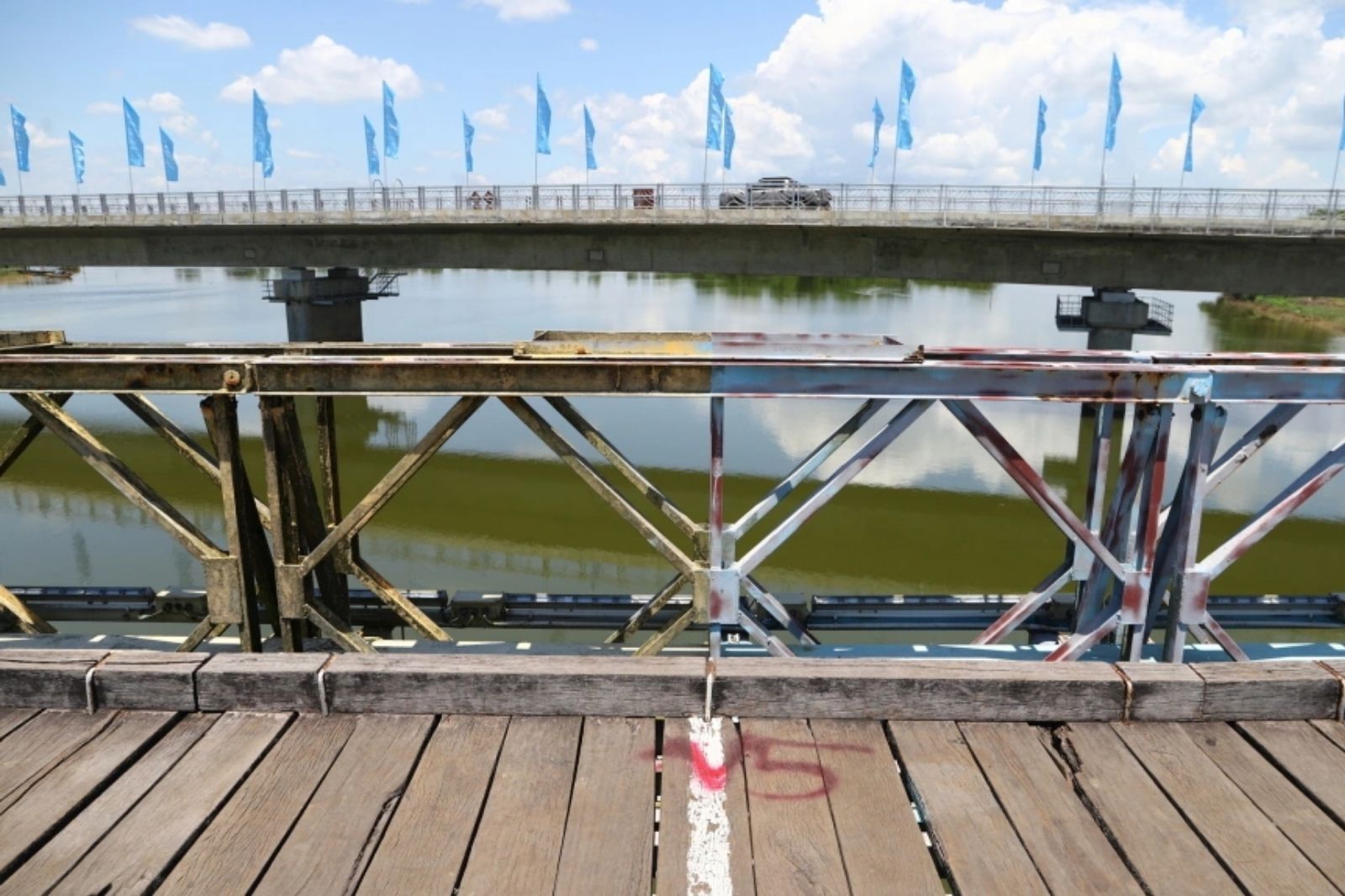
The bridge painted in 2 colors
Photo: The bridge painted in 2 colors 

2. The paint color war at Hien Luong Bridge

One of the most impressive stories about Hien Luong Bridge is the "paint war" that lasted for years, from after 1954 to around 1960.

  • Initially, the Republic of Vietnam government (in the South) painted the Southern half of the bridge blue (or sky blue) to assert it as a national border, creating an image of permanent division.
  • The Northern side (Democratic Republic of Vietnam) immediately painted its half the exact same blue to erase the boundary, demonstrating the aspiration for national reunification.
  • Afterward, the Southern side changed to brown (or yellow), and the Northern side repainted accordingly. The "color battle" took place fiercely, sometimes overnight.

Finally, both sides reached a tacit agreement to keep two colors: blue in the North, yellow in the South, separated by a 1cm-wide white line in the middle as the demarcation. The bridge was divided into two nearly equal halves (about 89m on each side), with 450 planks on the northern bank and 444 planks on the southern bank.

This was not just a battle over paint colors, but a political struggle, demonstrating the resilient will of the Vietnamese people against the plot of division.

White painted line marking the boundary on Hien Luong Bridge
Photo: White painted line marking the boundary on Hien Luong Bridge  

3. What do the two colors of Hien Luong Bridge symbolize?

Beyond being a demarcation mark on the historical bridge, the two paint colors on Hien Luong Bridge carry special messages and meanings, clearly reflecting the historical context of the country during the period of division.

  • Blue (Northern side): Symbolizes the aspiration for peace, national reunification, and national solidarity. Choosing and maintaining this paint color reflected the desire for a unified Vietnam with no remaining boundaries.
  • Yellow (Southern side): Associated with the footprint of the Southern administration during that historical period, becoming a symbol of the temporary demarcation line's existence on Hien Luong Bridge.

Furthermore, the two colors reflected the ideological confrontation between the two regions: the North emphasized solidarity and resistance, while the South emphasized freedom and economic development. This serves as a symbol of the pain of family separation, national division, and the longing for reunification. The wars without gunfire such as the "flag battle" (competing in flagpole height) and "loudspeaker battle" (propaganda broadcasting) further highlighted this symbolic value.

The bridge restored and repainted in 2 colors
Photo: The bridge restored and repainted in 2 colors 

4. The historical context behind the division of Hien Luong Bridge

The division of Hien Luong Bridge originated from the 1954 Geneva Accords, which ended the Indochina War. According to the accords, Vietnam was temporarily divided at the 17th parallel, with the Ben Hai River serving as the border line. The North was governed by the Democratic Republic of Vietnam, while the South was controlled by the State of Vietnam (later the Republic of Vietnam). A 5 km-wide demilitarized zone on each side was established to prevent conflict.

Initially, the division was only temporary for two years pending general elections for reunification in 1956. However, President Ngo Dinh Diem refused the elections, leading to a prolonged division until 1976. This context transformed Hien Luong Bridge into a symbol of the Cold War in Vietnam, where the two sides fiercely confronted each other without direct weaponry.

Tourists checking in at Hien Luong Bridge
Photo: Tourists checking in at Hien Luong Bridge 

5. The historical significance and symbolic value of Hien Luong Bridge

Hien Luong Bridge is a vivid testament to the period of Vietnam's division from 1954–1975, where ideological conflict played out through paint colors, propaganda loudspeakers, and opposing flags. It was destroyed twice (1952 by the Viet Minh, 1967 by US bombs), but was always rebuilt as a symbol of resilience.

Today, the bridge holds symbolic value for peace and reunification, featuring monuments like "Desire for National Reunification" – portraying a woman looking toward the North, symbolizing longing for separated families. As a national relic, it educates the younger generation about national history, attracts tourism, and serves as a reminder of the value of peace. If you visit Quang Tri, do not miss the opportunity to explore Hien Luong Bridge to gain a deeper appreciation of Vietnamese history.

Hien Luong Bridge today
Photo: Hien Luong Bridge today  

Hien Luong Bridge, with its two painted colors of blue and yellow, is not merely an architectural structure but also a symbol of the aspiration for peace and national reunification. The past "paint war", though fought silently, demonstrated the resilient will and indomitable spirit of the Vietnamese nation. Today, standing on this historic bridge, we not only feel the pain of division but also cherish more deeply the value of independence, unity, and peace.

To gain a deeper understanding of the significance of this bridge as well as the Ben Hai River that once served as a historical demarcation line, you can choose to join the Hien Luong Bridge – Ben Hai River tour. This journey is not only for history enthusiasts but also for anyone wishing to experience the beauty of memory blended with the natural scenery of Quang Tri. 

Loading......

Featured destinations