|

Back Home

sovaba
TRAVEL GUIDEBai Dinh Pagoda

Exploring Bai Dinh Pagoda is an ideal journey for those who love spiritual, peaceful spaces deeply imbued with the ancient capital of Ninh Binh. From walking through the endlessly long Arhat corridor, worshiping the majestic giant Buddha statue amidst the mountains, to standing silently before the Bell Tower echoing with deep resonance, a self-sufficient trip to Bai Dinh Pagoda will bring unforgettable moments of peace and deep reflection.

In this travel guide by Sovaba Travel, you will find detailed instructions on the outstanding stops in the complex, such as Tam The Hall, Phap Chu Hall, Ngoc Well, Maitreya Buddha statue, along with suggested itineraries for a full and complete day tour. In addition, do not miss out on self-sufficient travel tips for Bai Dinh Pagoda, such as opening hours, entrance fees, electric car costs, the ideal time for pilgrimage, as well as how to combine Bai Dinh – Trang An to optimize your Ninh Binh exploration journey.
History and Significance of Bai Dinh Pagoda

Bai Dinh Pagoda dates back over 1,000 years, associated with the Hoa Lu capital under the Dinh, Early Le, and Ly dynasties – a period when Buddhism was considered the state religion. The ancient pagoda complex originated during the Dinh dynasty, featuring a shrine to deity Cao Son, one of the "Hoa Lu four sacred guardians". The founder of the ancient pagoda was Zen Master Ly Quoc Su Nguyen Minh Khong (1065-1141), a renowned monk, magician, and famous herbalist doctor. He came here seeking medicinal herbs to cure King Ly Than Tong, subsequently establishing a pagoda dedicated to Buddha and a herbal medicine garden.

Bai Dinh Pagoda is an ancient temple with a long history
Photo: Bai Dinh Pagoda is an ancient temple with a long history 

In 1997, the ancient pagoda was recognized as a national historical, cultural, and revolutionary relic. Construction of the new pagoda area began in 2003, with Phase 1 inaugurated in 2008 on the occasion of the UN Day of Vesak. In 2010, the pagoda hosted a grand ceremony welcoming Buddha's relics from India to Vietnam – the first such event in the country. In 2014, Bai Dinh Pagoda hosted the United Nations Day of Vesak 2014. Today, the pagoda is a major Buddhist center attracting millions of visitors and Buddhists, harmoniously blending Buddhist beliefs, Mother Goddess worship, and Confucianism. The pagoda is not only a place of worship but also a symbol of peace and prayers for national prosperity. Numerous heads of state, such as Nong Duc Manh and Nguyen Minh Triet, have visited, affirming the cultural status of this relic site.

Geographical Location and How to Get to Bai Dinh Pagoda

Bai Dinh Pagoda is located in Tay Hoa Lu ward, Gia Vien district, Ninh Binh province, about 15 km from the center of Hoa Lu ancient capital and about 95 km from Hanoi. It serves as the western gateway to the Hoa Lu relic area along Highway 38B, north of the Trang An World Heritage complex. Nestled on a mountain slope between a lake valley and limestone mountains, it creates a majestic natural landscape.

How to Get There from Hanoi

  • Motorbike or self-drive car: Follow Highway 1A towards Ninh Binh, turn onto Highway 38B at Gia Vien. Travel time is around 2-2.5 hours. Note that the roads have slopes, so check your vehicle carefully.
  • Passenger bus: From Giap Bat or My Dinh bus stations, catch a bus to Ninh Binh (priced around 80,000-100,000 VND/one way). From Ninh Binh city, rent a motorbike or take a taxi to the pagoda (about 12 km).
  • Bus: Hanoi - Ninh Binh route, then transfer to a local bus.
  • Group tour: Many travel companies offer 1-day Hanoi - Bai Dinh - Trang An tours priced from 500,000-800,000 VND/person, including shuttle bus and lunch.

How to Get There from Other Provinces

  • From Ho Chi Minh City: Fly to Hanoi then proceed as above.
  • From Hue or Da Nang: Train to Ninh Binh, then take a taxi or motorbike taxi (approx. 200,000 VND).

Upon arrival, you can park your vehicle at the lot (motorbike 15,000 VND, car 40,000 VND), then walk or take an electric buggy into the pagoda (approx. 3.5 km).

Ideal Time to Visit Bai Dinh Pagoda

The best time to travel to Bai Dinh Pagoda is from the 1st to the 3rd lunar month (around February to April solar calendar), when the weather in Ninh Binh is cool and pleasant (temperatures between 15-25°C) with little rain. This is also the festival season, allowing you to experience the vibrant atmosphere with palanquin processions, folk games, and cultural performances.

If you wish to avoid crowds, visit between September and November, when the weather is chilly and the scenery is lush green after the rainy season. Avoid May to August as hot weather and heavy rains can make traveling difficult. The pagoda is open daily from 6:00 AM to 6:00 PM, but it is recommended to arrive early to avoid the sun and heavy crowds. 

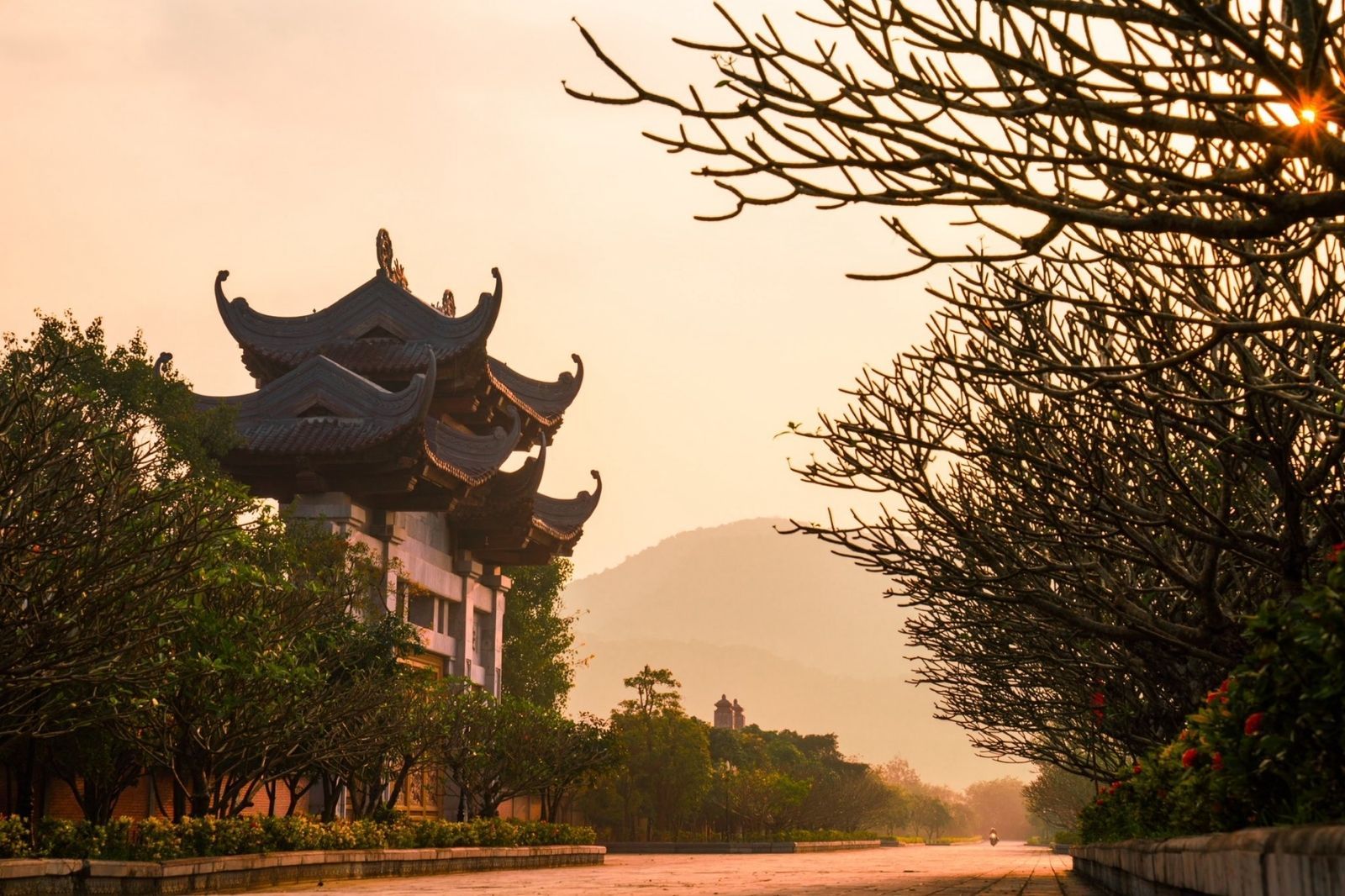
Sunset at Bai Dinh Pagoda
Photo: Sunset at Bai Dinh Pagoda  

Main Attractions at Bai Dinh Pagoda

The 539-hectare pagoda complex is divided into an ancient pagoda area (27 ha) and a new pagoda area (80 ha). Below are the highlights:

New Pagoda Area

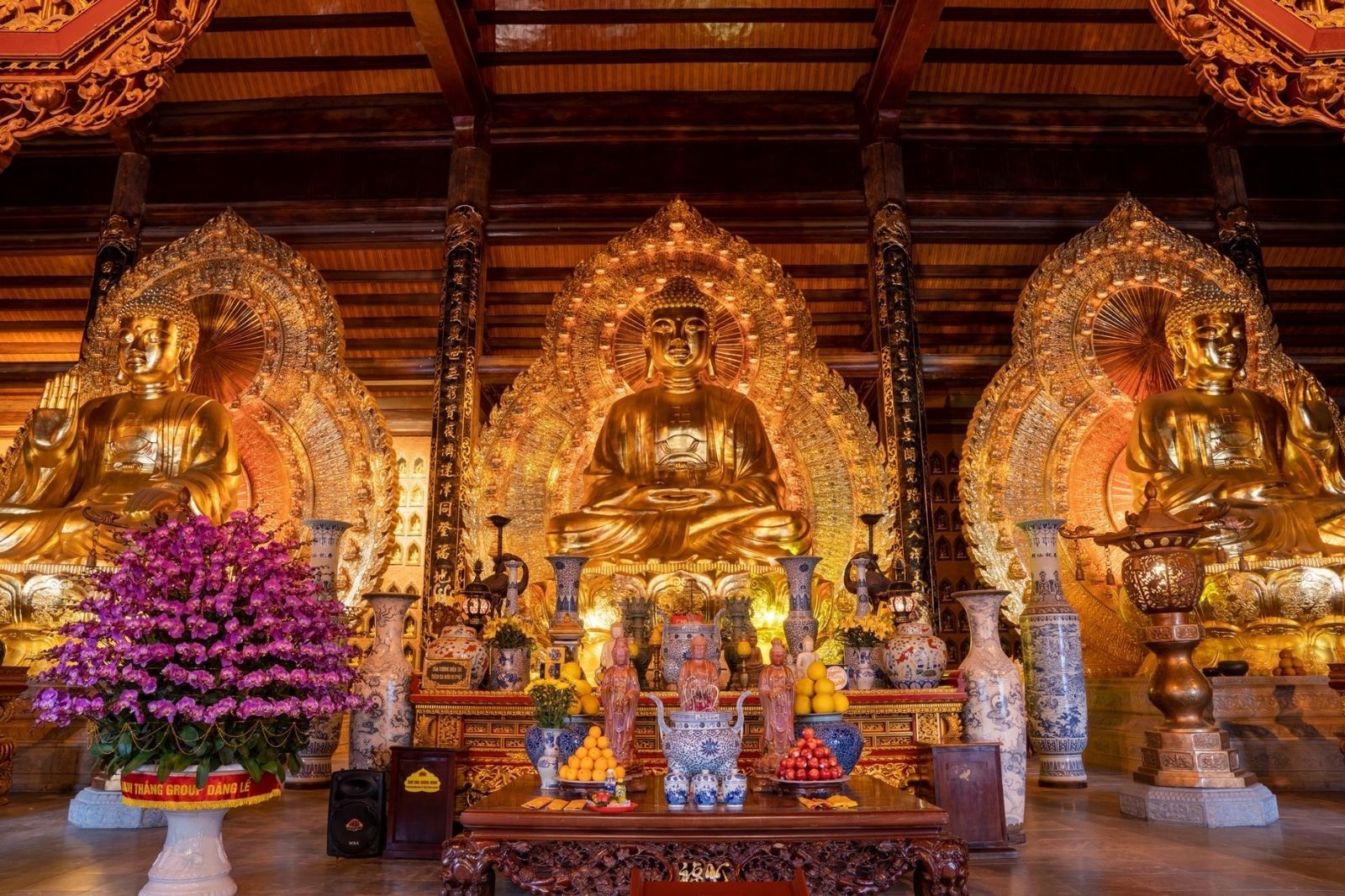
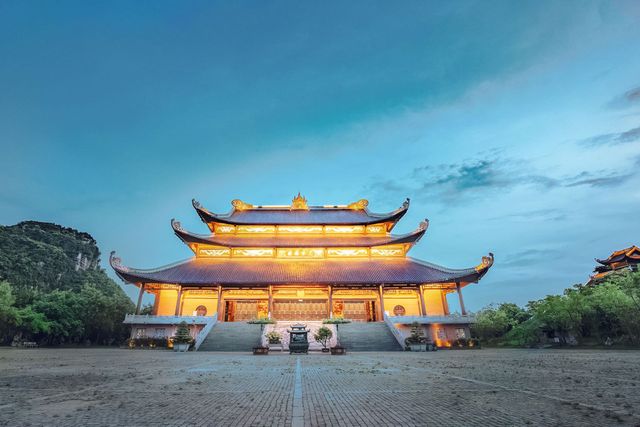
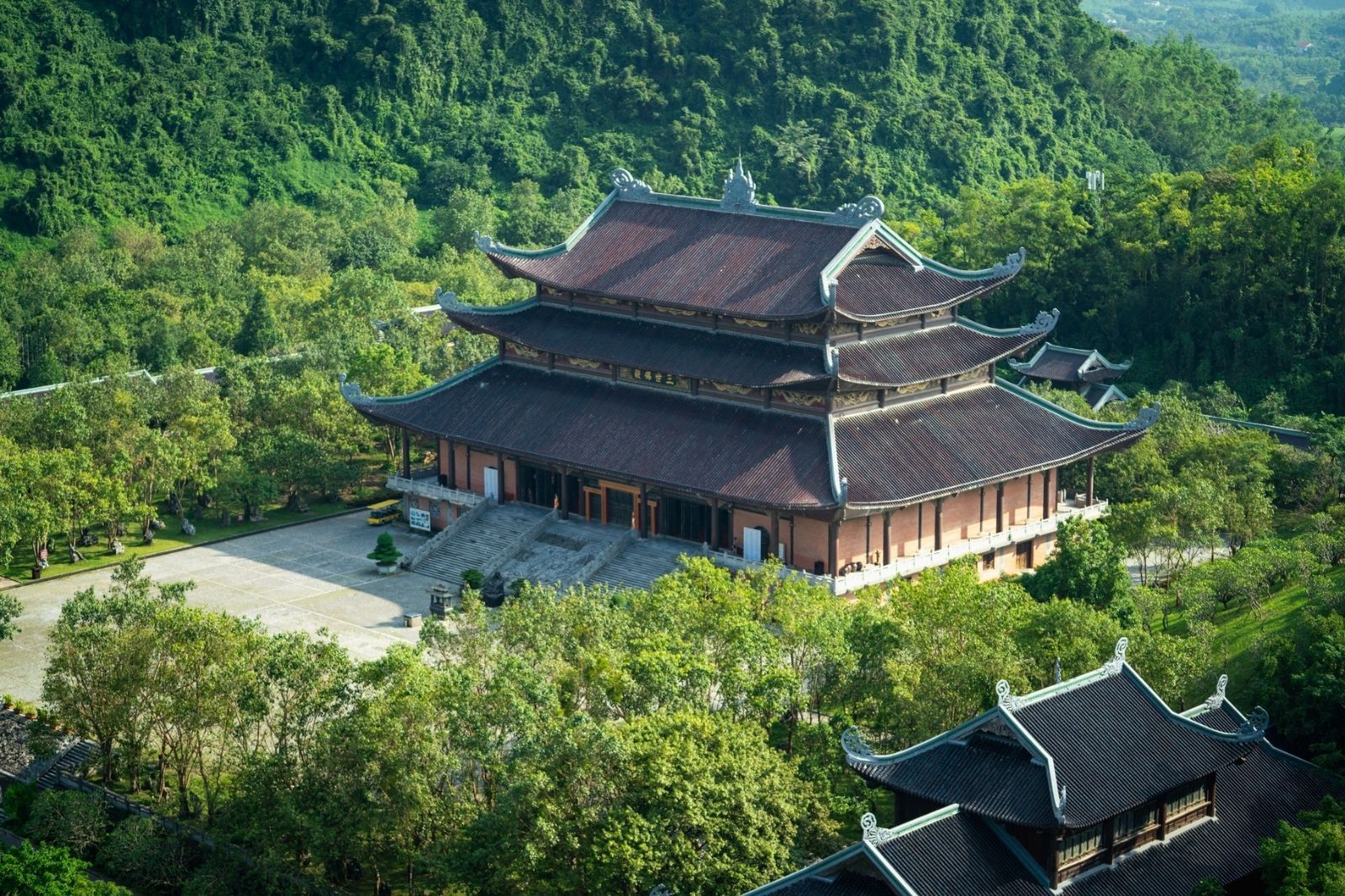
  • Tam The Hall: Dedicated to the Three Buddhas of Three Times in bronze, each 7.2m tall and weighing 50 tons.
  • Phap Chu Hall: Houses Asia's largest bronze Phap Chu Buddha statue (100 tons, 10m tall).
  • Quan Am Hall: Bronze Guan Yin (Avalokiteshvara) statue 9.57m tall, weighing 80 tons.
  • Arhat Corridor: Longest in Asia (1,052m) featuring 500 Arhat statues carved from Ninh Binh green stone, standing 2.5m tall.
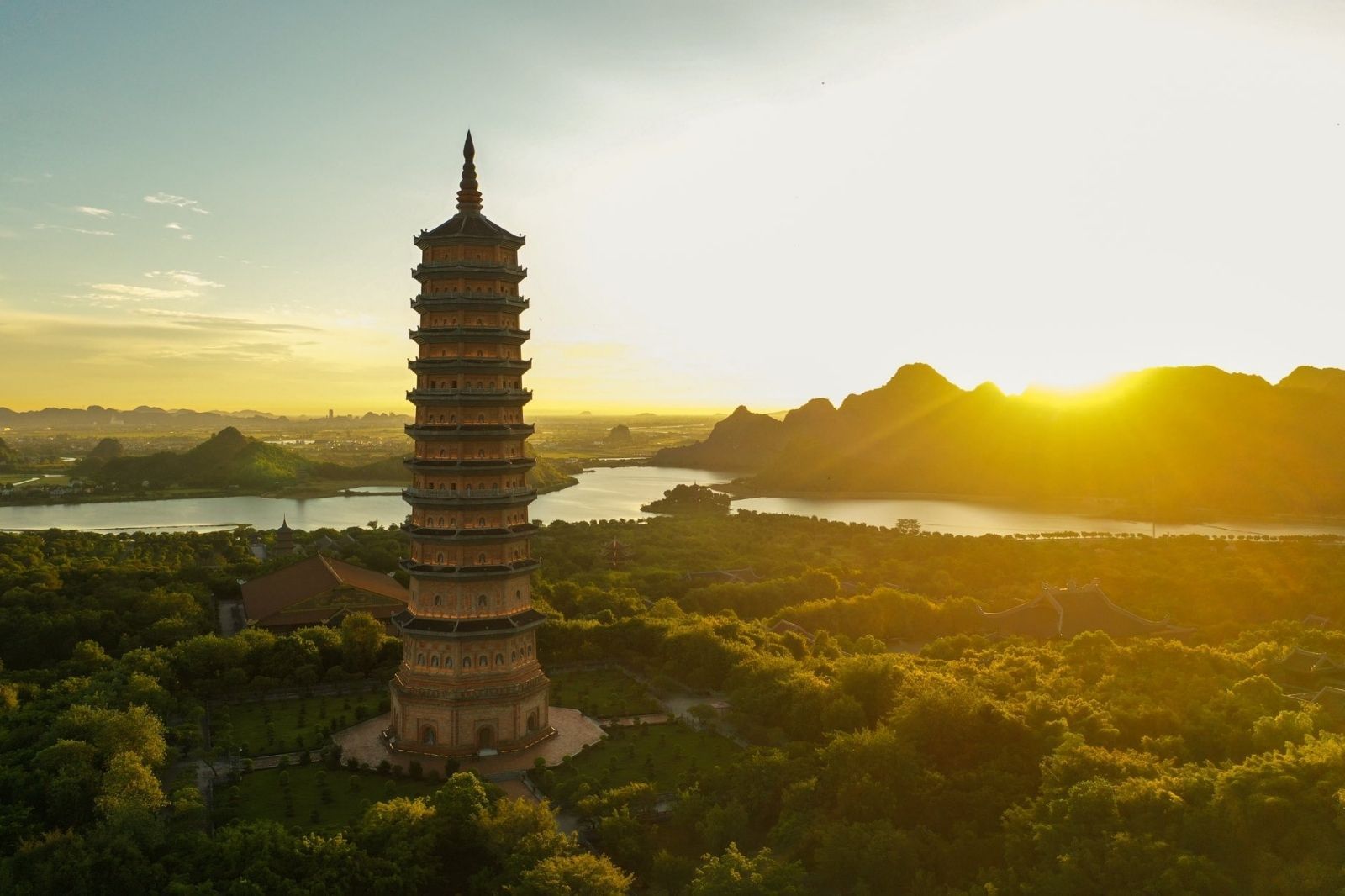
  • Stupa (Bao Thap): Tallest in Asia (100m, 13 stories), displaying Buddha relics from India and Myanmar. Elevator ticket to top: 50,000 VND/person.
  • Bell Tower: Featuring Vietnam's largest bronze bell (36 tons) and a 70-ton bronze drum.
  • Maitreya Buddha Statue: Largest in Southeast Asia (100 tons, 10m tall), located outdoors.
  • Dam Thi Lake and Life-Release Pond: Places for relaxation and sightseeing.

Ancient Pagoda Area

  • Light Cave: Dedicated to Buddha and deities, 25m long, accessible via 300 stone steps.
  • Dark Cave: Dedicated to Holy Mothers and Fairies, with 7 chambers, stalactites, and a jade well.
  • Saint Nguyen Temple: Bronze statue worshipping Ly Quoc Su Nguyen Minh Khong.
  • Cao Son Temple: Dedicated to the western guardian deity of Hoa Lu, leaning against the mountain.
  • Jade Well: Largest in Vietnam (30m diameter, 6m depth), water never runs dry.

To explore everything, you need at least 3-4 hours. You can combine your visit with nearby Trang An to enrich your trip.

Tam The Hall at Bai Dinh Pagoda
Photo: Tam The Hall at Bai Dinh Pagoda 

Architecture and Outstanding Records of Bai Dinh Pagoda

Bai Dinh Pagoda's architecture carries traditional Vietnamese identity: curved roofs shaped like phoenix tails, utilizing Ninh Binh green stone, ironwood, and Bat Trang glazed tiles. The vast space harmonizes with nature, distinct from Chinese architecture.

The pagoda holds numerous records:

  • Largest pagoda complex in Vietnam (539 ha).
  • Largest gold-gilded bronze Buddha statue in Asia (100 tons).
  • Longest Arhat corridor in Asia.
  • Tallest stupa in Asia (100m).
  • Largest bronze bell in Vietnam (36 tons).
  • Largest Jade Well in Vietnam.
  • Most Arhat statues (500 statues) and most Bodhi trees (100 trees brought from India).

These records were recognized between 2009 and 2012, affirming the scale and cultural value of the pagoda.

Bao Thap Stupa at Bai Dinh Pagoda
Photo: Bao Thap Stupa at Bai Dinh Pagoda  

Bai Dinh Pagoda Festival

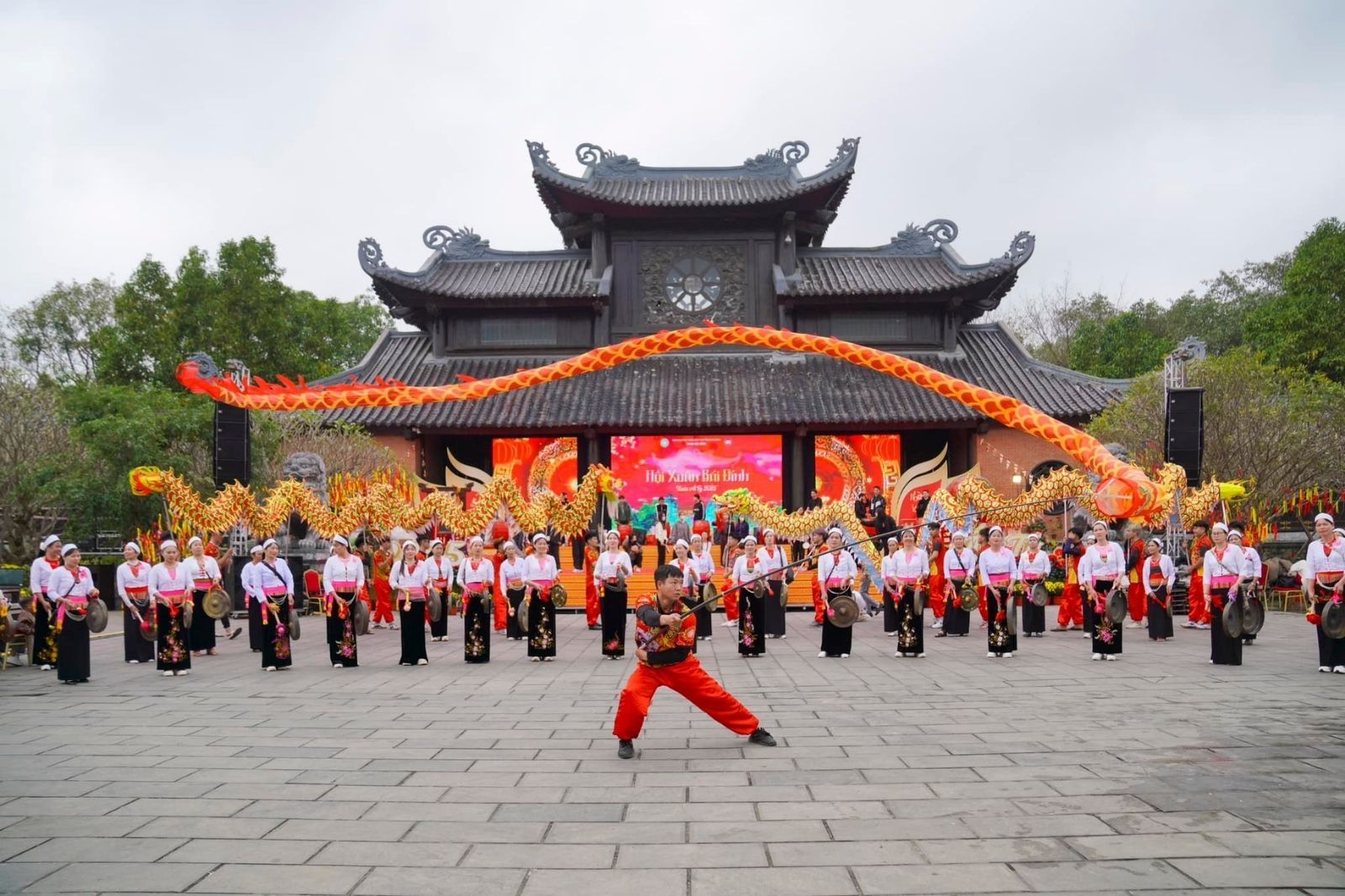
Bai Dinh Pagoda Festival is the largest cultural and spiritual event in the region, lasting from the afternoon of the 1st day of the Lunar New Year until the end of the 3rd lunar month, with the official opening ceremony held on the 6th day of the first lunar month.

The festival comprises two main parts:

  • Ceremonial Part: Focuses on traditional rituals such as burning incense to worship Buddha, commemorating Saint Nguyen Minh Khong, offering sacrifices to God Cao Son (the deity guarding the western gateway of Hoa Lu ancient capital), and worshipping Holy Mother Thuong Ngan. The highlight is the solemn palanquin procession from the ancient pagoda area to the new pagoda area.
  • Festival Activities Part: Takes place with rich cultural and artistic activities, including folk games, cave visits, traditional art performances such as Cheo singing and Xam singing, alongside theatrical performances reenacting King Dinh Tien Hoang's throne ascension ritual and Emperor Quang Trung's flag dedication ceremony.

The festival attracts millions of Buddhists and tourists, presenting a unique blend of Buddhist beliefs, Mother Goddess worship, and Confucianism, creating an extraordinarily sacred and vibrant early spring atmosphere.

Festival at Bai Dinh Pagoda
Photo: Festival at Bai Dinh Pagoda  

Dining and Accommodation Near Bai Dinh Pagoda

After completing your pilgrimage and exploration at Bai Dinh Pagoda, choosing suitable places to eat and rest will help you recharge and relax completely. Below are detailed suggestions for dining and accommodation near the pagoda area:

Featured Cuisine

  • Must-try Ninh Binh specialties: Visitors must sample the famous dishes of the ancient capital, such as Mountain goat meat, Crispy rice, Mountain snails, and Eel vermicelli.
    • Location suggestions: Restaurants around the pagoda area (e.g., Bai Dinh Restaurant) or Trang An area offer affordable prices (approx. 50,000 - 150,000 VND/dish).
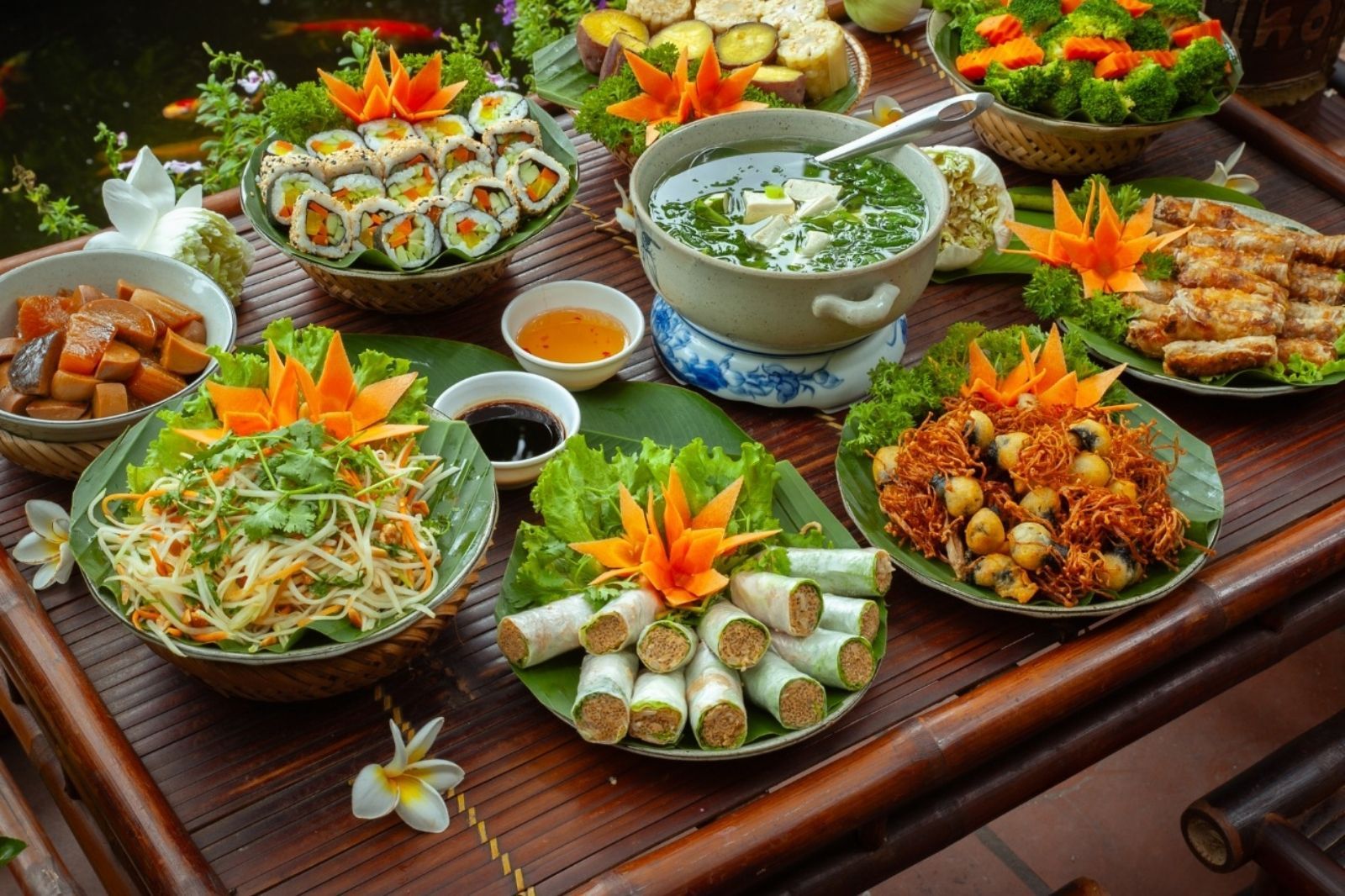
  • Vegetarian options: For Buddhists or vegetarian travelers, Bai Dinh Pagoda features a vegetarian restaurant right on the premises serving pure, serene vegetarian dishes at reasonable prices.
Vegetarian cuisine
Photo: Vegetarian cuisine  

Comfortable Accommodation 

  • Staying near Pagoda/Trang An:
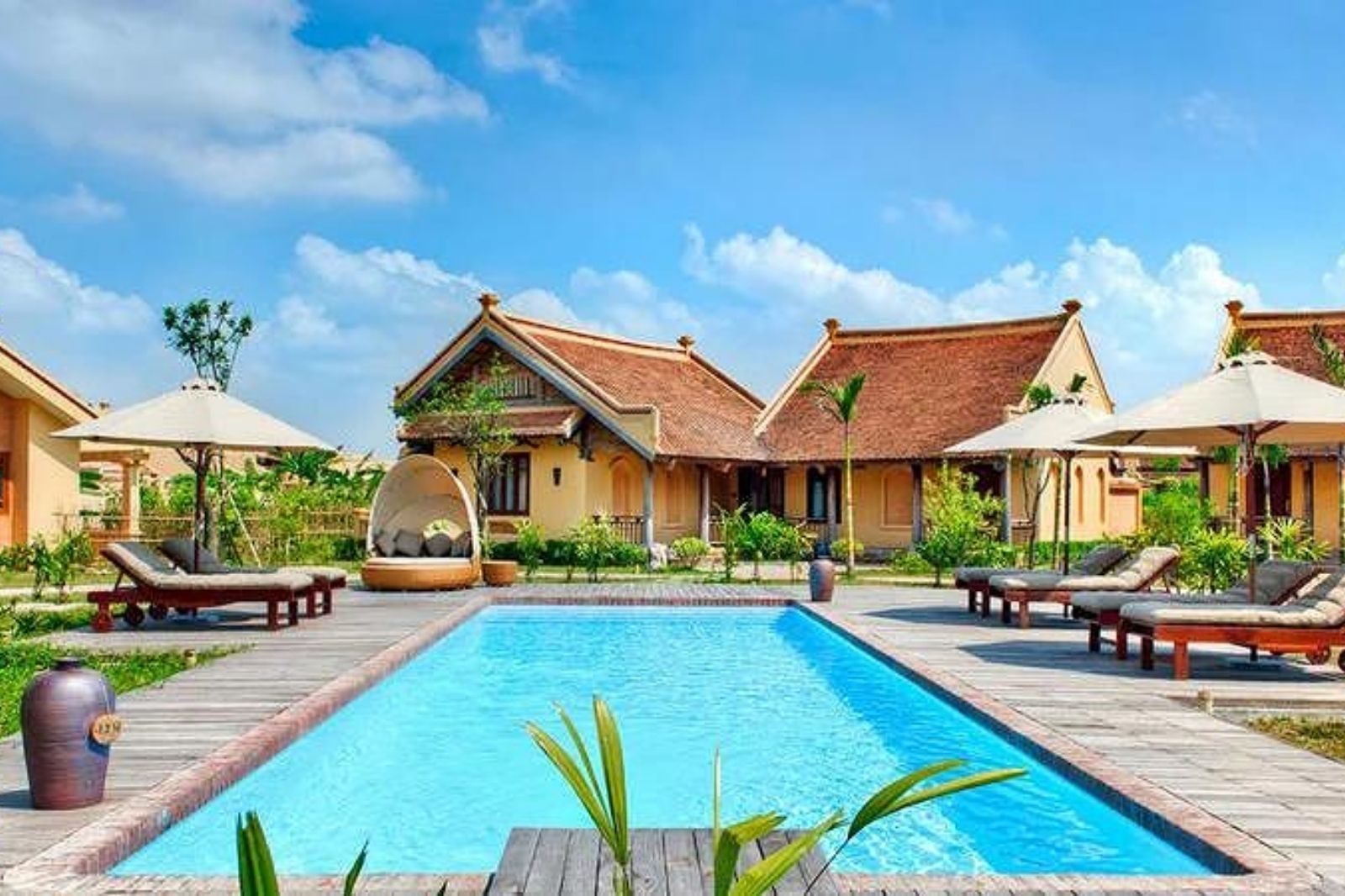
    • Luxury resorts: Ninh Binh Hidden Charm Resort (4-star standard, around 1,500,000 VND/night), offering a comfortable and peaceful experience.
    • Homestay/Bungalow: Homestays/bungalows in Trang An area are budget-friendly options close to nature (prices starting from 500,000 VND/night).
  • Staying in Ninh Binh City Center:
    • If you want convenient access to other nearby attractions, you can choose hotels in the city center (about 12 km from the pagoda) such as Emerald Resort or Legend Hotel.
Emerald Resort
Photo: Emerald Resort

Bai Dinh Pagoda is not only a monumental religious architectural work but also a sanctuary preserving the thousand-year cultural, historical, and spiritual soul of the Vietnamese nation. A trip here will bring you a sense of peace amidst nature, awe before Asian records, and pride when standing in the ancient capital of Hoa Lu. If you want a complete, comfortable journey without worrying about transportation, dining, or itineraries, let Sovaba Travel accompany you on your Bai Dinh Pagoda travel tour. 

To not miss out on the opportunity to discover this heritage site, contact Sovaba Travel today! In addition, you can refer to other diverse Ninh Binh Tour options such as the Ninh Binh 2 Days 1 Night Tour (combining Trang An, Tam Coc, Mua Cave), Ninh Binh - Ha Long Tour, or Cuc Phuong National Park Exploration Tour. Please contact hotline 0934.733.223 or visit sovaba.travel for advice on the most suitable itinerary!

Articles related to Bai Dinh Pagoda