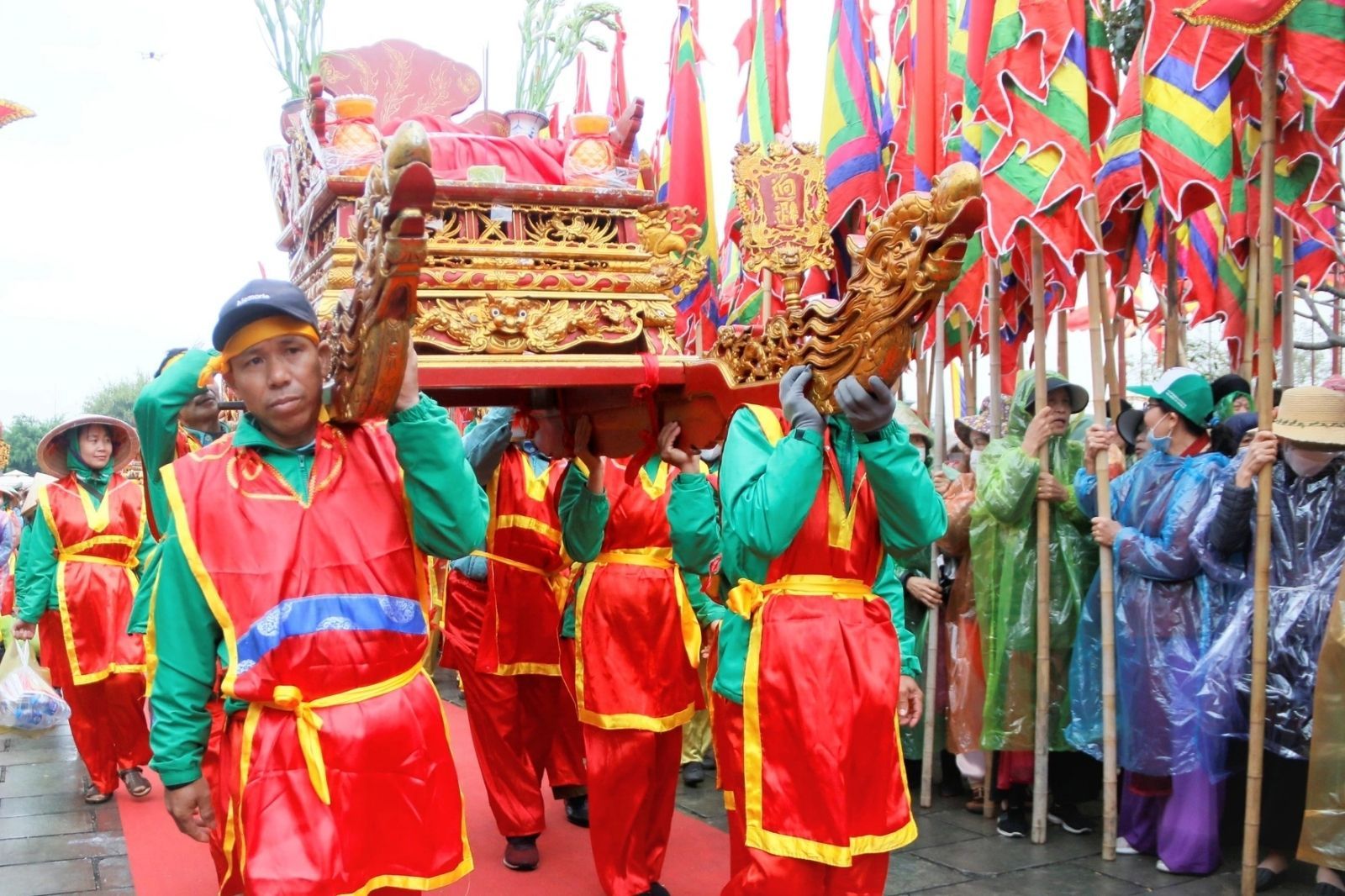
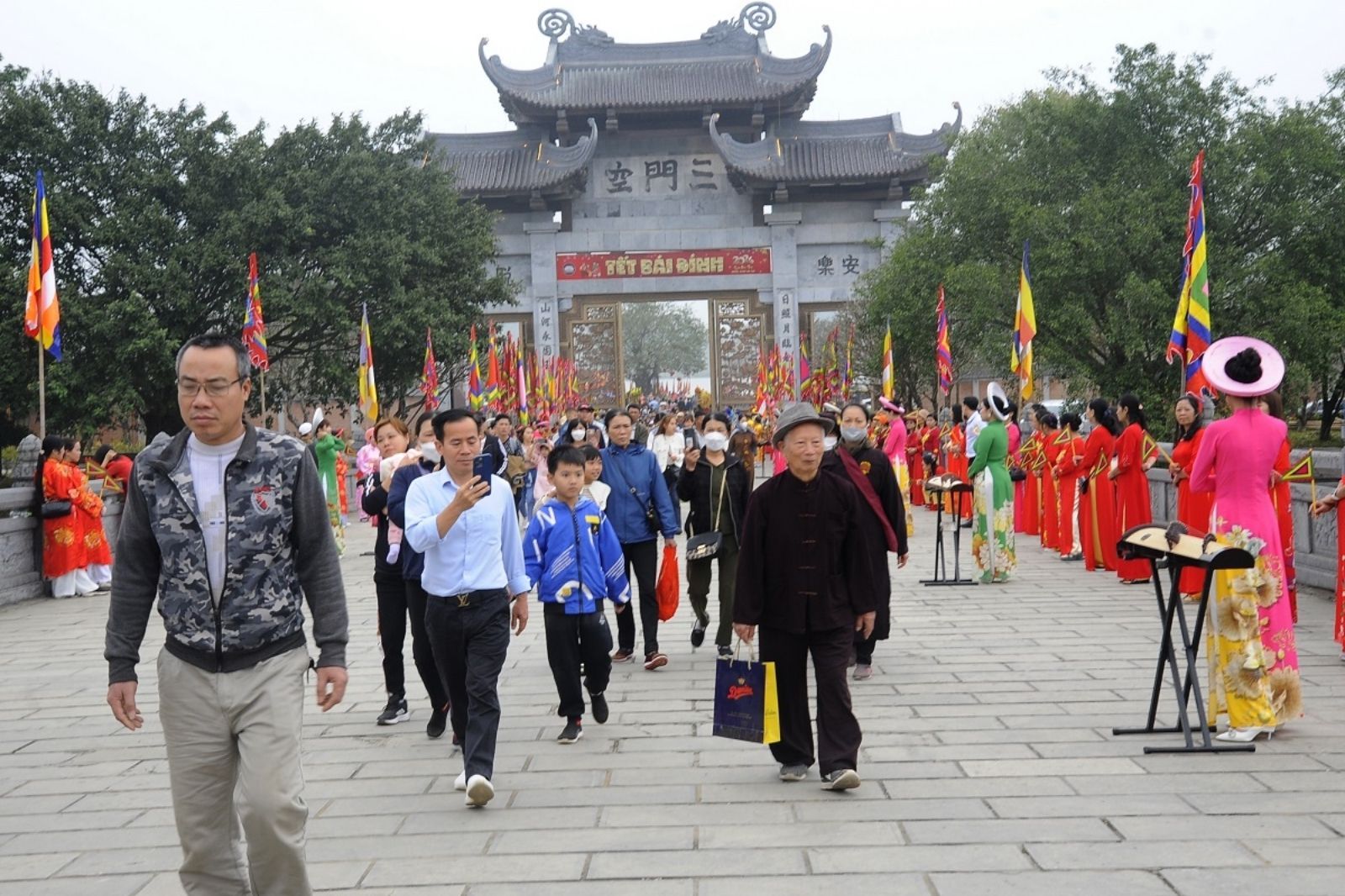
Bai Dinh Pagoda Festival originates from the ancient pagoda complex founded during the Dinh Dynasty (10th–11th centuries), associated with the Dinh – Early Le – Ly dynasties, a period when Buddhism served as the national religion and profoundly influenced the spiritual life of the Vietnamese people. The pagoda was founded by Ly Quoc Su Nguyen Minh Khong – a profound Zen master. The name "Bai Dinh" also carries a special meaning: "Bai" means worshiping heaven, earth, and the Buddhas, while "Dinh" refers to a high mountain peak, symbolizing worship in a sacred mountain realm.
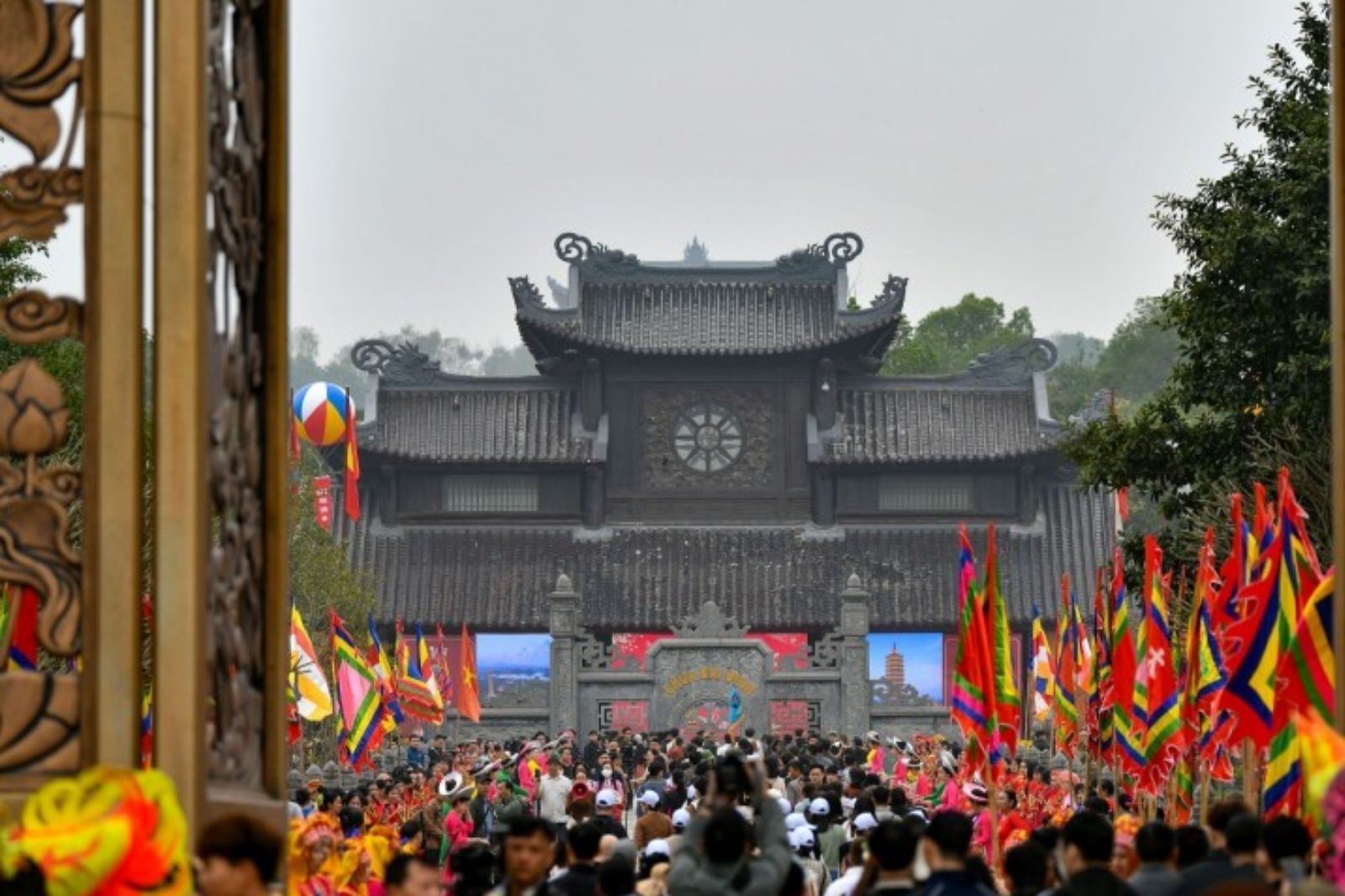
Every spring, the festival is held to commemorate the contributions of national heroes such as Dinh Tien Hoang, Emperor Quang Trung, as well as to honor saints such as Ly Quoc Su Nguyen Minh Khong or Deity Cao Son. This is a unique intersection of Buddhist beliefs, Mother Goddess worship, and Confucian spirit – fully reflecting the cultural identity of Dai Viet. Not only is it an occasion to pray for national peace, prosperity, and favorable weather, but the festival also contributes to preserving traditional artistic values such as Cheo, Xam, Ca tru singing, which are characteristic intangible heritages of Ninh Binh. Therefore, the spring journey to Bai Dinh not only carries spiritual significance but also opens up opportunities to learn history, enrich knowledge, and experience the cultural depth of Vietnam.