Ba Mu Pagoda Hoi An: Cultural and Spiritual Symbol of Hoi An Residents

Central

Da Nang

Sovaba.travel

Updated at: 24/09/2026

1. Where is Ba Mu Pagoda?

Ba Mu Pagoda is located right in the center of Hoi An Ancient Town, former Quang Nam Province (now Da Nang City), making it extremely convenient for visitors to explore.

  • Exact address: No. 675 Hai Ba Trung Street, Minh An Ward, Hoi An City.
  • Prime location: Located on Hai Ba Trung street, only about 300-400 meters (about a 5-7 minute walk) from the Covered Bridge (Chua Cau). From Fujian Assembly Hall or major streets in the Ancient Town, simply go straight along Hai Ba Trung Street to reach it.

Detailed directions:

  • If walking from the Covered Bridge (Chua Cau): Head towards Nguyen Thi Minh Khai or Hai Ba Trung Street, turn right onto Hai Ba Trung, and walk straight for about 400 meters. The three-entrance gate (Tam Quan) will appear on your right with vibrant colors standing out in the ancient town.
  • From the Ancient Town parking lot: Follow Tran Phu Street - turn onto Hai Ba Trung Street - go straight to No. 675.
  • If travelling by motorbike or car: From Da Nang, follow Highway 1A - Vo Chi Cong - turn onto the access road to Hoi An - reach Hai Ba Trung Street. There are free or low-cost parking spots available near the monument.

Entrance fee: Completely free. Opening hours are usually from early morning to early evening (around 6:00 AM – 6:00 PM), suitable for visiting at any time of day, especially in the early morning or at sunset for a quiet atmosphere and beautiful lighting.

Today, the most prominent remaining part of the complex is the Tam Quan Gate (Three-Entrance Gate), a well-preserved and beautifully restored structure. The area in front of the gate is spaciously designed with a pond, greenery, and lawns, creating a peaceful landscape that has become one of the most impressive check-in spots in the heart of Hoi An Ancient Town.

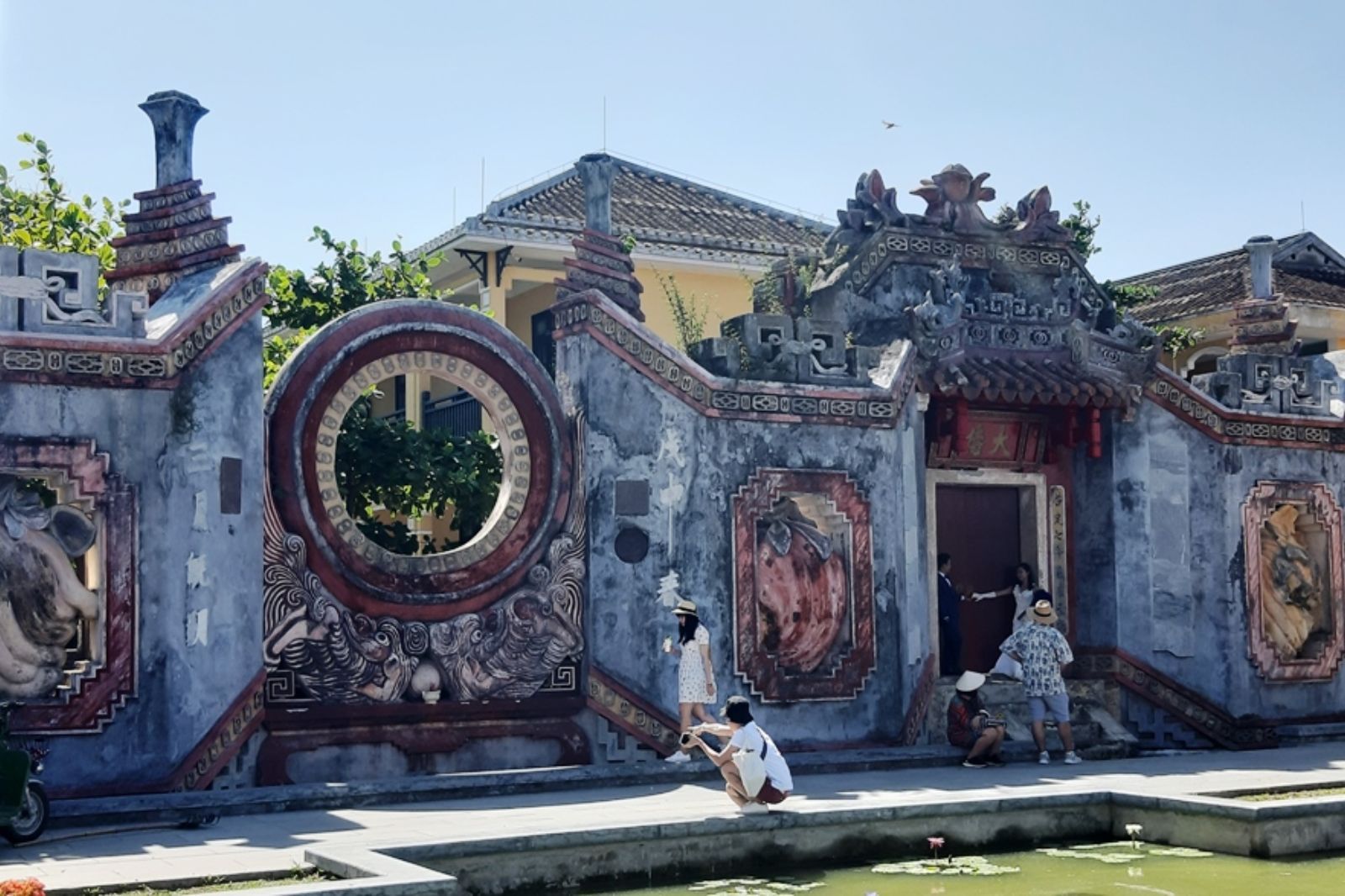
Ba Mu Pagoda located in the heart of Hoi An Ancient Town
Photo: Ba Mu Pagoda located in the heart of Hoi An Ancient Town  

2. The history of Ba Mu Pagoda

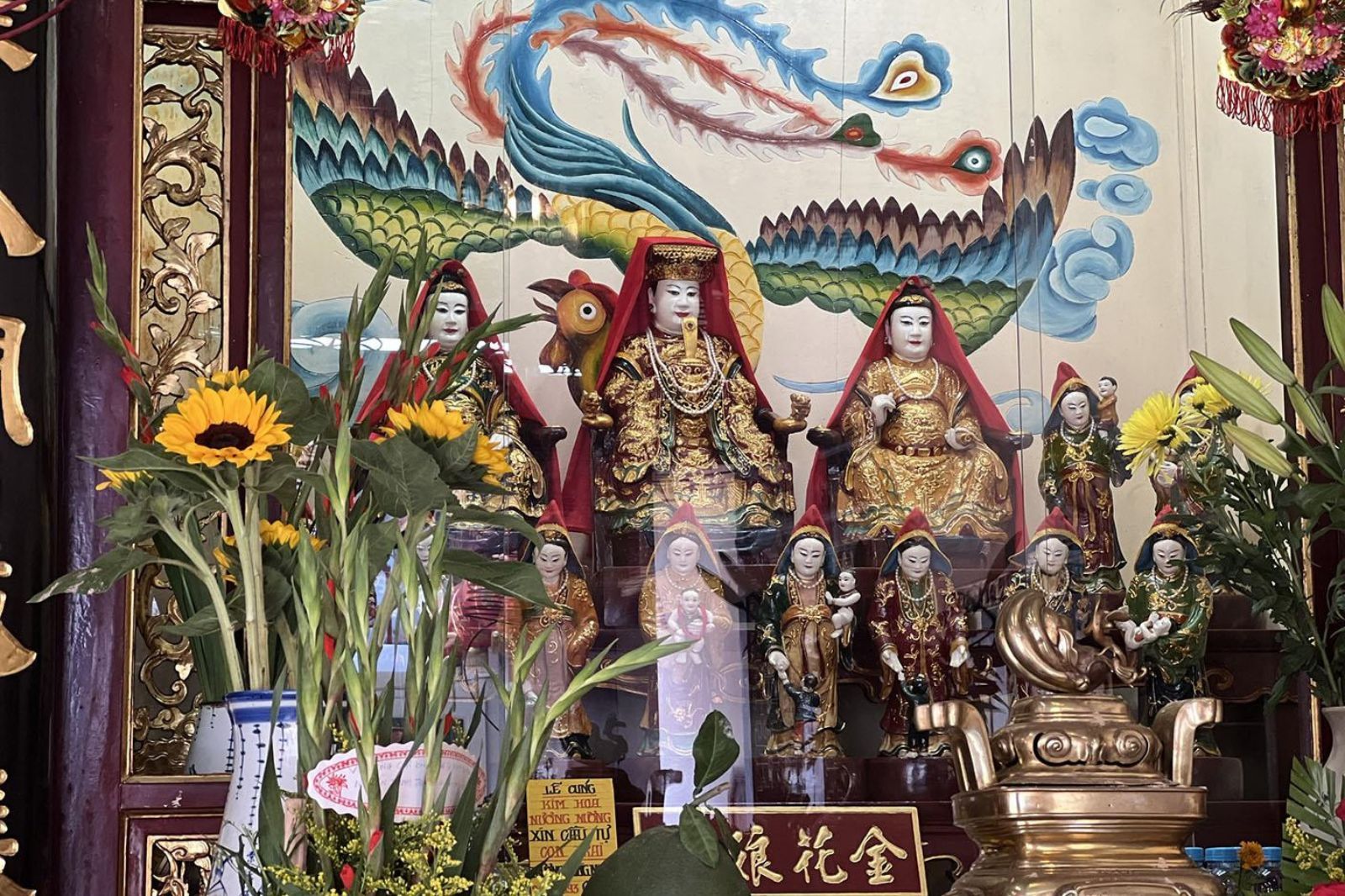
Ba Mu Pagoda is not actually a traditional Buddhist temple, but rather a folk religious structure of the Minh Huong community – Chinese immigrants who settled in the ancient Minh Huong village of Hoi An. According to historical records, in the 17th century, two structures, Cam Ha Palace and Hai Binh Palace, were built side by side at the center of the Minh Huong community. Among them, Hai Binh Palace was affectionately known by locals as "Ba Mu Pagoda." The site worships the Three Childbearing Goddesses (Ba Ba Chua Thai Sanh) and the Twelve Midwife Goddesses (Muoi Hai Ba Mu), folk deities who protect childbirth and care for infants. This belief originated from Chinese culture and was later adopted and blended by the Vietnamese, becoming a symbol of praying for fertility, safe delivery, and mother-and-child health.

Over historical upheavals, wars, and time, most of the architectural structures in the monument complex were damaged. Today, the Tam Quan Gate is the most prominent remaining feature and is considered one of Hoi An's oldest historical architectural works. In recent years, especially from 2018 to 2024, the monument underwent large-scale restoration and renovation, becoming a standout attraction in Hoi An Ancient Town that draws numerous domestic and international tourists. The name "Ba Mu Pagoda" stems from a simple, familiar term used by local residents, reflecting the community's long-standing connection to folk beliefs and local cultural life.

3. What is special about the architecture of Hoi An's Ba Mu Pagoda?

The highlight of the Ba Mu Pagoda complex is the Tam Quan Gate, a structure rich in East Asian architectural style and considered a signature architectural icon of Hoi An Ancient Town. The gate was built with ancient fired bricks, covered with yin-yang tile roofs, combined with a pillar system and intricately carved details. The overall structure is designed in the shape of a stylized scroll, featured by a large central circle – a symbol of the moon, which in folk belief serves as a pathway for deities. The reliefs and decorative motifs on the gate clearly reflect the cultural interplay between Vietnam and China. While the layout and structure evoke traditional Vietnamese temple and pagoda architecture, the carving techniques and patterns possess the delicate craftsmanship characteristic of Chinese art.

In addition, the vibrant colors of the structure combined with the moss-covered layer over time create a beauty that is both ancient and contemplative. The area in front of the gate is landscaped with a pond, green lawns, and ancient shade trees, providing an airy space and an impressive reflection effect, especially at sunset. Thanks to the harmony between ancient architecture, green landscape, and serene atmosphere, Ba Mu Pagoda has become a beloved stop for many tourists exploring Hoi An.

Tam Quan Gate of Ba Mu Pagoda
Photo: Tam Quan Gate of Ba Mu Pagoda 

4. The cultural and spiritual values of Ba Mu Pagoda

Not only holding architectural and historical value, Ba Mu Pagoda also occupies a special place in the spiritual life of Hoi An residents. Through many generations, the pagoda has been a place to entrust faith and aspirations, clearly reflecting the distinctive cultural and spiritual values of the ancient Hoi An community.

  • Worship of Ba Mu (Midwife Goddesses): Ba Mu represents deities protecting childbirth, praying for children, and family peace, unlike traditional Buddhist temples.
  • Cultural value: Demonstrates the harmony between Vietnamese folk beliefs and Minh Huong Chinese culture. It stands as proof of the multicultural community in Hoi An over centuries.
  • Modern significance: For locals, the pagoda is a place to express dreams of family happiness and abundant descendants. Visitors coming here can not only check-in but also feel the vibrant spiritual atmosphere of the ancient town.

Today, despite the passage of time, the cultural and spiritual values of Ba Mu Pagoda remain preserved and respected, contributing to the heritage depth of Hoi An Ancient Town – a place where folk beliefs and community life are tightly intertwined.

5. Rituals, customs, and beliefs associated with Ba Mu Pagoda

Religious practice at Ba Mu Pagoda is closely tied to the custom of worshipping the Midwife Goddesses, praying for smooth childbirth and healthy children.

  • Common rituals: Locals usually make simple offerings with fresh flowers, fruits, and clean water, without the complexity of major festivals.
  • Custom of praying for children: Many families come here to offer incense and pray for offspring, especially couples experiencing infertility.
  • Feast Day of Ba Mu: Usually takes place on the 1st day of the 2nd lunar month at nearby assembly halls such as the Fujian Assembly Hall, but locals still visit Ba Mu Pagoda to perform rituals throughout the year.
  • Folk belief: Ba Mu is seen as an approachable deity who protects women and children, embodying the desire for a peaceful life among Hoi An residents past and present.

Although large festivals are not held frequently, the pagoda space retains its sacredness, leading many young people to maintain the habit of visiting and praying.

Associated with the custom of worshipping Ba Mu
Photo: Associated with the custom of worshipping Ba Mu 

6. Must-try experiences when visiting Ba Mu Pagoda in Hoi An

Ba Mu Pagoda is an ideal destination to combine spirituality, check-in, and relaxation in the ancient town.

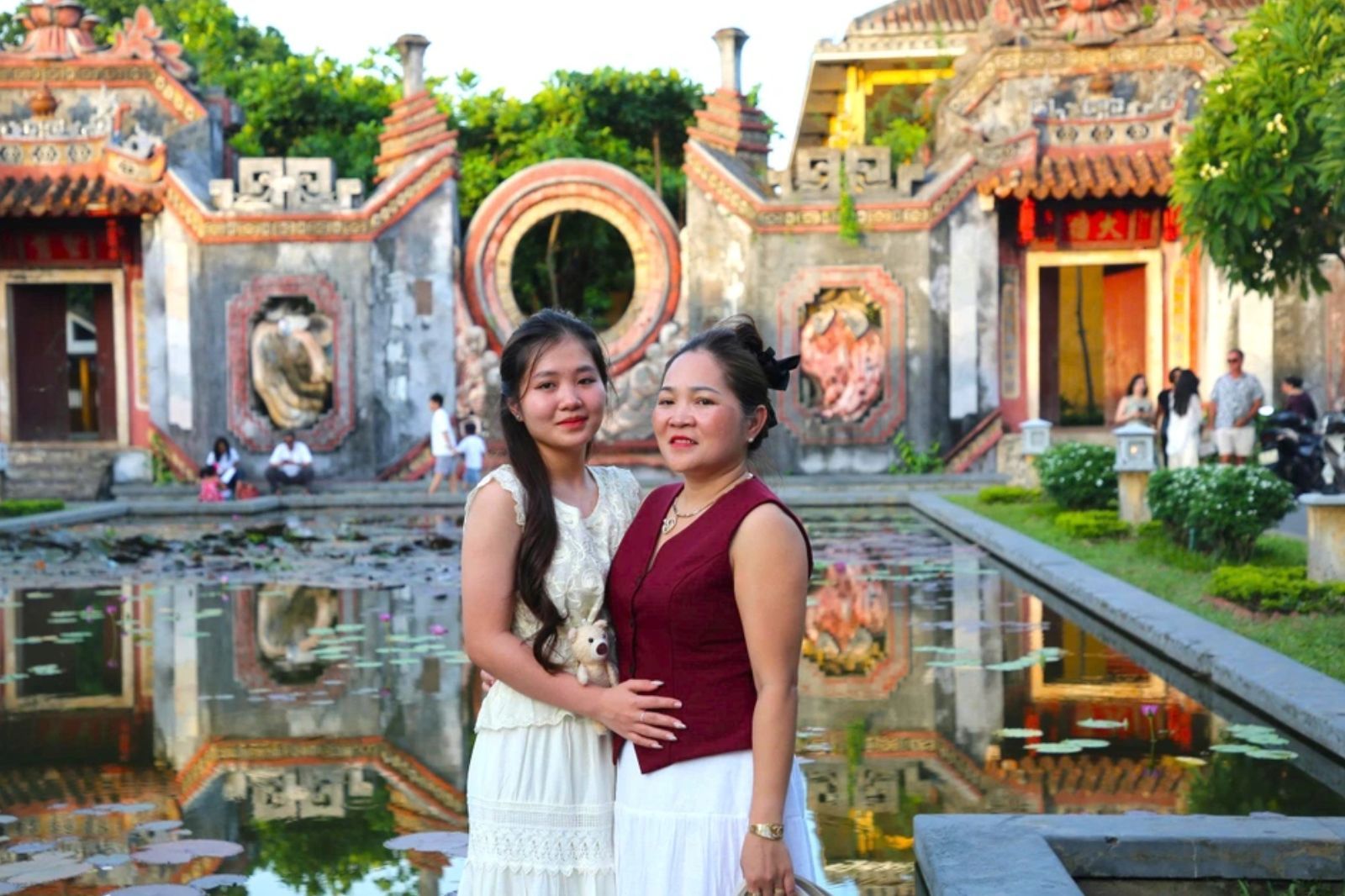
  • "Instagram-worthy" check-in: The vibrant Tam Quan Gate, lotus pond, and greenery provide a perfect background for photos. It is especially beautiful at sunset when lit up.
  • Relaxing stroll: A peaceful atmosphere with a pond, lawn, and walking paths, ideal for sightseeing, meditation, or artistic photography.
  • Combined discovery: Visit after visiting the Covered Bridge (Chua Cau), Fujian Assembly Hall, or taking a walk around the ancient town. Early morning or late afternoon is the most ideal time.
  • Spiritual experience: Light incense and pray for peace—a personal experience that helps you gain a deeper understanding of the spiritual life of Hoi An people.
Taking photos at Tam Quan Gate of Ba Mu Pagoda
Photo: Taking photos at Tam Quan Gate of Ba Mu Pagoda 

Ba Mu Pagoda Hoi An is not only an ancient spiritual site, but also a place preserving the faith, identity, and spiritual life of Hoi An residents across generations. Amidst the relaxed pace of the ancient town, the pagoda stands as a cultural anchor, helping visitors better appreciate the historical depth and unique religious values of this heritage land. If you have the opportunity to visit Hoi An, you can combine a visit to Ba Mu Pagoda into your ancient town exploration itinerary, alongside the Covered Bridge, ancient houses, assembly halls, and sampling delicious local cuisine. To make your trip more fulfilling and convenient, choosing a Hoi An ancient town tour with a culturally knowledgeable tour guide will help you gain deeper insights into each monument, story, and traditional lifestyle, making your visit not just sightseeing, but a true heritage experience journey.

Loading......

Featured destinations