Bich Dong Pagoda: The Ancient Temple Associated with Rocky Mountains and the Legend of "Nam Thien De Nhi Dong"

Northern

Ninh Binh

Tam Coc - Bich Dong

Sovaba.travel

Updated at: 24/09/2026

1. Introduction to Bich Dong Pagoda

Bich Dong Pagoda is an ancient temple built on the Trang An limestone mountain range, located in Dam Khe village, Ninh Hai commune, Hoa Lu district, Ninh Binh province. This is a historical and cultural relic within the Trang An - Tam Coc - Bich Dong Scenic Landscape Complex, recognized by UNESCO as a World Cultural and Natural Heritage site in 2014. The pagoda is famous for its architecture of "pagoda in the cave, cave in the pagoda", leaning against limestone mountains, creating a magnificent yet peaceful natural picture. Known as "Nam Thien De Nhi Dong" (the second most beautiful cave under the Southern sky), Bich Dong Pagoda is not only a place of pilgrimage but also an ideal destination for those who love exploring Vietnamese history and culture.

Covering an area of about 350 hectares, this area includes a system of caves, rivers, and peaceful villages, offering a diverse range of experiences from spiritual sightseeing to ecotourism. Every year, the pagoda welcomes thousands of visitors, especially during festival seasons or the ripe rice season.
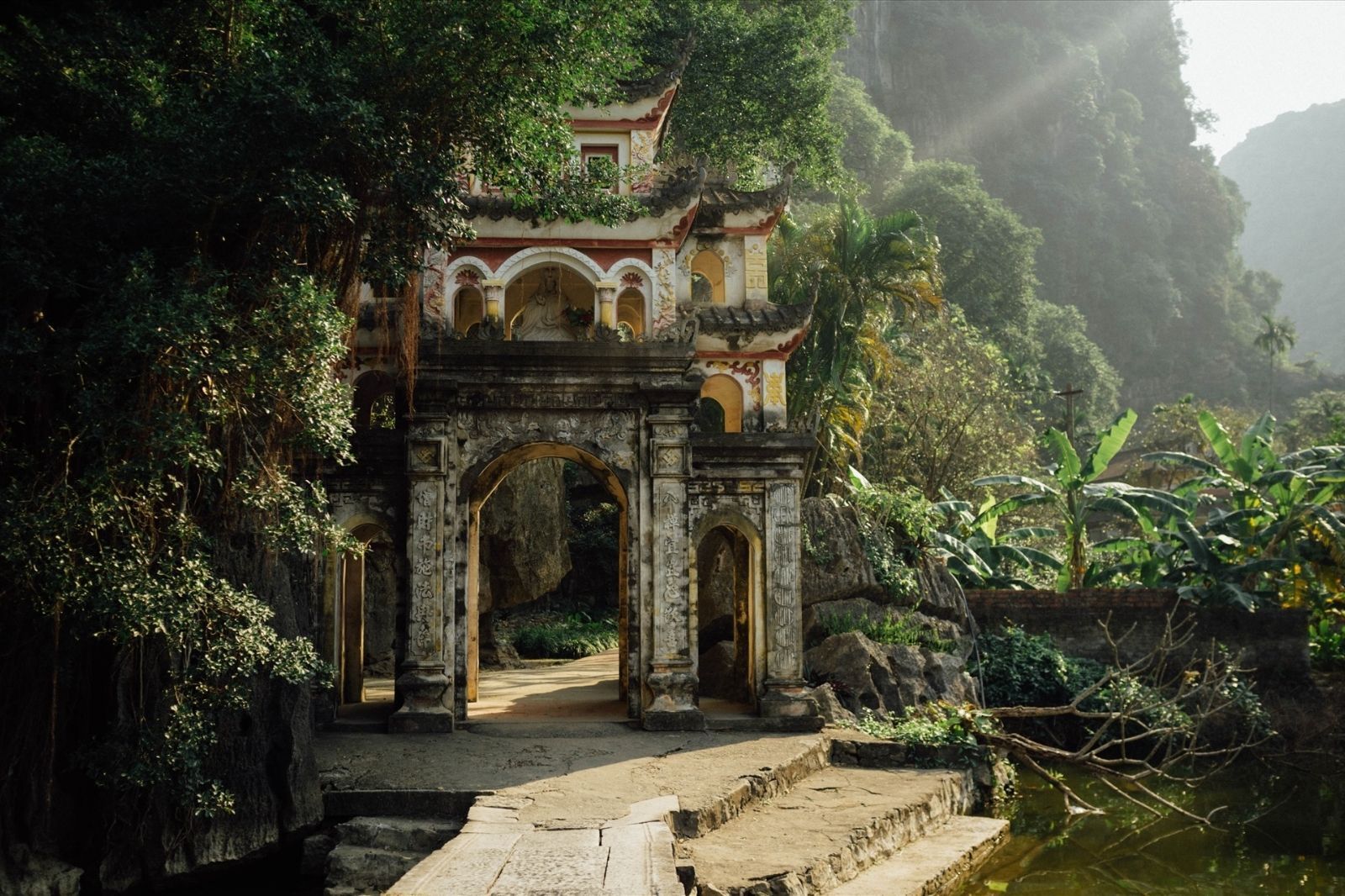
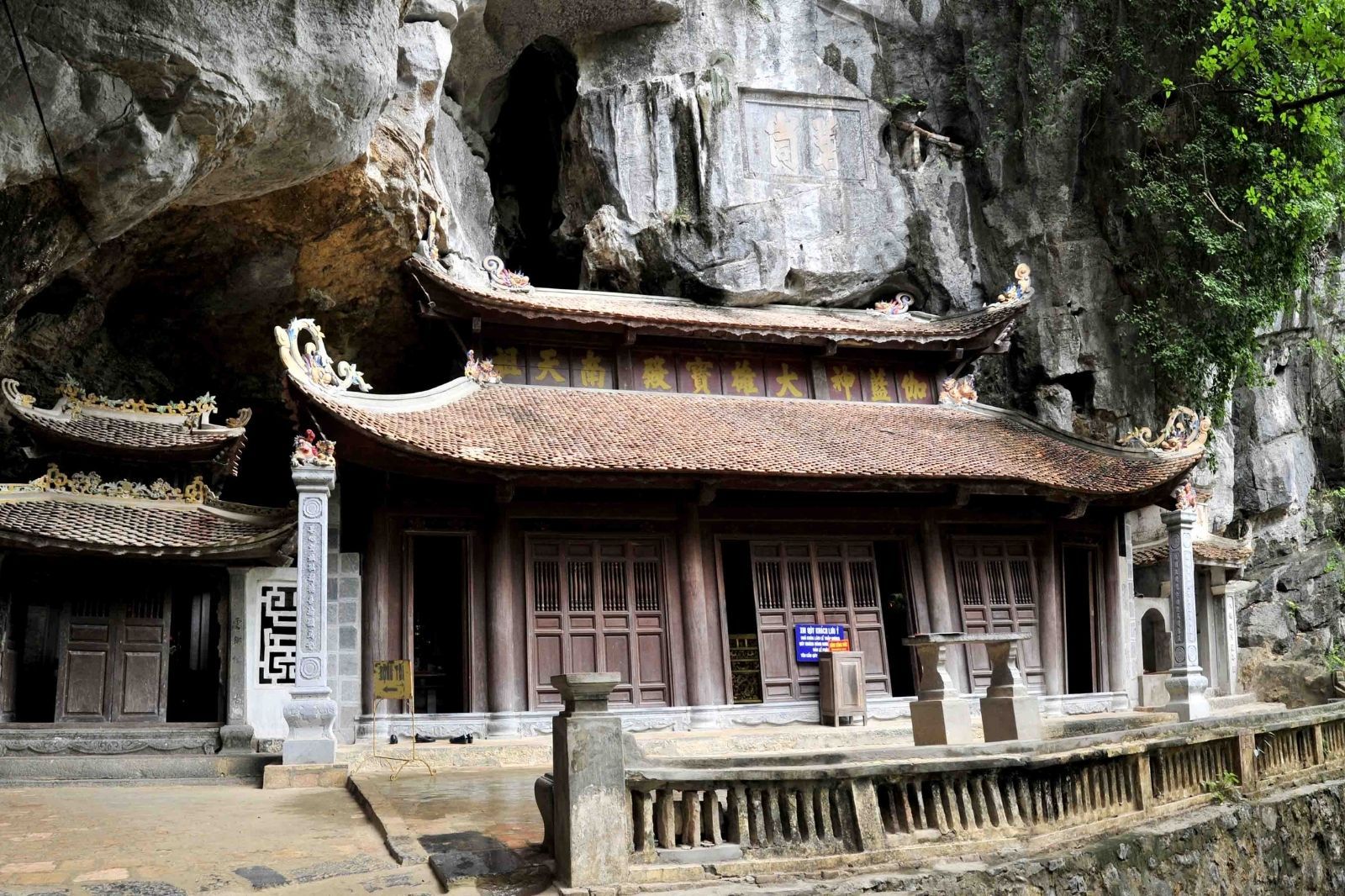
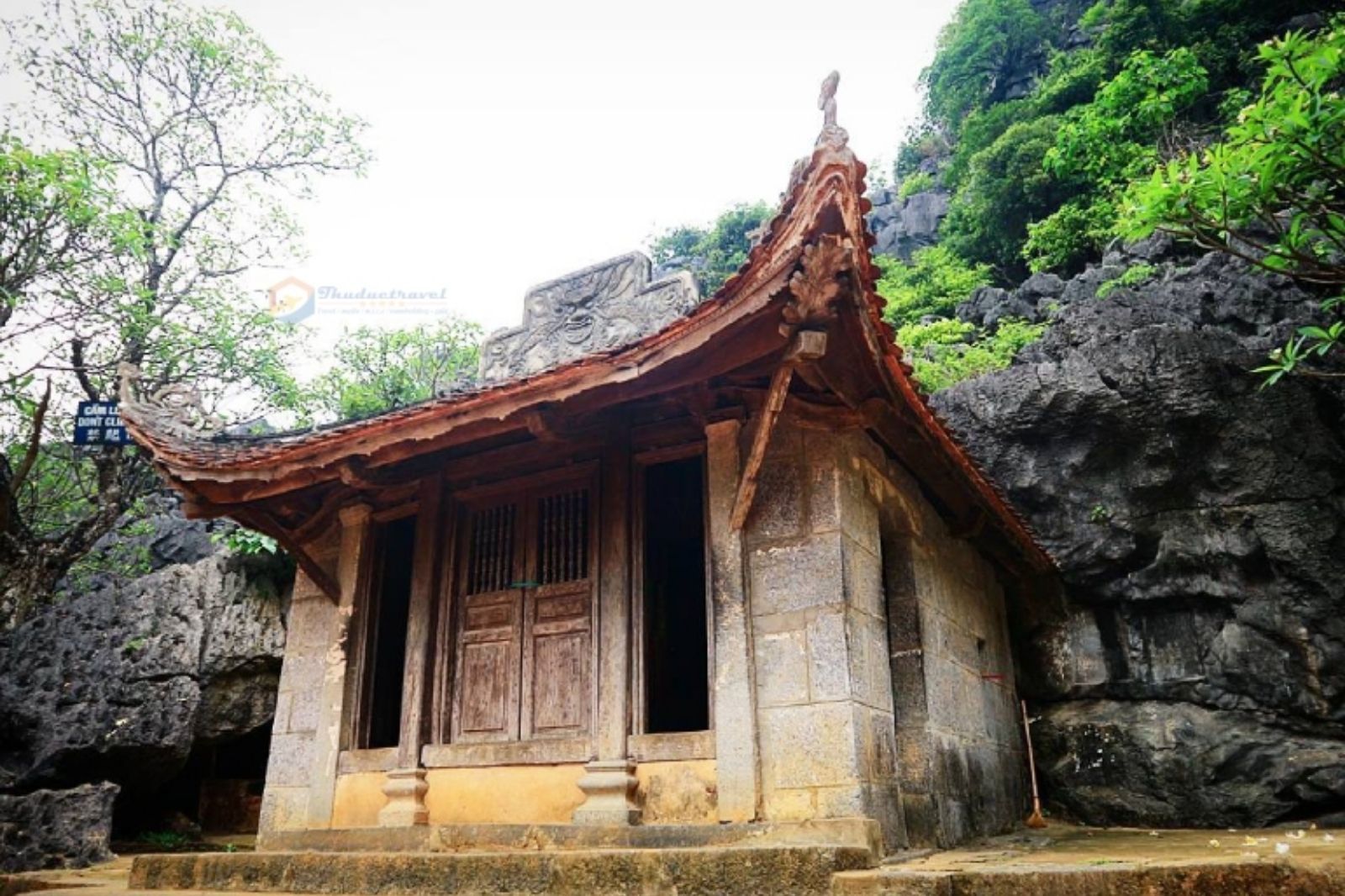
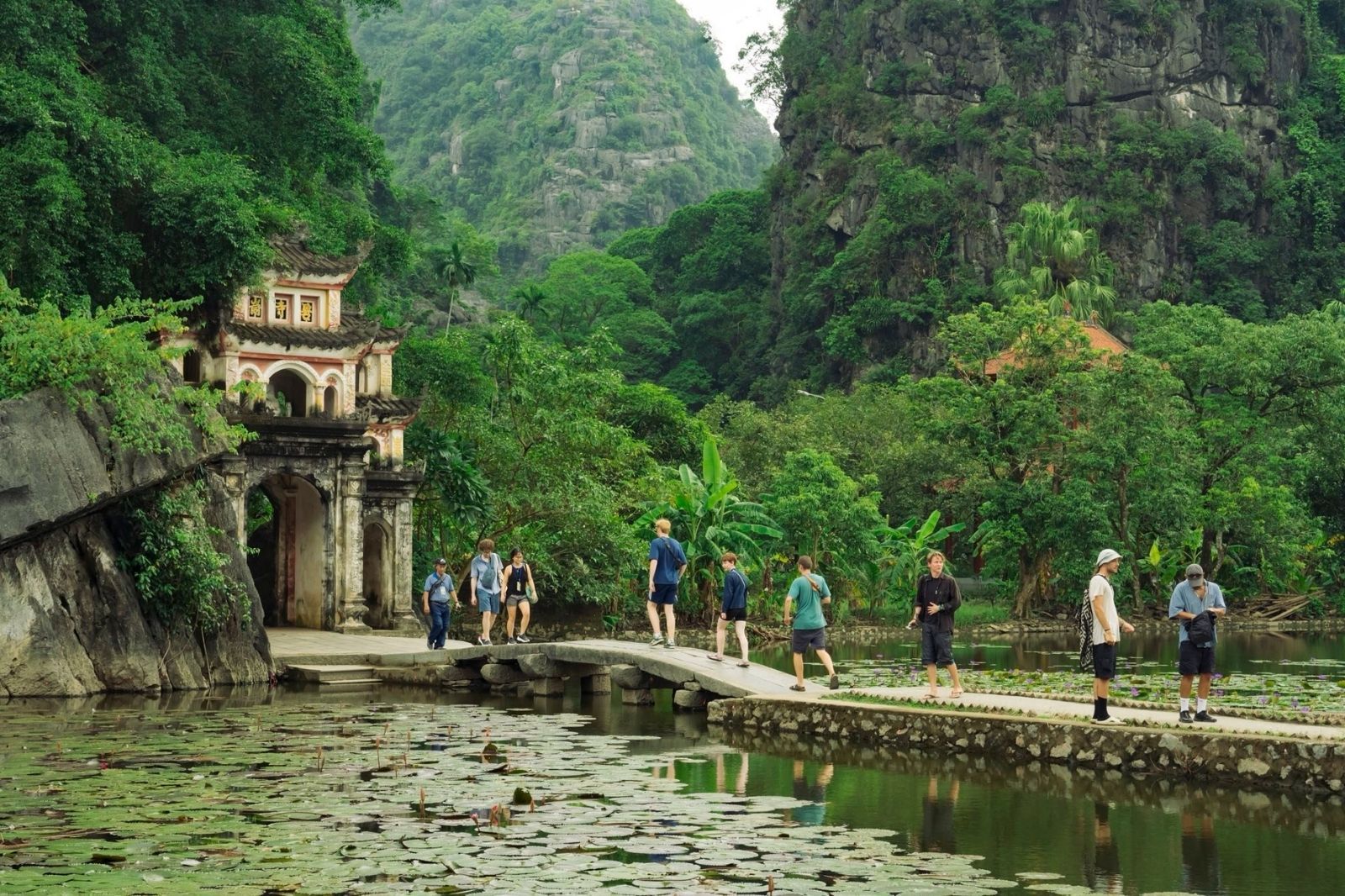
Bich Dong Pagoda is a small pagoda on the mountain
Photo: Bich Dong Pagoda is a small pagoda on the mountain 

2. Where is Bich Dong Pagoda located?

Bich Dong Pagoda is located in Dam Khe village, Ninh Hai commune, Hoa Lu district, Ninh Binh province, about 7km southwest of Ninh Binh city center and about 100km from Hanoi.

Directions from Hanoi:

  • Motorbike or private car: Follow the Hanoi - Ninh Binh Expressway (CT.01), taking about 1.5-2 hours. From Ninh Binh city, continue along Highway 38B towards Tam Coc, turn right at the Tam Coc three-way intersection to reach the boat pier, then walk or take an electric car for about 2km to the pagoda.
  • Passenger bus or limousine: Catch a bus at Giap Bat or My Dinh station, ticket price around 80,000-150,000 VND/one way, duration 2 hours. Upon reaching Ninh Binh, rent a motorbike (100,000-150,000 VND/day) or take a taxi to travel to the pagoda.
  • Train: From Hanoi Railway Station to Ninh Binh Railway Station (about 2.5 hours, 70,000-100,000 VND), then take a taxi or motorbike taxi for about 100,000 VND to the pagoda.
  • Airplane: From Ho Chi Minh City, fly to Hanoi or Thanh Hoa, then continue by bus to Ninh Binh.

From Central or Southern provinces, tourists can combine a flight to Hanoi and then travel further.

Note: The road to the pagoda features mountainous terrain, so choose appropriate transportation if traveling in a large group.

Trung Pagoda

3. History and development of Bich Dong Pagoda

Bich Dong Pagoda possesses a history of over 600 years, originally constructed in 1428 during the early Later Le Dynasty. Initially, it was just a small temple situated on a rocky mountainside, named Bach Ngoc Thach Son Dong, meaning “a stone pagoda as beautiful and pure as jade amidst deep mountains”. In 1705, during the reign of King Le Du Tong, two Venerable Monks, Tri Kien and Tri The, from Nghia Hung (Nam Dinh), came to this mountainous region. Recognizing the picturesque scenery and sacred terrain, they decided to restore and expand the pagoda. From then on, the pagoda complex was built into three distinct areas: Ha Pagoda (Lower), Trung Pagoda (Middle), and Thuong Pagoda (Upper), harmoniously following the natural rocky slope.

In 1707, the two Venerable Monks cast a large bronze bell, which is still preserved today in Toi Cave (Dark Cave). On the bell, a Chinese inscription records the merits of opening the mountain, praising the effort of “opening mountains, carving rocks, and passing down the pure Buddhist sanctuary”. In 1774 (Giap Ngo year), Lord Trinh Sam, during a visit, was captivated by the romantic landscape here. Before the scenery of rocky mountains, rivers, and lush green fields blending together, he renamed the place “Bich Dong”, meaning “Green Cave”.

Through many dynasties and numerous restorations, Bich Dong Pagoda today is not only a famous spiritual destination but also a special national historical and cultural relic within the Trang An Scenic Landscape Complex, recognized by UNESCO as a World Heritage site in 2014. Surrounding the pagoda are ancient tombs of monks and abbots through generations, standing as a testament to the centuries-old spiritual practice and history of this ancient temple.

4. Origin of the name and the legend of 'Nam Thien De Nhi Dong'

Nam Thien De Nhi Dong - "the second most beautiful cave under the Southern sky" is a nickname bestowed by ancient poets, ranking just after Huong Tich Cave (Hanoi). Legend has it that the jade green (bich) beauty of the limestone mountains, caves, and winding river caused Lord Trinh Sam to exclaim: 

"Mountains all four around, water all four seasons 

 Light wooden boats gently racing oars 

Rushing waves crashing around the cave 

Misty clouds pouring all over the Pagoda scenery". 

The rock formations inside Toi Cave are traditionally likened to immortals turned into stone, reminding people of karma and impermanence. Climbing the Giai Oan Bridge (Bridge of Exoneration) to toll the bell releases soul grievances, or visiting the Cam Lo Basin representing purity. For visitors, this is not just a check-in spot, but also a space to find peace amidst the hustle and bustle of life.

5. Unique architecture of Bich Dong Pagoda through its tiers

What creates the appeal of Bich Dong Pagoda is its "three-tier" architecture along the mountainside, following the shape of the Chinese character "Tam" (Three), forming a grand natural picture with eight beautiful scenes – Bich Son Bat Canh. The entire structure is built with rare and precious ironwood, roofed with unnotched traditional tiles, and the roof corners curve gracefully like sword blades or phoenix tails, undulating like water waves. At the foot of the mountain lies Xuyen Thuy Cave, where the Ngo Dong River meanders through a 350m long, average 6m wide cave, creating a perfect harmony between man-made architecture and natural wonders.

  • Ha Pagoda (Lower Pagoda): Located at the foot of the mountain, featuring 5 compartments in the shape of the Chinese character "Dinh", worshipping the Three Lives Buddhas, the Three Holy Ones of the Western Paradise, and the patriarch monks. It has stone steles and a tomb garden with ancient stupas.
  • Trung Pagoda (Middle Pagoda): Located halfway up the mountain (120 stone steps from Ha Pagoda), half inside the cave, worshipping Shakyamuni Buddha, featuring Toi Cave (Dark Cave) with a stone statue of Amitabha Buddha and an ancient bronze bell.
  • Thuong Pagoda (Upper Pagoda): Near the peak (40 steps from Trung Pagoda), worshipping Guan Yin Bodhisattva, featuring the Cam Lo Basin and a view looking towards Ngu Nhac Mountain resembling a lotus flower.

The entire architecture complements each other, creating the grand "Bich son bat canh" (Eight Scenery of the Green Mountain).

Thuong Pagoda
Photo: Thuong Pagoda  

6. Visiting experience at Bich Dong Pagoda for tourists

Visitors can begin their journey by taking a boat ride on the Ngo Dong River, weaving through the Tam Coc complex with three famous caves: Ca Cave, Hai Cave, and Ba Cave, to fully feel the beauty of the characteristic rivers and limestone mountains of Ninh Binh. Afterward, the journey continues with a mountain climb to visit Bich Dong Pagoda, overcoming about 120 stone steps leading up to the pagoda tiers, where visitors have the opportunity to admire sparkling stalactites and listen to the pagoda bell echoing through the quiet forest space.

In addition, visitors can combine visits to Toi Cave, Giai Oan Bridge, or go up to Thuong Pagoda to take in the panoramic view of the rice fields stretching along the Ngo Dong River, which is especially beautiful during the golden ripe rice season. Besides the main attractions, activities such as cycling around Tam Coc countryside, taking photos during the golden season, or participating in local festivals also offer intimate experiences, helping visitors gain a deeper understanding of local life and culture.

Tourists visiting Bich Dong Pagoda
Photo: Tourists visiting Bich Dong Pagoda  

7. Opening hours and entrance fees for Bich Dong Pagoda

Bich Dong Pagoda is open daily from 7:00 AM to 5:00 PM, but the ideal time to visit is early morning or late afternoon to avoid crowds. Sightseeing at the pagoda itself is free, but since it is located within the Tam Coc - Bich Dong area, you need to purchase an area ticket:

  • Sightseeing ticket (without electric car): 250,000 VND/adult, 120,000 VND/child (1-1.3m).
  • Ticket including electric car: 350,000 VND/adult, 190,000 VND/child.

Children under 1m are free. Note to check for updated ticket prices at the counter.

Tourists checking in in front of Bich Dong Pagoda
Photo: Tourists checking in in front of Bich Dong Pagoda 

The journey stopping at Bich Dong Pagoda is like stepping into a realm of ancient memories, where the sound of the pagoda bell blends with the breath of the rocky mountains to create the unique serenity of the Hoa Lu land. Not merely a scenic spot, Bich Dong is a place that preserves the rustic Buddhist spirit, a story of humans and nature coexisting harmoniously through generations. Coming here, anyone can find a sense of peace for themselves, even if just for a moment, but enough to make the soul feel lighter. If you want to fully enjoy the beauty of Tam Coc – Bich Dong, do not miss the all-inclusive Tam Coc - Bich Dong tour by Sovaba Travel. The itinerary is designed to be streamlined, easy to travel, rich in cultural and historical experiences, and especially suitable for travelers wishing to discover a deeper and more complete Ninh Binh.

Loading......

Featured destinations